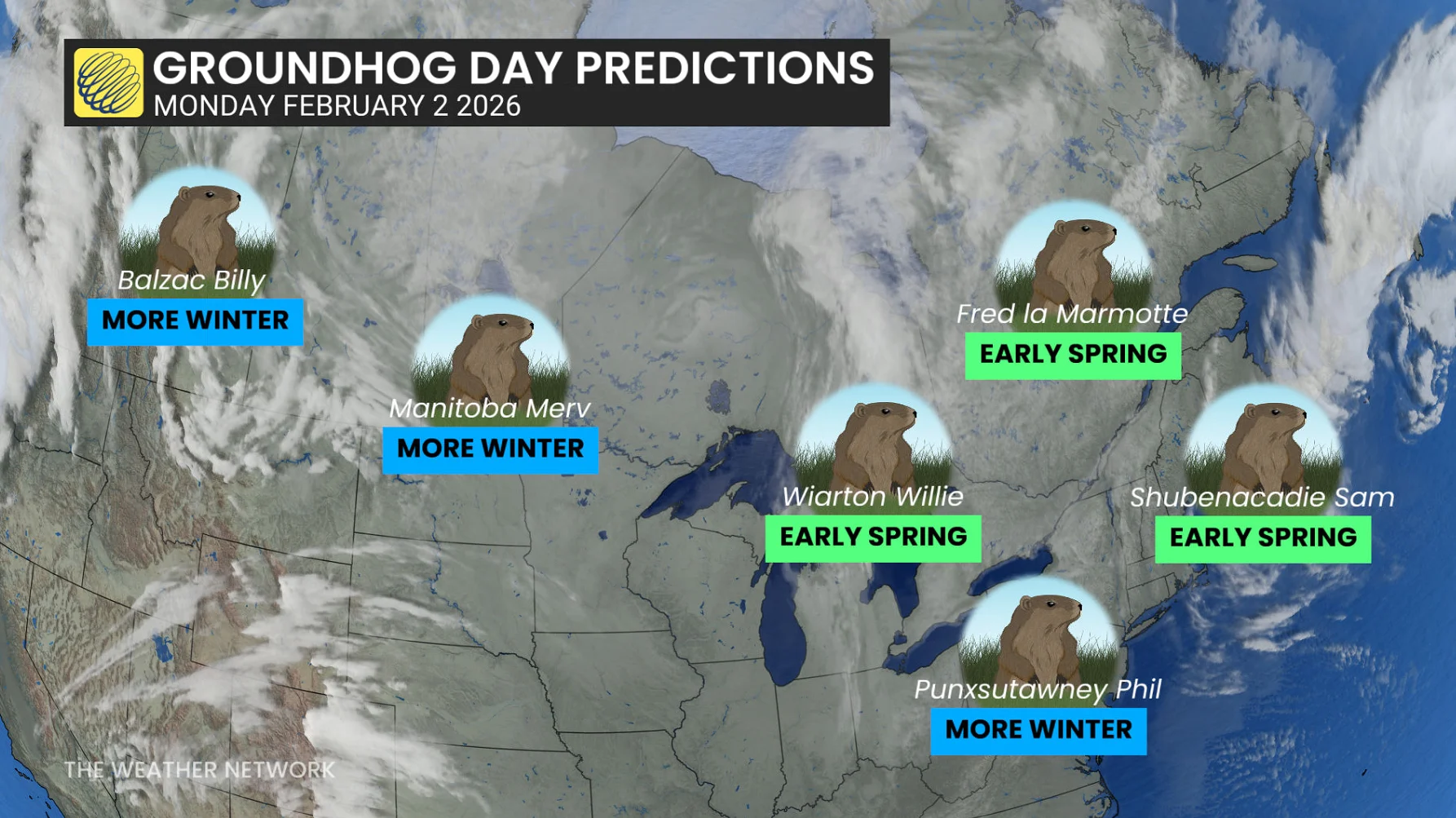
On February 2, 2026, the legendary groundhog Punxsutawney Phil emerged from his burrow at Gobbler’s Knob in Pennsylvania. Following the established tradition of the Groundhog Club’s Inner Circle, the groundhog did not see his shadow, signaling the official prediction for an early spring across the United States. This forecast offers a cultural touchstone for millions, marking a distinct point in the mid-winter calendar.
The Significance of the Annual Groundhog Day Tradition
Groundhog Day is a North American tradition observed on February 2. Its roots trace back to the Pennsylvania Dutch superstition that if a groundhog emerges from its burrow on this day and fails to see its shadow because the weather is cloudy, spring will arrive early. Conversely, if it is sunny and the animal sees its shadow, the cold weather will persist for another six weeks.
In 2026, the ceremony followed the historical protocols managed by the Punxsutawney Groundhog Club. The event is more than a weather prediction; it is a long-standing cultural phenomenon that draws thousands of visitors to Punxsutawney, Pennsylvania. The "Inner Circle," a group of local dignitaries and enthusiasts, carries out the ceremony with specific traditions, including the reading of the proclamation in the Pennsylvania Dutch dialect and the official interpretation of the groundhog's behavior.
Deciphering the 2026 Forecast
The 2026 prediction of an early spring was received with notable enthusiasm by the crowd at Gobbler’s Knob. To understand why this carries weight, one must examine the role of the groundhog (Marmota monax) as a mascot for seasonal transition. While the tradition is rooted in folklore rather than modern synoptic meteorology, the event remains a fixture of American public life.
Meteorologically speaking, early February serves as the midpoint between the winter solstice and the spring equinox. The 2026 results reflect the anticipation of warming trends, which, for many in the Northern Hemisphere, represents a psychological shift toward the end of the winter season. The absence of a shadow in 2026 was interpreted by the handlers as a definitive indicator, a result that was widely disseminated through news outlets and official social channels shortly after the 7:25 AM EST emergence.
Comparing Historical Groundhog Day Accuracy
A frequent question regarding the 2026 results is how they align with historical records. Critics and enthusiasts alike often compare the groundhog's "forecasts" against data provided by the National Oceanic and Atmospheric Administration (NOAA).
Historically, the groundhog’s accuracy rate hovers near 40% to 50%. While this does not align with the predictive rigor of professional meteorological models, the purpose of the event is not to compete with satellite data or pressure systems. Instead, it acts as a communal celebration of seasonal cycles. The 2026 result contributes to a multi-generational dataset maintained by the Punxsutawney Groundhog Club, which tracks these predictions dating back to the late 19th century.
Comparative Table: Methodology and Context
| Feature | Punxsutawney Phil (2026) | Scientific Meteorology |
|---|---|---|
| Primary Tool | Folklore/Behavioral Observation | Satellite, Radar, Modeling |
| Scope | Regional (Northeastern US) | Global and Local Forecasts |
| Intent | Cultural Observance | Public Safety/Planning |
| Basis | Shadow Visibility | Thermodynamic Data |
| Verified Accuracy | Approximately 40-50% | High (Short-term) |
The Logistics of the 2026 Ceremony
The 2026 event required significant preparation. Managing a crowd of thousands in the early morning hours of February requires close coordination between the Punxsutawney Groundhog Club, local law enforcement, and regional emergency services.
Prerequisites for Participation
Visitors planning to attend in person must account for the following:
- Temperature Management: February in Pennsylvania is characterized by sub-freezing temperatures. Specialized outdoor gear is required.
- Transportation: Access to Gobbler’s Knob is limited; shuttle buses are typically utilized to transport attendees from the town center to the park.
- Timing: The event takes place before sunrise. Most attendees arrive several hours early to secure a viewing spot near the stage.
For those watching from home, the 2026 results were broadcast via multiple digital platforms, including live streams from news agencies and the official Groundhog Club website. This digital accessibility ensures that the tradition remains relevant in an era where direct physical attendance is not the only way to engage with the results.
Common Misconceptions About the Results
A common error in interpreting the 2026 groundhog results is the assumption that the prediction applies uniformly to the entire continental United States. In reality, the prediction is hyper-local to the Pennsylvania region. When the groundhog predicts "early spring," it implies that the local climate in Western Pennsylvania will see an earlier-than-average rise in temperatures.
Furthermore, the groundhog's behavior is often confused with hibernation patterns. Groundhogs are true hibernators, and their emergence in February is often prompted by the hormonal changes associated with the breeding season rather than an intuitive sense of climate patterns. Understanding this distinction helps clarify why the "results" are essentially a symbolic representation of the season rather than a biological weather forecast.
Frequently Asked Questions
1. Does the 2026 groundhog result apply to my specific state?
No. The groundhog's prediction is localized to Punxsutawney, Pennsylvania. While it is often used as a lighthearted indicator for the Northeast, it does not account for the diverse climatic zones across the United States.
2. Is there scientific evidence behind the groundhog's shadow?
There is no peer-reviewed scientific evidence suggesting that a groundhog’s interaction with its shadow correlates with long-term climate patterns. The practice is purely ceremonial and stems from ancient European traditions such as Candlemas.
3. What happens if the weather is too severe for the ceremony?
The ceremony continues regardless of weather conditions. The Punxsutawney Groundhog Club has protocols in place to ensure the safety of the handlers and the groundhog, but the tradition itself is never canceled due to snow or extreme cold.
4. How are the 2026 results officially verified?
The results are verified by the "Inner Circle" of the Punxsutawney Groundhog Club. Their determination is final, and they issue an official proclamation, which serves as the permanent record for the year 2026.
5. Why does the groundhog see his shadow some years and not others?
The result depends entirely on the cloud cover at the precise moment of emergence. If the sun is at the correct angle to create a visible shadow behind the animal, the forecast is for six more weeks of winter.
Moving Forward After the Result
With the 2026 Groundhog Day results officially recorded as an "early spring," the community and observers can now look toward the actual transition of the seasons. For those interested in tracking the accuracy of this year’s prediction, comparing the official "early spring" claim against local temperature anomalies over the following six weeks provides a practical way to engage with the tradition.
If you are planning to attend future iterations of this event, ensure you register through the official Groundhog Club channels early, as local lodging fills up months in advance. The tradition remains a testament to the human desire to seek meaning and pattern in the seasonal transitions that govern our lives.