The 2025 music festival season on the East Coast of the United States was defined by a strategic shift toward curated, genre-specific experiences and a significant focus on 25th-anniversary milestones for legacy events. From the high-energy EDM kickoff at Ultra Music Festival in Miami to the late-summer surf-rock vibes of Sea.Hear.Now in New Jersey, the 2025 circuit demonstrated the industry's resilience through record-breaking attendance figures and advanced technological integration in crowd management.
The 2025 season stood out as a pivotal year for the Atlantic seaboard's live music economy. Following a period of logistical stabilization, promoters utilized 2025 to refine the "boutique" festival model—smaller, more targeted gatherings—while simultaneously scaling up production for the massive "Big Four" festivals of the region: Ultra, Boston Calling, Governors Ball, and Bonnaroo. This overview examines the successes, operational challenges, and cultural impact of the 2025 circuit, providing a retrospective analysis for attendees and industry professionals now planning for the 2026–2027 seasons.
The Economic and Cultural Landscape of 2025
The economic backdrop of the 2025 East Coast festival circuit was characterized by a "quality over quantity" approach. While previous years saw a saturation of mid-tier festivals, 2025 witnessed a consolidation. High production costs and artist fees led to the sunsetting of several smaller events, but those that remained, such as the Elements Music & Arts Festival in Pennsylvania, saw unprecedented growth.
Culturally, the 2025 season leaned heavily into nostalgia and legacy. With several major festivals hitting their 20th or 25th anniversaries, the programming reflected a cross-generational appeal. Headliners often paired modern pop titans with iconic rock or electronic acts from the early 2000s, successfully capturing both Gen Z and Millennial demographics.
The Return of the Mega-Festival Experience
The 2025 season saw the "mega-festival" reclaim its dominance. Events like Bonnaroo (which, while technically in Tennessee, remains the southern anchor for East Coast festival travelers) reported near-capacity crowds. The demand for multi-day, immersive camping experiences grew by approximately 12% compared to 2024, signaling that despite rising ticket prices, consumers prioritized the comprehensive "getaway" aspect of music festivals.
Rising Costs and Tiered Access
A major talking point throughout 2025 was the evolution of the "VIP" experience. Standard General Admission (GA) tickets across the East Coast averaged $350–$450, but the real revenue growth occurred in the Super-VIP and "Platinum" tiers. These packages, often exceeding $2,000, provided air-conditioned lounges, side-stage viewing, and gourmet catering, reflecting a shift toward luxury in the live music space.
Major Festival Highlights: A Chronological Analysis
The East Coast circuit typically follows a seasonal trajectory, beginning in the tropical climate of Florida and moving northward as the weather warms.
March: Ultra Music Festival (Miami, FL)
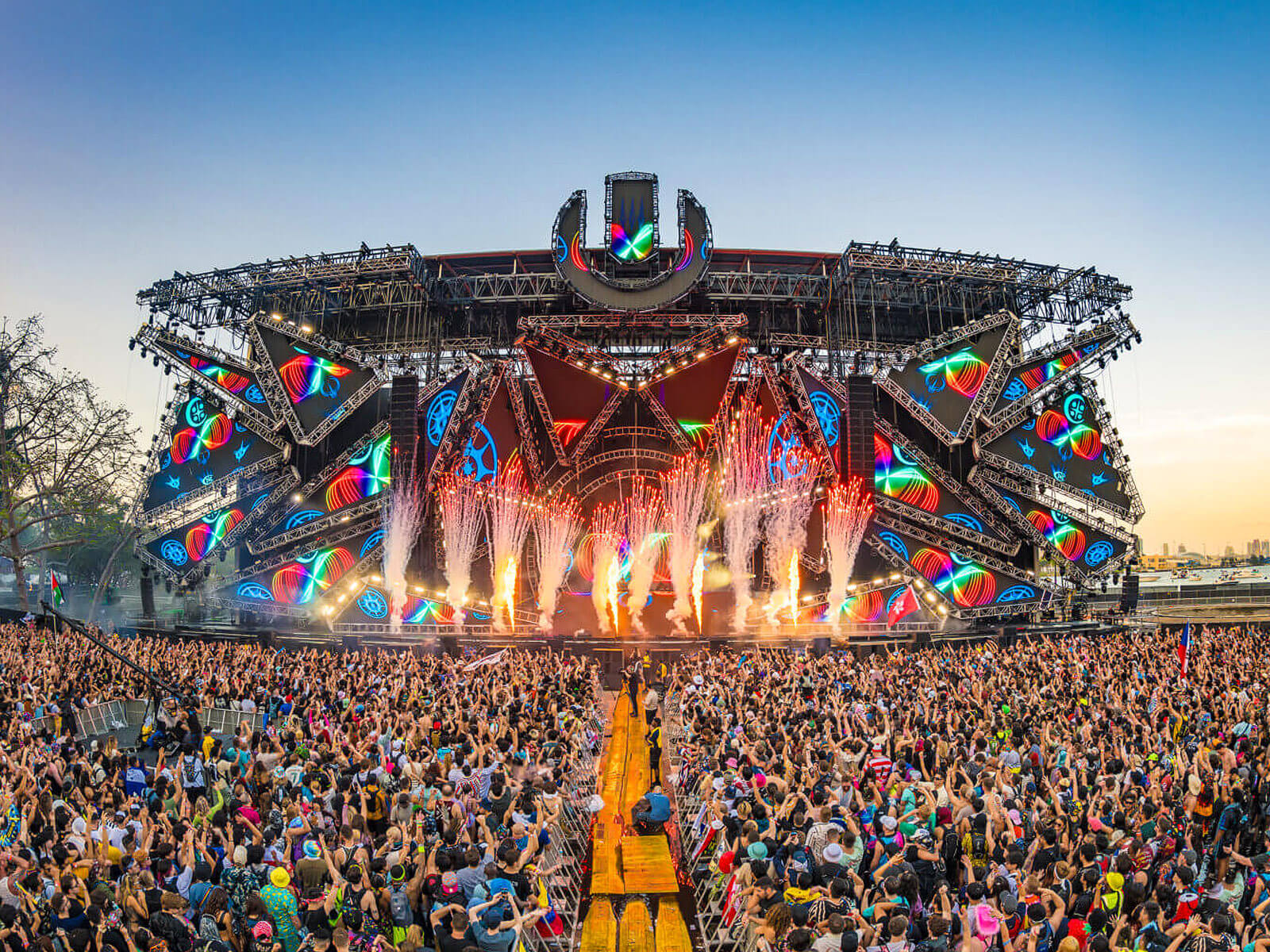
The 2025 edition of Ultra Music Festival (March 28–30) was a historic landmark, celebrating its 25th anniversary. As the premier global electronic music event, Ultra 2025 returned to Bayfront Park with a lineup that bridged the gap between underground techno and mainstream EDM. The festival’s success in 2025 was largely attributed to its "RESISTANCE" brand, which dominated the Megastructure with extended sets from world-renowned DJs.
Logistically, Ultra 2025 implemented a "Mission: Home" sustainability initiative that achieved a 90% waste diversion rate, setting a new standard for urban festivals. The 25th-anniversary production featured the most advanced pyrotechnics and LED mapping seen in the event's history.
May: Boston Calling (Boston, MA)
Taking place over Memorial Day Weekend (May 23–25), Boston Calling continued its residency at the Harvard Athletic Complex. In 2025, the festival leaned into its "Rock and Indie" roots, balancing heavy hitters with local New England talent. The three-stage layout allowed for seamless transitions, though the 2025 event faced minor criticism regarding the bottlenecking near the Red Stage during peak evening hours.
June: Governors Ball (Queens, NY)
Governors Ball 2025 (June 6–8) solidified Flushing Meadows Corona Park as its permanent home. By 2025, the "Gov Ball" brand had pivoted almost entirely toward the Gen Z demographic, emphasizing Hip-Hop, Pop, and Latin music. The 2025 edition saw a massive surge in attendance for its Latin-themed stages, reflecting the diverse cultural fabric of New York City.
June: Bonnaroo Music & Arts Festival (Manchester, TN)
While geographically situated in the Southeast, Bonnaroo (June 12–15, 2025) serves as a primary destination for the entire Eastern Seaboard. The 2025 "Farm" experience was notable for its expansion of "Where in the Woods," the forest-based electronic stage that operates 24 hours a day. Bonnaroo 2025 was also one of the first major festivals to integrate comprehensive AI-driven safety monitoring to manage crowd density and heat exhaustion.
Regional Comparison: 2025 East Coast Festival Data
The following table compares the primary metrics for the major festivals that defined the 2025 season.
| Festival | 2025 Dates | Primary Genre | Key Feature/Milestone | 2025 Status |
|---|---|---|---|---|
| Ultra Music Festival | March 28–30 | EDM/Techno | 25th Anniversary Edition | Record Sell-out |
| Boston Calling | May 23–25 | Indie/Rock/Pop | Harvard Athletic Complex | High Local Attendance |
| Governors Ball | June 6–8 | Pop/Hip-Hop/Latin | Flushing Meadows Venue | Youth-focused |
| Bonnaroo | June 12–15 | Multi-genre | Centeroo 24-Hour Stages | Camping Peak |
| Elements Festival | August 8–11 | Bass/House/Jam | Immersive Poconos Site | Boutique Growth |
| Sea.Hear.Now | Sept 13–14 | Rock/Surf | Beachfront/Surf Contests | Fastest Sell-out |
Operational Trends and Technological Integration
The 2025 season was a testing ground for several "Next-Gen" festival technologies that have since become standard in 2026.
RFID and Biometric Entry
By 2025, the use of RFID-enabled wristbands for cashless payments was universal across major East Coast events. However, 2025 saw the introduction of optional biometric entry (facial recognition or palm scanning) at festivals like Ultra and Governors Ball to reduce wait times at security checkpoints. While this sparked some privacy debates, the average entry time was reduced from 45 minutes to under 10 minutes.
Sustainability and Environmental Impact
In 2025, the "Green Festival" movement moved from a marketing buzzword to a logistical requirement. The Sea.Hear.Now festival in Asbury Park led this charge by banning all single-use plastics and implementing a "Leave No Trace" program for the beach. Furthermore, Elements Music & Arts Festival in the Poconos utilized 100% solar power for its secondary stages, a feat that garnered significant industry praise.
Health and Safety Protocols
Following several high-heat summers, 2025 festivals prioritized "Harm Reduction." This included:
- Enhanced Hydration Stations: Tripling the number of free water-refill points.
- Cooling Tents: Air-conditioned "chill-out" zones with medical staff on standby.
- Drug Checking and Education: Continued partnership with organizations like DanceSafe to provide education and safety resources.
The Boutique Revolution: Elements and Soundside
While the mega-festivals grab the headlines, the 2025 season was also defined by the success of boutique festivals. These events offer a more curated, community-focused atmosphere that many fans found preferable to the massive crowds of Bonnaroo or Ultra.
Elements Music & Arts Festival (Long Pond, PA) became a flagship for the East Coast boutique scene in 2025. Set in the heart of the Poconos, the festival combined world-class electronic music with immersive art installations and a heavy emphasis on "The Four Elements" (Earth, Air, Fire, Water). The 2025 edition was particularly noted for its improved infrastructure, resolving previous years' issues with entry traffic.
Similarly, Soundside (formerly Sound on Sound) in Bridgeport, CT, leveraged its unique waterfront location at Seaside Park. In 2025, it successfully catered to an older, more affluent demographic by focusing on "Classic Rock" and "Singer-Songwriter" lineups, demonstrating that the East Coast festival market has room for diverse age groups.
Challenges and Lessons Learned from 2025
Despite the overall success, the 2025 season was not without its hurdles. These challenges have become the primary case studies for 2026 event planning.
- Weather Volatility: The East Coast faced several severe weather events in June and August 2025. Governors Ball saw a brief evacuation due to lightning, highlighting the need for more robust emergency communication apps.
- Transportation Logistics: Transportation to and from festivals remained a pain point. The reliance on NJ Transit for Sea.Hear.Now and the 7 Train for Governors Ball resulted in significant overcrowding, leading to calls for increased ferry services and shuttle private-public partnerships in future years.
- Tiered Pricing Backlash: While VIP tiers were profitable, there was a noticeable social media backlash regarding the "exclusionary" nature of certain festival layouts, where the best viewing areas were reserved exclusively for high-paying ticket holders.
Frequently Asked Questions
What was the most successful East Coast music festival in 2025?
In terms of ticket velocity and cultural impact, Sea.Hear.Now in Asbury Park, NJ, was widely considered the most successful of the 2025 season. Its unique blend of surfing culture and high-caliber rock headliners led to a sell-out within hours of the public on-sale. From a purely economic and scale perspective, Ultra Music Festival remained the leader, driven by its 25th-anniversary global draw.
How did 2025 festival prices compare to previous years?
Festival ticket prices in 2025 saw a moderate increase of 8–12% over 2024. This was largely driven by increased labor costs, artist fees, and the implementation of more sophisticated safety technologies. However, many festivals introduced "layaway" or "installment" plans, which became the preferred payment method for nearly 40% of attendees.
Were there any major 2025 festival cancellations on the East Coast?
While the major festivals remained stable, 2025 saw the hiatus of several "spin-off" events that struggled with identity and funding. The focus shifted toward strengthening existing brands rather than launching new ones, as investors became more cautious regarding the "market saturation" of the mid-2020s.
What were the major genre trends of the 2025 season?
2025 was the year of "Genre Fluidity." While Ultra remained EDM-focused, festivals like Bonnaroo and Governors Ball saw a blurring of lines, with "Hyperpop," "Afrobeats," and "Regional Mexican Music" taking up significant space on main stages. This reflected the changing listening habits of a streaming-first audience.
Is camping still a major part of the East Coast festival experience?
Yes, but the nature of camping changed in 2025. There was a significant rise in "Glamping" (glamorous camping) and "Pre-set Tents." At Bonnaroo and Elements, the demand for luxury camping options far outpaced the availability, suggesting that fans are willing to pay for comfort and convenience in a festival setting.
Planning for the Future: Post-2025 Strategy
As we move through 2026, the data from the 2025 season serves as a roadmap for both organizers and attendees. For fans, the primary takeaway is the importance of early booking—particularly for boutique festivals like Elements or Sea.Hear.Now, which have smaller capacities and loyal followings.
For those planning to attend the 2026 or 2027 circuits, focusing on "multi-modal" travel options and prioritizing festivals with proven safety and weather-contingency track records is recommended. The 2025 season proved that the East Coast remains a powerhouse of the live music industry, provided that festivals continue to innovate in sustainability and fan experience.