In the 2025 model year, gasoline-powered internal combustion engine (ICE) vehicles continued to dominate the United States automotive market. Automakers refined engine efficiency through advanced turbocharging, direct injection, and high-gear-count transmissions, balancing strict federal emissions regulations with consumer demands for long driving ranges, high towing capacity, and affordable upfront purchase costs across all vehicle categories.
The Landscape of Pure Gas Vehicles in the 2025 Model Year
The United States automotive market in 2025 reflected a balanced coexistence between traditional internal combustion engines, hybrid electric vehicles (HEVs), and battery electric vehicles (BEVs). While electrification gained consistent market share, gasoline-powered vehicles retained a majority position in key segments, particularly full-size pickup trucks, heavy-duty utility vehicles, and budget-conscious compact crossovers.
Automakers operating in the U.S. faced dual pressures during the 2025 model year. On one side, federal regulatory frameworks—such as corporate average fuel economy (CAFE Standards) enforced by the National Highway Traffic Safety Administration (NHTSA) and emissions limits established by the Environmental Protection Agency (EPA)—pushed manufacturers toward lower fleetwide carbon outputs. On the other side, consumer sentiment maintained strong demand for vehicles with fast refueling times, high towing capability, and uncompromised performance in extreme weather conditions.
To satisfy both regulatory requirements and consumer preferences, engineering teams did not abandon internal combustion technology. Instead, they accelerated engine downsizing, adopted dual-fuel injection systems, expanded variable valve lift control, and integrated sophisticated thermal management. The result was a generation of 2025 gasoline engines that delivered higher horsepower and torque outputs per liter of displacement than at any prior point in automotive history.
Key Model Segment Breakdown for 2025 Gas Vehicles
The 2025 model year marked significant shifts in how vehicle segments approached pure gasoline powertrains. While some high-volume nameplates transitioned exclusively to hybrid setups, others introduced heavily re-engineered gas engines to extend product lifecycles.
Compact and Midsize Sedans
The sedan segment underwent a notable strategic divergence in 2025:
- Toyota Camry: Transitioned entirely to a hybrid powertrain for the 2025 redesign, ending the availability of standalone four-cylinder and V6 pure-gas engines.
- Honda Accord: Offered a split lineup, reserving its pure 1.5-liter turbocharged gas engine for base trim levels (LX and SE) while pushing upper trims toward hybrid technology.
- Nissan Altima & Sentra: Maintained naturally aspirated four-cylinder gas engines paired with continuously variable transmissions (CVTs) to deliver low entry pricing and competitive highway fuel economy.
- Hyundai Elantra & Kia K5: Offered options ranging from fuel-efficient, naturally aspirated 2.0-liter engines to performance-oriented 2.5-liter turbocharged variants.
Midsize and Full-Size Utility Vehicles (SUVs)
Sport utility vehicles remained the largest growth engine for U.S. auto sales in 2025. Automakers invested heavily in modular gas powertrains to power two-row and three-row family haulers.
2025 SUV Powertrain Trends:
Displacement Downsizing: Transition from V6 to 2.0L/2.4L Turbocharged I4
Transmission Pairing: Standard 8-speed and 10-speed Automatic Transmissions
Drivetrain: Modular Front-Wheel / Rear-Wheel Drive with On-Demand AWD
Toyota 4Runner: The sixth-generation 2025 4Runner replaced its long-standing 4.0-liter naturally aspirated V6 with a standard 2.4-liter turbocharged i-FORCE four-cylinder engine producing 278 horsepower and 317 lb-ft of torque.
Ford Explorer: Received a mid-cycle refresh for 2025, streamlining its engine lineup around the proven 2.3-liter EcoBoost inline-four and the high-output 3.0-liter twin-turbo EcoBoost V6 in the ST trim.
Chevrolet Tahoe & Suburban: Underwent interior and exterior styling updates for 2025 while retaining the traditional naturally aspirated 5.3-liter and 6.2-liter V8 engines alongside an updated 3.0-liter inline-six turbodiesel.
Full-Size Pickups and Light Trucks
The full-size truck market represents the highest-profit segment in the U.S. auto industry, where towing dynamics, bed payload capabilities, and long-range durability dictate purchasing decisions.
- Ram 1500: The 2025 Ram 1500 officially retired the iconic 5.7-liter Hemi V8. In its place, Stellantis introduced the 3.0-liter inline-six twin-turbo Hurricane engine family, available in Standard Output (420 hp) and High Output (540 hp) configurations, alongside the base 3.6-liter Pentastar V6.
- Ford F-150: Continued offering a diverse internal combustion lineup, including the 2.7-liter EcoBoost V6, 3.5-liter EcoBoost V6, and the naturally aspirated 5.0-liter Coyote V8, complemented by the supercharged 5.2-liter V8 in the Raptor R.
- Chevrolet Silverado 1500 & GMC Sierra 1500: Retained a four-engine strategy, ranging from the 2.7-liter TurboMax four-cylinder to the 5.3-liter and 6.2-liter EcoTec3 V8 engines.
Technical Advancements in 2025 Gasoline Powertrains
Modern internal combustion engines bear little structural or operational resemblance to units designed a decade prior. Engine management systems in 2025 utilized real-time sensor arrays and fast electronic control units (ECUs) to balance air-fuel ratios continuously.
Dual-Fuel Injection Systems
To combat carbon buildup on intake valves—a historic side effect of early direct-injection engines—manufacturers expanded the deployment of dual-injection technology. Systems like Toyota's D-4S and Ford's dual-port and direct-injection (PFDI) use port injectors under light engine loads for clean combustion and reduced emissions, while switching to direct high-pressure injection under heavy loads to maximize power density and prevent engine knock.
Variable Displacement and Cylinder Deactivation
Engineers refined dynamic cylinder deactivation systems for 2025. Systems such as General Motors' Dynamic Fuel Management (DFM) can deactivate individual cylinders in up to 17 different patterns, allowing a V8 engine to operate smoothly on as few as two cylinders during steady highway cruising, reducing dynamic pumping losses and fuel usage.
Twin-Scroll Turbocharging and Thermal Efficiency
Single-scroll turbochargers have largely been replaced by twin-scroll designs in four- and six-cylinder engines. By separating exhaust pulses from cylinder pairs, twin-scroll units eliminate exhaust gas interference, providing faster turbine spool-up, virtually eliminating turbo lag, and widening the engine's peak torque curve from low RPM levels.
Cost Analysis and Ownership Dynamics
When assessing 2025 gasoline vehicles in the United States, prospective owners must evaluate both initial capital expenditure and ongoing operational costs relative to alternative powertrains.
Total Cost of Ownership Breakdown: Initial Purchase Price + Registration/Taxes
- (+) Fuel Expenses (Based on EPA MPG & Regional Gas Prices)
- (+) Scheduled ICE Maintenance (Oil, Filters, Spark Plugs, Brakes)
- (+) Insurance Premiums
- (-) Residual / Resale Value Retention
Upfront Capital Costs
Gasoline-powered vehicles maintained a lower average manufacturer's suggested retail price (MSRP) compared to equivalent plug-in hybrid (PHEV) and battery electric (BEV) models in 2025. The absence of expensive traction battery packs and high-voltage power electronics allows OEMs to price entry-level gas sedans and crossovers competitively.
Fuel Economy and Operational Costs
According to official test data managed by the U.S. Department of Energy Fuel Economy Guide, 2025 gas-powered compact vehicles average between 30 and 38 miles per gallon (MPG) on highway cycles, while full-size trucks and three-row SUVs range between 18 and 24 MPG combined.
Estimated Annual Fuel Cost Formula: Annual Fuel Cost = (Annual Miles Driven / Vehicle Combined MPG) × Price per Gallon
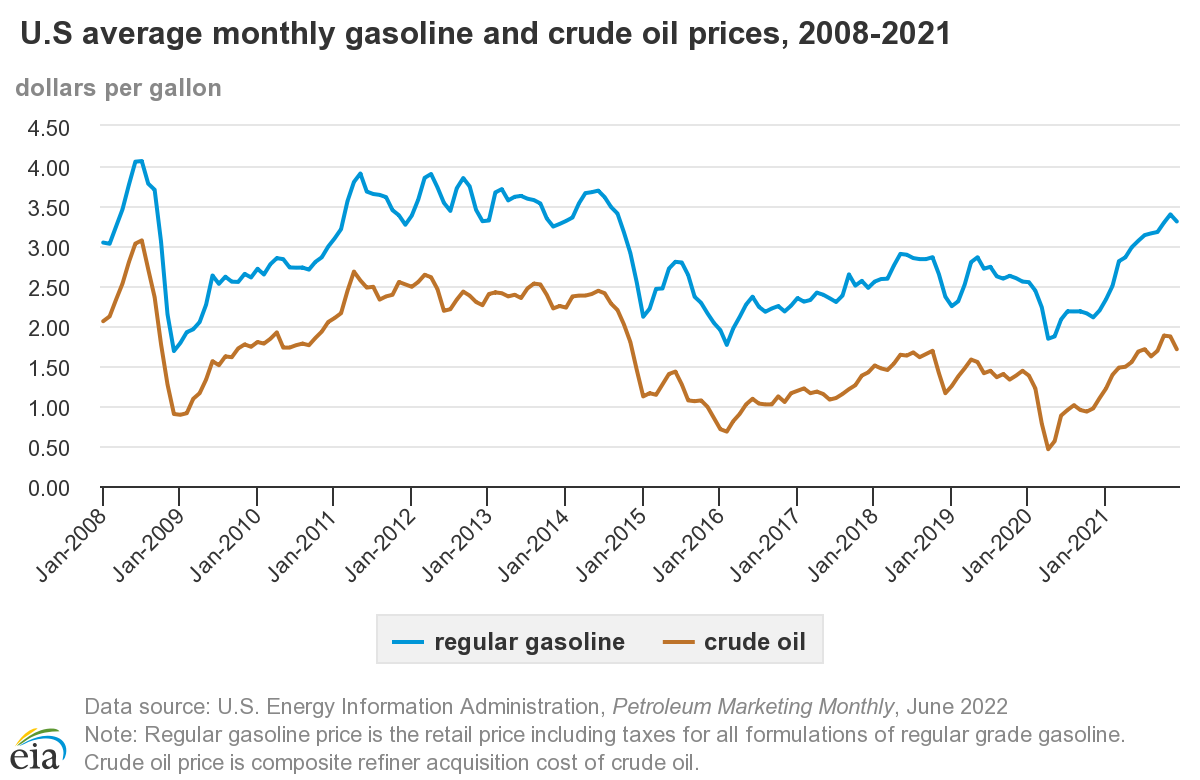
For example, driving 15,000 miles per year in a 2025 midsize crossover averaging 26 MPG combined, at a fuel price of $3.50 per gallon, yields an annual fuel expenditure of approximately $2,019.
Maintenance and Servicing Requirements
Gasoline engines follow established maintenance schedules based on physical fluid and component wear:
- Engine Oil and Filter Changes: Required every 5,000 to 10,000 miles depending on synthetic oil formulations and duty cycle severity.
- Spark Plug Replacement: Intervals range between 60,000 and 100,000 miles for iridium-tipped plugs.
- Air and Fuel Filter Service: Replaced every 15,000 to 30,000 miles to preserve air intake quality and fuel pump longevity.
- Cooling and Transmission Service: Fluid flushes performed between 50,000 and 100,000 miles.
While ICE vehicles require more mechanical system servicing than BEVs, parts availability across the U.S. is universal, and independent repair facilities provide competitive service pricing compared to specialized EV service infrastructure.
Performance and Specification Comparison
The following table summarizes key technical specifications, fuel economy ratings, and entry MSRP ranges for prominent pure-gasoline 2025 vehicles sold across major segments in the United States.
| Model | Vehicle Segment | Base Engine Architecture | Horsepower & Torque | EPA Estimated MPG (City/Hwy/Comb) | Approximate Starting MSRP (2025 MY) |
|---|---|---|---|---|---|
| Honda Civic Sedan | Compact Sedan | 2.0L 4-Cylinder naturally aspirated / 1.5L Turbo | 150 hp / 133 lb-ft (2.0L) | 32 / 41 / 36 | $24,250 |
| Honda Accord (LX/SE) | Midsize Sedan | 1.5L Turbocharged Inline-4 | 192 hp / 192 lb-ft | 29 / 37 / 32 | $28,300 |
| Toyota 4Runner | Midsize Off-Road SUV | 2.4L Turbocharged Inline-4 (i-FORCE) | 278 hp / 317 lb-ft | 20 / 26 / 22 (Estimated) | $40,700 |
| Ford Explorer | Three-Row SUV | 2.3L EcoBoost Inline-4 | 300 hp / 310 lb-ft | 21 / 28 / 24 | $39,755 |
| Chevrolet Tahoe | Full-Size Utility | 5.3L EcoTec3 V8 | 355 hp / 383 lb-ft | 15 / 20 / 17 | $59,000 |
| Ram 1500 | Full-Size Pickup | 3.0L Twin-Turbo Inline-6 (Hurricane SO) | 420 hp / 469 lb-ft | 18 / 25 / 21 | $40,275 |
| Ford F-150 | Full-Size Pickup | 2.7L EcoBoost Twin-Turbo V6 | 325 hp / 400 lb-ft | 19 / 25 / 21 | $37,065 |
| Ford Mustang GT | Performance Coupe | 5.0L Coyote V8 | 480 hp / 415 lb-ft | 15 / 24 / 18 | $43,560 |
Regulatory and Environmental Context
Gasoline vehicles operating in the United States must comply with environmental oversight managed primarily by the EPA and state-level regulatory agencies.
U.S. Emissions Architecture: Federal Standards (EPA Tier 4 / Multi-Pollutant)
- Intersects with State Rules (CARB Advanced Clean Cars II)
- Mandates evaporative control, catalytic converter efficiency, and fleet averages.
EPA Multi-Pollutant Regulations
In early 2024, the EPA finalized updated light-duty and medium-duty vehicle emissions standards covering model years 2027 through 2032 under the Clean Air Act. These rules set strict fleetwide targets for greenhouse gases ($CO_2$) and criteria pollutants ($NO_x$ and particulate matter). The 2025 model year served as an important bridge period, requiring automakers to optimize gasoline particulate filters (GPFs) and evaporative emission controls on ICE platforms to ensure compliance as tighter caps take effect.
State-Level CARB Regulations
Under Section 177 of the federal Clean Air Act, individual states can adopt California Air Resources Board (CARB) zero-emission vehicle (ZEV) mandates. While several states are phasing in mandates requiring an increasing percentage of ZEV sales through 2035, standard gas vehicles remained fully legal to buy, register, sell, and operate across all 50 states for the 2025 model year.
Frequently Asked Questions
Are gasoline cars banned from being sold in the United States?
No, gasoline cars are not banned in the United States. Federal rules do not ban gas vehicles. While California and several participating Section 177 states have adopted frameworks targeting a phase-out of new non-hybrid gas passenger car sales by 2035, new 2025 model-year gas vehicles remain entirely legal to purchase, register, and drive nationwide.
Which major 2025 vehicle models eliminated pure gas engines?
The most notable model to drop a pure gas engine for 2025 was the Toyota Camry, which transitioned to an all-hybrid lineup across every trim level. Similarly, models like the Toyota Sienna, Land Cruiser, and Crown operate exclusively with hybrid powertrains, illustrating how some manufacturers are replacing entry-level gas engines with electrified setups.
What are the main engine changes in 2025 pickup trucks?
The biggest change in the 2025 full-size truck market was Ram replacing its long-running 5.7-liter Hemi V8 with the 3.0-liter twin-turbo Hurricane inline-six engine. The new engine provides higher horsepower and torque outputs along with improved fuel efficiency compared to the naturally aspirated V8 it replaced.
How do maintenance costs for a 2025 gas car compare to an electric vehicle?
Gasoline vehicles require regular fluid replacements, oil changes, spark plug service, and exhaust system maintenance that electric vehicles do not. However, routine ICE maintenance can be performed by any licensed mechanic using widely available aftermarket parts. Electric vehicles generally incur lower routine brake and powertrain maintenance, but can involve higher out-of-warranty battery replacement costs and specialized repair requirements.
Is dynamic cylinder deactivation reliable in 2025 gas engines?
Modern cylinder deactivation systems used in 2025 engines are significantly more refined than early iterations from previous decades. Systems like GM's Dynamic Fuel Management (DFM) and Honda's Variable Cylinder Management (VCM) use high-speed computer logic and hydraulic oil-control valves to switch cylinder states seamlessly, minimizing component wear while maximizing highway fuel savings.
How does ethanol-blended gasoline affect 2025 gas engines?
All 2025 model-year gasoline engines sold in the U.S. are factory-calibrated to run on standard E10 fuel (10% ethanol, 90% gasoline), and many are rated to handle E15 blends without modification. Engine control units use knock sensors and oxygen sensors to automatically adjust ignition timing and fuel delivery to maintain proper combustion safety and performance regardless of standard ethanol variations.
Final Guidance for 2025 Gas Vehicle Buyers
When evaluating a 2025 gasoline-powered vehicle in today's market, buyers should match their selection to their specific driving profile and long-term operating costs:
- Verify Driving Patterns: If your annual mileage consists primarily of long highway trips or rural driving without access to home charging, a modern forced-induction (turbocharged) gasoline engine provides high fuel efficiency and fast, simple refueling.
- Review Specific Powertrain Warranties: Examine manufacturer powertrain coverage. Standard warranties typically range from 5 years/60,000 miles to 10 years/100,000 miles, protecting key engine assemblies, turbos, and internal lubricated parts.
- Check Fuel Grade Requirements: High-compression and turbocharged gasoline engines (such as those found in performance sedans and heavy-duty towing packages) may require or recommend 91+ octane premium fuel to achieve advertised horsepower and fuel economy figures. Factor potential fuel price differentials into your annual budgeting.
- Compare Total Cost of Ownership: Utilize resources provided by the U.S. Department of Energy to calculate localized fuel, insurance, and depreciation estimates before finalizing a vehicle purchase.