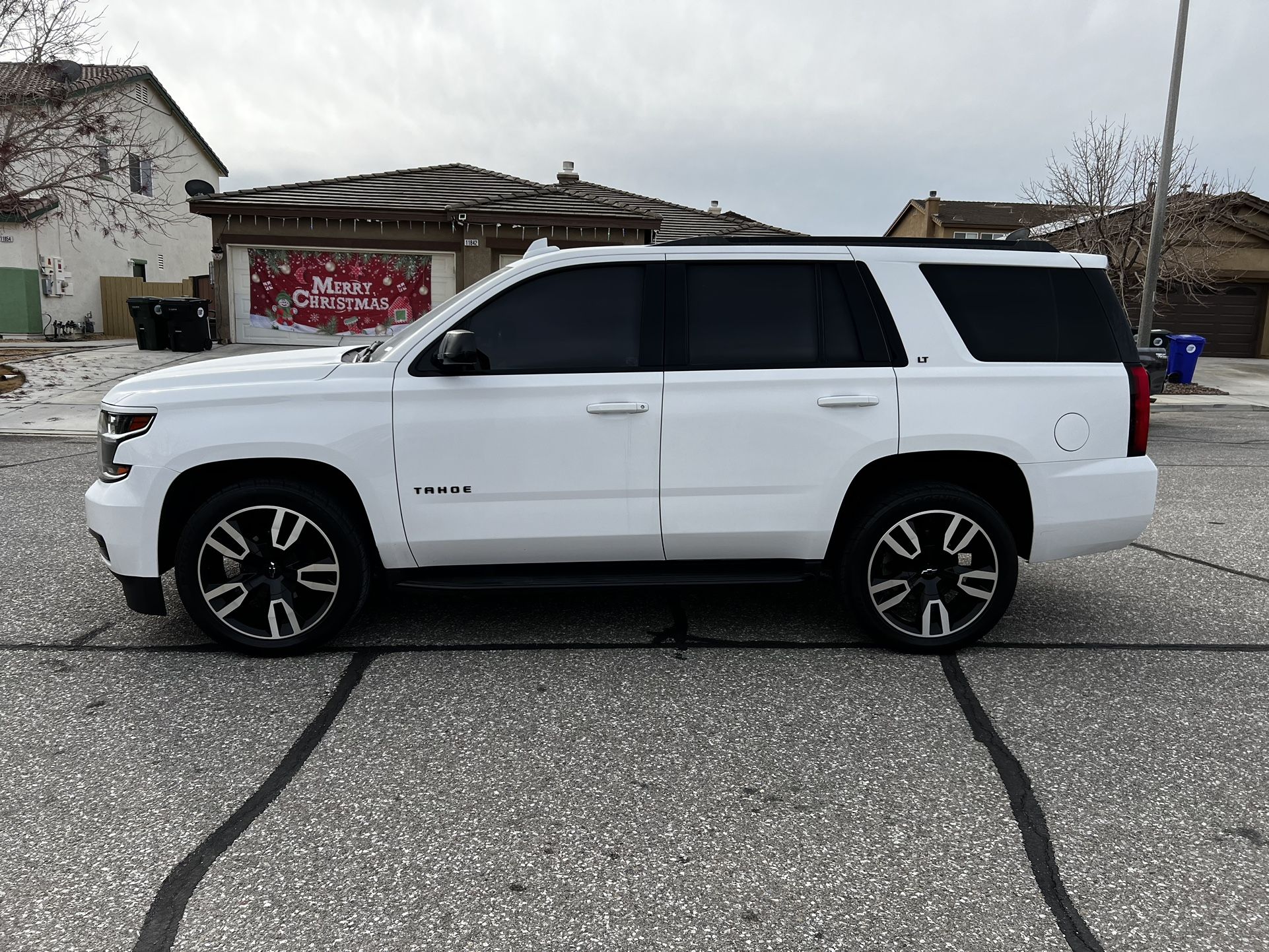
The 2020 Chevrolet Tahoe balances traditional body-on-frame truck capability with three-row passenger utility, earning praise for its rugged towing strength, spacious cabin, and familiar V8 performance, while drawing criticism for its dated interior technology, tight third-row legroom, and rigid ride quality compared to unibody crossovers.
Evaluating the 2020 Chevrolet Tahoe requires looking back at the final model year of the fourth-generation full-size SUV platform before General Motors transitioned to its independent rear suspension architecture for the 2021 model year. As a traditional body-on-frame utility vehicle sharing its mechanical foundations with the Chevrolet Silverado pickup truck, the 2020 Tahoe occupies a distinct space in the automotive market. It appeals to families needing massive towing capacity, fleet operators requiring durability, and buyers who prefer classic truck-based driving dynamics over modern crossover alternatives. Professional automotive critics and long-term owners have analyzed every facet of this vehicle, from its powertrain reliability to its cargo configurations. This comprehensive review synthesizes automotive evaluations, technical specifications, and real-world utility factors to help prospective buyers understand what the 2020 Tahoe offers.
Identity, Scope, and Fourth-Generation Legacy
The 2020 model year marked the closing chapter for a design generation that debuted for 2015. Built on GM’s K2XX platform, the Tahoe sits between the midsize Traverse and the extra-large Suburban. Unlike its longer sibling, the Tahoe features a shorter wheelbase that enhances maneuverability in tight spaces and urban environments while retaining the core hauling attributes of its platform-mates.
Automotive journalists reviewing the 2020 model generally categorized it as a known quantity. Because the vehicle had been on the market for several years by 2020, most mechanical bugs had been resolved, making it one of the more mechanically reliable choices within its generation. However, reviewers consistently noted that its technology suite, interior packaging, and fuel economy lagged behind newer competitors such as the Ford Expedition, which adopted independent rear suspension and turbocharged V6 power earlier in the decade.
Powertrain Options and Mechanical Specifications
Performance in the 2020 Chevrolet Tahoe is anchored by two proven small-block V8 engine options, mated exclusively to traditional automatic transmissions. Buyers could configure their vehicles with either rear-wheel drive (RWD) or four-wheel drive (4WD) featuring a two-speed transfer case for serious off-road or inclement-weather utility.
| Feature | 5.3L EcoTec3 V8 | 6.2L EcoTec3 V8 |
|---|---|---|
| Horsepower | 355 hp @ 5,600 rpm | 420 hp @ 5,600 rpm |
| Torque | 383 lb-ft @ 4100 rpm | 460 lb-ft @ 4,100 rpm |
| Transmission | 6-Speed Automatic | 10-Speed Automatic |
| Max Towing Capacity | Up to 8,600 lbs | Up to 8,400 lbs |
| Availability | LS, LT, Premier | Premier (Performance) |
The standard 5.3-liter V8 produces 355 horsepower and 383 lb-ft of torque, paired with a 6-speed automatic transmission. Reviewers found this engine adequate for daily commuting and moderate towing, though the 6-speed transmission felt a gear or two short compared to modern multi-speed units, occasionally resulting in hunting for gears on steep inclines.
For buyers seeking upgraded performance, the 6.2-liter V8—available exclusively on the top-tier Premier trim via performance packages—delivers 420 horsepower and 460 lb-ft of torque. Coupled with a smooth-shifting 10-speed automatic transmission, this engine transformed the driving experience, providing effortless acceleration and more refined power delivery. Fuel economy, however, remains a persistent weak point across both engines. EPA estimates typically hover around 15 mpg city and 22 mpg highway for the 5.3-liter RWD model, with real-world figures dropping significantly when fully loaded or towing heavy trailers.
Interior Comfort, Cabin Technology, and Packaging
Inside the cabin, reviews of the 2020 Tahoe highlight a mix of premium materials on upper trims and utilitarian plastics on lower configurations. The dashboard layout is truck-derived, featuring physical buttons and knobs for climate and audio controls that receive high marks for ergonomics and ease of use while wearing gloves.
Seating and Cargo Limitations
Seating configurations accommodate up to nine passengers when equipped with a front bench seat, though standard configurations seat seven or eight. Reviewers frequently criticized the second and third rows for packaging compromises inherent to the live-axle rear suspension layout.
- Second Row: Offers generous legroom and sliding functionality, available with either a bench or captain's chairs.
- Third Row: Positioned low to the floor due to the solid rear axle packaging, forcing adult passengers into an uncomfortable knee-up seating posture. Headroom and legroom are notably tight compared to unibody competitors.
- Cargo Space: Behind the third row, cargo capacity is restricted to 15.3 cubic feet. Folding both rear rows flat expands total cargo volume to a massive 94.7 cubic feet, though the raised load floor makes loading heavy items more physically demanding.
Infotainment and Connectivity
Chevrolet equipped the 2020 Tahoe with the user-friendly Chevrolet Infotainment 3 system, featuring an 8-inch touchscreen interface. Standard connectivity features include Apple CarPlay and Android Auto compatibility, 4G LTE Wi-Fi hotspot capability, and multiple USB ports spread across all three rows. Reviewers praised the responsiveness and clear graphics of the software, noting that it avoided the steep learning curve found in some competing luxury interfaces.
Trim Levels and Equipment Walkthrough
The 2020 Tahoe lineup is structured across three core trim levels: LS, LT, and Premier. Each tier builds progressively upon comfort, safety, and aesthetic enhancements.
LS Trim
As the entry-level model, the LS focuses on fleet and budget-conscious private buyers. It includes cloth upholstery, rear parking sensors, remote start, tri-zone automatic climate control, and 18-inch alloy wheels. Reviewers noted that the LS offers robust baseline utility without unnecessary technological complexity.
LT Trim
The mid-tier LT adds leather-heated front seats, a power liftgate, a Bose premium audio system, lane departure warning, forward collision alert, and automatic emergency braking through the Enhanced Driver Alert Package. The LT represents the sweet spot for most buyers, balancing premium amenities with reasonable pricing.
Premier Trim
Sitting at the pinnacle of the lineup, the Premier trim introduces magnetic ride control suspension, ventilated front seats, heated second-row seats, power-folding second and third-row seats, blind-spot monitoring, rear cross-traffic alert, and 20-inch wheels. Reviewers heavily favored models equipped with the Magnetic Ride Control suspension, as it significantly dampens road harshness and body roll compared to the standard suspension setups found on LS and LT trims.
Safety Ratings and Driver Assistance Features
Safety evaluations for the 2020 Chevrolet Tahoe from the National Highway Traffic Safety Administration (NHTSA) resulted in an overall four-star rating out of five stars, reflecting its performance in frontal crash, side crash, and rollover evaluations.
Standard safety equipment on base models is relatively sparse, but upper trims and option packages introduce advanced driver-assistance systems (ADAS). These include:
- Forward Collision Alert
- Low-Speed Forward Automatic Braking
- Lane Keep Assist with Lane Departure Warning
- Blind-Spot Monitoring and Lane Change Alert
- Rear Cross-Traffic Alert
- Safety Alert Seat (which vibrates to warn drivers of potential hazards)
Reviewers pointed out that while these systems function effectively, many active safety features required paying for higher trim levels or expensive packages, whereas competitors often included them as standard equipment across all variants.
Ride Quality and Handling Dynamics
Driving a body-on-frame full-size SUV requires understanding its mechanical architecture. The 2020 Tahoe drives like a heavy-duty truck, which presents distinct advantages and disadvantages on public roads.
On the highway, the Tahoe tracks straight and provides a commanding view of the road. However, over broken pavement, potholes, and expansion joints, models equipped with standard suspension setups exhibit noticeable jitter and side-to-side head toss due to the solid rear axle. Vehicles specified with the Magnetic Ride Control dampers manage surface imperfections much more gracefully, continuously adjusting shock absorber firmness in milliseconds.
Handling is predictable, though body roll is evident during sharp cornering due to the vehicle's high center of gravity and curb weight exceeding 5,500 pounds. Steering is light and numb, prioritizing effortless parking lot maneuvers over high-feedback driving engagement.
Common Issues, Reliability, and Ownership Considerations
Long-term reliability data and owner feedback highlight several recurring mechanical and electrical concerns that prospective buyers should inspect:
- Transmission Performance: The 6-speed automatic transmission paired with the 5.3L V8 has occasional reports of harsh shifting or torque converter shudder. Regular fluid changes are critical to longevity.
- Active Fuel Management (AFM): The cylinder-deactivation system can experience lifter wear if oil maintenance intervals are neglected. Many owners disable this system using aftermarket tuners.
- Interior Trim Wear: Dashboard cracking around the instrument cluster and peeling chrome on steering wheel buttons are frequently noted cosmetic flaws in high-mileage examples.
- AC Condenser Leaks: Air conditioning condenser failures are a documented weak point in the climate control plumbing for this generation.
Frequently Asked Questions
What is the towing capacity of a 2020 Chevrolet Tahoe?
When properly equipped with the 5.3-liter V8 engine and the max trailering package, the 2020 Chevrolet Tahoe can tow up to 8,600 pounds. Rear-wheel-drive models typically offer slightly higher maximum towing ratings than four-wheel-drive variants due to weight differences.
Is the 2020 Tahoe good on gas?
No, the 2020 Tahoe is not considered fuel-efficient. EPA ratings average around 15 mpg in the city and 22 mpg on the highway for rear-wheel-drive models, while four-wheel-drive variants drop slightly lower. Real-world fuel economy decreases further when towing or carrying heavy payloads.
What is the difference between a 2020 Tahoe and a 2020 Suburban?
The primary difference is length and cargo capacity. The Suburban is approximately 20 inches longer than the Tahoe, providing significantly more third-row legroom and cargo space behind the third-row seats, while both vehicles share identical front cabin layouts and mechanical underpinnings.
Does the 2020 Tahoe have Apple CarPlay?
Yes, the 2020 Chevrolet Tahoe features standard Apple CarPlay and Android Auto capability integrated into its 8-inch touchscreen infotainment system across all trim levels.
How many seats are in a 2020 Chevrolet Tahoe?
The Tahoe can seat up to nine passengers when configured with front and second-row bench seats. However, standard seating configurations typically accommodate seven or eight passengers utilizing front bucket seats and second-row bench or captain's chairs.
Final Recommendation and Buying Advice
The 2020 Chevrolet Tahoe remains a compelling choice for buyers who prioritize heavy-duty towing capability, traditional V8 power, and generous ground clearance over modern unibody crossover amenities. While its third-row seating is cramped and fuel economy is poor, its mechanical durability and parts availability make it a dependable workhorse. Buyers should prioritize models with the Magnetic Ride Control suspension for improved ride comfort, verify transmission service history, and budget for higher fuel expenditures during regular operation.