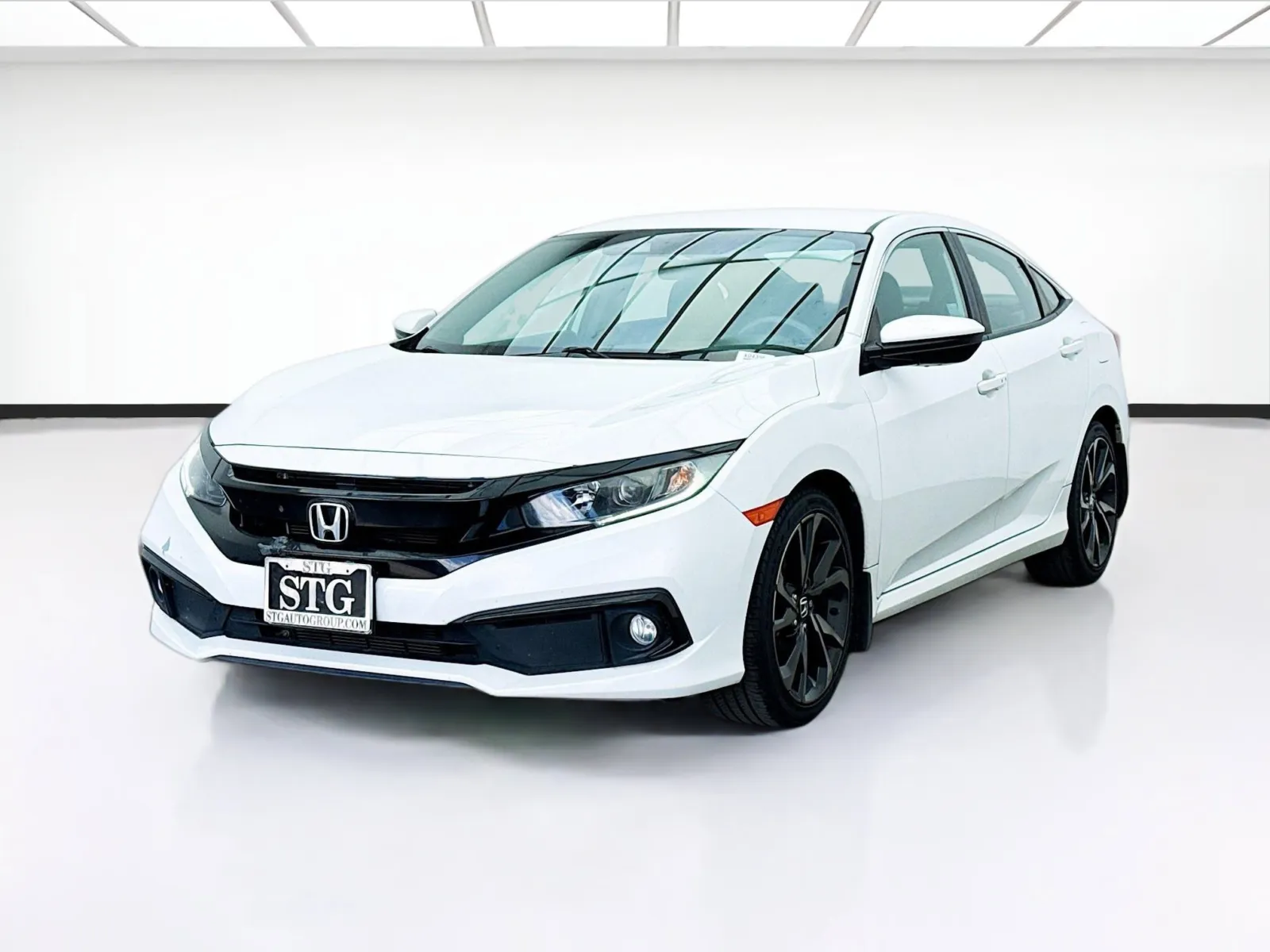
The 2020 Honda Civic Sport Sedan 4D occupies a compelling sweet spot in the compact car market, bridging the gap between practical daily transportation and engaging driving dynamics. Featuring a standard 2.0-liter naturally aspirated four-cylinder engine, aggressive exterior styling elements inherited from higher trims, and a cavernous interior package, the Sport trim brings a youthful aesthetic and athletic tuning to the tenth-generation Civic lineup without sacrificing the legendary reliability and fuel efficiency expected from the nameplate.
Identity and Scope of the 2020 Honda Civic Sport Sedan 4D
The tenth-generation Honda Civic, spanning model years 2016 through 2021, received a mid-cycle refresh for the 2020 model year. Within this lineup, the Sport sedan 4D (four-door) was designed to slot directly between the volume-selling LX and the more heavily equipped EX trims. It appealed directly to buyers who wanted the visual aggression and tech upgrades of the coupe or hatchback models, but required the traditional four-door sedan configuration.
| Specification | Detail |
|---|---|
| Engine | 2.0-Liter DOHC i-VTEC 4-Cylinder |
| Horsepower | 158 hp @ 6,500 rpm |
| Torque | 138 lb-ft @ 4,200 rpm |
| Transmission | 6-Speed Manual or Continuously Variable Transmission (CVT) |
| Drivetrain | Front-Wheel Drive (FWD) |
| Fuel Economy | Up to 29 city / 37 highway / 32 combined mpg (CVT) |
| Cargo Capacity | 15.1 cubic feet |
When evaluating a used 2020 model in the secondary market, understanding the specific equipment hierarchy is vital. The Sport trim brought unique 18-inch alloy wheels wrapped in lower-profile all-season tires, fog lights, a gloss-black decklid spoiler, and a center-mounted dual-outlet exhaust system styled after the higher-performance Si and Type R variants.
Powertrain, Performance, and Driving Dynamics
Under the hood, the 2020 Honda Civic Sport Sedan 4D utilizes a 2.0-liter port-injected engine producing 158 horsepower and 138 lb-ft of torque. Unlike the 1.5-liter turbocharged engine found in the EX, Touring, and Si models, this naturally aspirated powerplant relies on higher engine revolutions to deliver its power, making it responsive and predictable in stop-and-go urban environments.
Transmission choices significantly impact the driving character of the Sport sedan. Honda was one of the few manufacturers in the compact segment to offer a 6-speed manual transmission on a mid-tier trim. The manual features short, mechanical throws and a light clutch pedal, making it accessible for daily commuting while providing an engaging connection for enthusiasts. Alternatively, the available Continuously Variable Transmission (CVT) features paddle shifters mounted to the steering wheel, simulating stepped gear ratios to reduce the typical engine drone associated with CVTs under hard acceleration.
Handling is one of the strongest attributes of the tenth-generation architecture. The multi-link rear suspension paired with MacPherson struts up front provides a planted feel through twisty backroads while maintaining highway composure. The Sport trim benefits from retuned steering calibration and stiffer stabilizer bars compared to the base LX, resulting in minimal body roll and precise turn-in response.
Interior Comfort, Cabin Space, and Technology
Stepping inside the 2020 Honda Civic Sport Sedan 4D reveals a cabin that prioritizes ergonomic layout and storage utility over flashy design. The seating position is low and car-like, providing ample head and legroom for front passengers. Despite the sloping roofline, rear-seat passengers enjoy generous legroom, though taller adults may find rear headroom slightly compromised compared to boxier crossover alternatives.
Cabin materials in the Sport trim feature a mix of soft-touch surfaces on the armrests and dash fascia, paired with durable fabric upholstery and leather-wrapped steering wheel and shift knob accents. The center console offers deep storage capacity with a sliding armrest and configurable cupholders capable of swallowing large beverage containers and electronics.
Technology integration in the 2020 model year received a crucial physical upgrade: the inclusion of a volume knob for the 7-inch touchscreen infotainment system, addressing widespread consumer complaints from earlier years of the tenth generation. The infotainment suite includes:
- Apple CarPlay and Android Auto integration as standard equipment
- A 4-speaker, 160-watt audio system (upgraded to 8 speakers on select packages, though standard Sport makes do with the base configuration)
- Bluetooth HandsFreeLink and streaming audio
- Dual-zone automatic climate control
Safety Features and Driver Assistance Technologies
Safety is a core pillar of the Civic lineup, with the entire 2020 model year receiving the Honda Sensing suite of driver-assist and safety technologies as standard equipment regardless of trim level. This package includes:
- Collision Mitigation Braking System (CMBS) with Forward Collision Warning
- Road Departure Mitigation System (RDM) with Lane Departure Warning
- Lane Keeping Assist System (LKAS)
- Adaptive Cruise Control (ACC) with Low-Speed Follow
In crash testing conducted by the National Highway Traffic Safety Administration (NHTSA), the 2020 Honda Civic Sedan achieved a 5-overall star safety rating. Similarly, the Insurance Institute for Highway Safety (IIHS) named the vehicle a Top Safety Pick, earning the highest rating of "Good" in all crashworthiness evaluations when equipped with specific headlights.
Fuel Economy and Cost of Ownership
Efficiency remains a primary driver for compact sedan buyers, and the 2020 Civic Sport delivers competitive fuel economy figures. Models equipped with the CVT return an EPA-estimated 29 mpg in city driving, 37 mpg on the highway, and 32 mpg in combined cycles. Opting for the 6-speed manual naturally alters these figures slightly, typically yielding around 25 mpg city, 36 mpg highway, and 29 mpg combined.
Maintenance costs for the 2020 Civic Sport are historically lower than average for the compact segment. Routine maintenance consists of standard fluid changes, spark plug replacements at recommended intervals, and routine inspections of the brake system. The timing chain design eliminates the need for costly belt replacement services. Owners should budget for tire replacements sooner than standard commuter cars due to the lower-profile 18-inch tires found on the Sport trim, which are more susceptible to pothole damage and wear out more quickly than standard 16-inch sidewalls.
Comparison: Civic Sport vs. Competitors
To contextualize the value proposition of the 2020 Honda Civic Sport Sedan 4D, it helps to compare it directly against key rivals in the compact sedan market from the same model year.
| Vehicle Model | Engine | Horsepower | Infotainment |
|---|---|---|---|
| 2020 Honda Civic Sport Sedan | 2.0L 4-Cylinder | 158 hp | 7-inch w/ Knob |
| 2020 Toyota Corolla SE | 2.0L 4-Cylinder | 169 hp | 7 or 8-inch Touchscreen |
| 2020 Mazda 3 Sedan | 2.5L 4-Cylinder | 186 hp | 8.8-inch Non-Touchscreen |
| 2020 Hyundai Elantra Sport / Limited | 2.0L 4-Cylinder | 147 hp | 7 or 8-inch Touchscreen |
While the Toyota Corolla SE offers slightly more horsepower, its interior packaging and cargo capacity trail behind the Civic. The Mazda 3 Sedan provides a more premium interior finish and a larger base engine, but its rear seat and trunk space are notably more constrained than the class-leading packaging of the Honda.
Frequently Asked Questions
Does the 2020 Honda Civic Sport Sedan have a turbo engine?
No. The Sport trim sedan utilizes a naturally aspirated 2.0-liter four-cylinder engine. Interestingly, the Civic Sport Hatchback of the same model year features a 1.5-liter turbocharged engine, but the Sport Sedan relies exclusively on the non-turbo 2.0L powerplant producing 158 horsepower.
Is Apple CarPlay standard on the 2020 Civic Sport?
Yes. Apple CarPlay and Android Auto integration are standard equipment on the 2020 Honda Civic Sport Sedan, displayed through a 7-inch touch-screen interface that also includes physical buttons and a much-welcomed volume knob.
What is the difference between the 2020 Civic LX and Sport trims?
The Sport trim adds significant visual and functional upgrades over the base LX. These include 18-inch alloy wheels, fog lights, a gloss-black decklid spoiler, center-outlet exhaust, a leather-wrapped steering wheel and shifter, sport pedals, and standard Apple CarPlay and Android Auto integration, which is basic or optional on lower trims depending on regional configurations.
Are there common issues to look out for on a used 2020 Civic Sport?
Overall reliability for the 2020 model year is exceptionally high. However, buyers should inspect the CVT transmission for smooth operation if applicable, check for any recalls related to fuel pump modules or software updates, and ensure the Honda Sensing camera and radar sensors are properly calibrated if the windshield has been replaced.
How much cargo space does the 2020 Civic Sedan offer?
The trunk provides 15.1 cubic feet of cargo capacity, which is among the largest in the compact sedan class. Additionally, the 60/40 split-folding rear seats fold flat to accommodate longer items.
Final Recommendation
The 2020 Honda Civic Sport Sedan 4D remains an exceptionally well-rounded choice for buyers seeking a reliable, fuel-efficient daily driver with aggressive styling and engaging driving dynamics. Whether you select the enthusiast-friendly 6-speed manual or the convenient CVT, the Sport trim delivers excellent value, strong safety scores, and low long-term operating costs. When shopping in the secondary market, prioritize vehicles with documented maintenance histories and verified Honda Sensing calibration checks.