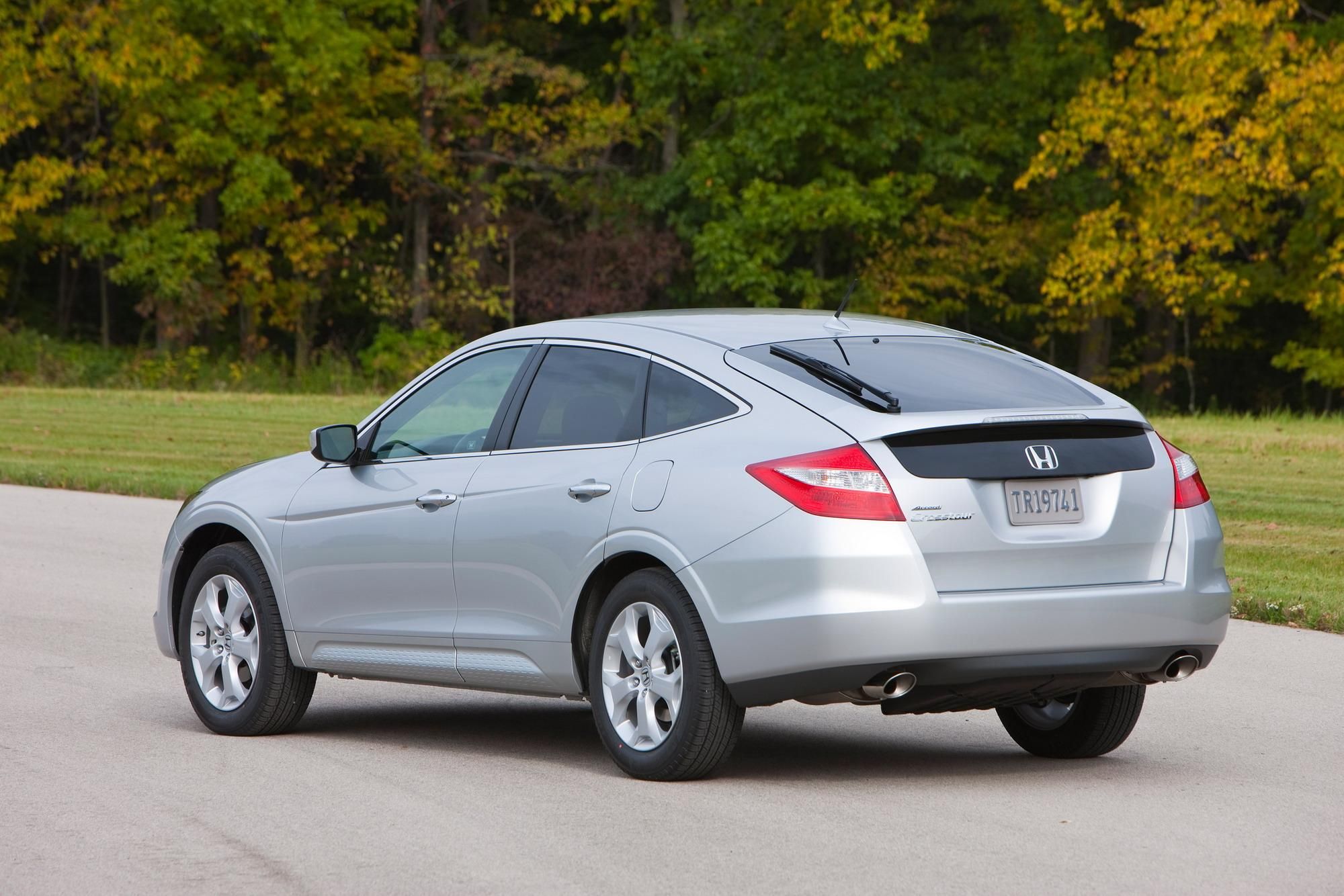
The 2010 Honda Accord Crosstour features a 3.5-liter V6 engine producing 271 horsepower, a 5-speed automatic transmission, available Real Time 4WD, and a distinctive fastback crossover utility design offering up to 51.3 cubic feet of cargo capacity with the rear seats folded.
When Honda introduced the Accord Crosstour for the 2010 model year, it entered the market as a polarizing yet mechanically robust alternative to traditional midsize sedans and standard sport utility vehicles. Blending the low-slung driving dynamics of the eighth-generation Accord sedan with an elevated ride height and a sloping, fastback tailgate, the Crosstour was designed for buyers who wanted passenger car refinement alongside expanded cargo versatility. Understanding the complete technical specifications, powertrain options, interior dimensions, and chassis dynamics of the 2010 Honda Accord Crosstour requires a detailed examination of what lies beneath its unique sheet metal.
Introduction to the 2010 Honda Accord Crosstour
The automotive landscape of the late 2000s and early 2010s was undergoing a structural shift. Crossovers were rapidly eating into the market share of traditional wagons and sedans. Honda sought to capture this transitional demographic by stretching the Accord platform into a hybrid vehicle type. Dropping the "Accord" prefix later in its production lifecycle, the initial 2010 model was built squarely on the Accord platform, sharing its front double-wishbone and rear multi-link suspension architecture, front-wheel-drive underpinnings, and core interior layout.
Positioned above the standard sedan in terms of price and overall footprint, the Crosstour targeted families and active lifestyle buyers who found traditional SUVs too bulky or truck-like, but desired more utility than a standard four-door sedan could provide. While its styling sparked intense debate among automotive journalists and consumers alike, its mechanical foundation relied on Honda's proven powertrain and chassis engineering.
Powertrain and Mechanical Specifications
Under the hood, the 2010 Honda Accord Crosstour streamlined its mechanical offerings by focusing exclusively on Honda's high-output V6 architecture. Unlike the standard Accord sedan, which offered four-cylinder engine variants, the Crosstour was designed to haul a heavier body shell and therefore required a more robust power plant from launch.
Engine Architecture and Performance
The sole engine available for the 2010 model year was the J35Z2 (for front-wheel-drive models) and J35Z3 (for all-wheel-drive models) 3.5-liter, 24-valve, SOHC VTEC V6 engine.
- Displacement: 3,471 cc (3.5 liters)
- Bore and Stroke: 89.0 mm × 93.0 mm
- Compression Ratio: 10.5:1
- Horsepower: 271 hp at 6,200 rpm
- Torque: 254 lb-ft at 5,000 rpm
- Valvetrain: Variable Valve Timing and Lift Electronic Control (VTEC)
- Fuel Management: Multi-point programmed fuel injection (PGM-FI)
This engine incorporated Honda's Variable Cylinder Management (VCM) system. VCM is a displacement-on-demand technology that can shut down cylinders depending on driving loads. Under light cruising conditions, the engine runs on three cylinders; under moderate acceleration, it switches to four cylinders; and under heavy load or acceleration, all six cylinders fire. This system was designed to improve fuel economy during highway cruising, though real-world efficiency heavily depended on driving style and terrain.
Transmission and Drivetrain Options
Power is routed through a standard 5-speed automatic transmission featuring Grade Logic Control, which helps hold gears when climbing or descending steep grades to prevent unnecessary shifting. Manual transmission options were not offered on the Crosstour.
Buyers could choose between two drivetrain configurations:
- Front-Wheel Drive (FWD): Standard across the lineup, offering predictable handling and lower overall vehicle weight.
- Real Time 4WD: An automatic, reactive all-wheel-drive system available on the EX-L trim. This system uses a dual-pump hydraulic system that engages the rear wheels instantaneously when front-wheel slippage is detected, providing added traction in snow, heavy rain, or loose surfaces.
Dimensions, Weight, and Exterior Specifications
The Crosstour’s dimensions distinguish it immediately from the sedan upon which it was based. It is longer, wider, and notably taller, with an increased ride height that enhances visibility and road clearance.
| Specification | Front-Wheel Drive (FWD) | Real Time 4WD |
|---|---|---|
| Wheelbase | 110.1 in (2,797 mm) | 110.1 in (2,797 mm) |
| Overall Length | 199.6 in (5,070 mm) | 199.6 in (5,070 mm) |
| Overall Width | 74.7 in (1,897 mm) | 74.7 in (1,897 mm) |
| Overall Height | 65.7 in (1,669 mm) | 65.7 in (1,669 mm) |
| Ground Clearance | 6.1 in (155 mm) | 6.1 in (155 mm) |
| Curb Weight | 3,845 lbs (1,744 kg) | 3,969 lbs (1,800 kg) |
| Turning Diameter | 40.4 ft (12.3 m) | 40.4 ft (12.3 m) |
The exterior design features aggressive fender flares, a bold chrome grille, and a fastback roofline that terminates in an integrated tailgate spoiler. While this shape aids aerodynamic efficiency on the highway, it restricts vertical cargo clearance near the rear hatch compared to a boxy traditional SUV.
Interior Layout, Comfort, and Cargo Capacity
Inside, the 2010 Honda Accord Crosstour mirrors the dashboard layout, ergonomics, and material quality of the higher-tier Accord sedan trims. The center stack features a cascading array of buttons and a central display screen, surrounded by metallic or wood-grain trim depending on the chosen interior package.
Passenger Space
The vehicle provides comfortable seating for up to five occupants.
- Headroom (Front/Rear): 39.6 in / 37.5 in (without sunroof)
- Legroom (Front/Rear): 42.2 in / 37.4 in
- Shoulder Room (Front/Rear): 58.2 in / 56.4 in
- Hip Room (Front/Rear): 55.9 in / 53.6 in
Cargo Utility
Cargo flexibility is the primary selling point of the Crosstour. Behind the second-row seats, the vehicle offers 25.7 cubic feet of storage space. Folding the 60/40 split-folding rear seats flat expands total cargo capacity to 51.3 cubic feet.
Under the rear cargo floor, Honda included a hidden utility box—a durable, removable plastic storage well measuring several cubic feet, designed to hold wet items, tools, or valuables safely out of sight. A clever reversible cargo floor featured carpet on one side and a hard, easy-to-clean plastic surface on the other, catering to outdoor gear and messy cargo.
Trim Levels and Standard Equipment Specifications
For the 2010 model year, Honda streamlined the ordering process by offering the Crosstour in two primary trim levels: EX and EX-L. Each trim level came comprehensively equipped, reflecting its status as a premium offering.
Crosstour EX
The entry-level EX trim was far from bare-bones, featuring numerous comfort and safety amenities as standard equipment:
- 18-inch alloy wheels with 225/60 R18 all-season tires
- One-touch power moonroof
- Dual-zone automatic climate control
- 360-watt AM/FM/CD audio system with 7 speakers, including a subwoofer and MP3/WMA playback capability
- USB audio interface and auxiliary input jack
- Steering-wheel-mounted audio, cruise, and phone controls
- 10-way power driver's seat with power lumbar support
- 4-way power front passenger seat
- Active Noise Cancellation (ANC) system to reduce cabin drone during VCM cylinder deactivation
Crosstour EX-L
The luxury-oriented EX-L trim added premium materials and advanced technology packages:
- Leather-trimmed heated front seats
- Leather-wrapped steering wheel and shift knob
- Auto-dimming rearview mirror with integrated backup camera display (or navigation screen if equipped)
- Bluetooth HandsFreeLink wireless telephone interface
- Premium audio upgrade with XM Satellite Radio
- Available Real Time 4WD system
- Available Honda Satellite-Linked Navigation System with voice recognition and rearview camera
Fuel Economy and Environmental Ratings
EPA fuel economy estimates for the 2010 Honda Accord Crosstour reflect its heavy curb weight and V6-only powertrain. Front-wheel-drive models achieved an EPA rating of 18 mpg city, 27 mpg highway, and 21 mpg combined. Selecting the Real Time 4WD variant reduced efficiency slightly to 17 mpg city, 25 mpg highway, and 20 mpg combined.
The vehicle met stringent federal emissions standards, achieving a Tier 2 Bin 5 federal emissions rating and qualifying as a Low-Emission Vehicle (LEV-2 ULEV) in California-emissions states.
Safety Ratings and Chassis Protection
Safety engineering on the 2010 Crosstour leveraged Honda’s Advanced Compatibility Engineering (ACE) body structure, designed to distribute frontal crash energy more evenly throughout the passenger cabin while minimizing damage to other vehicles during impacts.
Standard Safety Features
- Dual-stage, multiple-threshold front airbags (SRS)
- Front-side airbags with passenger-side Occupant Position Detection System (OPDS)
- Side-curtain airbags with rollover sensor for all outboard seating positions
- Anti-lock Braking System (ABS) with Electronic Brake Distribution (EBD) and Brake Assist
- Vehicle Stability Assist (VSA) with traction control
- Active front head restraints designed to reduce whiplash injuries in rear-end collisions
- Tire Pressure Monitoring System (TPMS)
In crash testing conducted by the Insurance Institute for Highway Safety (IIHS), the 2010 Accord Crosstour earned the organization's highest rating of "Good" in frontal-offset and side-impact evaluations, securing a strong safety pedigree for its era.
Common Maintenance Items and Technical Considerations
For owners and prospective buyers evaluating a used 2010 Honda Accord Crosstour, understanding historical mechanical considerations is vital for long-term reliability.
- Variable Cylinder Management (VCM): While efficient, early iterations of Honda's VCM system in the 3.5L V6 engine can occasionally lead to oil consumption issues over high mileage due to piston ring wear on the deactivated cylinders. Monitoring oil levels between changes is strongly recommended.
- Suspension Components: Given the vehicle's weight and front-heavy balance, front strut mounts, stabilizer bar links, and lower control arm bushings can experience wear over extended mileage, manifesting as clunking noises or loose steering feel.
- Transmission Fluid Maintenance: The 5-speed automatic transmission requires regular fluid changes (every 30,000 to 45,000 miles under normal driving conditions) to ensure longevity and smooth gear engagement, as neglected fluid can lead to harsh shifting or premature wear.
Frequently Asked Questions
What engine options were available in the 2010 Honda Accord Crosstour?
The 2010 model was offered exclusively with a 3.5-liter SOHC VTEC V6 engine producing 271 horsepower and 254 lb-ft of torque. Unlike the standard Accord sedan, four-cylinder engines were not available in the Crosstour lineup for this model year.
Does the 2010 Honda Accord Crosstour have all-wheel drive?
Yes, all-wheel drive was available as an option on the EX-L trim level. Honda's system, branded as Real Time 4WD, operates automatically, engaging the rear wheels via a dual-pump hydraulic system only when front-wheel slippage is detected.
What is the cargo capacity of the 2010 Crosstour?
The Crosstour provides 25.7 cubic feet of cargo volume behind the rear seats. Folding the rear 60/40 split seats flat expands the total cargo volume to 51.3 cubic feet, complemented by a hidden under-floor storage basin in the cargo area.
Is the Crosstour considered an SUV or a sedan?
The 2010 Honda Accord Crosstour is technically classified as a crossover utility vehicle (CUV) or a fastback wagon. It combines the mechanical architecture, interior dashboard design, and driving dynamics of a midsize sedan with an elevated ride height and an extended tailgate utility profile.
What are the fuel economy ratings for the 2010 Crosstour?
Front-wheel-drive models are EPA-rated at 18 mpg city, 27 mpg highway, and 21 mpg combined. Real Time 4WD variants return slightly lower fuel economy, rated at 17 mpg city, 25 mpg highway, and 20 mpg combined.
How does the Crosstour differ from the standard 2010 Accord sedan?
While the Crosstour shares its platform, front-end styling cues, and interior dashboard layout with the eighth-generation Accord sedan, it features a taller ride height, an overall length increase of roughly one inch, a unique fastback sloping roofline, a rear liftgate instead of a traditional trunk, and a heavier chassis architecture.