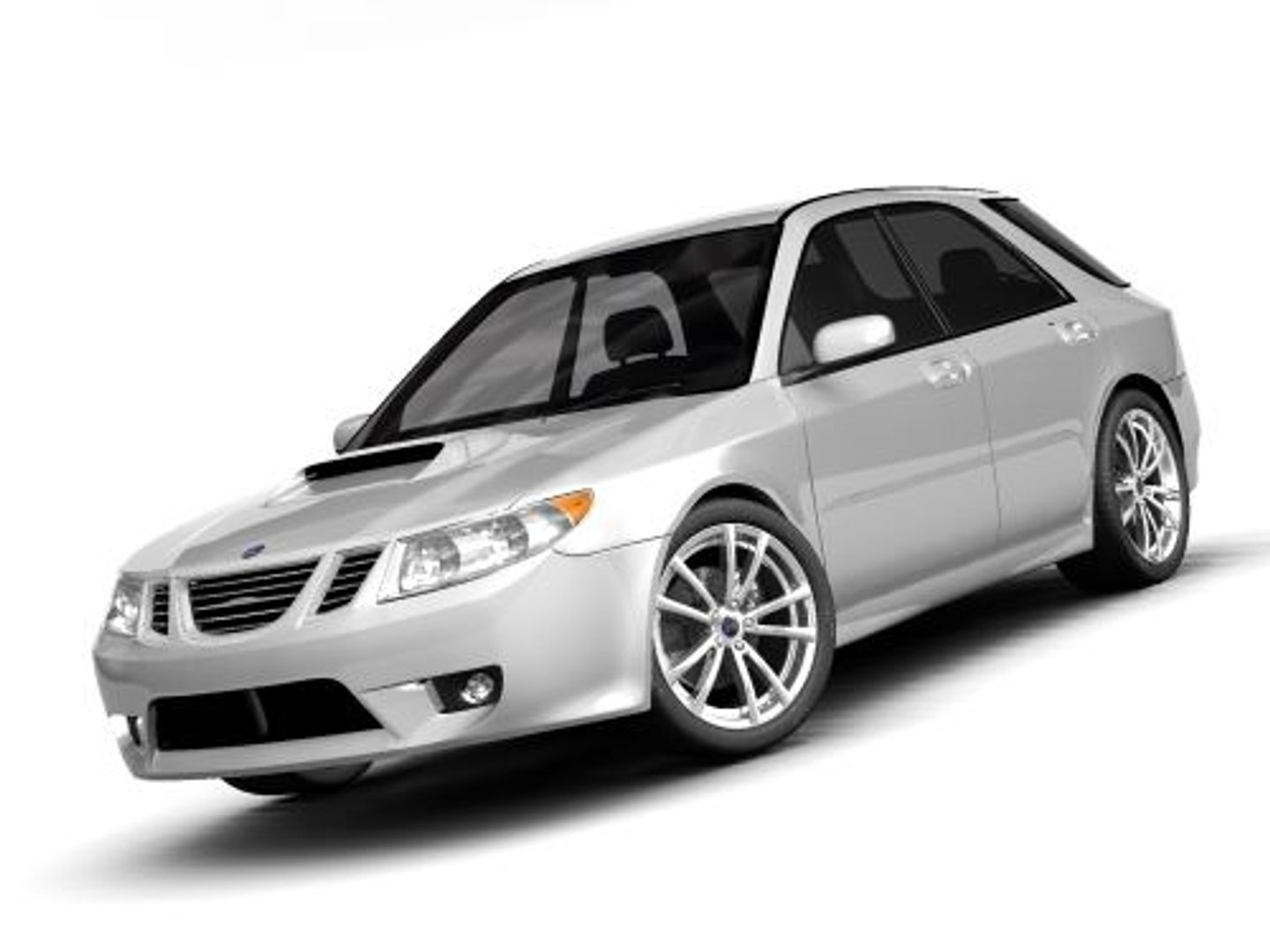
The 2005 Saab 9-2X represents a fascinating chapter in automotive history, born from an era of corporate partnerships and desperate brand preservation. Often nicknamed the "Saabaru," this compact all-wheel-drive vehicle combined Subaru Impreza architecture with Swedish-inspired styling cues, creating a distinct cult classic that continues to captivate enthusiasts today.
Introduction to the Saab 9-2X Phenomenon
When General Motors acquired a controlling stake in Subaru’s parent company, Fuji Heavy Industries, in the early 2000s, it ignited an unexpected cross-cultural automotive experiment. Saab, the storied Swedish aeronautical-heritage brand known for quirkiness, turbocharging, and safety innovations, desperately needed an entry-level compact vehicle to bolster its North American lineup. At the same time, Subaru possessed a robust, rally-bred all-wheel-drive platform—the second-generation Impreza—that was eager for broader market penetration.
The result was the 2005 Saab 9-2X. Available exclusively as a four-door wagon, the 9-2X was offered in two trim levels: the naturally aspirated Linear and the turbocharged Aero. Rather than merely slapping a badge on a Subaru, Saab engineers and designers overhauled the front and rear fascias, upgraded the sound deadening, and retuned the suspension to impart a more European ride quality. Though its production run was short-lived—spanning only the 2005 and 2006 model years—the 2005 Saab 9-2X has evolved from an awkward corporate compromise into a highly sought-after enthusiast classic.
Background and Corporate Context
To understand the 2005 Saab 9-2X, one must examine the precarious state of Saab Automobile under General Motors ownership during the late 1990s and early 2000s. General Motors sought to maximize platform sharing across its global portfolio to save on development costs. Saab needed a compact wagon to compete against the burgeoning popularity of vehicles like the Audi A4 Avant and Volkswagen Passat wagon, but developing a bespoke platform from scratch was financially impossible.
General Motors turned to its twenty percent stake in Fuji Heavy Industries. The Subaru Impreza WRX wagon was selected as the donor vehicle due to its acclaimed symmetrical all-wheel-drive system and potent boxer engine. However, transforming a rugged, utilitarian Japanese rally machine into a premium Swedish-branded vehicle required a delicate balancing act. Saab styling director Michael Mauer and his team worked to integrate Saab's signature design language into the Impreza's body shell while keeping structural modifications to a minimum to control production costs.
Design and Styling Evolution: Merging Sweden and Japan
The exterior design of the 2005 Saab 9-2X is a study in hybridization. While the core greenhouse, roofline, doors, and glasshouse remained unmistakably Subaru Impreza, the front and rear treatments were entirely redone.
Front-End Transformation
The most striking modification was the front clip. Saab designers implemented a new hood, fenders, bumper, and headlights inspired by the classic Saab aesthetic and previewed by the 9-3X concept car. The nose featured a distinct adaptation of Saab's traditional "clam-shell" hood design, coupled with a signature three-port grille and teardrop-shaped projector headlights. These changes lengthened the car's visual profile by a few inches, lending it a more mature, planted stance than its Subaru sibling.
Rear-End and Interior Refinements
At the rear, the 9-2X received a redesigned tailgate, new combination lamp clusters, and a smoother bumper fascia that eliminated the Impreza's somewhat boxy appearance. Inside, the cabin retained the core architecture, ergonomics, and switchgear of the Subaru Impreza, but Saab added unique touches. The 9-2X featured a cleaner instrument cluster design, unique upholstery patterns, and most importantly, significantly more sound insulation. Extra acoustic dampening material was stuffed into the doors, floor pan, and firewall to reduce the harsh road noise and boxer engine drone characteristic of standard Imprezas of that era.
Technical Specifications and Trim Levels
The 2005 Saab 9-2X was divided into two distinct models catering to entirely different market segments: the comfort-oriented Linear and the performance-focused Aero.
| Trim Level | Engine | Horsepower | Torque | Transmission Options | 0-60 mph (Estimated) |
|---|---|---|---|---|---|
| Linear | 2.5L Naturally Aspirated EJ251 Boxer-4 | 165 hp @ 5,600 rpm | 166 lb-ft @ 4,000 rpm | 5-speed manual / 4-speed automatic | ~8.5 seconds |
| Aero | 2.0L Turbocharged EJ205 Boxer-4 | 227 hp @ 6,000 rpm | 217 lb-ft @ 4,000 rpm | 5-speed manual / 4-speed automatic | ~6.3 seconds |
The Linear Trim
The entry-level Linear model was powered by a naturally aspirated 2.5-liter flat-four engine. It was designed for everyday commuting, offering predictable power delivery, excellent all-weather traction via the continuous all-wheel-drive system (or active all-wheel-drive for automatic variants), and respectable fuel economy. It served as an accessible entry point to the brand for buyers seeking utility and safety.
The Aero Trim
For enthusiasts, the 2005 Saab 9-2X Aero was the undisputed star. Mechanically identical to the legendary Subaru Impreza WRX wagon of the same year, the Aero featured a turbocharged 2.0-liter intercooled boxer engine pushing 227 horsepower. It came standard with a sport-tuned suspension, larger anti-roll bars, quicker steering rack ratios, ventilated four-wheel disc brakes, and 16-inch alloy wheels. Crucially, the Aero possessed the exact tuning footprint of the WRX, making it an undercover performance machine.
Driving Dynamics and Chassis Tuning
One of the most praised aspects of the Saab 9-2X—particularly the Aero model—was its handling dynamics. While General Motors and Saab wanted a more compliant, comfortable ride for the Swedish market, the chassis engineers actually stumbled upon a handling improvement over the stock Subaru WRX.
Saab engineers specified unique suspension bushings, altered spring rates, and revised geometry. These tweaks reduced the understeer that plagued early-2000s Subarus during hard cornering. The steering felt slightly heavier and more communicative off-center, and body roll was mitigated. Combined with Subaru's symmetrical all-wheel-drive system, the 9-2X delivered exceptional grip in rain, snow, and dry pavement alike. Reviewers of the era frequently noted that the 9-2X Aero was actually the best-handling version of the Impreza platform available in North America at the time, out-dancing its aggressive sibling in balanced poise.
Market Reception and Short Production Run
Despite its dynamic competence and unique styling, the 2005 Saab 9-2X faced an uphill battle in the marketplace. Traditional Saab loyalists were deeply suspicious of the vehicle, viewing it as a badge-engineered Japanese car that diluted the brand's heritage of unique Swedish engineering, front-wheel-drive bias, and unconventional hatchback designs. Conversely, hardcore Subaru enthusiasts often ignored the 9-2X, preferring the aggressive, rally-inspired styling and aftermarket support of the actual Impreza WRX.
Pricing also played a role. The 9-2X commanded a slight premium over its Subaru equivalent, which alienated budget-conscious buyers who realized they were paying extra primarily for a Saab badge and nicer sound deadening.
The corporate landscape shifted dramatically in 2005 when General Motors sold its stake in Fuji Heavy Industries to Toyota. As a result, the partnership that birthed the 9-2X was dissolved prematurely. The Saab 9-2X received minor updates for the 2006 model year—including a larger 2.5-liter turbocharged engine for the Aero to match the updated WRX—before production was permanently cancelled in May 2005. Total production numbers for North America hovered around 10,000 units across both model years, making it an exceptionally rare sight on modern roads.
Evolution Into a Modern Cult Classic
Time has been remarkably kind to the Saab 9-2X. What was once viewed as an awkward corporate compromise is now celebrated as an automotive unicorn.
Because the 9-2X shares roughly 95% of its mechanical components, suspension geometry, and interior architecture with the second-generation Subaru Impreza (specifically the GD/GG chassis codes from 2004–2005), maintaining and modifying a 9-2X is remarkably straightforward. Owners have unrestricted access to the massive aftermarket support network designed for the Subaru WRX.
Common Modifications and Restoration
Today, surviving 9-2X models—particularly the Aero variants—are prized by enthusiasts. Common enthusiast practices include:
- Engine Upgrades: Utilizing standard WRX aftermarket exhausts, intercoolers, and engine management maps to extract more power from the EJ205 or EJ255 engines.
- Suspension Refreshing: Upgrading bushings, struts, and lowering springs to sharpen handling further.
- Cosmetic Preservation: Sourcing rare Saab-specific front bumper covers, headlights, and hatch garnishes, which have become increasingly difficult and expensive to replace due to low production numbers.
Frequently Asked Questions
Is the 2005 Saab 9-2X just a Subaru Impreza?
Mechanically and structurally, yes. The platform, drivetrain, engine, transmission, and most interior components are directly sourced from the Subaru Impreza. However, the 9-2X features unique front and rear exterior styling, upgraded sound deadening, revised Saab-specific interior trim, and distinct suspension tuning that alters its ride and handling characteristics.
Are parts difficult to find for a Saab 9-2X?
Mechanical parts are very easy to find because they interchange directly with the 2004–2005 Subaru Impreza and WRX. However, cosmetic parts that are unique to Saab—such as the hood, fenders, headlights, front bumper, and grille—are rare and can be expensive to source if damaged in a collision.
Which engine is better: the Linear or the Aero?
The Linear is ideal for drivers seeking reliable, fuel-efficient daily transportation with the security of all-wheel drive. The Aero is vastly superior for performance enthusiasts, featuring a turbocharged engine, sport suspension, and significant aftermarket potential identical to the Subaru WRX.
Did the Saab 9-2X have rust issues typical of Subarus of that era?
Yes. Because the unibody and sheet metal are shared directly with the Subaru Impreza, 2005 Saab 9-2Xs are equally susceptible to rear quarter-panel and rocker-panel rust, particularly in regions that use road salt during winter. Thoroughly inspecting the undercarriage is critical when evaluating a used model.
How rare is the 2005 Saab 9-2X today?
It is quite rare. Saab sold fewer than 10,000 units total across the 2005 and 2006 model years in North America, with the Aero variants making up a fraction of that total. Finding a clean, unmodified, rust-free manual Aero model has become increasingly difficult.
Conclusion and Next Actions
The 2005 Saab 9-2X stands as a unique historical artifact: a harmonious blend of Swedish design sensibilities and Japanese rally engineering. While it failed to achieve commercial success during its initial production run, its mechanical reliability, engaging driving dynamics, and uncommon rarity have secured its status as a revered modern classic.
If you are considering purchasing or restoring a Saab 9-2X today, your primary next action should be to conduct a comprehensive pre-purchase inspection focusing on chassis rust, head gasket condition (especially on the naturally aspirated Linear), and turbocharger health (on the Aero). Join dedicated enthusiast communities and owner forums to connect with specialty parts suppliers, ensuring you can preserve this rare piece of automotive history for years to come.