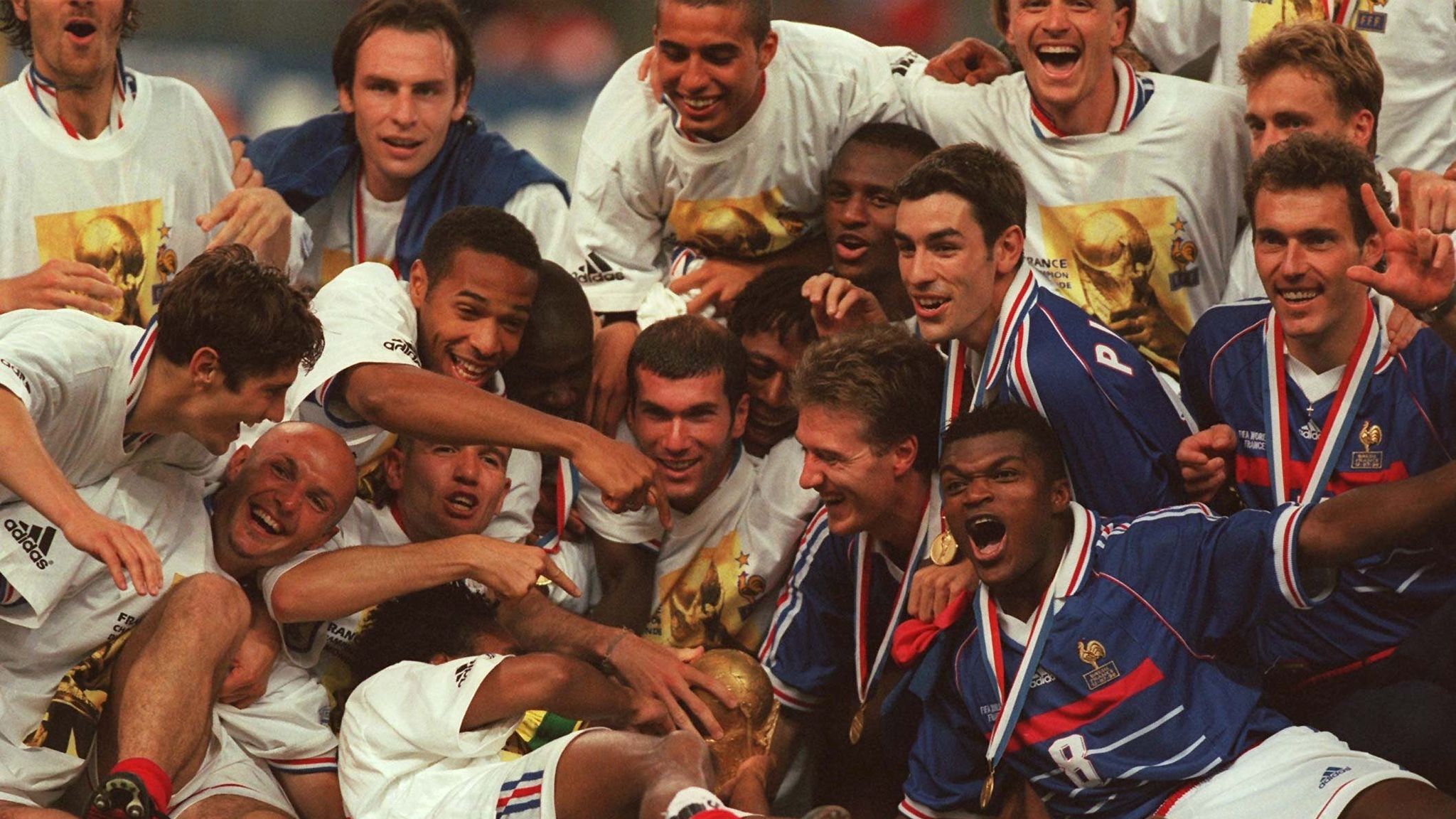
France secured its first-ever FIFA World Cup title by defeating the defending champions, Brazil, 3-0 on July 12, 1998. Two first-half headers from Zinedine Zidane and a late breakaway goal by Emmanuel Petit sealed the victory at the Stade de France, marking a turning point in French sporting and social history.
The Context of the 1998 FIFA World Cup Final
The 1998 FIFA World Cup was a landmark tournament for several reasons. It was the first to feature 32 teams, and as the host nation, France faced immense pressure to perform on home soil. Before 1998, the French national team—nicknamed Les Bleus—had a checkered history in the competition, notably failing to qualify for the 1990 and 1994 editions. However, under the meticulous guidance of manager Aimé Jacquet, a new generation of players had been forged into a disciplined, defensively sound unit.
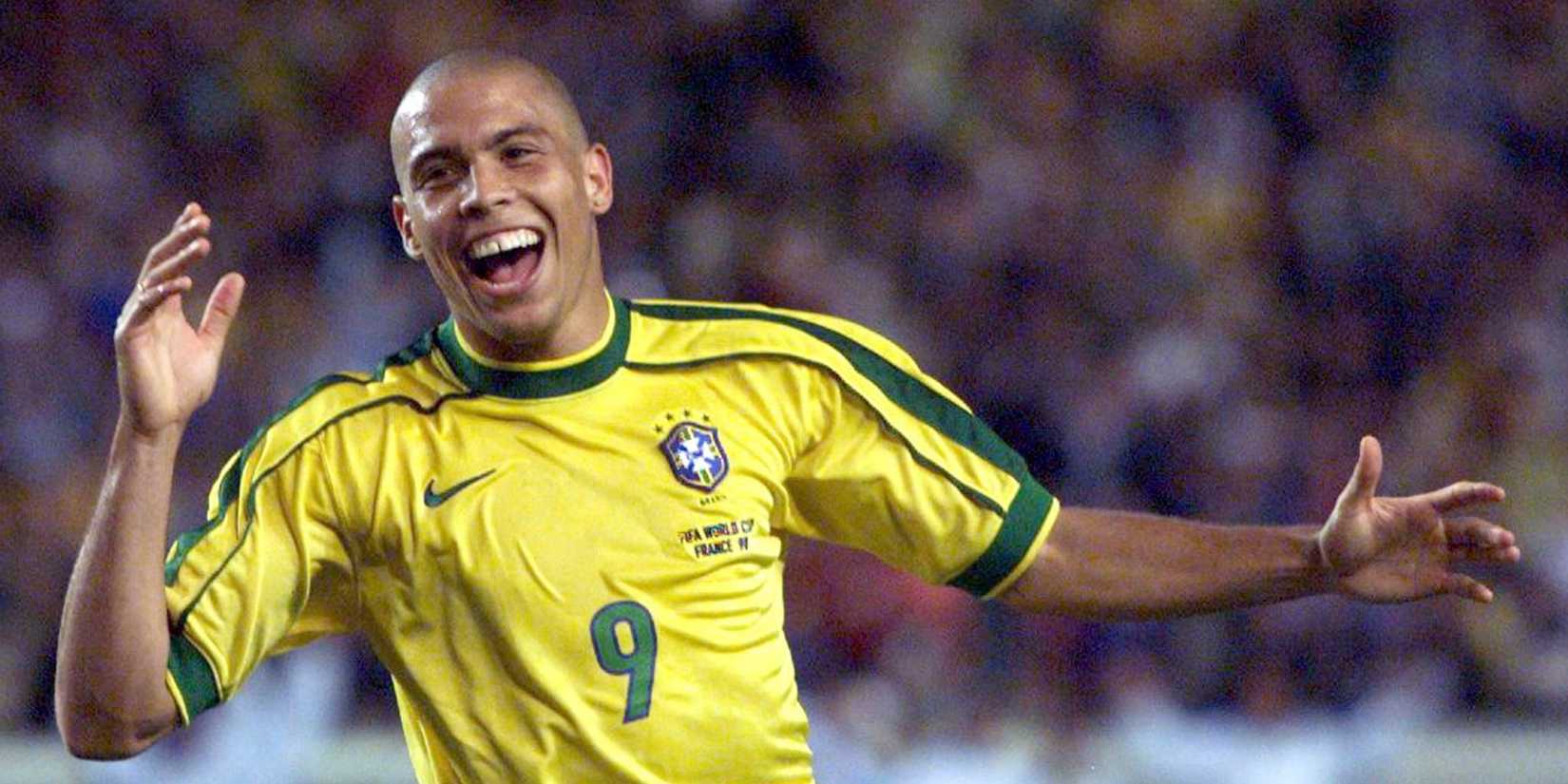
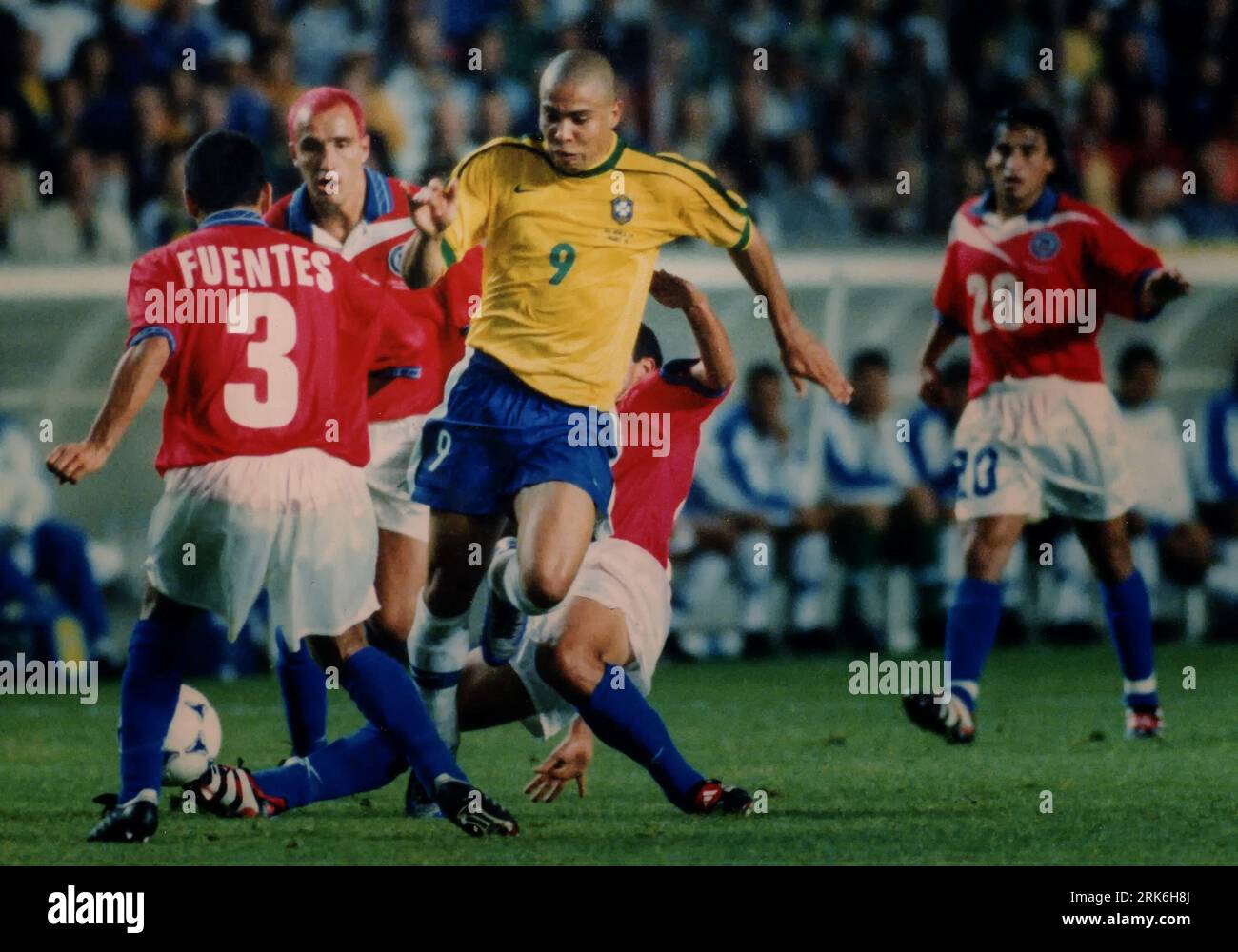
Brazil arrived at the final as the heavy favorites. They were the defending champions from USA '94 and possessed the world’s most formidable attacking talent in Ronaldo, often referred to as O Fenômeno. Brazil’s path to the final had been marked by flair and high-scoring matches, whereas France had grinded through the knockout stages with a narrow golden goal victory against Paraguay, a penalty shootout against Italy, and a come-from-behind win against Croatia.
By the time the final kicked off in Saint-Denis, the match was framed not just as a sporting contest, but as a clash of philosophies: the tactical pragmatism and defensive organization of Europe versus the expressive, individualistic brilliance of South America.
The Ronaldo Mystery: Pre-Match Drama
The hours leading up to the final remain among the most controversial in sports history. When the official team sheets were first released to the media, the name of Ronaldo was sensationally missing from the Brazilian starting lineup. Edmundo was listed in his place. Rumors swirled through the Stade de France regarding the star striker’s health.
It was later revealed that Ronaldo had suffered a convulsive fit or seizure in the team hotel earlier that afternoon. Despite being rushed to a clinic for neurological tests, he was cleared to play just 45 minutes before kickoff and was reinstated into the starting eleven. However, the psychological impact on the Brazilian squad was profound. The team appeared distracted and sluggish, and Ronaldo himself played the match as a shadow of the player who had dominated the tournament up to that point.
Tactical Breakdown: How Aimé Jacquet Neutralized Brazil
Aimé Jacquet’s tactical approach is often cited by coaching experts as a masterclass in preparation. Jacquet identified that Brazil’s primary strength—their marauding full-backs, Cafu and Roberto Carlos—was also their greatest vulnerability. By playing a 4-3-2-1 formation (the "Christmas Tree"), France crowded the midfield and forced Brazil’s playmakers to operate in congested spaces.
The Midfield Shield
The French midfield "trio of steel"—Didier Deschamps, Christian Karembeu, and Emmanuel Petit—was instructed to disrupt the supply lines to Rivaldo and Leonardo. By winning the battle in the center of the pitch, France prevented Brazil from establishing their trademark rhythm. Deschamps, the captain, acted as the tactical anchor, while Petit provided the box-to-box energy required to transition from defense to attack.
Exploiting Set-Pieces
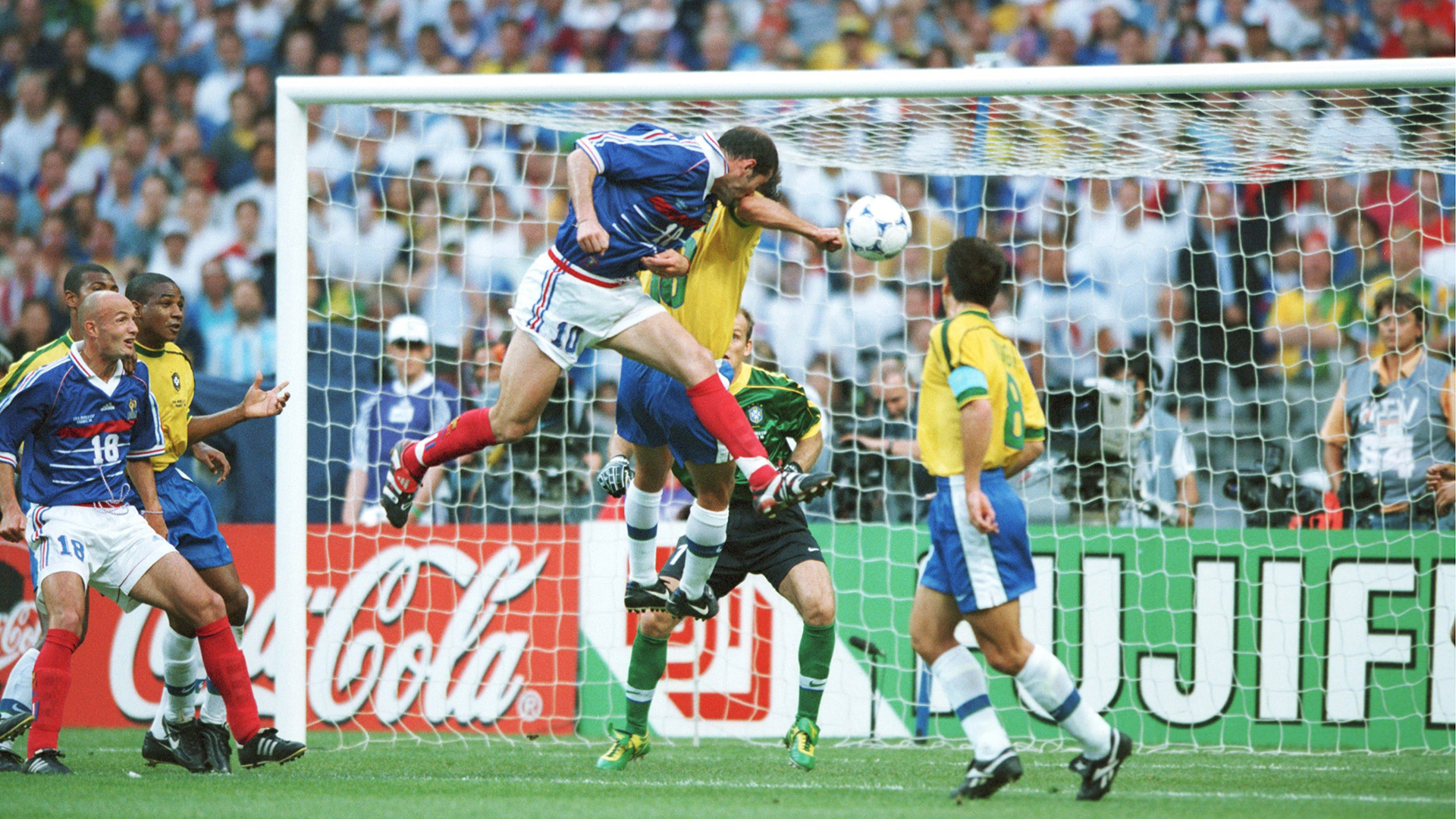
Jacquet had noted Brazil’s weakness in defending set-pieces, particularly their zonal marking system which often left gaps at the near and far posts. He specifically instructed his players to target these areas. This preparation bore fruit in the 27th minute when Petit delivered a corner that Zinedine Zidane met with a powerful header to open the scoring.
The Match Chronology: Zidane’s Ascendance
The final began with France showing unexpected offensive intent. While Brazil looked for Ronaldo to ignite their attack, it was Zidane who dictated the tempo.
- 27th Minute: France earned a corner on the right wing. Emmanuel Petit swung a precise ball into the six-yard box. Zidane, despite not being known as a prolific header of the ball, outjumped the Brazilian defense to beat goalkeeper Claudio Taffarel.
- 45th Minute+: Just before the halftime whistle, France earned another corner, this time from the left. Youri Djorkaeff delivered the cross, and Zidane once again found space to head the ball into the net.
- The Second Half: Brazil attempted to rally, introducing Denílson to add more width. They created several chances, including a close-range effort from Ronaldo that Fabien Barthez bravely blocked.
- 68th Minute: France faced a crisis when veteran defender Marcel Desailly received a second yellow card and was sent off. Playing with ten men for the final twenty minutes, France retreated into a deep defensive block.
- 90th Minute+: As Brazil pushed everyone forward in a desperate attempt to score, France launched a classic counter-attack. Patrick Vieira played a through-ball to Emmanuel Petit, who raced clear and slotted the ball past Taffarel to make it 3-0.
Defensive Excellence and the "Leboeuf Factor"
While Zidane took the headlines for his goals, France’s victory was built on a historic defensive performance. The backline of Lilian Thuram, Bixente Lizarazu, and Frank Leboeuf (filling in for the suspended Laurent Blanc) was impenetrable.
Leboeuf, who was often viewed as the weak link heading into the final due to his lack of game time compared to Blanc, performed flawlessly against the world’s best attackers. The French defense's ability to maintain its shape even after Desailly’s dismissal demonstrated the high level of tactical discipline Jacquet had instilled. Behind them, goalkeeper Fabien Barthez provided a commanding presence, coming off his line to intercept crosses and organizing the defense with vocal authority.
Key Statistics and Match Details
The following table summarizes the technical details of the 1998 World Cup Final.
| Category | France | Brazil |
|---|---|---|
| Final Score | 3 | 0 |
| Goal Scorers | Zidane (27', 45+1'), Petit (90+3') | None |
| Total Shots | 15 | 12 |
| Shots on Target | 5 | 6 |
| Corners | 3 | 9 |
| Possession | 48% | 52% |
| Yellow Cards | 4 (Desailly x2, Deschamps, Karembeu) | 1 (Junior Baiano) |
| Red Cards | 1 (Marcel Desailly) | 0 |
| Venue | Stade de France, Saint-Denis | - |
| Attendance | 80,000 | - |
Socio-Cultural Impact: "Black-Blanc-Beur"
The 1998 victory transcended the world of sports. In the 2026 retrospective, historians still point to this match as a pivotal moment for French national identity. The team was famously dubbed the "Black-Blanc-Beur" (Black, White, and North African) squad, representing the multi-ethnic fabric of modern France.
Players like Zidane (of Algerian descent), Desailly (born in Ghana), and Patrick Vieira (born in Senegal) became symbols of a successful, integrated Republic. On the night of the victory, over a million people gathered on the Champs-Élysées, chanting "Zizou President." While the social cohesion sparked by the win was later challenged by political shifts in the following decades, the 1998 final remains the definitive example of how football can serve as a unifying force for a nation.
Legacy in 2026: The Foundation of French Dominance
As of 2026, the 1998 triumph is viewed as the "Big Bang" of French football. It provided the blueprint for the nation's subsequent successes, including the 2000 European Championship, the 2018 World Cup win, and their consistent presence in major finals.
The victory led to massive investment in the national football academy at Clairefontaine and established a coaching lineage that continues to this day. Didier Deschamps, the captain of the 1998 squad, went on to become the longest-serving manager in the team’s history, bridging the gap between the legends of '98 and the stars of the 21st century like Kylian Mbappé.
For Brazil, the 1998 final was a traumatic event that led to a national inquiry into the health of Ronaldo and the influence of sponsors on team selection. Though they would recover to win the World Cup in 2002, the 3-0 loss remains their heaviest defeat in a World Cup final.
FAQ
Why did Ronaldo play poorly in the 1998 final?
Ronaldo suffered a medical emergency, reported as a convulsion or seizure, just hours before the match. Although he was physically cleared to play by doctors, he lacked his usual explosiveness and coordination. The psychological distress felt by his teammates, who witnessed the event, also contributed to the team's lackluster performance.
Who was the Man of the Match in the 1998 World Cup Final?
Zinedine Zidane was the undisputed Man of the Match. His two goals in the first half effectively decided the contest and cemented his reputation as one of the greatest players of his generation. His performance shifted the narrative of his career, proving he could deliver on the biggest stage under extreme pressure.
How many World Cups has France won since 1998?
Following the 1998 victory, France won its second World Cup title in 2018, defeating Croatia 4-2 in the final. They also reached the finals in 2006 (losing to Italy on penalties) and 2022 (losing to Argentina on penalties), establishing themselves as the most consistent international team of the last 30 years.
What was the significance of the "Black-Blanc-Beur" slogan?
The slogan referred to the diverse ethnic backgrounds of the French players. "Black" represented players of African descent, "Blanc" represented white players, and "Beur" was a slang term for those of North African (Maghreb) descent. It symbolized a dream of racial harmony and national unity in France through the lens of sporting success.
Where is the Stade de France located?
The Stade de France is located in Saint-Denis, just north of Paris. Built specifically for the 1998 World Cup, it remains the national stadium of France and continues to host major international football matches, rugby tournaments, and athletics events.
Practical Recommendation for Football Historians
To truly understand the tactical nuances of France's 1998 triumph, it is recommended to study the official FIFA match archives or documentaries such as Les Yeux dans les Bleus, which provide behind-the-scenes access to the French locker room during the tournament. Analyzing the defensive shape of the French team during the final 20 minutes when they were down to ten men offers invaluable insights into the importance of positional discipline and mental resilience in high-stakes environments.