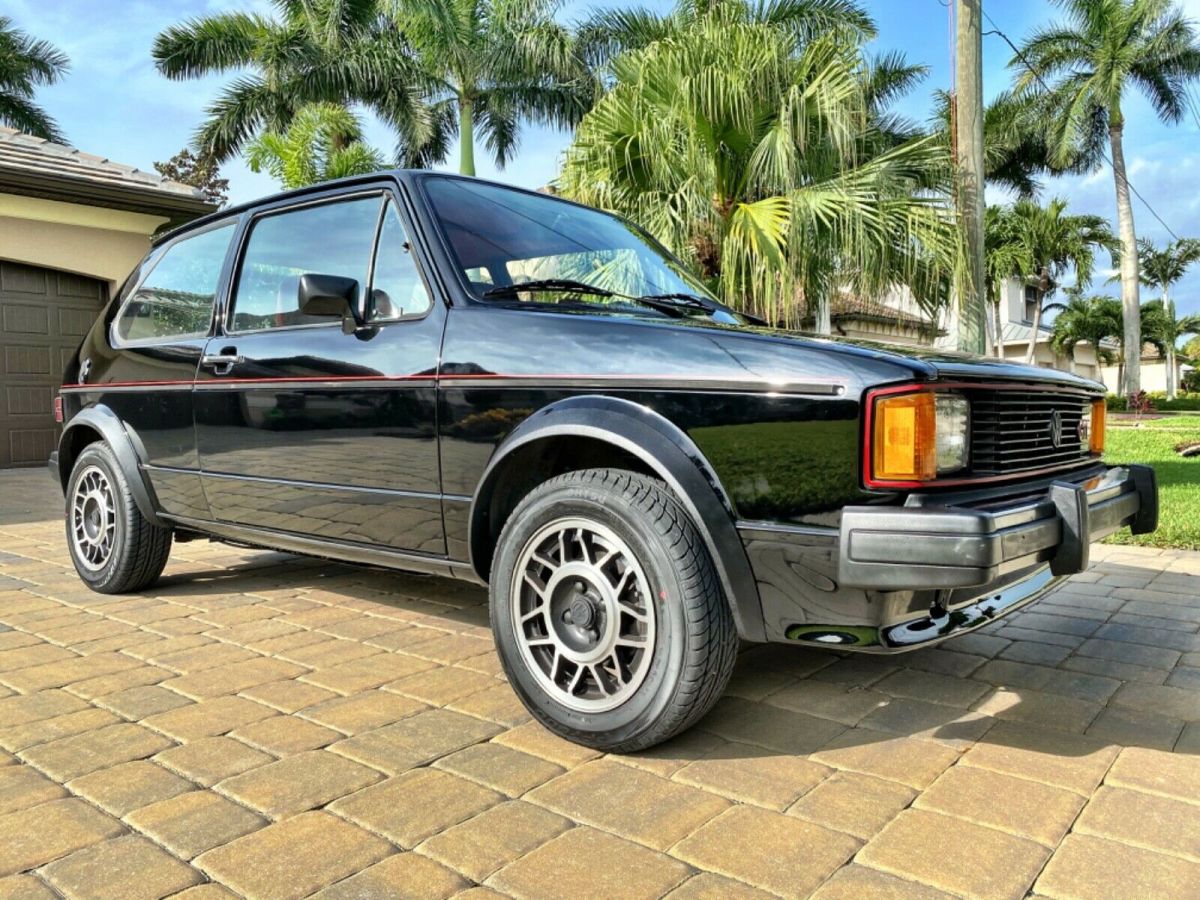
The 1984 Volkswagen Rabbit GTI represents the pinnacle of the first-generation (Mk1) performance hatchbacks in North America. As the final production year for the Westmoreland, Pennsylvania-built Rabbit, it combined a lightweight chassis with a Bosch-injected 1.8-liter engine, delivering a purist driving experience that remains a benchmark for the "hot hatch" segment in 2026.
The Evolution of a Legend: From Golf to Rabbit GTI
The story of the 1984 Volkswagen Rabbit GTI is inextricably linked to the birth of the hot hatch movement. While Europe received the original Golf GTI as early as 1976, North American enthusiasts had to wait until 1983 for a domestic version. Volkswagen of America, operating out of the Westmoreland plant, initially focused on economy-minded Rabbits that many critics felt were "too soft" for the brand's European heritage.
By 1984, the GTI had matured into its most refined Mk1 form. It served as a bridge between the analog simplicity of the 1970s and the burgeoning performance technology of the 1980s. This model year is particularly sought after by collectors in 2026 because it represents the last "true" light-weight Rabbit before the larger, heavier Mk2 Golf platform took over for the 1985 model year.
The 1984 GTI was not about raw horsepower; it was about the synergy of weight, gearing, and suspension tuning. With a curb weight of approximately 1,850 to 1,900 pounds, the vehicle didn't require massive power to feel fast. It provided a tactile, mechanical connection to the road that modern electronic-assisted vehicles struggle to replicate.
Technical Specifications and Performance
At the heart of the 1984 Rabbit GTI is the legendary 1.8-liter "JH" code engine. This naturally aspirated, inline-four cylinder engine featured a cast-iron block and an aluminum alloy head. While its output figures might seem modest by 2026 standards, its power delivery was perfectly suited to the car's nimble frame.
The JH 1.8L Powerplant
The engine utilized the Bosch K-Jetronic (CIS - Continuous Injection System) mechanical fuel injection. Unlike modern electronic systems, CIS is a purely mechanical/hydraulic system that relies on air-flow measurement to determine fuel delivery.
- Horsepower: 90 hp @ 5,500 rpm
- Torque: 105 lb-ft @ 3,250 rpm
- Compression Ratio: 8.5:1
- Valvetrain: SOHC, 2 valves per cylinder, mechanical lifters (in most '84 models)
The "JH" engine was a significant upgrade over the earlier 1.6-liter units found in standard Rabbits. It provided a much-needed torque boost, allowing the GTI to pull strongly out of corners. Enthusiasts often point to the mechanical lifters used in the 1984 model as a preferred feature for high-RPM reliability, though they do require periodic manual adjustment.
Transmission and Gearing
The 1984 GTI was equipped with a close-ratio five-speed manual transmission (the 020 gearbox). The gearing was specifically designed to keep the engine in the meat of its power band. While this resulted in higher engine speeds during highway cruising—often exceeding 3,500 RPM at 70 mph—it gave the Rabbit an urgency in city driving and on twisty backroads that its competitors lacked.
Suspension, Braking, and Handling Dynamics
What truly separated the GTI from a standard Rabbit was its chassis tuning. Volkswagen engineers stiffened the suspension significantly to handle the increased performance demands.
Suspension Architecture
The front end utilized MacPherson struts with a 17.5mm stabilizer bar. The rear featured a semi-independent torsion beam axle with an integrated 20mm stabilizer bar. By 1984, the damping rates were finely tuned to provide a firm ride that communicated road textures without being unnecessarily harsh.
One of the most famous traits of the 1984 GTI is its tendency to "lift a leg" during hard cornering. Due to the stiff rear anti-roll bar and the short wheelbase, the inside rear wheel will frequently lose contact with the pavement during aggressive turn-ins, a characteristic that remains a badge of honor for Mk1 enthusiasts.
Braking and Wheels
The 1984 GTI featured 9.4-inch vented front disc brakes and rear drum brakes. While rear drums are considered antiquated today, in a car this light, they provided adequate stopping power for the era. The car sat on the iconic 14x6-inch "Snowflake" alloy wheels, wrapped in 185/60HR14 Pirelli P6 tires (originally). These wheels have become one of the most recognizable design elements of the era.
Exterior and Interior Design: Functional Aesthetics
The 1984 Rabbit GTI followed the "less is more" philosophy. It avoided the excessive plastic cladding found on many 80s performance cars, opting instead for subtle cues that signaled its intent.
Visual Identity
The exterior was distinguished by:
- Blacked-out Trim: The chrome found on standard Rabbits was replaced with satin black trim around the windows, bumpers, and grille.
- Red Grille Outline: A signature GTI trait that persists on modern Volkswagens.
- Front Spoiler: A deeper air dam to reduce lift at speed.
- Fender Flares: Small black plastic flares to accommodate the wider 14-inch wheels.
Available colors for the 1984 model year in the US included Black, Royal Red, Cashmere White, and Diamond Silver Metallic.
The Driver-Centric Cockpit
Inside, the 1984 GTI was a masterclass in ergonomics. The most striking feature was the heavily bolstered sport seats, often upholstered in a distinctive red or blue striped velour (depending on the exterior color). These seats provided excellent lateral support during spirited driving.
The "Golf Ball" shift knob is perhaps the most famous interior detail, a nod to the car's European "Golf" nomenclature. The dashboard featured an additional three-gauge cluster in the center console, providing vital information such as oil temperature, a clock, and a voltmeter—features usually reserved for much more expensive sports cars.
1984 Volkswagen Rabbit GTI Technical Data Table
| Feature | Specification |
|---|---|
| Engine Type | Inline 4-Cylinder SOHC (Code JH) |
| Displacement | 1,780 cc (1.8 Liters) |
| Fuel System | Bosch K-Jetronic (CIS) |
| Power Output | 90 hp @ 5,500 rpm |
| Peak Torque | 105 lb-ft @ 3,250 rpm |
| Transmission | 5-Speed Manual (Close-Ratio 020) |
| Curb Weight | ~1,850 lbs |
| 0-60 MPH | 9.7 Seconds (est.) |
| Top Speed | 108 mph |
| Brakes (Front/Rear) | 9.4-inch Vented Discs / 7.1-inch Drums |
| Wheels | 14x6-inch "Snowflake" Alloys |
Restoration and Ownership in 2026
Owning a 1984 Rabbit GTI in 2026 is a commitment to preserving automotive history. While the cars are mechanically simple, finding one that hasn't been succumbed to rust or poor modifications is increasingly difficult.
The Challenge of Rust
The Westmoreland-built Rabbits were notorious for rust issues, often more so than their German-built counterparts. Potential buyers must carefully inspect the following "danger zones":
- Strut Towers: Rust here can compromise the vehicle's structural integrity.
- Windshield Cowl: Clogged drains lead to water pooling, which rots the firewall.
- Floor Pans: Specifically where the seat rails attach.
- Rear Beam Mounts: A critical safety area that requires thorough cleaning and inspection.
Maintaining the CIS Injection
The Bosch K-Jetronic system is reliable if driven regularly, but it does not tolerate sitting. In 2026, finding technicians who truly understand how to calibrate a fuel distributor or warm-up regulator (WUR) is becoming a challenge. Modern fuels with high ethanol content can also be hard on the original rubber seals and fuel lines; many owners now opt for ethanol-free gasoline or upgraded fuel system components to prevent corrosion.
Parts Availability
While many mechanical parts are shared with other Volkswagen models of the era, GTI-specific trim pieces—such as the red-stripe grille, the snowflake center caps, and the original seat fabric—are becoming exceptionally rare. The "New Old Stock" (NOS) market is highly competitive, and prices for original interior components have reached record highs in recent years.
Market Value and Collectibility
As of 2026, the 1984 Rabbit GTI has transitioned from a "budget classic" to a legitimate blue-chip collectible. The market values "survivor" cars—those that remain unmodified and retain their original paint—most highly.
- Concours Condition: $35,000 – $50,000+
- Excellent (Driver Plus): $20,000 – $30,000
- Fair (Restoration Candidate): $8,000 – $15,000
The increase in value is driven by Gen X and Millennial collectors who view the GTI as the definitive car of their youth. Its inclusion in major automotive auctions and high-profile sales on platforms like Bring a Trailer has solidified its status as an investment-grade vehicle.
Common Myths and Misconceptions
Myth: The 1984 GTI is slow because it only has 90 horsepower. In reality, horsepower is only half the story. The power-to-weight ratio and the extremely short gearing mean the GTI feels significantly faster in "real world" driving than the numbers suggest. It was designed for "B-road" blasting, not drag strips.
Myth: All 1984 Rabbits are GTIs. This is a common error. Volkswagen sold thousands of standard Rabbits (L, LS, and Diesel models) in 1984. A genuine GTI must have the "JH" engine, the 5-speed close-ratio box, the specific suspension, and the "17" or "GTI" designation in the VIN.
Myth: German-built Rabbits are better than Westmoreland builds. While there are minor differences in plastic quality and wiring, the North American GTI was a specific product designed for this market. The "Westy" GTI has its own unique charm, including the square headlights which many enthusiasts now prefer over the European round lights for their period-correct 80s aesthetic.
Frequently Asked Questions
What is the most common mechanical issue with the 1984 GTI?
The most frequent issue is related to the fuel system, specifically the CIS (Continuous Injection System). If the car sits for long periods, fuel gums up the tiny orifices in the fuel distributor. Vacuum leaks are also common; because the CIS system relies on precise air pressure, even a small crack in a rubber hose can cause rough idling or stalling.
Can the 1984 Rabbit GTI be used as a daily driver in 2026?
While it is mechanically capable, it is generally not recommended as a primary daily driver. It lacks modern safety features like airbags and ABS, and its small stature makes it vulnerable in modern traffic. Furthermore, the rising value and scarcity of parts make it better suited for weekend drives and car shows.
How do I verify if a 1984 Rabbit is a genuine GTI?
Check the VIN. A 1984 GTI built in the USA will start with "1VW". Look for the "JH" engine stamp on the block and the "2H" or "9A" transmission codes. Additionally, look for the factory-installed oil cooler and the rear anti-roll bar, which were exclusive to the GTI and some higher-trim models.
Is it easy to find tires for the original 14-inch Snowflake wheels?
Finding high-performance 185/60R14 tires has become more difficult in 2026, as most modern manufacturers have moved toward 16-inch and larger sizes. However, specialty manufacturers like Coker Tire and certain boutique European brands still produce period-correct performance rubber for the vintage market.
What is the "JH" engine code, and why does it matter?
The JH code signifies the 1.8L high-compression engine specifically tuned for the North American GTI. It features a larger throttle body and a more aggressive camshaft than the standard 1.8L engines found in the Jetta or Quantum of the same era.
Final Recommendation for Enthusiasts
If you are looking to acquire a 1984 Volkswagen Rabbit GTI, prioritize structural integrity over mechanical perfection. Engines and transmissions can be rebuilt, but a rusted-out unibody is a financial sinkhole. Look for a car with a documented service history and, if possible, the original interior. The '84 GTI isn't just a car; it's a time capsule that captures the exact moment the automotive world realized that practical hatchbacks could also be genuinely thrilling to drive. For the purest experience, keep the modifications period-correct and enjoy the "lifting leg" handling that made this car a legend.