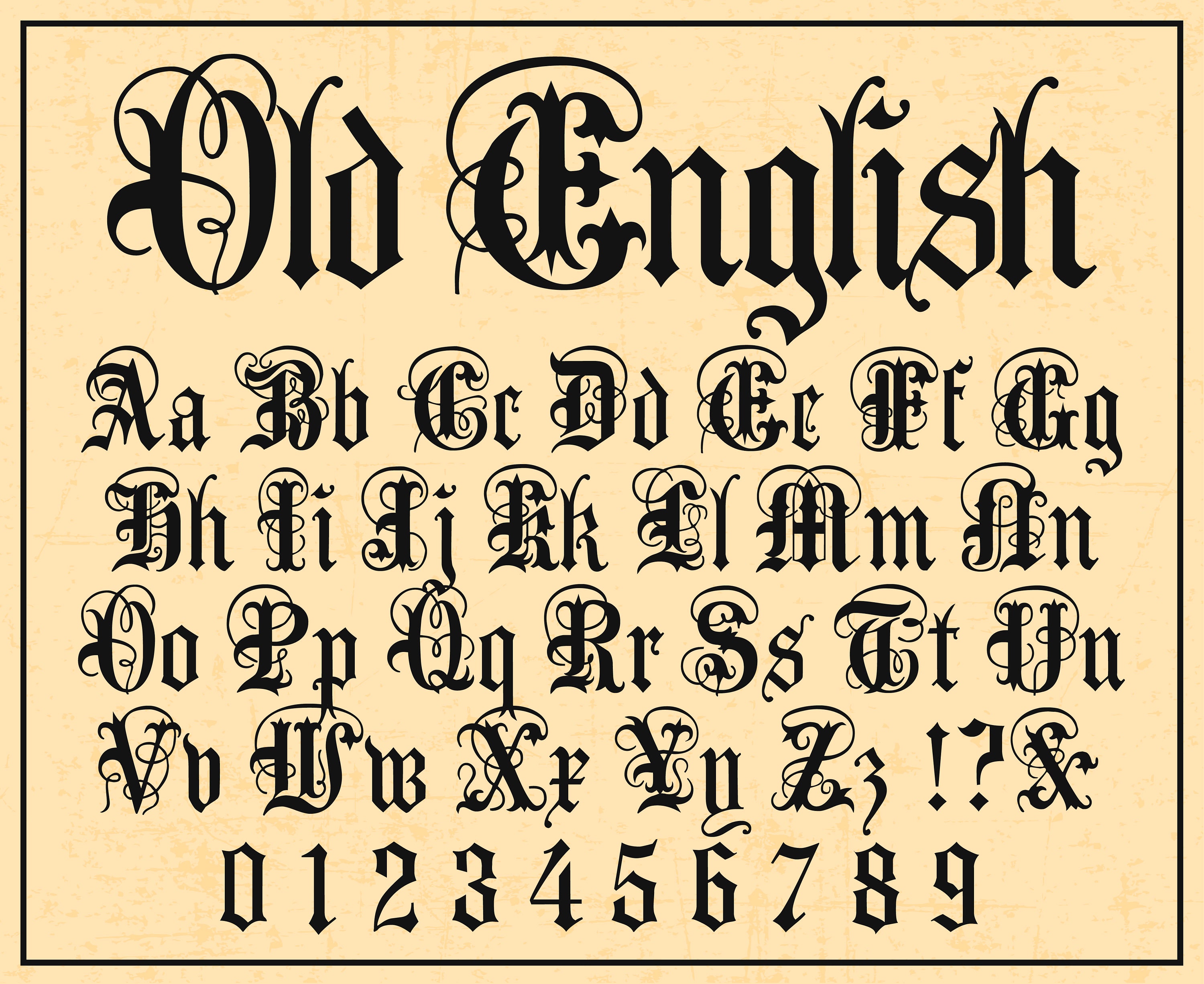
The 12 English letters—E, T, A, O, I, N, S, R, H, D, L, and U—represent the most frequently occurring characters in the English language. Collectively, these twelve letters account for approximately 80% of all written text, forming the foundational core of linguistic structure, cryptographic analysis, and modern communication systems.
The Significance of Letter Frequency in 2026
In the landscape of 2026, understanding the distribution of the English alphabet is more than a linguistic curiosity; it is a technical necessity. While the English alphabet consists of 26 letters, their distribution is famously uneven. This phenomenon, known as letter frequency, dictates how we design keyboards, how compression algorithms like Huffman coding function, and how large language models (LLMs) tokenized data for processing.
The "top 12" letters—E, T, A, O, I, N, S, R, H, D, L, and U—are the workhorses of the language. They appear in almost every sentence and provide the skeletal structure for most English words. This distribution remains remarkably stable across various corpora, from formal academic papers to informal digital messaging, though slight variations occur depending on the specific medium.
Deep Dive into the Top 12 Letters
Each of these twelve letters possesses unique historical, phonetic, and structural properties that contribute to their high frequency.
1. The Letter E
The letter E is the undisputed champion of the English alphabet, typically appearing with a frequency of about 12-13%. Its dominance is attributed to several factors:
- The Silent E: English orthography uses the "silent e" to modify the sounds of preceding vowels (e.g., "rate" vs. "rat").
- Common Suffixes: Many of the most common English suffixes, such as -ed, -er, and -est, rely on the letter E.
- The Definite Article: The most common word in English, "the," contains E.
2. The Letter T
As the most frequent consonant, T appears in approximately 9% of text. It is a cornerstone of English structure, primarily due to its role in common digraphs like th, st, and nt. The high frequency of "the," "that," "to," and "it" ensures T's position near the top of the list.
3. The Letter A
A is the second most common vowel, appearing about 8% of the time. It is a fundamental building block of both Germanic and Latinate words. As an indefinite article and a common component of prefixes (like a- or ad-), A is indispensable to the flow of English sentences.
4. The Letter O
The letter O serves as a vital vowel in many short, functional words such as "of," "on," "for," and "to." Its frequency (around 7.5%) is sustained by its versatility in forming diphthongs (like ou and oi) and its presence in numerous Latin-derived roots.
5. The Letter I
I follows closely behind O. Beyond its role in common words like "is," "in," and "it," it is the only letter that functions as a capitalized first-person singular pronoun. This unique grammatical role, combined with its use in the -ing suffix, maintains its high statistical presence.
6. The Letter N
N is the second most common consonant. Its frequency is driven by its role in negation ("not," "no," "never") and its presence in common endings like -ion, -en, and -ance. In 2026, computational analysis shows that N is particularly prevalent in technical and legal documentation due to these suffix structures.
7. The Letter S
The letter S is the primary driver of plurality in English. Furthermore, it marks the third-person singular present tense of verbs (e.g., "he runs"). Its frequency is also bolstered by its presence in common clusters like st, sp, and sh.
8. The Letter R
R is a "liquid" consonant that appears frequently in both Germanic and Romance components of English. It is a staple of common prefixes (re-, pre-) and suffixes (-er, -or). Its behavior as a rhotic or non-rhotic sound depending on dialect does not change its visual frequency in written text.
9. The Letter H
H owes its high rank (9th) largely to the "the" family of words and the sheer volume of digraphs it forms: th, sh, ch, and ph. Without these combinations, H would likely fall much lower in the rankings.
10. The Letter D
The letter D is essential for the past tense of regular verbs (-ed). It also appears in high-frequency functional words like "and," "did," and "do." Its role as a dental stop makes it a phonological anchor in the language.
11. The Letter L
L is common in adjectives ending in -ful or -al and adverbs ending in -ly. It also appears in many foundational Germanic words (like "all," "light," and "land"). Its frequency remains stable at approximately 4%.
12. The Letter U
Rounding out the top twelve, U is the least common of the "common" letters but remains essential. Its frequency is helped by the "qu" pairing and its presence in common words like "but," "up," and "use."
Technical Specifications and Comparative Analysis
The following table outlines the approximate frequency and characteristics of these 12 letters based on modern 2026 linguistic datasets.
| Letter | Approx. Frequency (%) | Classification | Primary Linguistic Role |
|---|---|---|---|
| E | 12.70% | Vowel | Modifier, Suffixes, Common words |
| T | 9.06% | Consonant | Functional words, Digraphs (th) |
| A | 8.17% | Vowel | Article, Root vowel |
| O | 7.51% | Vowel | Prepositions, Diphthongs |
| I | 6.97% | Vowel | Pronoun, Continuous tense (-ing) |
| N | 6.75% | Consonant | Negation, Nominalization (-ion) |
| S | 6.33% | Consonant | Plurals, Verb conjugation |
| R | 5.99% | Consonant | Prefixes/Suffixes, Liquids |
| H | 6.09% | Consonant | Digraph contributor |
| D | 4.25% | Consonant | Past tense, Functional words |
| L | 4.03% | Consonant | Adverbial and Adjectival endings |
| U | 2.76% | Vowel | Root vowel, "qu" digraph |
Note: These percentages may vary slightly depending on the source (e.g., Oxford English Corpus vs. Google Books Ngram Viewer).
Historical Evolution of Letter Frequency
The dominance of these 12 letters is not accidental; it is the result of centuries of linguistic blending. English is a West Germanic language that was heavily influenced by Old Norse, Norman French, and Latin.
The Germanic Core
The high frequency of T, H, E, and S can be traced back to Old English. Functional words like "the," "that," "is," and "and" are Germanic in origin. Because these "glue words" are used in almost every sentence, the letters they contain naturally rise to the top of the frequency charts.
The Latin and French Overlay
The influx of French and Latin words after 1066 brought a wealth of words containing A, I, R, and L. Many of our more complex or academic terms come from these sources. The suffix -tion (using T, I, O, N) is a classic example of Latin influence that significantly boosts the frequency of those specific letters.
Printing and Standardization
The advent of the printing press in the 15th century and the subsequent standardization of spelling fixed many of these frequencies in place. Early printers sometimes adjusted spellings to justify margins (adding or removing an 'e'), but the core frequency of the 12 most used letters has remained remarkably consistent since the Early Modern English period.
Cryptography and the "ETAOIN SHRDLU" Phenomenon
Historically, the study of the 12 most common letters was the foundation of cryptanalysis. Before the era of modern digital encryption, frequency analysis was the primary method for breaking simple substitution ciphers.
The sequence "ETAOIN SHRDLU" became famous among typesetters and journalists. It was the approximate order of frequency of the twelve most common letters in English. Linotype machine operators used this sequence to fill out a line of type when a mistake was made, as these keys were arranged in order of frequency on the left side of the machine.
In 2026, while frequency analysis is no longer sufficient to break AES-256 encryption, it remains a vital tool in:
- Steganography: Hiding data within text without changing the statistical profile of the letters.
- Language Identification: Algorithms can identify a language simply by checking if the frequency of the letters matches the expected "top 12" profile for English.
- Data Compression: Systems like Gzip and Brotli use the known frequency of these letters to represent common characters with fewer bits, saving massive amounts of storage space globally.
Practical Applications in Design and Technology
The distribution of these 12 letters has profound implications for how humans interact with technology.
Keyboard Layouts
The QWERTY layout, designed in the 19th century, was actually intended to separate common letter pairs (like 'st') to prevent mechanical jams. However, modern ergonomic layouts like Dvorak or Colemak are designed specifically to place the top 12 letters on the "home row" to reduce finger travel and increase typing speed.
User Experience (UX) and Web Design
Web designers use letter frequency to optimize "readability" and "scannability." For example, when designing a font, a typographer must ensure that the most common letters (E, T, A) are the most legible, as they will be seen more than any others.
Search Engine Optimization (SEO)
In the realm of SEO as of 2026, the frequency of letters plays a subtle role in URL optimization and readability scores. Algorithms often penalize "keyboard smashing" or strings of text that do not conform to natural linguistic distributions, as these are markers of spam or low-quality AI-generated content.
Common Misconceptions About English Letters
Despite their ubiquity, there are several common myths regarding the 12 most common letters.
- The "S" Plurality Myth: Many people assume S is the most common letter because of plurals. While S is very common, E and T surpass it because they are integrated into the core function of both nouns and verbs.
- The Rarity of Vowels: While there are only 5-6 vowels, they occupy 5 of the top 12 spots. This means that nearly half of all letters written are vowels, despite them making up only 20% of the alphabet's variety.
- Consistency Across Languages: The top 12 letters in English are not the same as in other languages. For instance, in Spanish, the letter A often challenges E for the top spot, and Z is far more common than it is in English.
Frequently Asked Questions
Which of the 12 letters is the most common at the start of words?
While E is the most common letter overall, the letter T is the most common starting letter for English words. This is primarily due to the massive volume of words like "the," "to," "that," and "this." The letter O and A also frequently appear as starters, but T remains the leader in most corpora.
Why is 'U' included in the top 12 but not 'C' or 'M'?
The letter U is a vowel, and English is a vowel-heavy language in terms of frequency. While C and M appear in many words, the structural requirement for vowels in every syllable ensures that U stays ahead. However, in some specialized scientific texts, C may occasionally overtake U due to the prevalence of Latin-based terminology.
Has the frequency of these letters changed with digital slang?
As of 2026, studies of digital communication (social media, instant messaging) show that while certain letters like Y or K (in "okay" or "lol") have seen slight bumps, the core 12 remain dominant. The underlying grammar of English—even in its most informal form—still relies on the same functional "glue" words.
How does frequency analysis help in accessibility?
For users who rely on eye-tracking software or single-switch input devices, the interface is often mapped so that the most common letters (the top 12) are the easiest and fastest to select. This significantly increases the words-per-minute (WPM) capability for individuals with motor impairments.
Does the "top 12" list change in British vs. American English?
The differences are negligible. While British English uses "u" in words like "colour" (increasing U's frequency slightly) and American English uses "z" in "organization" (barely moving the needle for Z), the overall statistical distribution of the top 12 letters remains virtually identical across all major dialects.
Final Recommendation for Users
For those involved in data science, content creation, or cryptography, it is essential to treat these 12 letters as the "critical infrastructure" of the English language. When optimizing content for 2026 search algorithms or designing user interfaces, prioritize the legibility and placement of these high-frequency characters. Understanding the ETAOIN SHRDLU hierarchy allows for better compression, faster communication, and a deeper understanding of how English functions as a global system.