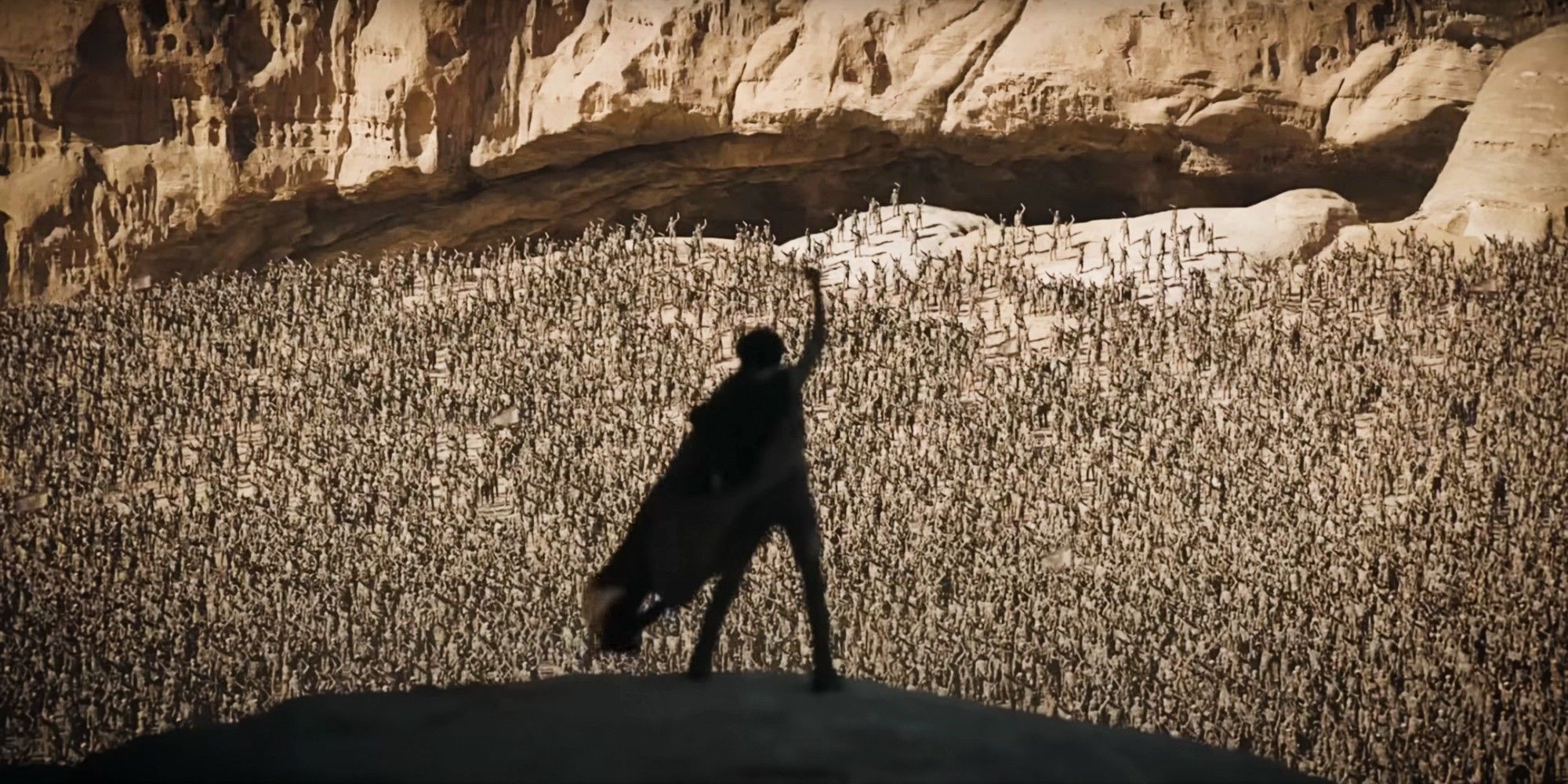
The conclusion of Denis Villeneuve’s Dune: Part Two marks a pivotal shift in the science fiction genre, moving from the traditional "hero’s journey" toward a sobering examination of religious fanaticism, geopolitical manipulation, and the tragic loss of agency. By cementing Paul Atreides’ transition from a vengeful exile into the messianic Lisan al-Gaib, the film recontextualizes the entire narrative as a warning against absolute power rather than a celebration of triumph.
The Ascension of the Kwisatz Haderach
The final act of Dune: Part Two is not merely an ending; it is the culmination of a centuries-long breeding program conducted by the Bene Gesserit. Paul Atreides’ final confrontation with the Padishah Emperor Shaddam IV and the Harkonnen forces serves as the mechanism by which he seizes the Golden Lion Throne. However, the narrative impact lies in the "how" of this victory. Paul does not win through honor or traditional martial prowess alone; he wins by weaponizing the "Arrakis problem"—the fundamentalist fervor of the Fremen—which he knows will lead to a holy war across the known universe.
For the audience, this shift is jarring. Throughout the film, we are conditioned to root for Paul as he integrates into Fremen culture and seeks justice for his family. The ending forces a reconsideration of these motivations. Paul’s acceptance of his title as the Prophet is a calculated political move to control the Fremen, effectively transforming their spiritual hope into his own military engine. This subversion of the "chosen one" trope is the film’s most significant narrative contribution.
The Tragedy of Chani: A Moral Compass Lost
While the political machinations of the Great Houses dominate the screen, the ending of Dune: Part Two is anchored by the perspective of Chani. Unlike the source material by Frank Herbert, where Chani is a more traditionally devoted partner, the film’s version of the character serves as the primary audience proxy for skepticism. Her refusal to kneel to Paul at the conclusion represents the last vestige of the Fremen’s autonomy.
Her departure into the desert serves as a powerful narrative device. By having Chani reject Paul’s ascent, the story separates the "legend" of the Muad'Dib from the reality of Paul Atreides. Her heartbreak is not just personal; it is societal. She recognizes that the person she loved has been consumed by the cold, necessary cruelty of the Kwisatz Haderach. This divergence provides a necessary critique of Paul’s actions, ensuring the audience understands that his victory is a catastrophe for the very people he claims to lead.
Geopolitical Realignments and the Holy War
The narrative impact of the ending extends far beyond the borders of Arrakis. By forcing the Great Houses to acknowledge his legitimacy, Paul creates a power vacuum that he immediately fills with the threat of total destruction. The "Holy War"—or Jihad—is no longer a distant possibility; it is the inevitable next step.
The film intentionally leaves the viewer in a state of unease. We see the armada of the Great Houses hovering in orbit, unwilling to submit, yet terrified by Paul’s threat to destroy the Spice source. This creates a state of "Mutually Assured Destruction" that mirrors historical nuclear deterrents. The narrative suggests that peace in this universe is impossible; there is only the transition from one form of tyranny to another. Paul’s victory is absolute, yet it feels entirely pyrrhic.
Comparative Narrative Structures: Book vs. Film
To understand the weight of the film’s conclusion, it is helpful to look at how it handles the source material’s themes. Villeneuve chooses to accelerate certain emotional beats to heighten the tragedy.
| Element | Literary Presentation | Cinematic Presentation |
|---|---|---|
| Paul’s Motivation | Driven by visions and revenge | Driven by necessity and fear of visions |
| Chani’s Role | Supportive, internal monologues | Skeptical, external opposition |
| The Holy War | Anticipated as a future threat | Portrayed as an immediate inevitability |
| The Ending | Focused on political stability | Focused on the onset of global trauma |
The cinematic interpretation leans heavily into the idea that Paul is a "cautionary tale." By making the Jihad feel like an active, impending force—signaled by his visions and his cold demeanor toward his mother, Lady Jessica—the film ensures the ending leaves a lasting impact on the viewer’s perception of "heroism."
The Role of Lady Jessica and the Bene Gesserit
Lady Jessica’s transformation throughout the film serves as the catalyst for the ending. Her manipulation of the Fremen through the Missionaria Protectiva—the seeding of myths and legends—is the bedrock upon which Paul stands. The ending brings their relationship into a chilling new light. Mother and son are no longer allies in a struggle for survival; they are the architects of a nightmare.
When Paul asserts himself as the leader, Jessica’s cold satisfaction confirms that the Bene Gesserit’s long-term plan has succeeded, but at the cost of the humanity of the individuals involved. The narrative impact here is deeply cynical: it suggests that the "Kwisatz Haderach" is a product of social engineering, not divine destiny. The ending confirms that the "miracle" is merely a well-executed lie that has spiraled out of control.
FAQ: Understanding the Finale
Why does Chani leave at the end of the film? Chani leaves because she realizes Paul is no longer the man who fell in love with her. By choosing to manipulate the Fremen prophecy to gain power, he has betrayed the core values of the people she represents. Her departure symbolizes the loss of authentic Fremen culture to the machinery of religious fanaticism.
Is Paul Atreides a villain in the context of the ending? The film avoids labeling Paul as a traditional villain, but it clearly paints him as a tragic figure who chooses the "lesser of two evils" while knowing it leads to mass death. He is a monster of necessity, created by the circumstances of his birth and the influence of his mother.
What does the ending imply about the future of Arrakis? The ending implies that Arrakis will become the center of a brutal empire. The Fremen, once protectors of the desert, are now the primary weapons of a universe-spanning war. The ecology of the planet will likely be transformed to serve the needs of the new regime, effectively ending the life that the Fremen previously cultivated.
Why did Paul threaten the spice production? Spice is the "currency" of the universe, essential for space travel and the power of the Guild. By threatening to destroy it, Paul holds the entire civilization hostage. It is a strategic checkmate that forces the Great Houses to recognize his throne, proving he has fully embraced his role as a tyrant.
How does the film’s ending set up potential future installments? The ending leaves the political landscape in total chaos. The Great Houses are in opposition, the Emperor is shamed, and the Fremen are emboldened. It provides a clear setup for the "Messiah" stage of the saga, where the consequences of Paul’s choices begin to tear his own control apart.
Final Considerations and Next Actions
The ending of Dune: Part Two is a masterclass in narrative subversion. By focusing on the cost of power, the film forces the audience to reconcile with the fact that their protagonist has become the antagonist of history. To fully appreciate this, consider re-watching the film with a focus on Paul’s eyes during his speech to the Fremen; notice how his humanity seems to evaporate as he realizes he has finally achieved the influence he once dreaded.
For viewers seeking to understand the deeper layers of this conclusion, reading Frank Herbert’s Dune Messiah is the logical next step. While the film ends on a note of rising conflict, the subsequent narrative dives into the internal psychological decay that follows such a rapid and violent rise to absolute power. If you wish to analyze the film further, prioritize studying the visual language of the final scenes—the sharp contrasts between the blinding sun of Arrakis and the dark, shadow-filled throne room—which mirror Paul’s own internal descent into darkness.