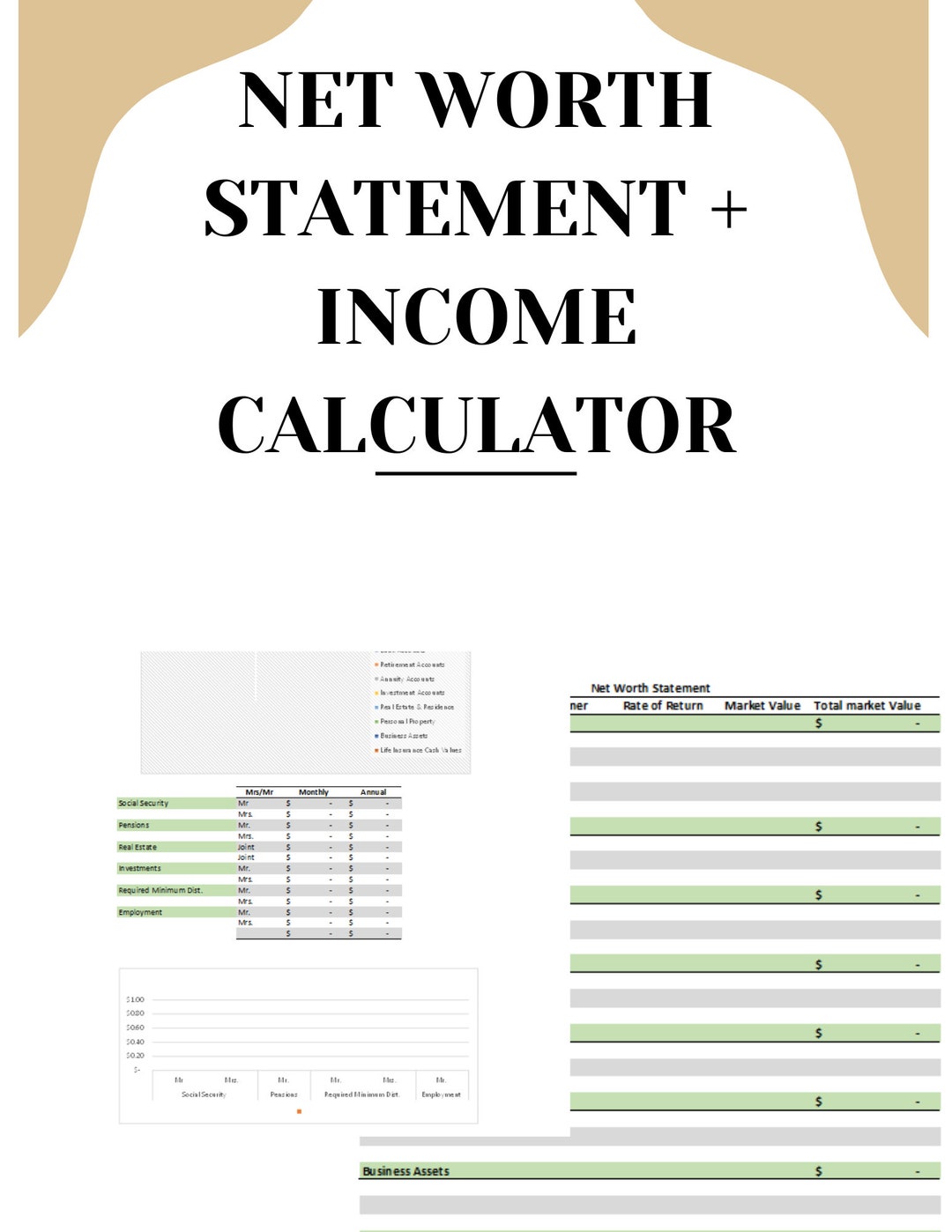
A net worth statement, financial goals, and a budget are all part of a financial plan. A comprehensive financial plan serves as a roadmap that evaluates your current financial standing, identifies your future objectives, and outlines the specific strategies required to bridge the gap between where you are and where you want to be.
Financial planning is not a one-time event but a continuous process of managing your money to achieve life goals. In 2026, with shifting tax landscapes and evolving investment vehicles, understanding how these individual components integrate is more critical than ever. Each element—the net worth statement, the goals, and the budget—provides a different perspective on your economic health, allowing for informed decision-making and long-term stability.
The Net Worth Statement: Your Financial Snapshot
The net worth statement, often referred to as a statement of financial position, is the foundation of any financial plan. It provides a clear, objective look at your financial health at a specific point in time. By calculating the difference between what you own (assets) and what you owe (liabilities), you arrive at your "net worth," which is a primary metric for tracking wealth accumulation over years or decades.
Understanding Assets
Assets are resources with economic value that you own or control. In a professional financial plan, assets are typically categorized by their liquidity and purpose:
- Liquid Assets: These include cash, checking accounts, savings accounts, and money market funds. These are your most accessible funds, typically used for emergency reserves or short-term spending.
- Invested Assets: This category includes brokerage accounts, retirement accounts like 401(k)s or IRAs, and health savings accounts (HSAs). In 2026, many investors also include diversified digital assets or private equity holdings here.
- Personal Use Assets: These are tangible items that provide utility but may not be easily converted to cash, such as your primary residence, vehicles, and jewelry. While these contribute to your net worth, they are rarely used to fund daily retirement expenses.
Calculating Liabilities
Liabilities are your financial obligations or debts. Understanding these is essential for managing interest costs and debt-to-income ratios.
- Current Liabilities: Debts due within one year, such as credit card balances, utility bills, or the current portion of a personal loan.
- Long-Term Liabilities: Debts that extend beyond one year, most notably mortgages, student loans, and auto loans.
The formula is simple: Total Assets - Total Liabilities = Net Worth. A positive net worth indicates that you have more value in assets than you owe in debt. A negative net worth, common among recent graduates or those with high debt loads, serves as a signal that the financial plan must prioritize debt reduction and asset building.
Setting Financial Goals: The Roadmap for Success
If the net worth statement shows you where you are, financial goals determine where you are going. Without clear objectives, a financial plan lacks direction. Goals provide the motivation to stick to a budget and the criteria for choosing specific investment strategies.
The SMART Criteria in 2026
Effective financial goals should follow the SMART framework: Specific, Measurable, Achievable, Relevant, and Time-bound. For example, instead of saying "I want to save for retirement," a SMART goal would be: "I aim to contribute $22,500 annually to my 401(k) to reach a $1.5 million portfolio by age 65."
Categorizing Goals by Horizon
Financial planners categorize goals based on the time required to achieve them, which dictates the level of risk you can afford to take with the associated funds:
- Short-Term Goals (0-2 Years): Building an emergency fund, saving for a vacation, or paying off a small credit card balance. These funds should generally remain in low-risk, liquid accounts like high-yield savings.
- Intermediate-Term Goals (2-10 Years): Saving for a down payment on a home, funding a wedding, or starting a business. These may involve a mix of bonds and conservative equity investments.
- Long-Term Goals (10+ Years): Retirement planning and education funding (529 plans). Because of the longer time horizon, these goals often benefit from more aggressive, growth-oriented investment allocations.
In the current 2026 environment, goal setting must also account for the "sunset" of the Tax Cuts and Jobs Act (TCJA) provisions. With the return of higher individual tax brackets and lower standard deductions, many individuals are finding that their long-term retirement goals require higher gross savings to account for a larger projected tax bite in the future.
The Budget: Managing Your Monthly Cash Flow
A budget, or a cash flow statement, is the tactical component of a financial plan. It is the tool that ensures you have the surplus income necessary to fund the goals identified in the previous step. While the net worth statement is a "still photo" of your finances, the budget is the "movie"—it tracks the movement of money in and out of your household over a period of time.
The 50/30/20 Rule
A common and effective budgeting strategy is the 50/30/20 rule, which provides a balanced framework for modern cost-of-living challenges:
- 50% Needs: Essential expenses such as housing, groceries, utilities, and insurance.
- 30% Wants: Discretionary spending including dining out, entertainment, and hobbies.
- 20% Savings and Debt Repayment: This is the "fuel" for your financial plan. This portion goes toward retirement contributions, emergency fund building, and paying down high-interest debt.
Fixed vs. Variable Expenses
A robust budget distinguishes between fixed expenses (mortgage/rent, car payments) and variable expenses (entertainment, groceries). In 2026, many households have seen an increase in "subscription creep," where small, recurring digital costs can silently erode a budget. Reviewing these monthly is essential for maintaining the surplus needed for your broader financial goals.
How These Components Interact Within a Financial Plan
A financial plan is more than the sum of its parts. These three components—net worth, goals, and budget—work in a feedback loop to create financial momentum.
- The Budget Funds the Goals: Without a surplus in your monthly budget, you cannot save for your goals. If you find your goals are lagging, the budget is the first place you look to "find" more money by cutting discretionary spending.
- The Goals Drive the Net Worth: As you meet your goals—such as paying off a $30,000 student loan or investing $10,000 in a brokerage account—your net worth increases. Each goal achieved is a step toward a higher net worth and greater financial independence.
- The Net Worth Validates the Plan: Regularly updating your net worth statement allows you to see if your plan is working. If your net worth is stagnant despite a disciplined budget, it may indicate that your investment returns are too low or your debt interest rates are too high, requiring a pivot in your strategy.
| Component | Function | Frequency of Review | Key Metric |
|---|---|---|---|
| Net Worth Statement | Measures overall wealth and solvency. | Annually or Semi-Annually | Total Assets vs. Total Liabilities |
| Financial Goals | Provides direction and purpose. | Annually or upon life events | Progress toward specific milestones |
| Budget | Manages day-to-day cash flow. | Monthly | Surplus (Income - Expenses) |
Additional Elements of a Professional Financial Plan in 2026
While the net worth statement, goals, and budget are the core pillars, a professional-grade financial plan includes several other critical modules to protect and optimize your wealth.
Risk Management (Insurance)
A financial plan is only as strong as its weakest link. Risk management involves identifying potential threats to your financial stability—such as disability, death, or lawsuits—and mitigating them through insurance. This includes life insurance, disability insurance, and property/casualty coverage. In 2026, cybersecurity insurance and identity theft protection have also become standard considerations in a comprehensive plan.
Tax Planning
Effective tax planning is about more than just filing a return in April; it is about "tax-loss harvesting" in brokerage accounts, choosing between traditional and Roth retirement contributions, and understanding the tax implications of asset location. With the 2026 tax landscape seeing significant shifts in brackets and exemptions, proactive tax planning can save an individual tens of thousands of dollars over their lifetime. You can find updated tax rate schedules on the IRS official website.
Estate Planning
Estate planning ensures that your assets are distributed according to your wishes after your death. It involves drafting a will, establishing powers of attorney, and potentially creating trusts. Even for those with a modest net worth, estate planning is vital for naming guardians for minor children and avoiding the costly and public process of probate.
Investment Policy
Your investment policy dictates how your assets are allocated across stocks, bonds, and other vehicles based on your risk tolerance and time horizon. This section of the financial plan ensures that your portfolio is diversified enough to weather market volatility while remaining aggressive enough to meet your long-term goals. For more on diversification and investor protection, visit FINRA.
Common Pitfalls in Financial Planning
Despite having the right components, many people struggle to execute their financial plans. Recognizing these common mistakes can help you stay on track.
- Ignoring "Invisible" Debts: Many people forget to include deferred taxes (like those owed on a traditional 401k withdrawal) or "Buy Now, Pay Later" (BNPL) balances in their net worth statements, leading to an inflated sense of wealth.
- Setting Unrealistic Goals: If your budget only allows for $200 in monthly savings, setting a goal to buy a $500,000 home in two years is counterproductive. Goals must be anchored in the reality of your current cash flow.
- The "Set It and Forget It" Mentality: A financial plan is a living document. Inflation, changes in tax law (like those occurring in 2026), and major life events like marriage or career changes require you to revisit and adjust your plan.
- Focusing Solely on Returns: Many investors obsess over beating the market while ignoring high-interest debt or failing to have an adequate emergency fund. A balanced plan prioritizes stability before chasing high returns.
FAQs
What is the difference between a budget and a financial plan?
A budget is a specific tool used to track monthly income and expenses. A financial plan is a much broader document that includes a budget, but also encompasses net worth analysis, long-term goal setting, tax strategies, insurance needs, and estate planning. A budget tells you how you are spending today; a financial plan tells you how you will live tomorrow.
Why is net worth a better metric than income?
Income only measures how much money is coming in, but it doesn't account for how much is staying or how much debt you have. A person earning $250,000 a year with $300,000 in debt and zero savings has a negative net worth, while someone earning $60,000 with a paid-off home and $100,000 in savings is technically wealthier. Net worth is the true measure of financial independence.
How often should I update my financial plan?
You should review your budget monthly and your net worth statement at least once a year. However, your entire financial plan should be updated whenever you experience a significant life event, such as a change in employment, the birth of a child, a marriage or divorce, or a significant change in tax laws, which is a major factor for many in 2026.
Does a financial plan require a professional?
Not necessarily. Many people can create a basic financial plan using software and self-education. However, as your net worth grows and your tax situation becomes more complex, a Certified Financial Planner (CFP) can provide specialized knowledge in areas like tax-efficient withdrawal strategies and complex estate structures. You can verify a professional's credentials through the CFP Board.
Can I have a financial plan if I have a negative net worth?
Yes. In fact, a financial plan is arguably most important when you have a negative net worth. The plan will provide the specific debt-reduction strategies and budget adjustments needed to move your net worth into positive territory.
Practical Next Steps for Your Financial Plan
If you do not yet have a formal financial plan, the best way to start in 2026 is by gathering your data. Begin by listing every account you own and every debt you owe to create your first net worth statement. Next, track your spending for 30 days to establish a realistic budget based on current inflation and cost-of-living data. Finally, sit down and write out three specific goals: one for the next year, one for the next five years, and one for retirement.
By integrating these elements, you move from reactive money management to proactive wealth building. Remember that the goal of a financial plan isn't just to accumulate "numbers on a screen," but to provide the security and freedom to live the life you choose.