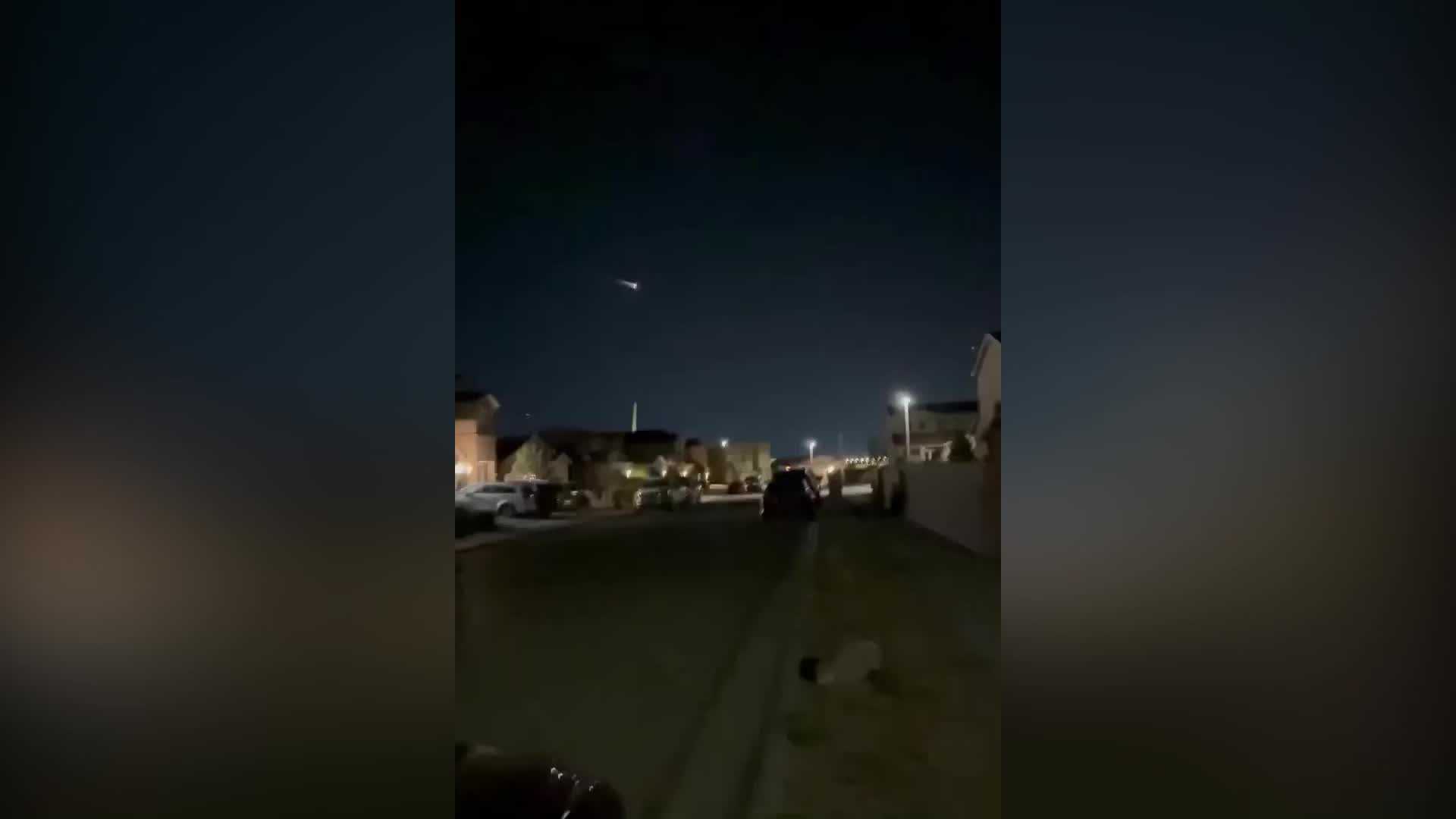
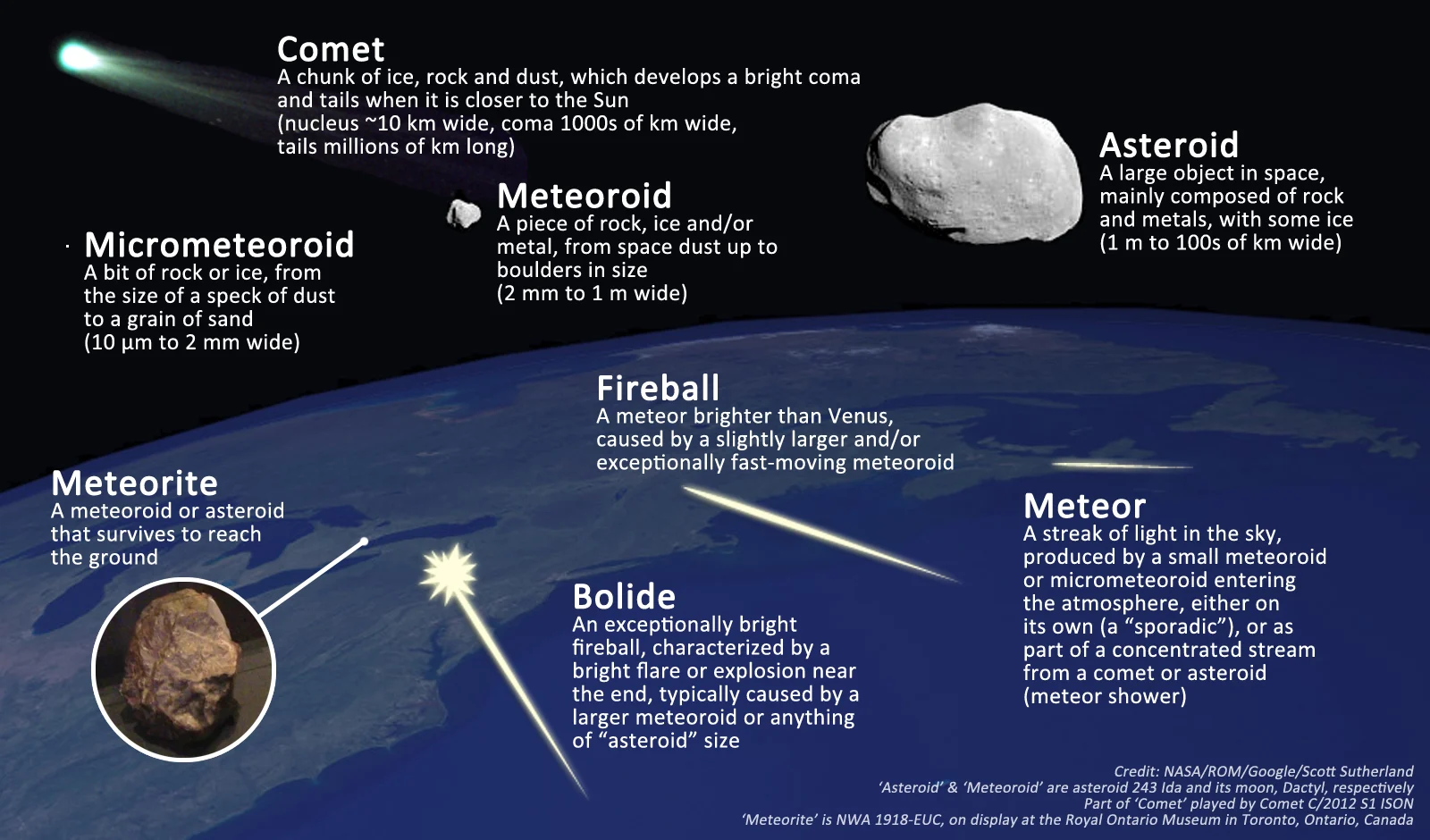
A fireball over Mexico City is typically a bolide, an exceptionally bright meteor that explodes in the atmosphere. These events occur when small asteroids or fragments enter Earth's atmosphere at high speeds, creating a brilliant flash and often a sonic boom. While visually startling, most burn up completely before reaching the ground.
The appearance of a fireball over a densely populated metropolitan area like Mexico City is a significant astronomical and social event. Given the city’s high altitude and the prevalence of surveillance and citizen-led monitoring, these occurrences are often captured from multiple angles, providing invaluable data for scientists. As of 2026, the study of these "near-Earth objects" (NEOs) has become a priority for regional space agencies and academic institutions like the National Autonomous University of Mexico (UNAM).
The Science of Atmospheric Entry: Fireballs and Bolides
To understand why a fireball lights up the night sky so dramatically, one must look at the physics of atmospheric entry. When a meteoroid—a piece of rocky or metallic debris in space—intersects with Earth’s orbit, it enters the atmosphere at velocities ranging from 11 to 72 kilometers per second (approximately 25,000 to 160,000 miles per hour).
From Meteoroid to Fireball
As the object hits the increasingly dense layers of the upper atmosphere, it compresses the air in front of it. This process, known as adiabatic compression, generates immense heat. This is not caused by friction alone, but by the rapid "ram pressure" at the leading edge of the object. The surface of the meteoroid begins to melt and vaporize, creating a glowing envelope of ionized gas known as plasma.
A "fireball" is technically defined by the International Meteor Organization (IMO) as a meteor that appears brighter than any of the planets (magnitude -4 or brighter). When a fireball ends its flight with an explosion or a significant terminal flash, it is classified as a bolide.
The Anatomy of the Flash
The brilliant light witnessed over Mexico City is the result of two simultaneous processes:
- Incandescence: The physical heating of the rock itself.
- Ionization: The stripping of electrons from atmospheric atoms (oxygen and nitrogen) and the meteor’s own vaporized material. When these electrons recombine with atoms, they release energy in the form of light.
The color of the fireball can often reveal its composition. For instance, a green tint suggests the presence of nickel or magnesium, while a reddish hue may indicate the presence of atmospheric nitrogen and oxygen being heated, or a slower-moving object.
Historical Context: Notable Events in Mexico City
Mexico City has been the backdrop for several high-profile fireball events, most notably the significant bolide of February 18, 2020. That event remains a primary case study for atmospheric scientists due to the sheer volume of high-definition footage captured by the "Webcams de México" network and thousands of smartphones.
| Date | Approximate Time | Visibility Region | Notable Features |
|---|---|---|---|
| Feb 18, 2020 | 20:18 CST | CDMX, Puebla, Tlaxcala, Edomex | Massive terminal flash; blue-white light. |
| May 19, 2021 | 01:30 CST | Central Mexico | Bright green trail; visible for several seconds. |
| Nov 21, 2023 | 18:45 CST | Mexico City, Morelos | Early evening sighting; fragmented during descent. |
| Jan 12, 2025 | 03:15 CST | CDMX, Hidalgo | High-altitude explosion; recorded by seismic sensors. |
The 2020 event was particularly significant because it occurred during the early evening when many residents were outdoors. It lit up the sky with a brightness comparable to a full moon, casting sharp shadows across the Zócalo and Paseo de la Reforma. Scientific analysis later suggested the object was likely a small asteroid fragment, a few meters in diameter, that disintegrated approximately 20 to 30 kilometers above the surface.
Why Mexico City is a Hotspot for Sightings
Geographical and urban factors make Mexico City a unique location for observing fireballs.
High Altitude and Thin Air
Situated at an average elevation of 2,240 meters (7,350 feet), Mexico City is "closer" to the sky than most major global capitals. The air is thinner, meaning there is less atmospheric interference and light scattering between the observer and the upper atmosphere where the meteor begins to glow. This often results in sightings that appear more vivid and "closer" than they would at sea level.
The Valley of Mexico Effect
The city is surrounded by mountains and volcanoes, such as Popocatépetl and Iztaccíhuatl. These high peaks provide excellent vantage points for automated sky-tracking cameras. Furthermore, the "bowl" shape of the valley means that a fireball appearing anywhere over central Mexico is likely to be visible to the millions of people living within the basin.
Technological Density
With a metropolitan population exceeding 22 million, the sheer density of cameras—ranging from security systems and traffic monitors to personal mobile devices—ensures that almost any significant atmospheric event is recorded from multiple perspectives. This allows researchers to use triangulation to determine the object's exact trajectory, speed, and potential impact site.
The Role of Monitoring Networks
The detection of a fireball over Mexico City is no longer left to chance. Several organizations and technologies work in tandem to document these events.
Webcams de México
This private network operates hundreds of high-quality cameras across the country. Because many are pointed at the volcanoes or the city skyline, they are perfectly positioned to capture fireballs. Their footage is often the first to go viral, providing the initial "time and place" data needed by scientists.
UNAM and National Observatories
The Institute of Astronomy at UNAM (Universidad Nacional Autónoma de México) utilizes specialized sensors and all-sky cameras. Following a major sighting, UNAM researchers often analyze the light curves (the variation of brightness over time) to estimate the mass and density of the object.
Seismic and Acoustic Detection
One of the most startling aspects of a large bolide is the sonic boom. When the object travels faster than the speed of sound, it creates a shockwave. In Mexico City, these waves are occasionally sensitive enough to be picked up by the seismic monitoring stations used for earthquake detection, such as those managed by the National Seismological Service (SSN).
Safety and Risks: Should Residents Be Concerned?
When a fireball "explodes" over a city, the immediate reaction is often fear of an impact or a terrestrial explosion. However, the risk to the public is remarkably low.
Atmospheric Protection
Earth’s atmosphere acts as a powerful shield. Most meteoroids that produce visible fireballs are the size of a pebble or a basketball. Even objects the size of a small car usually shatter under the intense pressure of the lower atmosphere. By the time any fragments reach the ground, they have reached "terminal velocity"—falling at roughly the same speed as a rock dropped from a tall building, rather than the hypersonic speeds they had in space.
The Risk of Broken Glass
The primary hazard from a very large bolide is not the rock itself, but the shockwave. As seen in the 2013 Chelyabinsk event in Russia, the pressure wave from a mid-air explosion can shatter windows. While Mexico City hasn't experienced an event of that magnitude in modern history, emergency protocols from the Civil Protection (Protección Civil) advise staying away from windows if a bright, prolonged flash is seen in the sky, as the sound wave may take several seconds or even minutes to arrive.
Identifying Meteorites: The Aftermath
If a fireball is large enough and the trajectory is favorable, fragments known as meteorites may reach the ground. Finding these in the urban sprawl of Mexico City is nearly impossible, but they are often sought in the surrounding rural areas of the State of Mexico, Puebla, or Hidalgo.
Scientific Value
Meteorites are "time capsules" from the early solar system. They contain pristine material that has not been altered by the geological processes of Earth. Scientists at the UNAM Institute of Geology study these fragments to understand the chemical composition of the asteroid belt and the history of planetary formation.
What to Do If You Find a Suspected Meteorite
If a fireball event is followed by reports of fallen rocks, there are specific characteristics to look for:
- Fusion Crust: A thin, dark, eggshell-like coating caused by the intense heat of entry.
- Regmaglypts: Small indentations on the surface that look like thumbprints in clay.
- Magnetism: Most meteorites contain metallic iron and will attract a strong magnet.
- Density: They are typically much heavier than ordinary terrestrial rocks of the same size.
Space Weather and Prediction
As of 2026, our ability to predict small fireball events remains limited. While we can track large asteroids (over 140 meters) with high accuracy, the small fragments (1 to 5 meters) that cause most fireballs are often too dim to be detected by telescopes until they are hours away from Earth.
The NASA Planetary Defense Coordination Office and international partners continue to improve ground-based radar and space-based infrared surveys to close this gap. For now, most fireballs over Mexico City remain "sporadic" meteors—unpredictable, beautiful, and a reminder of our planet's place in a dynamic solar system.
Comparison of Atmospheric Phenomena
It is common for residents to confuse fireballs with other man-made or natural events. The following table distinguishes these occurrences.
| Phenomenon | Duration | Appearance | Cause |
|---|---|---|---|
| Fireball/Bolide | 2–10 seconds | Rapid, brilliant flash; often leaves a smoke trail (persistent train). | Natural space debris (asteroidal or cometary). |
| Space Junk Re-entry | 30–90 seconds | Slower movement; breaks into multiple glowing sparks; often gold/orange. | Decommissioned satellites or rocket stages. |
| Iridium Flare | 5–20 seconds | Steady brighten and fade; no trail or explosion. | Sunlight reflecting off satellite antennas. |
| Weather Balloon | Constant/Slow | Stationary or drifting slowly; white or metallic. | High-altitude scientific instruments. |
Frequently Asked Questions
Why was there a loud boom after the light?
The boom is a sonic shockwave. Because the meteoroid is traveling many times the speed of sound, it creates a "cone" of pressurized air. Even if the meteor is 30 kilometers up, the sound eventually reaches the ground. Because light travels faster than sound, you will always see the flash before you hear the boom.
Can a fireball cause a fire on the ground?
It is extremely rare. By the time a meteorite reaches the ground, its outer layers have been ablated (blown away), and the core of the rock is often still freezing cold from its time in space. There are very few documented cases of a meteorite starting a fire; most "fireballs" that cause fires are actually downed power lines or flares.
Are these events becoming more frequent?
No. While it may seem like there are more fireballs over Mexico City, this is due to increased documentation. With more people owning high-quality cameras and 24/7 social media connectivity, events that would have gone unnoticed in the past are now captured and shared instantly.
Should I report a sighting?
Yes. Organizations like the American Meteor Society and the International Meteor Organization collect "fireball reports" from the public. Your location, the direction of the meteor, and its color help scientists determine its path and whether it may have dropped meteorites.
Is the green color dangerous?
No. The green light is usually a result of nickel or magnesium in the meteoroid vaporizing, or the ionization of oxygen in the Earth's atmosphere. It is a natural chemical reaction and does not indicate radiation or toxic materials.
Practical Recommendations for Observers
If you witness a fireball over Mexico City, follow these steps to contribute to citizen science:
- Note the Time: Accuracy to the minute is vital for syncing with satellite data.
- Determine Direction: Note where the meteor started and ended relative to landmarks (e.g., "It moved from the Latinoamericana Tower toward the Popocatépetl volcano").
- Listen for the Boom: Start a timer or check your watch when you see the flash. If you hear a boom later, the time delay helps scientists calculate the meteor's altitude.
- Check Social Media: Search for "Meteorito" or "Bolido" on platforms like X (formerly Twitter) or Instagram to see if others captured the event from different angles.