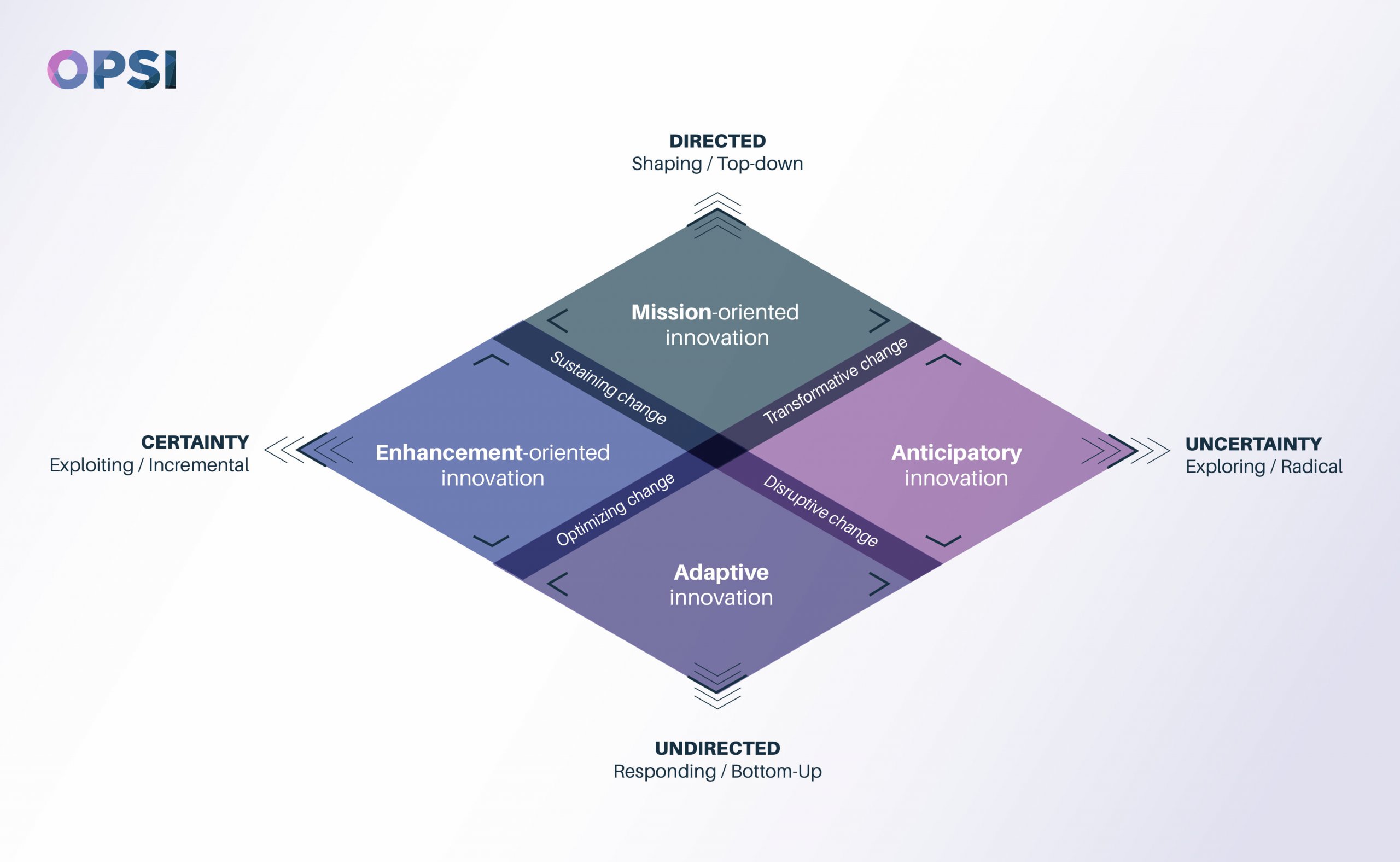
Finding a different word for innovation depends entirely on the context of your message. While "innovation" is often a catch-all term, more precise alternatives include breakthrough for scientific leaps, disruption for market-changing shifts, ingenuity for creative problem-solving, and modernization for updating existing systems. Choosing the right synonym ensures your communication is impactful and avoids the "buzzword fatigue" prevalent in 2026.
The Evolution of Innovation as a Term
By 2026, the word "innovation" has become one of the most frequently used—and arguably overused—terms in the professional lexicon. In corporate boardrooms, tech startups, and academic journals, the word is often deployed as a generic placeholder for any kind of change or improvement. However, as language evolves toward greater specificity, the need for precise alternatives has never been higher.
To communicate effectively, a writer or speaker must identify the nature of the change they are describing. Are you discussing a radical departure from the status quo, or a small, iterative improvement? Is the change driven by technological prowess, or is it a result of human resourcefulness? By selecting a more targeted word, you provide the listener with a clearer mental image of the value being created.
The historical weight of the word "innovation" stems from the Latin innovatus, meaning "to renew or change." While the core meaning remains the same, the modern application has split into several distinct semantic domains. Understanding these domains allows us to replace a tired cliché with a word that carries genuine weight and clarity.
Categorizing Synonyms by Strategic Context
To find the most appropriate replacement for innovation, it is helpful to categorize alternatives based on the specific type of progress being discussed. Each category carries its own nuances, technical implications, and emotional resonances.
1. Radical and Foundational Leaps
When a project or discovery changes the fundamental rules of a field, "innovation" feels too small. In these instances, you are looking for words that convey a sense of "first-of-its-kind" status.
- Breakthrough: This term is ideal for scientific and medical contexts. It implies that a significant barrier has been overcome, leading to a new level of understanding or capability. A breakthrough isn't just a new product; it is the moment the impossible becomes possible.
- Paradigm Shift: Popularized by Thomas Kuhn, this phrase refers to a fundamental change in approach or underlying assumptions. It is best used when an entire industry or academic field moves from one way of thinking to another.
- Revolution: Use this when the change is so profound that it overturns existing structures. In 2026, we often speak of the "Autonomous Revolution" rather than just autonomous innovation, because the impact affects every layer of society.
- Pioneering: This focuses on the act of being first. It describes the courage and initiative required to explore uncharted territory, whether in business, exploration, or social policy.
2. Market and Industrial Dynamics
In the business world, the word innovation is often used to describe how a company gains a competitive edge. However, the specific mechanism of that edge usually dictates a better word choice.
- Disruption: Specifically refers to an innovation that creates a new market and value network, eventually displacing established market-leading firms and products. As defined by Clayton Christensen, disruption is a specific process, not just "big change."
- Transformation: This is the preferred term for internal changes within an organization. "Digital transformation" or "cultural transformation" suggests a deep, structural evolution of how a company operates, rather than just the release of a new feature.
- Modernization: When the goal is to bring an outdated system up to current standards, modernization is the most accurate term. It implies the removal of technical debt and the adoption of contemporary best practices.
- Advancement: A neutral, professional term that suggests steady progress. It is frequently used in the context of "technological advancements," implying a step forward in a linear progression of capability.
3. Human-Centric and Creative Ingenuity
Sometimes, the value of a new idea isn't in its technological complexity, but in the cleverness and resourcefulness of the human mind behind it.
- Ingenuity: This word emphasizes the human quality of being clever, original, and inventive. It is often used when solving a problem with limited resources—the "MacGyver" approach to progress.
- Novelty: While sometimes used to mean "a trivial new thing," in a professional sense, novelty refers to the quality of being new, original, or unusual. In patent law, novelty is a strict requirement for a new invention.
- Originality: This highlights the fact that an idea was not copied or derived from others. It is a powerful word for the arts, branding, and creative strategy.
- Vision: Use this when the "innovation" is actually a long-term goal or a unique way of looking at the future. Leaders provide vision; engineers provide the implementation.
Iteration vs. Invention: Distinguishing the Degree of Change
One of the most common mistakes in professional writing is failing to distinguish between a "new thing" and a "better version of an old thing." Using the wrong word here can lead to accusations of hyperbole or a lack of technical understanding.
The Case for Iteration and Refinement
Most "innovations" in the corporate world are actually iterations. An iteration is a repetitive process where a product or service is improved through successive versions. In the software development cycles of 2026, iteration is the standard mode of operation.
Similarly, refinement suggests the polishing of an existing idea to make it more efficient, elegant, or user-friendly. If your company has taken an existing product and made it 10% faster, calling it a "revolutionary innovation" is inaccurate; calling it a "significant refinement" or an "optimization" demonstrates professional integrity.
The Case for Invention and Discovery
On the other side of the spectrum are invention and discovery. While innovation often involves the commercial application of an idea, invention is the act of creating the idea or device itself. Discovery is the act of finding something that already existed but was unknown (like a new chemical element or a biological process).
| Term | Context | Scope | Core Meaning |
|---|---|---|---|
| Iteration | Software / Design | Incremental | Improving an existing version through cycles. |
| Optimization | Engineering / Finance | Efficiency-focused | Making a process as effective as possible. |
| Invention | R&D / Engineering | Foundational | Creating a completely new device or method. |
| Refinement | Product / UX | Aesthetic / Functional | Polishing and removing flaws from a concept. |
| Synthesis | Strategy / Art | Combination-based | Combining existing ideas into a new whole. |
The "Buzzword" Problem: Why Specificity Matters in 2026
In 2026, the "Global Innovation Index" and similar metrics continue to track national progress, but at the individual and corporate level, "innovation" has reached a saturation point. When a word is used to describe everything from a new flavor of soda to a quantum computing breakthrough, it loses its ability to communicate specific value.
Using a different word for innovation is not just about expanding your vocabulary; it is about signal-to-noise ratio. In a crowded marketplace, specific language acts as a signal.
For example, if a startup claims to be "innovating the logistics space," a savvy investor might be skeptical. However, if that same startup claims to be "streamlining last-mile delivery through algorithmic optimization," the investor immediately understands the "How" and the "What." The latter phrasing replaces the abstract "innovation" with the concrete "streamlining" and "optimization."
Technical and Academic Alternatives
In specialized fields, "innovation" is often replaced by terms that carry specific regulatory or technical meanings.
- Novel Application: Frequently used in engineering and patent applications to describe using an existing technology in a way it was never intended to be used.
- State-of-the-Art: Not a synonym for the act of innovating, but a description of the highest level of development reached at any particular time.
- Heuristic Approach: Used in computer science and problem-solving to describe a method that is not guaranteed to be optimal but is sufficient for the immediate goals.
- Disruptive Technology: A term with heavy technical baggage, often cited in reports by the World Economic Forum to describe technologies like AI or blockchain that fundamentally alter industrial landcapes.
- Pioneer Species/Concepts: In biology and metaphorical sociology, "pioneering" refers to the first entities to inhabit a new niche.
How to Choose the Right Alternative
To select the perfect word, ask yourself the following three questions:
1. What is the scale of the change?
If it is small and incremental, use improvement, enhancement, or iteration. If it is large and ground-breaking, use breakthrough, revolution, or transformation.
2. What is the source of the change?
If it comes from clever thinking, use ingenuity or resourcefulness. If it comes from scientific research, use advancement or discovery. If it comes from combining two existing things, use synthesis or integration.
3. What is the intended outcome?
If the goal is to be more efficient, use optimization or streamlining. If the goal is to be new and different, use novelty or originality. If the goal is to replace the old, use modernization or disruption.
Practical Guidance for Implementation
When writing a report, speech, or marketing copy in 2026, follow these steps to phase out generic language:
- Audit your draft: Highlight every instance of the word "innovation" or "innovative."
- Contextualize: For each highlighted word, identify exactly what happened. Did a team work harder? Did a machine run faster? Did a new idea emerge?
- Swap and Expand: Replace the word with a more specific synonym. Then, add a sentence explaining the impact of that specific change.
- Check for Hyperbole: Ensure that words like "revolutionary" are reserved for truly life-changing events. Over-promising with high-intensity synonyms can damage your credibility.
Frequently Asked Questions
What is a formal word for innovation?
In formal or academic writing, advancement or augmentation are excellent choices. Advancement suggests a professional, forward-moving progress in a field, while augmentation suggests the improvement of a system’s capabilities. Another strong formal choice is transformation, particularly when discussing organizational or social change.
Can "invention" be used interchangeably with "innovation"?
Strictly speaking, no. An invention is the creation of a new product or process for the first time. Innovation is the practical implementation of an invention to make it usable or marketable. You can invent something in a lab that never sees the light of day; it only becomes an innovation once it is applied to solve a problem or meet a need.
What is a word for "innovation" in a creative context?
In the arts or creative industries, originality and vision are the most common substitutes. Creative professionals also frequently use freshness or novelty to describe ideas that break away from established tropes or conventions. Ingenuity is also highly valued as it highlights the artist's cleverness in execution.
Is "disruption" always a good synonym for innovation?
No. Disruption is a very specific type of innovation that starts at the bottom of a market and eventually moves up to unseat established leaders. Using "disruption" to describe a high-end luxury product improvement is technically incorrect. Disruption implies a change in the market structure, not just a better product.
What word should I use for small, constant innovations?
The most accurate terms for small, continuous improvements are continuous improvement, incremental progress, or iteration. In manufacturing and business management, the Japanese term Kaizen is often used to describe the philosophy of making small, daily changes that result in significant long-term growth.
How has the meaning of "innovation" changed in 2026?
By 2026, the focus has shifted from "innovation for the sake of novelty" to "purposeful innovation." Because of global challenges, terms like regenerative design, sustainable evolution, and resilience-building are often used in place of "innovation" to describe progress that accounts for environmental and social impacts.
Recommendation for Next Actions
If you are looking to refresh your professional vocabulary, start by identifying the "verbs" behind your "innovations." Instead of saying your team "innovated," say they reimagined a process, pioneered a new method, or overhauled a legacy system.
For your next major project description, avoid using the word "innovation" entirely. Force yourself to use three different, specific synonyms that describe the scale, the source, and the outcome of your work. This exercise will not only make your writing more compelling but will also help you clarify the actual value you are delivering to your audience.