Attorney lead generation companies serve as intermediaries that connect law firms with prospective clients actively seeking legal representation. These services operate by capturing consumer inquiries through digital marketing channels, filtering those inquiries based on practice area and geographic criteria, and delivering the lead information to firms for case evaluation and intake conversion.
The Mechanism of Legal Lead Generation
The legal industry relies heavily on trust and visibility. Prospective clients often begin their search for representation on search engines, social media, or dedicated legal directories. Lead generation companies intercept this initial search intent by deploying high-level search engine marketing (SEM), search engine optimization (SEO), and targeted social media advertising.
When a potential client interacts with an advertisement or a landing page managed by a lead generation agency, they typically complete a form or initiate a phone call. The agency then uses automated systems to verify that the prospective client meets specific baseline criteria—such as the legal issue being within the firm’s practice area and the client being located within the firm’s jurisdiction. Once verified, the "lead" is sold or routed to the subscribing law firm.
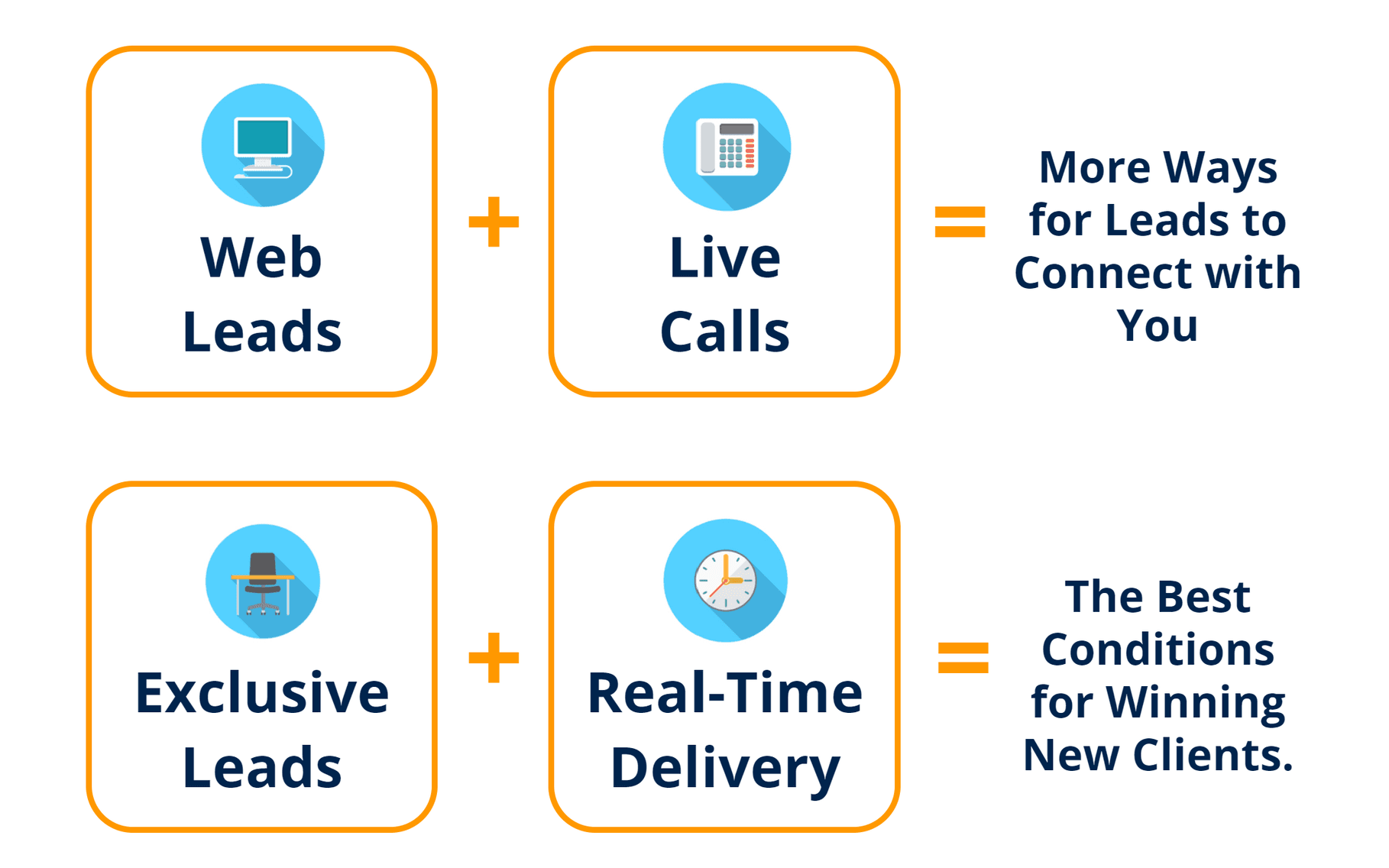
It is critical to distinguish between exclusive leads and shared leads. Exclusive leads are sold to a single firm, offering a higher probability of conversion. Shared leads are sold to multiple firms simultaneously, creating a competitive environment where the first firm to contact the lead often captures the client.
Evaluating Service Models: Pricing and Delivery
Law firms must analyze the fee structures employed by lead generation providers. These models significantly impact the return on investment (ROI) for the firm’s marketing budget.
- Cost-Per-Lead (CPL): In this model, the firm pays a fixed price for every qualified inquiry received. This is predictable but requires the firm to have a high-functioning internal intake team to convert those leads into retainers.
- Cost-Per-Acquisition (CPA): This is a performance-based model where the firm only pays when a signed retainer agreement is secured. While this minimizes risk for the law firm, providers often charge substantially higher premiums for CPA leads to offset the risk of non-conversion.
- Monthly Retainer/Managed Services: Some agencies manage the law firm’s entire digital footprint, including website SEO and paid media, for a flat monthly fee. This is less about buying individual leads and more about building a sustainable, long-term acquisition engine.
Prerequisites and Legal Ethics
Before engaging with a lead generation company, law firms must evaluate their internal capacity and adherence to ethical guidelines. Professional conduct rules regarding attorney advertising and fee-sharing vary significantly by state.
- Intake Capacity: Lead generation is only effective if the firm has the personnel to respond to inquiries immediately. Data suggests that lead conversion rates drop significantly if the potential client is not contacted within the first hour of their initial inquiry.
- Bar Association Rules: Many state bar associations have specific regulations regarding how attorneys may pay for referrals. In some jurisdictions, paying for "leads" is permissible, whereas paying for "referrals" (which may imply an endorsement or a split of fees) is strictly regulated or prohibited. Firms should consult their local ethics counsel to ensure the agency's business model aligns with local rules of professional conduct.
- Quality Control: Firms must have a system in place to audit leads. This includes verifying the accuracy of the contact information and ensuring the prospective client truly has a viable case. Requesting a "credit" policy from the vendor—where the firm is reimbursed for invalid, disconnected, or fraudulent leads—is a standard expectation in 2026.
Comparing Lead Generation Approaches
| Feature | Exclusive Lead Generation | Shared Lead Generation | Managed Digital Marketing |
|---|---|---|---|
| Pricing Model | Higher CPL | Lower CPL | Monthly Retainer |
| Competition | None (Single firm) | 2–5 competing firms | None (Owned assets) |
| Conversion Risk | Lower | Higher (Speed matters) | Variable (Performance-based) |
| Control | Moderate | Low | High |
| Primary Goal | Direct acquisition | Volume-based growth | Brand and lead sustainability |
Strategic Implementation Steps
To successfully integrate lead generation into your firm’s growth strategy, follow this structured process:
- Identify High-Value Practice Areas: Determine which cases drive the most profitability. For many firms, personal injury, mass torts, and estate planning are the primary targets for lead generation services due to their high lifetime client value.
- Vet Potential Vendors: Request case studies and client testimonials. Ask for the specific geographic areas they cover and their process for verifying lead quality. Ask specifically about how they handle spam or bot-generated inquiries.
- Run Pilot Campaigns: Do not commit to a long-term, high-budget contract immediately. Start with a smaller spend to test the quality of leads and the firm's ability to convert them.
- Optimize Intake Processes: The lead generation company is responsible for delivering the lead, but the law firm is responsible for closing the deal. Ensure that intake staff are trained to handle leads with a sales-oriented, empathetic approach.
- Continuous Performance Monitoring: Track the "Cost to Acquire a Client" (CAC) rather than just the "Cost per Lead." If a lead costs $100 but results in a $10,000 fee, the investment is highly effective. If it costs $100 and never leads to a signed case, the model requires adjustment.
Common Pitfalls to Avoid
Many law firms encounter issues because they approach lead generation as a "set it and forget it" solution. A frequent mistake is failing to integrate lead data into a Client Relationship Management (CRM) system. Without a CRM, follow-up calls are often missed, and data on which lead sources produce the highest ROI is lost.
Another common pitfall is ignoring the quality of the "creative." If the ads or landing pages managed by the vendor promise services that your firm does not actually provide, you will receive unqualified leads that frustrate both the intake staff and the prospective client. Always review the marketing materials the agency plans to use on your behalf.
Frequently Asked Questions
1. How quickly should a law firm follow up on a lead? Immediate follow-up is critical. Most lead generation agencies provide real-time delivery of leads. Contacting a lead within 5 to 15 minutes significantly increases the likelihood of scheduling a consultation, as prospects are often currently in the research phase and may be contacting multiple firms at once.
2. Are lead generation leads compliant with state bar ethics? It depends on your jurisdiction. While most states allow payment for "advertising" or "lead generation services," you must ensure the payment is a flat fee for the service and not a percentage of the legal fee. Always verify the agency’s contract terms against the specific advertising rules of your state.
3. What happens if I receive a "bad" lead? A reputable lead generation company will have a clear credit or refund policy. This usually involves reporting the invalid lead (e.g., a wrong number or an out-of-area prospect) within a specified window, such as 24 or 48 hours. Ensure this policy is clearly defined in your service agreement.
4. Should I focus on SEO or buy leads? SEO provides long-term, organic growth that decreases your cost per acquisition over time but takes months or years to yield results. Buying leads provides immediate volume but creates a permanent monthly expense. A balanced firm often uses bought leads to fuel immediate growth while simultaneously investing in organic SEO to build an independent, sustainable pipeline.
5. How do I measure the ROI of my lead generation campaign? Calculate your total marketing spend divided by the number of cases actually signed. If your spend is $5,000 per month and you sign five cases, your cost per acquisition is $1,000. Compare this cost against the average net profit of those cases to determine your true profitability.
Conclusion and Next Steps
The decision to utilize attorney lead generation companies should be viewed as a business investment rather than an administrative expense. Begin by assessing your firm's current intake bandwidth. If your team is struggling to keep up with existing inquiries, adding paid lead sources will only exacerbate the issue. Conversely, if your firm has the capacity to handle more volume, begin by reaching out to three potential lead providers for a consultation. Request a detailed explanation of their geographic targeting, lead verification process, and their policy for handling credit requests for unqualified leads. By selecting a vendor that aligns with your specific practice needs, you can transform your client acquisition process into a predictable and scalable engine for your law firm.