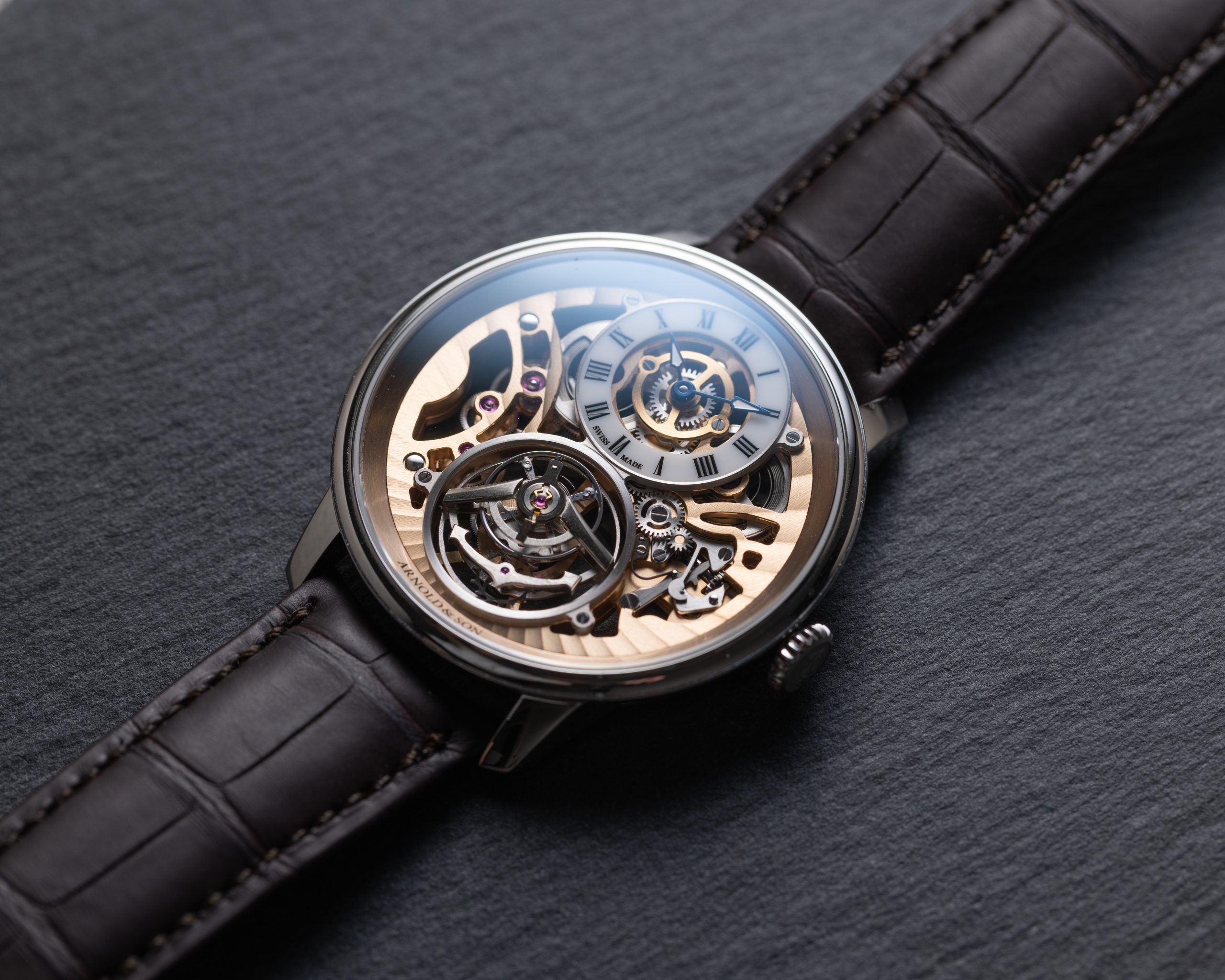
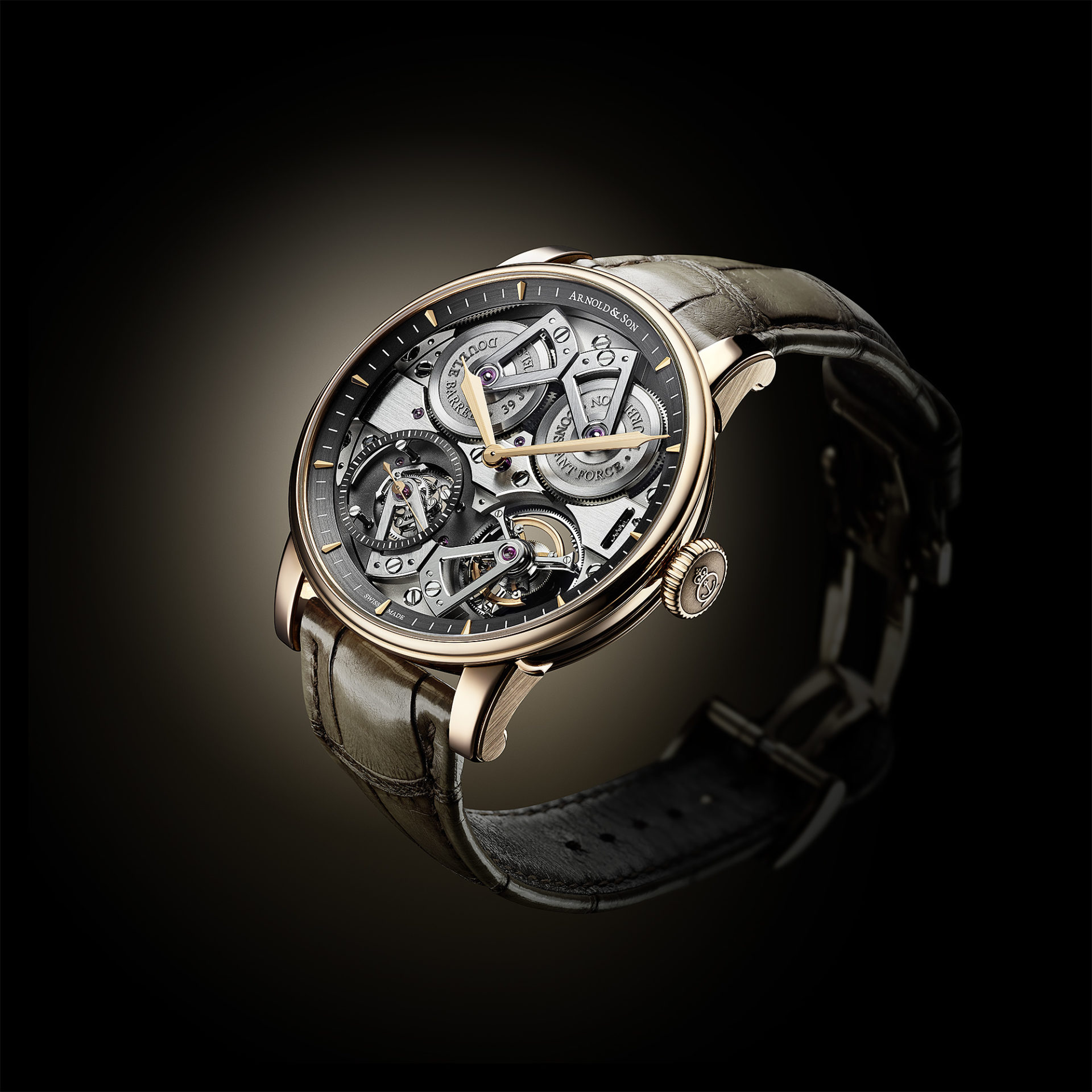
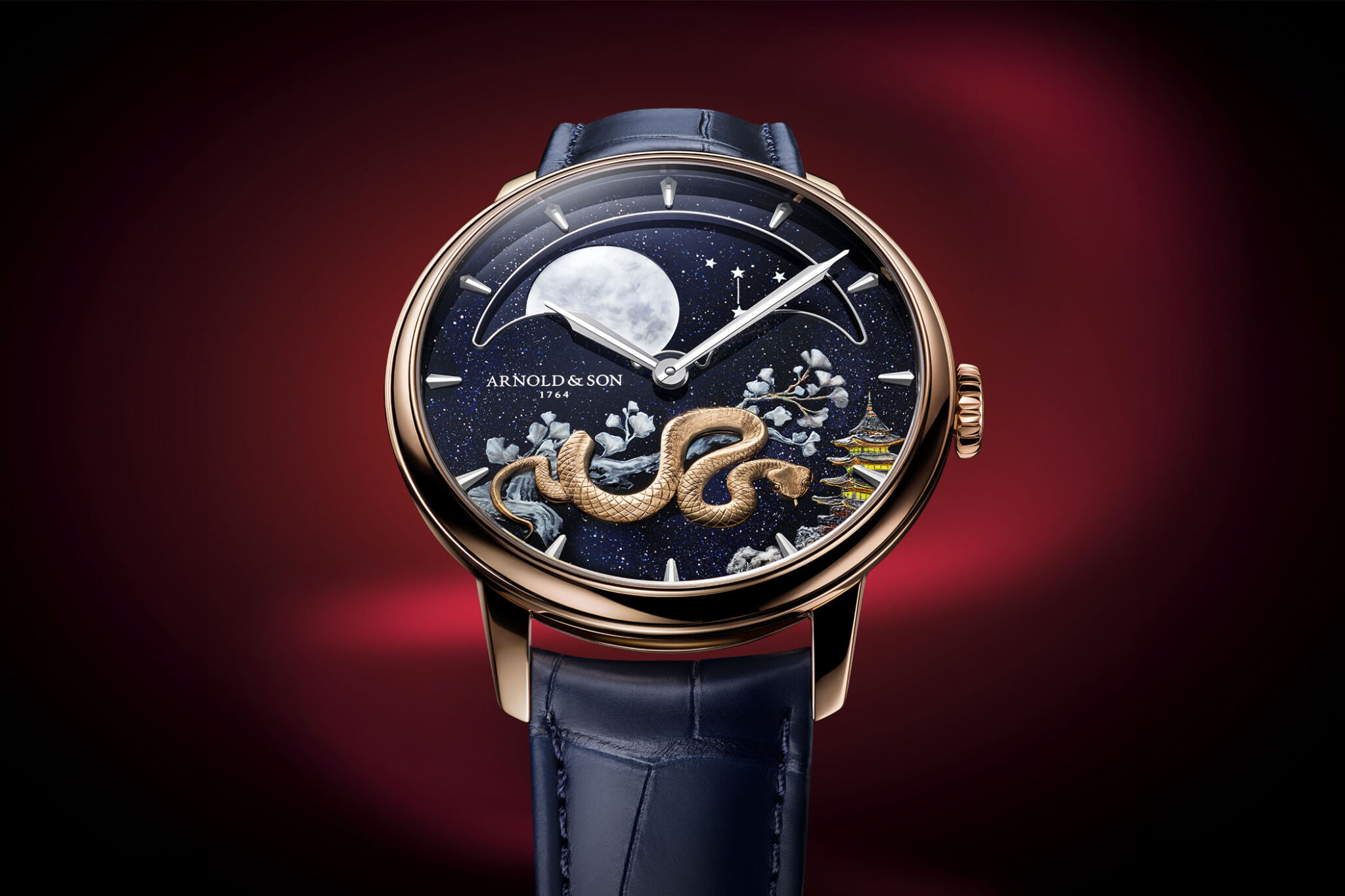
Arnold & Son timepieces represent a rare blend of 18th-century British marine chronometry heritage and contemporary Swiss high horology. Manufactured in La Chaux-de-Fonds, Switzerland, these watches are distinguished by custom in-house calibers, dial-side mechanical complications, symmetrical movement architecture, and monumental astronomical displays, appealing directly to discerning collectors of fine independent watchmaking.
The Dual Identity of Arnold & Son: British Roots and Swiss Manufacture
The identity of modern Arnold & Son timepieces rests on a foundation established by John Arnold (1736–1799), one of the most inventive horologists in history. Arnold was a contemporary of Abraham-Louis Breguet and played a pivotal role in solving the longitude problem by perfecting the marine chronometer. His breakthroughs included pioneering the spring detent escapement, patenting the helical balance spring, and popularizing the term "chronometer" for high-precision timekeepers.
While the historical legacy originates in London, the modern brand operates as a fully integrated Swiss manufacture based in La Chaux-de-Fonds, Switzerland. Following its revival in 1995 and its acquisition by the Citizen Group in 2012 alongside movement specialist La Joux-Perret, Arnold & Son achieved true manufacture status. Rather than relying on off-the-shelf base movements, the brand conceives, develops, decorates, and builds every movement specifically for the watch case it occupies.
This structural independence allows Arnold & Son to maintain an exceptionally low annual production volume, typically estimated between 600 and 1,000 pieces annually. Each timepiece reflects a commitment to structural symmetry, visible mechanical operations on the dial side, and hand-applied finishing standards that rival the highest tiers of traditional Swiss watchmaking.
Core Horological Innovations and Architectural Signatures
Arnold & Son separates itself from traditional luxury watchmakers by prioritizing dial-side mechanics and explicit movement symmetry. Rather than hiding complex mechanisms behind solid metal or sapphire casebacks, the manufacture designs its movements to expose gears, levers, balance wheels, and escapements on the dial.
- Arnold & Son Technical Focus
- Dial-Side Mechanics
- DSTB
- Time Pyramid
- Nebula
- Chronometric Precision
- Dual Balance (DBG)
- Dead-Beat
- Astronomical & World Time
- Luna Magna (3D Moon)
- Globetrotter
- Dial-Side Mechanics
Dial-Side True Beat (Dead-Beat Seconds)
In traditional mechanical watches, the seconds hand sweeps continuously around the dial. In contrast, a dead-beat seconds—or true beat—mechanism causes the seconds hand to jump precisely once per second, similar to a quartz movement, but driven entirely by mechanical levers and springs. Historically, marine chronometers used dead-beat seconds to allow navigators to count exact seconds accurately when calculating celestial position.
Arnold & Son’s DSTB (Dial-Side True Beat) collection elevates this complication by moving the entire dead-beat mechanism—including its anchor, lever, and dedicated spring—to the dial side of the watch. This allows the wearer to observe the mechanical release and jump of the seconds hand in real time.
Symmetrical Movement Architecture
Traditional movements arrange gear trains off-center based on spatial efficiency. Arnold & Son often designs calibers from scratch around strict visual symmetry. The Nebula and Time Pyramid models serve as prime examples:
- Nebula: Utilizes an inverted movement where openworked bridges radiate from the perimeter toward the center, placing twin mainspring barrels at the top and the balance wheel symmetrically at the bottom.
- Time Pyramid: Displays a vertical, linear movement structure shaped like a pyramid, featuring two separate mainspring barrels, two power reserve indicators, and an elevated balance wheel at 12 o'clock.
Three-Dimensional Astronomical Displays
In astronomical watchmaking, moon phase indications are traditionally rendered flat on a rotating disk beneath a dial window. Arnold & Son revolutionized this representation with the Luna Magna, which houses a large 3D spherical moon measuring 12 mm in diameter embedded directly into the movement architecture. Half crafted from white marble (or opal) and half from dark aventurine (or meteorites), the sphere rotates on its axis to show the moon's exact shadow line.
Key Collections: Royal Collection vs. Instrument Collection
Arnold & Son organizes its catalog into two primary pillars, each addressing distinct aesthetic and technical mandates: the Royal Collection and the Instrument Collection.
- ARNOLD & SON CATALOG
- ROYAL COLLECTION (Classical Elegance & Astronomical)
- Luna Magna (3D Moon Phase)
- Perpetual Moon (Large Display)
- Ultrathin Tourbillon
- HM Double Hemisphere
- INSTRUMENT COLLECTION (Technical Precision & Navigation)
- Time Pyramid (Vertical Caliber)
- Globetrotter (3D Worldtimer)
- DSTB (Dial-Side True Beat)
- DBG (Double Beat GMT)
- ROYAL COLLECTION (Classical Elegance & Astronomical)
1. The Royal Collection
The Royal Collection draws aesthetic inspiration from the timepieces John Arnold created for King George III and the royal court. This line emphasizes classical refinement, guilloché dials, rare stone sub-dials, hand engraving, and astronomical complications.
- Luna Magna: Features the 12 mm three-dimensional moon sphere. Driven by the manual-wind Caliber A&S1021, it maintains an astronomical accuracy requiring a one-day correction only once every 122 years.
- Perpetual Moon: Known for housing one of the largest moon phase apertures on the luxury market. The moon disk often features hand-engraved textures, luminescent coatings, and stone dials such as aventurine, jasper, or hematite.
- Ultrathin Tourbillon: Showcases ultra-slim movement design, with calibers like the A&S8200 measuring just 2.97 mm in thickness. The tourbillon cage is held by an openworked bridge, combining high precision with minimal vertical height.
2. The Instrument Collection
The Instrument Collection honors John Arnold’s contributions to marine navigation, marine chronometers, and scientific observation. The aesthetics are openworked, technical, and structural.
- Time Pyramid: Inspired by 19th-century British skeleton clocks, this model features a transparent dial showing a vertical movement. The dual mainspring barrels deliver 90 hours of power reserve, indicated by two independent scales on the left and right sides of the dial.
- Globetrotter: A world-time timepiece featuring a prominent three-dimensional half-globe depicting the Northern (or Southern) Hemisphere. Held beneath a central arching bridge, the globe completes a full counter-clockwise rotation every 24 hours over a sapphire ring displaying world time zones.
- DBG (Double Beat GMT): Built for true dual-timezone tracking. Unlike standard GMT watches that merely change the hour hand via a jumper gear, the DBG houses two completely independent escapements and balance wheels driven by a single gear train. This allows setting two timezones independently to the exact minute—crucial for countries with 15-minute or 30-minute offset time zones (such as India or Nepal).
- Nebula: A masterclass in openworked watchmaking, available in 38 mm and 41.5 mm sizes, featuring ten bridges finished with hand-chamfered edges (anglage) and satin finishes.
Technical Specifications of Highlighted Arnold & Son Calibers
To evaluate the mechanical depth of Arnold & Son timepieces, examine the core specifications of their primary in-house calibers summarized below:
| Model | Movement Caliber | Key Complication / Feature | Case Dimensions | Power Reserve | Escapement Frequency |
|---|---|---|---|---|---|
| Luna Magna | Caliber A&S1021 (Manual) | 3D Spherical Moon Phase (12 mm), secondary moon phase on back | 44.0 mm diameter / 15.9 mm height | 90 Hours | 21,600 vph (3 Hz) |
| Time Pyramid 42.5 | Caliber A&S1615 (Manual) | Vertical pyramid architecture, dual power reserve indicators | 42.5 mm diameter / 4.25 mm movement thickness | 90 Hours | 21,600 vph (3 Hz) |
| Globetrotter | Caliber A&S6022 (Automatic) | 3D rotating central hemisphere, 24-hour worldtime ring | 45.0 mm diameter / 17.2 mm height | 45 Hours | 28,800 vph (4 Hz) |
| DSTB 42 | Caliber A&S6003 (Automatic) | Dial-Side True Beat (Dead-Beat Seconds), off-center hours | 42.0 mm diameter / 12.95 mm height | 55 Hours | 28,800 vph (4 Hz) |
| Nebula 38 / 41.5 | Caliber A&S5201 (Manual) | Openworked symmetrical bridge structure, twin barrels | 38.0 mm or 41.5 mm / 8.73 mm height | 90 Hours | 21,600 vph (3 Hz) |
| Ultrathin Tourbillon | Caliber A&S8300 (Manual) | One-minute tourbillon, ultra-slim profile (2.97 mm movement) | 41.5 mm diameter / 8.30 mm case height | 100 Hours | 21,600 vph (3 Hz) |
Movement Finishing and Craftsmanship Standards
High-end collectors inspect movements under magnification to evaluate traditional hand finishing. Arnold & Son applies traditional Swiss haute horlogerie decorative standards across all calibers, regardless of whether the movement is visible on the dial or through the caseback.
- Anglage (Beveling): The sharp edges of watch bridges are cut away to form a precise 45-degree angle, which is then polished by hand to produce a reflective mirror shine.
- Côtes de Genève / Rayons de la Gloire: Bridges are decorated with linear or radiating circular wave patterns that catch the light dynamically.
- Circular Graining (Perlage): Mainplates receive overlapping circular graining patterns to retain oil and enhance visual richness.
- Blued Screws and Polished Sinks: Steel screws are flame-blued to a uniform cobalt shade, while screw heads and jewel sinks are chamfered and mirror-polished.
- Skeletonization: In models like the Nebula and Time Pyramid, inner metal bridges are hollowed out without compromising structural rigidity, requiring delicate milling and manual edge finishing.
Collector & Buyer Considerations
Acquiring an Arnold & Son timepiece differs significantly from purchasing mass-produced commercial luxury watches. Pros, operational limitations, and ownership dynamics must be carefully weighed.
- Collector Value Considerations
- ADVANTAGES
- Genuine 100% In-House
- Unique dial-side tech
- Low annual volume
- LIMITATIONS
- High service dependence
- Substantial wrist sizes
- Niche resale liquidity
- ADVANTAGES
Strengths & Advantages
- In-House Movement Autonomy: Backed by movement maker La Joux-Perret, Arnold & Son designs completely bespoke calibers tailored to specific visual concepts rather than fitting generic movements into customized cases.
- Distinct Architectural Identity: Dial-side complications, true-beat mechanisms, and three-dimensional spheres create immediate visual recognition among horological enthusiasts.
- Exclusivity: With annual production remaining under 1,000 pieces worldwide, owners rarely encounter another individual wearing the same model.
Practical Limitations
- Case Dimensions: Complicated models such as the Globetrotter (45 mm) and Luna Magna (44 mm) possess prominent wrist presence and noticeable case height due to 3D moon spheres and arched bridges. Buyers with smaller wrists should look toward the Nebula 38 or Ultrathin Tourbillon.
- Secondary Market Dynamics: Unlike highly spec-driven steel sports watches from mainstream Swiss brands, independent haute horlogerie timepieces typically experience initial depreciation before stabilizing. They are best acquired for appreciation of mechanical art rather than short-term financial speculation.
- Servicing Complexity: Because movements contain proprietary geometry (such as dual balance wheels or elevated vertical mainsprings), service and repairs must be handled directly by authorized service centers or returned to the manufacture in La Chaux-de-Fonds.
Maintenance, Care, and Authenticity Verification
Preserving the functionality and value of an Arnold & Son watch requires dedicated ownership habits and strict verification processes.
- MAINTENANCE & CARE PROTOCOL
- REGULAR SERVICING
- 5-7 year full service cycle at authorized service centers
- WATER RESISTANCE
- Avoid water exposure on leather/openworked models (typically 30m)
- WINDING & HANDLING
- Wind manual models until resistance; set 3D moon only within safe windows
- REGULAR SERVICING
1. Servicing Interval and Lubrication
High-complication mechanical movements require fresh synthetic lubricants and gasket replacements every 5 to 7 years. Over time, movement oils degrade, increasing friction on tiny pivots and wheel arbors, which can degrade amplitude and timekeeping accuracy.
2. Handling Complex Complications
- Moon Phase Adjustments: For perpetual moon and Luna Magna models, never adjust the moon phase quick-set pusher when the movement hour hand is positioned between 8:00 PM and 2:00 AM. Adjusting mechanisms while gears are engaged can shear teeth or misalign the internal indexing levers.
- Manual Winding: For manual-wind models like the Time Pyramid (which has a 90-hour power reserve across twin barrels), wind the crown smoothly until soft resistance is felt. Avoid forcing the crown once fully wound to prevent mainspring damage.
3. Authenticity and Provenance Verification
When purchasing an Arnold & Son timepiece on the secondary market:
- Verify Movement Caliber Engravings: Check the caliber reference number (e.g., A&S1021, A&S5201) and serial numbers engraved directly onto the mainplate or bridges.
- Inspect Movement Finishing Quality: Authentic Arnold & Son movements feature hand-beveled bridges and mirror-polished sinks. Coarse machine marks, unpolished bevels, or printed brand logos indicate counterfeit origin.
- Documentation & Box Set: Ensure the watch includes its original certificate of origin, serial-matched guarantee card, and wooden presentation box.
Frequently Asked Questions
What makes Arnold & Son different from other Swiss luxury watch brands?
Arnold & Son stands out due to its combination of British chronometric history and 100% in-house movement development in Switzerland. Unlike brands that rely on shared base movements, Arnold & Son designs custom calibers tailored specifically to every watch model, prioritizing dial-side mechanics, symmetrical architecture, and 3D astronomical features.
Who owns Arnold & Son?
Arnold & Son is owned by the Citizen Watch Group, which acquired movement manufacture La Joux-Perret (the parent company of Arnold & Son) in 2012. This ownership provides financial backing while allowing the brand to operate independently in La Chaux-de-Fonds, Switzerland.
Are Arnold & Son movements made in-house?
Yes. All Arnold & Son movements are developed, manufactured, decorated, and assembled in-house at their facility in La Chaux-de-Fonds, Switzerland, in close collaboration with movement specialist La Joux-Perret.
What is a "True Beat" or "Dead-Beat" seconds complication?
A true beat (dead-beat) seconds complication causes the central seconds hand to jump precisely once per second, rather than sweeping continuously. Historically used in marine chronometers for precise timing, Arnold & Son presents this complication on the dial side in models like the DSTB.
How accurate is the 3D moon phase on the Luna Magna?
The 3D moon phase on the Luna Magna (Caliber A&S1021) is astronomically calculated to remain precise for 122 years before deviating by a single day, assuming the timepiece remains continuously wound.
How many watches does Arnold & Son produce per year?
Arnold & Son maintains a limited production output, typically manufacturing between 600 and 1,000 timepieces per year. This low volume ensures rigorous hand finishing and quality control across all collections.
Final Recommendation: Selecting the Right Arnold & Son Timepiece
When choosing an Arnold & Son timepiece, select a model that aligns with your wrist size, style preference, and mechanical interest:
- For Technical Architecture & Daily Wearability: Select the Nebula (38 mm or 41.5 mm). Its openworked symmetrical dial, ultra-thin profile, and 90-hour power reserve make it an ideal entry into modern high-concept skeleton watchmaking.
- For High Astronomical Artistry: Choose the Luna Magna or Perpetual Moon. The 12 mm 3D marble and aventurine sphere of the Luna Magna represents one of the most striking astronomical achievements in contemporary horology.
- For Pure Marine Chronometry Heritage: Consider the DSTB (Dial-Side True Beat) or Time Pyramid. Both models prominently display historical chronometer mechanisms—dead-beat seconds and vertical linear balance systems—directly on the dial.
Before purchasing, test the watch on your wrist at an authorized dealer to verify case proportions, and confirm that all original warranty cards and provenance documentation are present.