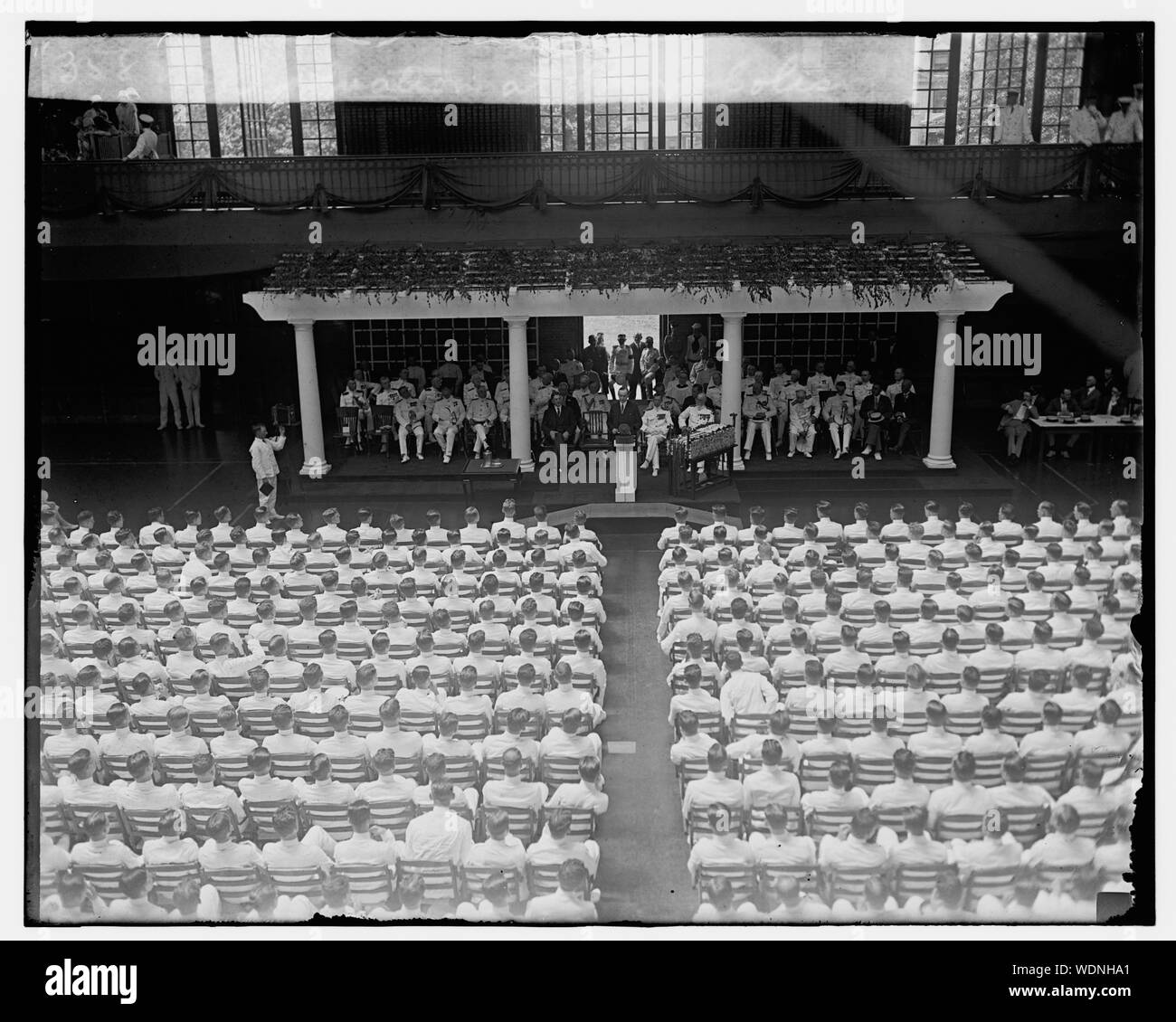
The United States Naval Academy (USNA) in Annapolis, Maryland, serves as the premier undergraduate college for the U.S. Navy and Marine Corps. Established in 1845, it functions as a National Historic Landmark, blending rigorous modern military training with a deeply preserved heritage that has shaped American naval doctrine and leadership for nearly two centuries.
The Genesis of Formal Naval Education (1845–1861)
Before the mid-19th century, the United States Navy lacked a centralized institution for training its officer corps. Prospective officers, known as midshipmen, learned their trade through a decentralized apprenticeship system. They were assigned directly to ships, where they received haphazard instruction from chaplains or senior officers while performing manual labor. This "school of the ship" approach often resulted in inconsistent technical knowledge and a lack of standardized discipline.
The catalyst for change was George Bancroft, the Secretary of the Navy under President James K. Polk. Bancroft recognized that the increasing complexity of steam propulsion and naval Gunnery required a more structured, scientific education. In 1845, without seeking initial Congressional funding—which he feared would be denied—Bancroft established the Naval School at Fort Severn, an old Army post in Annapolis.
The choice of Annapolis was strategic. Its location on the Severn River, tucked away from the distractions of larger cities like Philadelphia or New York, provided a secluded environment conducive to study. On October 10, 1845, the school opened with 50 midshipmen and seven professors. In 1850, the school was renamed the United States Naval Academy, and a four-year curriculum was implemented, requiring midshipmen to spend their summers at sea—a practice that remains a cornerstone of the institution in 2026.
The Civil War and the Newport Interim
The outbreak of the American Civil War in 1861 posed an existential threat to the Academy. Maryland was a border state with divided loyalties, and there were significant fears that Confederate sympathizers might seize the institution or that the state would secede. To ensure the safety of the midshipmen and the continuity of their education, the Academy was temporarily relocated to Newport, Rhode Island.
During this period, the Annapolis grounds were turned over to the U.S. Army for use as a hospital and a base of operations. The legendary frigate USS Constitution served as a floating classroom and dormitory in Newport. This era was pivotal because it tested the Academy’s resilience. Many Southern-born officers and midshipmen resigned their commissions to join the Confederate Navy, creating a leadership vacuum that the Academy had to work doubly hard to fill. When the Academy returned to Annapolis in 1865, it did so with a renewed sense of national purpose and a mandate to modernize for the post-war era.
The Flagg Renaissance: Architectural and Cultural Transformation
The late 19th and early 20th centuries marked a period of massive physical and conceptual expansion. Following the Spanish-American War, the United States emerged as a global naval power, and the Academy’s cramped, aging facilities no longer reflected the nation’s prestige.
Between 1899 and 1906, architect Ernest Flagg designed a master plan for the "New Naval Academy." Flagg utilized the Beaux-Arts style, characterized by grand symmetry and ornate classical details, to create a campus that felt both permanent and powerful. Key structures from this era include:
- Bancroft Hall: Named after the founder, this is the primary residence for all midshipmen. As of 2026, it remains one of the largest single continuous dormitory buildings in the world, featuring miles of corridors and its own post office, barbershop, and medical clinic.
- The Naval Academy Chapel: Known for its iconic copper dome, the Chapel is the spiritual heart of the Yard. Its crypt houses the remains of John Paul Jones, the Revolutionary War hero, whose body was recovered from France and reinterred here in 1906 to inspire future generations.
- Mahan Hall: Named for Alfred Thayer Mahan, the naval theorist whose works on sea power influenced global geopolitics, this building historically served as the library and now serves as a theater and honors center.
The Academy in the World Wars and the Cold War
The 20th century demanded rapid adaptation. During World War I and World War II, the Academy shifted to an accelerated schedule to meet the urgent need for officers. The "Class of 1917" and the classes of the early 1940s graduated early, heading directly into combat zones in the Atlantic and Pacific.
The curriculum during the Cold War era began to reflect the rise of nuclear power and aviation. The Academy established the first departments dedicated to aerospace engineering and nuclear physics. Leadership training also evolved, moving away from purely authoritarian models to embrace psychological and tactical nuances required for global maritime security.
In 1976, one of the most significant social shifts in the Academy's history occurred: the admission of women. This change required a complete overhaul of the physical infrastructure and the cultural norms of the "Yard." Today, in 2026, women represent a significant and integral portion of the Brigade of Midshipmen, holding high-ranking leadership positions and competing in all aspects of Academy life.
Historic Landmarks and Campus Features
The Naval Academy is not just a school; it is a living museum. For visitors and researchers, understanding the "Yard" (the term used for the campus) requires a look at its specific historical landmarks.
| Landmark | Established/Built | Historical Significance |
|---|---|---|
| Fort Severn Site | 1808 (Fort), 1845 (School) | The original location where George Bancroft founded the Naval School. |
| The Crypt of John Paul Jones | 1906 (Reinterment) | Houses the sarcophagus of the "Father of the U.S. Navy," a site of pilgrimage for naval traditions. |
| Tecumseh Statue | 1930 (Bronze version) | A figurehead from the USS Delaware; midshipmen offer pennies to "Tamanend" for good luck on exams. |
| Dahlgren Hall | 1903 | Originally an armory and drill hall, it now serves as a student union and ice rink, showcasing 19th-century naval ordnance. |
| Herndon Monument | 1867 | The site of the famous "Plebes-no-more" climb, symbolizing the end of the grueling freshman year. |
| Preble Hall | 1939 | Home to the U.S. Naval Academy Museum, housing one of the world's finest collections of ship models and naval artifacts. |
The Evolution of the Curriculum and the Honor Concept
The "Historic Context" of Annapolis is as much about the mind as it is about the architecture. The Academy’s academic rigor is legendary, currently emphasizing STEM (Science, Technology, Engineering, and Mathematics) to prepare officers for the high-tech environment of modern naval warfare. However, the bedrock of the institution remains the Honor Concept.
Unlike a rigid set of rules, the Honor Concept is a philosophy: "Midshipmen are persons of integrity: They stand for that which is right." Historically, this concept evolved from the 19th-century code of an "officer and a gentleman." By the mid-20th century, it was formalized to ensure that trust—the most vital component of military command—was ingrained in every graduate. In 2026, the Academy continues to refine this concept to address modern ethical challenges, including digital ethics and artificial intelligence.
Technical Requirements and Admissions in Historical Context
The process of joining the Naval Academy has remained remarkably consistent in its high standards, even as the specific requirements have modernized. Admission is not merely a matter of grades; it is a federal appointment.
- Congressional Nomination: Applicants must generally receive a nomination from a member of the U.S. Congress, the Vice President, or the President. This ensures a geographically diverse officer corps, a practice rooted in the post-Civil War desire for national unity.
- Physical Standards: The physical mission of the Academy dates back to its founding. Midshipmen must pass the Physical Readiness Test (PRT) and participate in mandatory athletics, reflecting the belief that a leader must be physically capable of enduring the rigors of life at sea.
- Academic Excellence: Historically, the Academy was one of the first engineering schools in the U.S. Today, every graduate receives a Bachelor of Science degree, regardless of their major, a tradition that underscores the technical nature of naval service.
Accessing the Yard: Modern Visitation Guidelines
As of 2026, the Naval Academy remains an active military installation. While it is open to the public, security protocols reflect the institution's dual role as a school and a high-security facility.
- Identification: All visitors over the age of 18 must present a valid government-issued photo ID (such as a REAL ID-compliant driver's license or passport) to enter the Yard.
- Pedestrian Access: Visitors generally enter through Gate 1, located at the intersection of King George Street and Randall Street.
- Guided Tours: The Armel-Leftwich Visitor Center provides official tours that provide deep historical context. These are highly recommended for those who want to understand the nuances of the architecture and the daily lives of the midshipmen.
- Public Events: The public is often invited to witness "Noon Formation" (weather permitting) during the academic year, where the entire Brigade of Midshipmen assembles in front of Bancroft Hall. This is one of the most enduring and photographed traditions at the Academy.
Frequently Asked Questions
Why is the Naval Academy called "Annapolis"?
The institution is frequently referred to by the name of the city it inhabits to distinguish it from the Military Academy (West Point) or the Air Force Academy (Colorado Springs). In naval culture, saying one "graduated from Annapolis" carries the same weight as naming the school itself.
Can anyone visit the crypt of John Paul Jones?
Yes, the crypt is located beneath the Naval Academy Chapel and is generally open to the public during the Chapel's visiting hours. It is considered a hallowed site, and visitors are expected to maintain a respectful silence. The sarcophagus is made of diverse marbles and is surrounded by bronze dolphins, a testament to the Beaux-Arts design prevalent in the early 1900s.
What is the significance of the "Yard"?
The "Yard" is the traditional naval term for the campus grounds. Historically, naval bases were referred to as shipyards or navy yards. By calling the campus the Yard, the Academy reinforces its identity as a naval command rather than just a traditional university.
How has the Academy's mission changed since 1845?
While the core mission—to develop midshipmen morally, mentally, and physically—remains the same, the scope has expanded. In 1845, the focus was on seamanship and navigation. In 2026, the mission includes preparing leaders for cyber warfare, nuclear deterrence, and international diplomacy, reflecting the Navy's role as a global force.
What is "Plebe Summer"?
Plebe Summer is the seven-week orientation program for incoming freshmen (Plebes). Historically, it serves as a transition from civilian life to the military. It is designed to strip away previous identities and forge a cohesive unit through intense physical training, naval indoctrination, and leadership lessons.
Next Actions for Prospective Visitors and Scholars
To fully appreciate the United States Naval Academy in its historic context, a physical visit is essential. Start by reviewing the current security and visitor guidelines on the official USNA website. If you are researching specific historical figures or naval records, the U.S. Naval Academy Museum in Preble Hall offers extensive archives and exhibits that are often available for scholarly review by appointment. For those interested in the architectural history, a walking tour focusing on Ernest Flagg's contributions provides the best insight into how the 19th-century "New Navy" visualized its future.