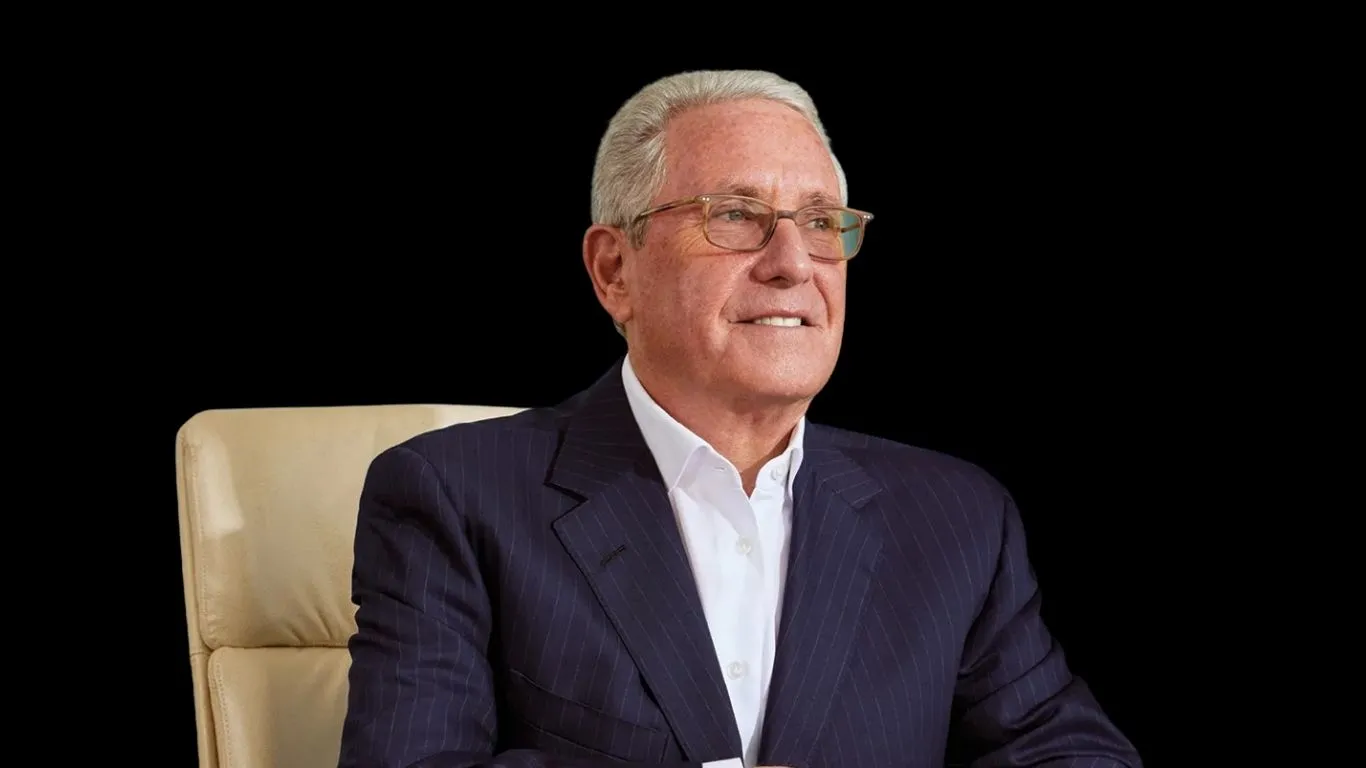
Andrew L. Farkas is an American real estate executive, merchant banker, and investor whose net worth is estimated to be between $500 million and $800 million. His wealth stems primarily from founding and scaling major real estate platforms—notably Insignia Financial Group and Island Capital Group—as well as high-value liquidity events, such as the $480 million sale of Island Global Yachting (IGY Marinas) to MarineMax.
Financial Disclaimer
Net worth calculations for private equity executives and real estate investors rely on public corporate filings, transaction disclosures, reported acquisition values, and historical asset performance. Because private merchant banking firms like Island Capital Group do not publish full audited financial statements, figures cited represent analytical estimates based on confirmed business transactions, historical equity sales, and reported asset valuations. This analysis is provided strictly for educational and informational purposes and does not constitute financial, investment, or tax advice.
Who Is Andrew L. Farkas? Early Life and Educational Background
Andrew Lance Farkas was born into a prominent New York business family. His father, Robin Farkas, served as the Chairman and Chief Executive Officer of Alexander’s, Inc., a well-known department store chain that eventually transitioned into a real estate investment trust. Growing up in an environment heavily tied to commercial business and urban development provided Farkas with early exposure to corporate finance and property management.
Farkas attended Harvard University, earning a Bachelor of Arts degree in Economics in 1982. His formal economic training provided a foundation for understanding macroeconomic market cycles, asset pricing, and corporate capital structures. Upon graduating, Farkas entered the finance and real estate sectors, gaining operational and syndication experience before establishing his own ventures.
His early career coincided with significant shifts in federal banking regulations and commercial property values in the late 1980s. Recognizing that market dislocation creates opportunities for capitalized investors, Farkas positioned himself to focus on distressed real estate assets and fee-based management services.
The Insignia Financial Group Era: Building a Real Estate Empire
The initial cornerstone of Andrew Farkas’s wealth was Insignia Financial Group, Inc., which he founded in 1990. The timing of Insignia’s creation was strategic: the United States was experiencing the fallout of the Savings and Loan Crisis, leaving financial institutions and federal entities—such as the Resolution Trust Corporation (RTC)—holding massive portfolios of non-performing commercial real estate loans and foreclosed properties.
- 1990: Insignia Founded
- Acquired RTC/Distressed Management Contracts
- Roll-Up Strategy: 50+ Real Estate Management Acquisitions
- Expansion: Commercial Services & Douglas Elliman Residential
- 2003: Institutional Exits
- Commercial Division Sold to CBRE (~$415 Million)
- Residential Division Divested (Douglas Elliman Platform)
The Roll-Up Strategy and Market Consolidation
Farkas recognized that property management was a highly fragmented industry dominated by regional operators. Insignia adopted an aggressive acquisition strategy, frequently referred to as a "roll-up." By acquiring regional property management companies and consolidating their administrative, accounting, and operational functions into a centralized corporate structure, Insignia achieved significant economies of scale.
- Asset Management Roll-Up: During the 1990s, Insignia acquired more than 50 real estate service and management companies.
- Scale of Operations: At its peak, Insignia became one of the largest managers of multi-family residential apartments and commercial real estate in the United States, overseeing hundreds of thousands of residential units and tens of millions of square feet of commercial space.
- Public Listing: Insignia was taken public on the New York Stock Exchange (NYSE: IFS), providing the firm with access to public equity markets to finance further acquisitions.
Major Liquidity Events: The Insignia Divestitures
By the late 1990s and early 2000s, Insignia had diversified into commercial real estate brokerage, residential brokerage, and real estate investment banking. Farkas executed a strategic plan to unlock the value built within the platform through targeted asset sales:
- Sale of Insignia/ESG to CB Richard Ellis (CBRE): In 2003, Insignia Financial Group sold its global commercial real estate services business to CB Richard Ellis (now CBRE Group, Inc.) in a transaction valued at approximately $415 million. This acquisition transformed CBRE into the world’s largest commercial real estate services company and provided a major liquidity payout for Insignia’s equity holders, including Farkas.
- Residential Brokerage Sales: Prior to and alongside the main CBRE transaction, Insignia divested its residential brokerage arms, including the platform that encompassed Insignia Douglas Elliman, generating additional proceeds for shareholders and corporate principal accounts.
The sale of Insignia marked Farkas’s transition from an operational executive managing large service organizations to a high-net-worth merchant banker operating through private equity vehicles.
Island Capital Group: Private Equity and Merchant Banking
Following the sale of Insignia in 2003, Andrew Farkas established Island Capital Group LLC, a private international real estate merchant bank based in New York. Island Capital was structured to control, manage, and invest in specialized real estate service companies, distressed asset portfolios, and development projects.
- Island Capital Group LLC
- C-III Capital Partners (CMBS & Distressed Debt)
- IGY Marinas (Sold 2022) (Luxury Marina Infrastructure)
- Direct Real Estate (Commercial & Residential)
Through Island Capital Group, Farkas shifted his investment philosophy toward high-barrier-to-entry sectors and fee-for-service financial platforms:
Commercial Mortgage-Backed Securities (CMBS) and C-III Capital Partners
In the wake of the 2008 global financial crisis, real estate debt markets experienced severe disruption. In 2010, Island Capital Group launched C-III Capital Partners LLC after acquiring the operations of Centerline Holding Company’s fund management and special servicing business.
C-III quickly established itself as a primary player in the Commercial Mortgage-Backed Securities (CMBS) industry. Special servicers are retained to manage defaulted or troubled loans held within CMBS trusts. Key elements of C-III's growth included:
- Special Servicing Volume: At its peak, C-III became one of the largest special servicers of commercial real estate loans in the United States, managing tens of billions of dollars in securitized debt workouts.
- Fee Generation: Special servicing platforms generate income through workout fees, liquidation fees, and administrative charges, creating predictable fee streams during economic downturns.
- Asset Management Expansion: C-III expanded into primary loan servicing, commercial real estate equity investments, investment management, and principal lending, generating steady management fees and performance incentives for Island Capital Group.
Island Global Yachting (IGY Marinas) and the $480M Divestment
One of the most notable luxury real estate investments executed by Farkas was the creation of Island Global Yachting (IGY Marinas) in 2005. Identifying a supply deficit in deep-water marina infrastructure capable of accommodating luxury superyachts, Farkas built a global network of marina properties.
IGY Marinas acquired, developed, and managed high-end marina facilities in prime maritime destinations, including the Caribbean, the United States, Latin America, and Europe. The business model combined real estate ownership (slips, upland retail, and hospitality facilities) with recurring operational service fees.
In August 2022, MarineMax, Inc. (NYSE: HZO), the world’s largest recreational retailer of boats and yachts, entered into a definitive agreement to acquire IGY Marinas from Island Capital Group for $480 million in cash, with potential additional earnout payments contingent on future performance. This sale represented one of the largest recorded transactions in the luxury marina sector and delivered substantial capital realization to Farkas and Island Capital’s equity partners.
Andrew L. Farkas Financial Milestones and Deal Summary
The growth of Andrew L. Farkas's net worth is marked by several landmark transactions across corporate real estate services, commercial mortgage platforms, and niche infrastructure assets:
| Era / Business Unit | Transaction / Entity Type | Primary Financial Detail | Impact on Total Wealth |
|---|---|---|---|
| Insignia Financial Group (1990–2003) | Real Estate Services Roll-Up | Sold to CBRE in 2003 for ~$415 Million | Generated foundational liquid capital and institutional reputation. |
| Douglas Elliman / Residential (Early 2000s) | Residential Brokerage Services | Strategic sale/restructuring of brokerage arm | Provided cash exits during New York residential expansion. |
| C-III Capital Partners (2010–Present) | CMBS Special Servicing & Finance | Acquired Centerline assets; managed tens of billions in CMBS debt | Created multi-year fee income streams and distress-workout yields. |
| IGY Marinas (2005–2022) | Luxury Superyacht Marina Platform | Sold to MarineMax in 2022 for ~$480 Million cash | Realized a massive cash payout in high-margin maritime real estate. |
| Island Capital Group (2003–Present) | Merchant Banking & Private Equity | Ongoing management of private assets and development portfolios | Serves as the primary holding company for continuous investment income. |
Asset Breakdown: How Farkas's Wealth Is Distributed
Understanding an executive's net worth requires analyzing the allocation of capital across different asset classes. For Andrew Farkas, wealth accumulation stems from a mix of highly liquid transaction proceeds, private equity equity holdings, and direct real estate assets.
| Asset Category | Allocation |
|---|---|
| Liquid Cash & Market Securities | 30% |
| Private Equity / Island Capital | 40% |
| Real Estate & Luxury Holdings | 20% |
| Maritime Infrastructure / Reinvestment | 10% |
1. Liquid Capital and Marketable Securities
Following major exits like the $415 million CBRE deal and the $480 million IGY Marinas transaction, a significant portion of capital was converted to liquid holdings. These funds are typically deployed across investment-grade debt, public equities, fixed-income vehicles, and capital allocation funds designed to preserve wealth across economic cycles.
2. Private Equity Interests via Island Capital Group
As the principal owner and manager of Island Capital Group, Farkas retains controlling or significant equity positions in private real estate funds, commercial lending vehicles, and property technology ventures. The net asset value (NAV) of these private entities fluctuates with commercial real estate valuations and prevailing interest rates.
3. Direct Commercial and Residential Real Estate
Farkas maintains investments in direct real estate properties, including commercial developments, multi-family assets, and residential real estate holdings in high-value markets such as New York City and the Hamptons. High-value personal real estate serves as both a lifestyle asset and a store of equity value.
4. Maritime and Niche Infrastructure Investments
Even after selling IGY Marinas to MarineMax, Island Capital Group and its affiliates maintain active advisory, development, and investment interests in specialized real estate niches, including waterfront infrastructure, maritime leisure properties, and hospitality developments.
Business Strategy: How Andrew Farkas Built His Wealth
Analyzing the career of Andrew Farkas reveals a consistent real estate and merchant banking strategy that sets his approach apart from standard property developers:
Counter-Cyclical Investing
Farkas has demonstrated a pattern of acquiring assets or launching platforms during market dislocations:
- 1990: Launching Insignia during the Savings and Loan crisis to buy distressed property management contracts.
- 2010: Building C-III Capital Partners following the 2008 financial crisis to capture loan servicing rights on troubled CMBS debt.
By entering markets when asset values are depressed, his platforms secure favorable basis entry prices, maximizing returns when real estate markets recover.
Platform Capital Accumulation vs. Single-Asset Ownership
Rather than relying solely on buying individual buildings, Farkas builds operating companies and service platforms. Platforms generate recurring management fees, leasing commissions, and servicing revenues. This operational income stream provides steady cash flow while preserving equity upside when the platform is sold to institutional buyers.
Consolidating Fragmented Industries
Both Insignia (property management) and IGY Marinas (luxury marina infrastructure) relied on consolidating fragmented sectors. By acquiring disparate regional operators, unifying branding, and introducing institutional management standards, Farkas expanded profit margins before exiting via sales to strategic acquirers.
Philanthropy and Professional Board Roles
Beyond his investment activities, Andrew Farkas participates in civic, educational, and philanthropic organizations:
- Maritime Conservation and Education: Through his involvement with maritime projects, Farkas has supported marine preservation initiatives and oceanic research organizations.
- Medical and Cultural Institutions: He has contributed to healthcare networks, educational foundations, and cultural institutions in the New York metropolitan area.
- Industry Leadership: Farkas has served on corporate boards, industry panels, and advisory councils related to commercial real estate standards, private equity investment guidelines, and financial services policy.
Summary of Current Financial Standing (2026 Context)
As of 2026, Andrew L. Farkas remains an active figure in commercial real estate finance and private equity. With a net worth estimated between $500 million and $800 million, his financial baseline is underpinned by decades of capital deployment, major platform sales, and fee-generating real estate networks.
While market movements in commercial real estate and interest rate fluctuations influence the precise mark-to-market valuation of his private equity portfolio, historical transactions—such as the Insignia and IGY Marinas sales—ensure substantial long-term wealth preservation.
Frequently Asked Questions
What is Andrew L. Farkas's estimated net worth in 2026?
Andrew L. Farkas's net worth is estimated between $500 million and $800 million. His wealth is derived from his equity stakes in private investments, direct real estate holdings, and major capital realizations through the sales of Insignia Financial Group and IGY Marinas.
How did Andrew Farkas make most of his money?
Farkas built his fortune by founding, growing, and selling real estate service companies and specialized platforms. Key drivers include founding Insignia Financial Group (sold to CBRE for ~$415M), creating C-III Capital Partners (CMBS special servicing), and founding IGY Marinas (sold to MarineMax for ~$480M).
What was the result of the IGY Marinas sale to MarineMax?
In August 2022, MarineMax acquired IGY Marinas from Island Capital Group for approximately $480 million in cash, with additional earnout potential. This transaction represented one of the largest liquidity events in luxury marina history and added cash reserves to Island Capital Group and its principals.
What is Island Capital Group?
Island Capital Group LLC is an international real estate merchant bank founded by Andrew L. Farkas in 2003. The firm engages in real estate private equity, asset management, distressed debt investment, and commercial real estate services.
What education does Andrew Farkas have?
Andrew Farkas graduated from Harvard University in 1982 with a Bachelor of Arts degree in Economics.
Strategic Takeaways for Real Estate Investors
Studying Andrew Farkas’s wealth-building approach offers several key lessons for real estate professionals and private equity investors:
- Prioritize Operational Cash Flow: Operating companies and real estate service platforms often deliver more predictable fee-based cash flow than individual property holdings.
- Capitalize on Dislocation: Market crises (such as 1990 and 2008) offer entry points for buying distressed management rights and loan servicing assets at low valuations.
- Scale Through Aggregation: Roll-up strategies that combine regional operators into nationwide networks create institutional-scale assets that command premium valuation multiples upon exit.
Next Steps for Readers: To explore similar real estate deal structures, examine corporate SEC filings for public acquirers like CBRE Group, Inc. and MarineMax, Inc., or read institutional guides on Commercial Mortgage-Backed Securities (CMBS) special servicing platforms.