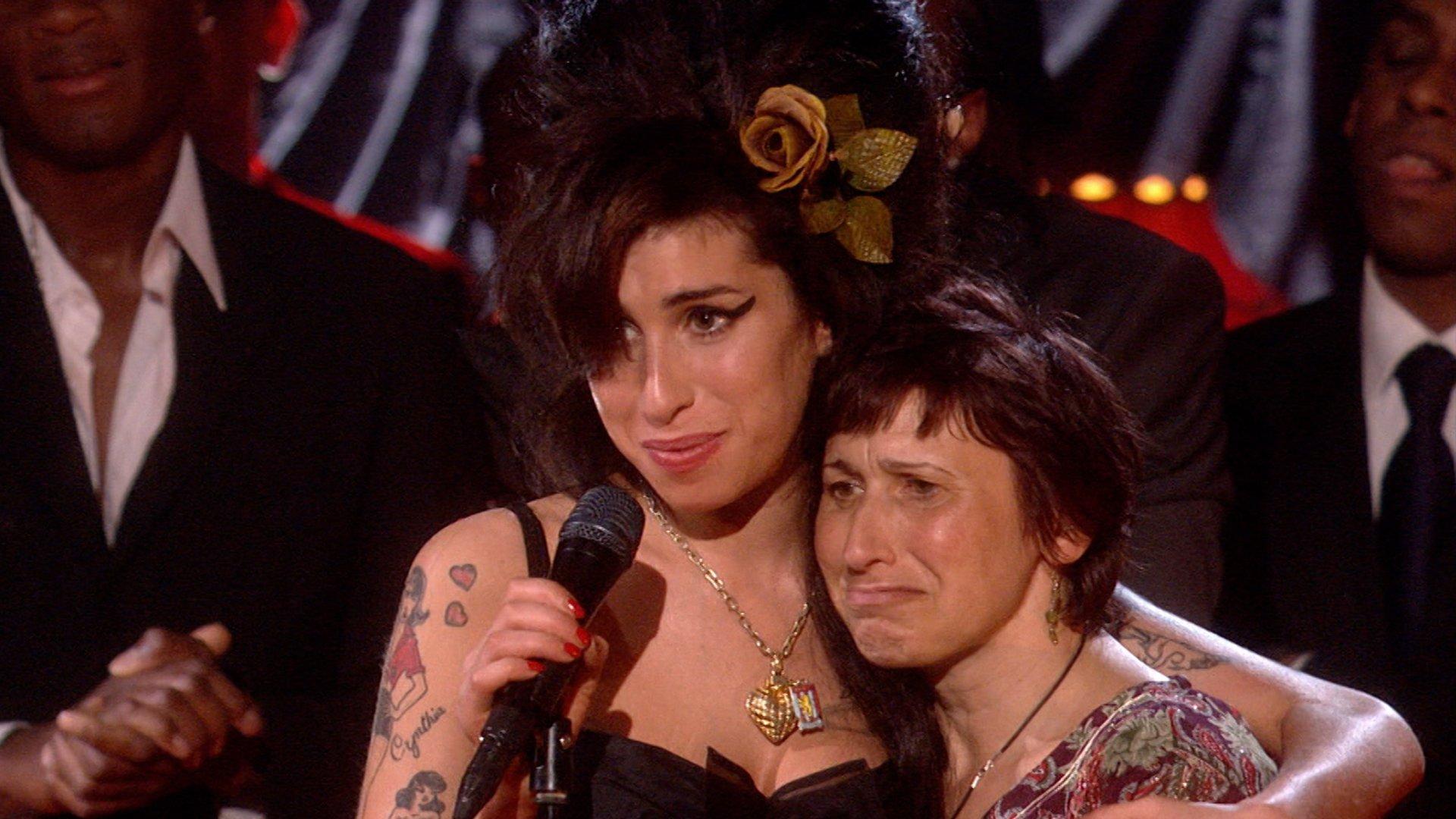
Amy Winehouse performed at the 50th Annual Grammy Awards on February 10, 2008, delivering a legendary two-song set consisting of "You Know I'm No Good" and "Rehab." Due to legal and visa complications, she performed via satellite from Riverside Studios in London. That evening, she made history by winning five of her six nominations.
The performance remains a defining moment in the history of the Recording Academy, representing both the pinnacle of Winehouse’s professional career and a significant cultural milestone for the "British Invasion" of the 21st century. In 2026, looking back across nearly two decades, the performance is still studied by music historians for its raw emotional power, technical execution, and the unique circumstances under which it was broadcast to millions of viewers worldwide.
The Road to Riverside: Why the Performance was Remote
To understand the significance of Amy Winehouse’s Grammy performance, one must first understand why she was not physically present at the Staples Center in Los Angeles. In early 2008, Winehouse was the most talked-about artist in the world, but her personal life was under heavy scrutiny. Her struggle with substance abuse and a late 2007 arrest in Norway for marijuana possession created a significant hurdle for her entry into the United States.
Initially, the U.S. Embassy in London rejected her application for a work visa. This news sent shockwaves through the Recording Academy, as Winehouse was the clear frontrunner for the night’s biggest awards. The rejection was based on her "use and abuse of narcotic drugs," a standard clause in U.S. immigration law that can lead to the denial of O-1 visas for performers.
Although the embassy eventually reversed its decision and granted the visa at the eleventh hour, the logistics of trans-Atlantic travel, combined with her health at the time—she had recently entered a rehabilitation program—led her team to decide that a satellite performance from London was the safest and most reliable option. Riverside Studios in Hammersmith was selected as the venue, allowing her to perform in front of an intimate audience of family, friends, and peers while being beamed live into the Grammy telecast.
Technical Execution and the London Atmosphere
The production of a satellite performance for an event as large as the Grammys involves immense technical coordination. In 2008, high-definition satellite feeds were common, but the risk of latency (audio delay) or signal loss was a constant concern for live television producers. The team at Riverside Studios worked in tandem with the Los Angeles production crew to ensure that Winehouse’s performance felt as though it were part of the main stage.
Unlike many satellite segments that feel clinical or detached, the Riverside setup was designed to mimic a smoky, high-end jazz club. The lighting was warm and moody, emphasizing the soulful, retro aesthetic of the Back to Black era. Winehouse was backed by her regular touring band, including the world-renowned Dap-Kings, who were instrumental in creating the signature retro-soul sound of her sophomore album.
The performance began with a sultry rendition of "You Know I'm No Good," followed by her chart-topping anthem "Rehab." Winehouse’s vocal delivery was noted for its spontaneity; she navigated the complex jazz phrasing with ease, proving that despite her personal struggles, her musicality remained sharp. Her signature beehive hairstyle and winged eyeliner were in full effect, solidifying her status as a fashion icon of the decade.
Analysis of the Setlist: "You Know I’m No Good" and "Rehab"
The choice of songs reflected the duality of Winehouse’s appeal. "You Know I'm No Good" showcased her ability to blend hip-hop sensibilities with traditional jazz and soul. The performance was characterized by her deep, resonant contralto and her unique rhythmic timing. The Dap-Kings provided a tight, brass-heavy foundation that allowed her to explore the nuances of the lyrics, which detailed infidelity and self-loathing with a frankness rarely heard in pop music.
"Rehab," the song that arguably defined her career, followed immediately. By early 2008, the song had become a global phenomenon, and the performance at the Grammys served as a definitive statement. In the context of her well-documented real-world struggles, the lyrics took on a poignant, almost defiant quality. The energy in Riverside Studios peaked during this number, with Winehouse interacting with her band and the small audience in a way that felt authentic and unpolished—a stark contrast to the highly choreographed pop performances occurring in Los Angeles.
The Historic Sweep: Five Grammy Wins
Amy Winehouse’s performance was framed by a series of monumental wins. Entering the night with six nominations, she won five, a record-tying achievement for a female artist at the time (matching Lauryn Hill, Alicia Keys, Norah Jones, and Beyoncé). Her wins were not just in minor categories but swept the "Big Three" of the General Field.
| Award Category | Work Nominated | Result | Significance |
|---|---|---|---|
| Record of the Year | "Rehab" | Won | Recognizes the artist, producer, and engineers. |
| Song of the Year | "Rehab" | Won | A songwriter's award; Winehouse was the sole writer. |
| Best New Artist | Amy Winehouse | Won | Cemented her status as the breakout star of the year. |
| Best Female Pop Vocal | "Rehab" | Won | Recognized her technical vocal performance. |
| Best Pop Vocal Album | Back to Black | Won | Confirmed the album's status as a modern classic. |
| Album of the Year | Back to Black | Nominated | Her only loss (to Herbie Hancock's River: The Joni Letters). |
The moment she won Record of the Year remains one of the most celebrated clips in Grammy history. Introduced by Natalie Cole and Tony Bennett (who would later become a close collaborator of Winehouse), the announcement was met with a look of genuine, stunned disbelief from Amy in London. She was seen clutching her mother, Janis, while her band members celebrated wildly behind her. In her brief acceptance speech, she famously thanked her parents and shouted out "Blake, my Blake, incarcerated," referring to her then-husband, Blake Fielder-Civil.
The Cultural Impact and Legacy in 2026
From the vantage point of 2026, Amy Winehouse’s Grammy night is viewed as the zenith of the 21st-century soul revival. It was a moment that shifted the trajectory of popular music, moving the industry away from the hyper-polished teen pop and R&B that dominated the early 2000s and toward a more organic, artist-driven sound.
Influence on Future Artists
Winehouse's success that night paved the way for a generation of British artists to conquer the American market. The success of Adele, Duffy, Florence + The Machine, and later artists like Sam Smith and Raye can be traced back to the door that Winehouse kicked open in 2008. Her victory proved that an artist could be uncompromisingly British, deeply rooted in vintage sounds, and still achieve massive commercial success in the United States.
The Human Element
The 2008 performance is also remembered for its human vulnerability. In an era where live television is often criticized for being overly rehearsed, Winehouse’s satellite broadcast felt dangerously real. It captured a brilliant artist at the peak of her powers while simultaneously acknowledging the personal battles she was fighting. This vulnerability is a key reason why her music continues to resonate with new generations of listeners in 2026.
Posthumous Recognition
Following her untimely death in 2011, the Recording Academy and the music world at large have continued to honor her 2008 performance. In 2024, the release of the biographical film Back to Black brought renewed attention to this specific Grammy night, painstakingly recreating the Riverside Studios setup and the global reaction to her wins. In 2026, her Grammy performance is frequently cited in "Best Of" lists and is a staple of music history curricula focusing on the evolution of 21st-century jazz and soul.
Technical Legacy: Satellite and Remote Performances
The 2008 broadcast was a precursor to the modern era of remote performances. While satellite feeds were used out of necessity for Winehouse, they became a standard tool for the industry, especially during the global events of the early 2020s. The Winehouse broadcast proved that the emotional weight of a performance is not diminished by distance, provided the production quality remains high and the artist's connection to the material is genuine.
The Dap-Kings’ involvement in the performance also highlighted the importance of "live" instrumentation in a digital age. Their tight, analog-inspired sound provided a template for producers like Mark Ronson and Salaam Remi, who worked with Winehouse to create a sound that was both timeless and contemporary. This "modern-vintage" approach remains a popular production style in 2026, often referred to as the "Winehouse Blueprint."
Frequently Asked Questions
Why wasn't Amy Winehouse at the Grammy ceremony in Los Angeles?
Amy Winehouse was unable to attend in person due to the initial denial of her U.S. work visa by the American Embassy in London. Although the decision was eventually overturned, the timing made it impossible for her to travel to Los Angeles. Additionally, she had recently entered a rehabilitation facility, making a performance from London the more manageable option for her health.
How many Grammys did Amy Winehouse win in 2008?
She won five Grammy Awards: Record of the Year, Song of the Year, Best New Artist, Best Female Pop Vocal Performance, and Best Pop Vocal Album. She was nominated for six, losing only Album of the Year to Herbie Hancock.
Who introduced Amy Winehouse's performance?
The performance was introduced from the Staples Center in Los Angeles by actor and musician Natalie Cole. Later in the evening, Tony Bennett announced her win for Record of the Year, a moment that became particularly significant given their future "Body and Soul" duet.
What band performed with her at Riverside Studios?
She was backed by her touring band, which included members of the Dap-Kings. This Brooklyn-based funk and soul group was essential to the sound of the Back to Black album and helped translate that studio sound into a live setting for the Grammy broadcast.
Where exactly in London did the performance take place?
The performance took place at Riverside Studios, located in the Hammersmith district of West London. The venue is a well-known television and film production studio that provided the necessary infrastructure for a high-definition international satellite broadcast.
Recommendations for Further Exploration
For those interested in the technical and cultural impact of this performance, several resources are highly recommended. Viewing the original broadcast footage provides the best insight into her vocal prowess and the emotional atmosphere of the night. Additionally, the 2015 documentary Amy, directed by Asif Kapadia, offers significant behind-the-scenes context regarding the visa struggle and the buildup to the 50th Grammy Awards.
Listeners should also explore the "Deluxe" editions of Back to Black, which often include live recordings from the 2007-2008 period, showcasing the evolution of the arrangements used in the Grammy set. Finally, for a deeper look at the musical architecture of the performance, researching the discography of the Dap-Kings and producer Mark Ronson provides a comprehensive understanding of how Winehouse’s soul-revival sound was constructed and why it remains so influential in the music landscape of 2026.