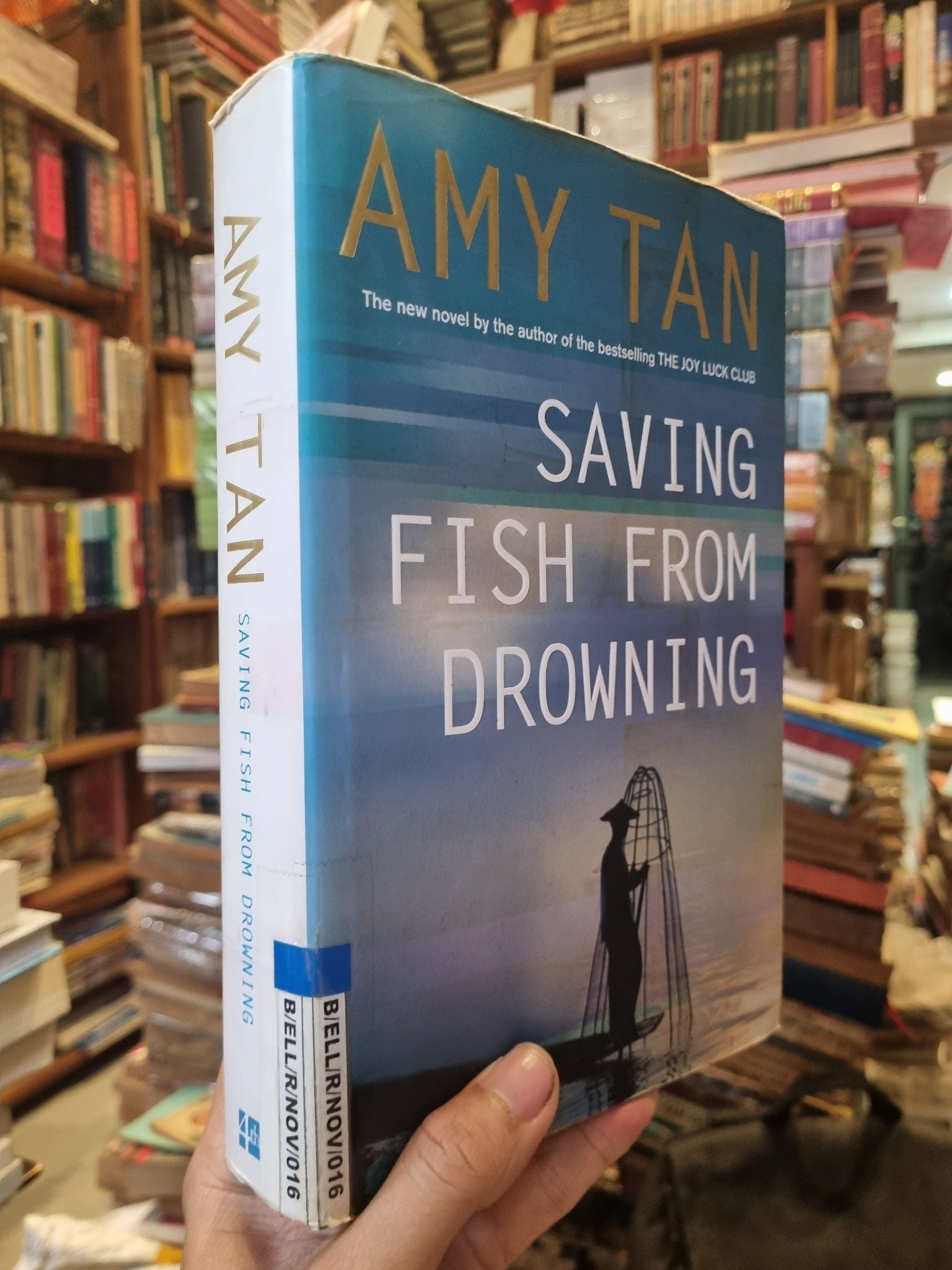
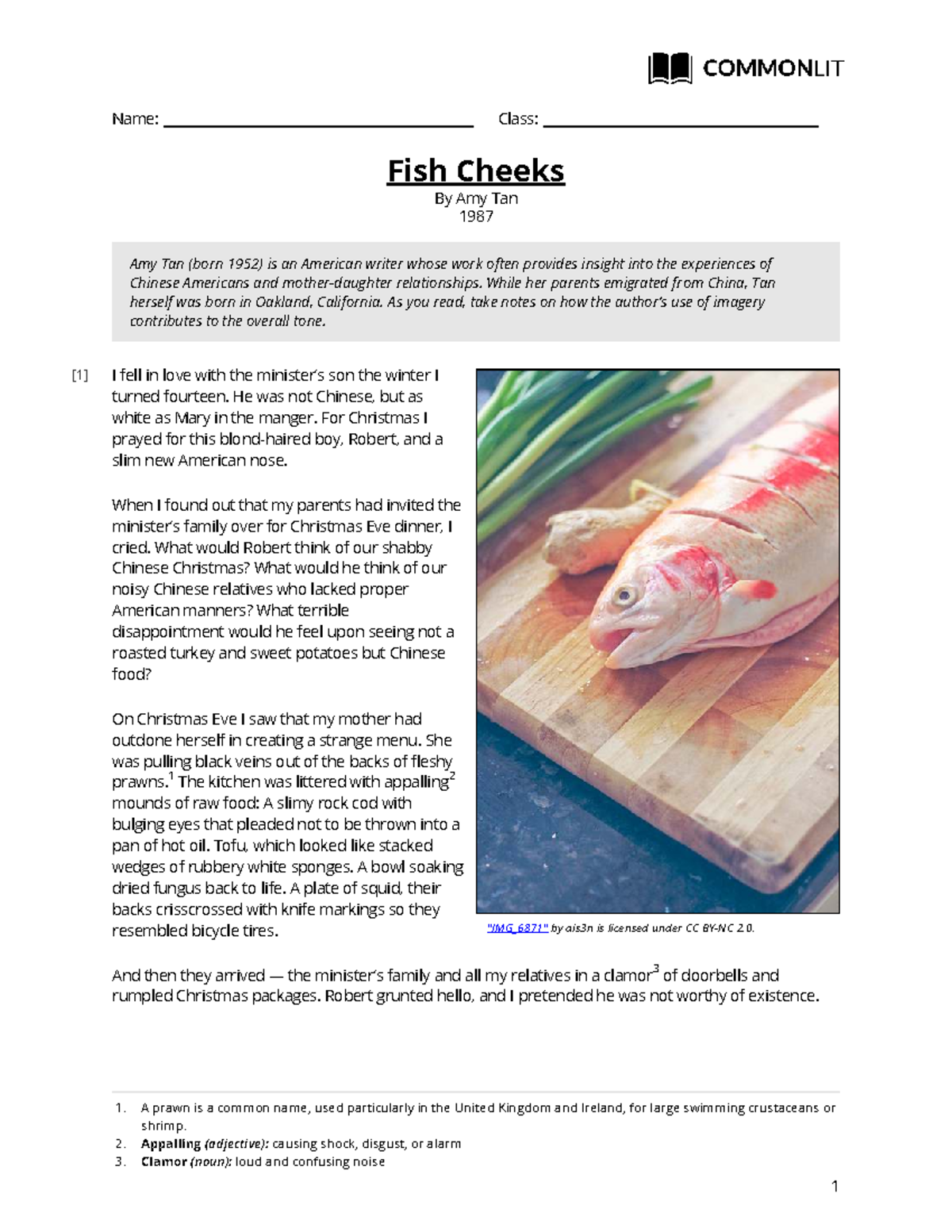
Accessing a PDF version of Amy Tan’s "Fish Cheeks" is straightforward because it is a staple of middle and high school English Language Arts (ELA) curricula. You can typically find the full text through reputable educational platforms like CommonLit, the Internet Archive, or various school district portals that host digital versions of literary anthologies for student use.
"Fish Cheeks" is more than just a short story; it is a poignant, autobiographical essay that explores the complexities of cultural identity, the pangs of adolescent embarrassment, and the eventual realization of self-worth. Originally published in Seventeen magazine in 1987, this brief narrative remains one of the most widely taught pieces of Asian American literature. Whether you are a student looking to download the text for an assignment or an educator seeking a reliable version for your classroom in 2026, understanding the context and depth of this work is essential.
How to Legally Access the "Fish Cheeks" PDF
Finding a digital copy of "Fish Cheeks" requires navigating various educational repositories. Because the essay is copyrighted, it is important to use sources that provide access legally, often under educational "Fair Use" or through licensed platforms.
Educational Repositories and Open Access
Most students and teachers in 2026 access "Fish Cheeks" through digital learning management systems (LMS). If you are looking for a standalone PDF, the following sources are generally the most reliable:
- CommonLit: This non-profit education site provides the full text along with interactive reading tools, vocabulary support, and assessment questions. It is a preferred source for a clean, professional PDF layout.
- School District Portals: Many public school districts (such as those in California or New Jersey) host PDF versions of required readings on their public-facing websites. Searching for "Fish Cheeks PDF" followed by a university or school district name (e.g., "Fish Cheeks PDF Berkeley") often yields direct links to scanned copies from textbooks.
- The Internet Archive (Archive.org): This digital library hosts copies of The Joy Luck Club and various anthologies containing the essay. While it may require a "digital borrow," it ensures you are reading the official published version.
- Google Classroom/Drive Links: Many educators share direct PDF links via shared drives. While convenient, ensure these are from verified educational domains to avoid malware or incomplete texts.
Why Version Matters
When downloading a PDF, check to see if it is the "unabridged" version. Some versions designed for lower grade levels may slightly simplify the vocabulary or omit the sensory descriptions of the food to save space. To get the full impact of Tan's imagery, ensure the PDF includes the detailed descriptions of the "slimy rocks" (shiitake mushrooms) and the "bulging fish eyes."
Context and Background: The Origin of "Fish Cheeks"
To appreciate the text in your PDF, you must understand its historical and personal context. Amy Tan, a first-generation Chinese American, wrote "Fish Cheeks" during a period when she was beginning to explore the "hyphenated" experience of being Chinese-American.
The essay is set during Christmas, a holiday that serves as a focal point for Western traditions. By placing a traditional Chinese dinner in the middle of a Western holiday, Tan highlights the collision of two worlds. The narrative is told from the perspective of a 14-year-old girl—an age where the desire to "fit in" is at its peak. This demographic focus is one reason why the essay is so frequently included in 8th and 9th-grade curriculums; it speaks directly to the universal experience of feeling "othered" by one's own family or heritage.
A Detailed Summary of the Narrative
If you are reviewing the text for a quiz or essay, a structural breakdown is helpful. The essay follows a classic narrative arc: the internal conflict, the rising action of the dinner, the climax of the father’s gesture, and the resolution years later.
The Internal Conflict
The story begins with the protagonist, Amy, discovering that her parents have invited the local minister's family—including her crush, Robert—over for Christmas dinner. Amy’s immediate reaction is one of dread. She is ashamed of her "shabby" Chinese Christmas and prays to God for a "slim American nose" instead of her own features. This sets the stage for a conflict between internal heritage and external social pressure.
The Dinner Scene
The bulk of the PDF text covers the dinner itself. Tan uses vivid, often grotesque imagery to describe the food from the perceived perspective of the American guests. What her family views as delicacies, Amy views as "strange" or "disgusting" through Robert’s eyes. The behavior of her family—the loud burping to show satisfaction and the lack of "proper" Western manners—mortifies her.
The Climax and Resolution
The emotional peak occurs when Amy’s father offers her the "tender" fish cheeks, her favorite part of the fish, loudly announcing it to the table. This moment of extreme embarrassment is the turning point. After the guests leave, Amy’s mother gives her a beige tweed skirt (a symbol of "Americanness") but delivers the central message of the essay: "You must be proud you are different. Your only shame is to have shame."
Literary Elements Analysis: Key Concepts for Study
When analyzing the "Fish Cheeks" PDF, students are often asked to identify specific literary devices. Tan’s writing is a masterclass in using sensory language to convey emotion.
1. Imagery and Sensory Language
Tan describes the food in ways that evoke a physical reaction. She describes tofu as "stacked like white sponges" and the squid as "crisscrossed... like bicycle tires." This use of simile and imagery serves a dual purpose: it describes the food while simultaneously conveying Amy’s disgust and her fear of how the food appears to those outside her culture.
2. The Use of Tone
The tone of the essay shifts from humorous and self-deprecating to poignant and wise. As an adult narrator looking back on her 14-year-old self, Tan can acknowledge how "ridiculous" her embarrassment was while still honoring the pain she felt at the time. This "dual-perspective" is a common feature in memoir writing.
3. Symbolism
- The Fish Cheeks: These symbolize the core of Chinese heritage—the best, most tender part of the meal, hidden from those who do not know where to look.
- The Beige Tweed Skirt: This represents Amy’s desire to assimilate. It is a "safe," neutral, Western garment that contrasts with the vibrant, messy, and "loud" nature of the Chinese dinner.
| Literary Device | Example from Text | Effect on the Reader |
|---|---|---|
| Simile | "Tofu, which looked like stacked white sponges." | Creates a visual that emphasizes the alien nature of the food to a Western eye. |
| Metaphor | "A slimy rock." | Refers to a shiitake mushroom, highlighting the narrator's internalized bias. |
| Irony | Amy prays for a "white" Christmas, but gets a very "Chinese" one. | Highlights the gap between her desires and her reality. |
| Theme | "Your only shame is to have shame." | The moral heart of the story; addresses cultural pride. |
Why "Fish Cheeks" Remains Relevant in 2026
As we move further into the 2020s, the themes of "Fish Cheeks" have only become more pertinent. In a globalized society, the "third-culture kid" experience—children raised in a culture different from their parents'—is increasingly common.
Cultural Pride vs. Assimilation
In 2026, educational standards emphasize "Social-Emotional Learning" (SEL) and "Diversity, Equity, and Inclusion" (DEI). "Fish Cheeks" fits perfectly into these frameworks because it doesn't offer a simple "happily ever after" where Amy suddenly loves her culture. Instead, it shows a realistic, messy process of growth. It teaches students that it is okay to feel conflicted about their identity and that understanding the value of one's roots often comes with time and maturity.
The Universal Nature of Embarrassment
Beyond the cultural specifics, every teenager has felt embarrassed by their parents. Whether it's a father's loud joke or a mother's "strange" cooking, the feeling of wanting the ground to swallow you whole when a crush is nearby is universal. This relatability is what keeps the PDF in high demand every school year.
Comparative Study: Tan's Other Works
If you are reading "Fish Cheeks" for a broader literature unit, it is helpful to compare it to Amy Tan’s most famous work, The Joy Luck Club.
While "Fish Cheeks" is a short, isolated essay, The Joy Luck Club (1989) explores these same themes on a much grander scale, following four Chinese immigrant families in San Francisco. Many of the character dynamics in the short essay—specifically the tension between a traditional mother and a modern daughter—are precursors to the vignettes found in the novel. Comparing the two can help students see how a writer develops a "seed" of an idea (like the dinner scene) into a full-length literary masterpiece.
Common Pitfalls When Reading "Fish Cheeks"
When students engage with the "Fish Cheeks" PDF, they occasionally misinterpret the ending or the author's intent.
- Misinterpreting the Father's Burp: Some readers think the father is being rude. In the context of the culture Tan is describing, a burp is a compliment to the chef. Understanding this cultural nuance is vital for a correct analysis of the text.
- Assuming Amy Hates Her Culture: It is easy to see the 14-year-old Amy as hating her heritage. However, the adult narrator makes it clear that she actually loved the food ("my favorite foods"). The conflict isn't with the culture itself, but with the perception of the culture by others.
- Overlooking the Mother’s Wisdom: The mother is often seen as a secondary character, but she is the architect of the story’s resolution. Her gift of the skirt is a brilliant parenting move: acknowledging her daughter's desire to fit in while firmly reminding her of who she is.
FAQ: Frequently Asked Questions
Is "Fish Cheeks" a true story?
Yes, "Fish Cheeks" is an autobiographical essay, meaning it is a true story from Amy Tan’s life. While some dialogue or specific details may be reconstructed from memory, the core events—the Christmas dinner with the minister’s family and her internal struggle—are factual.
What grade level is "Fish Cheeks" appropriate for?
The essay is typically taught in grades 6 through 9 (ages 11–15). Its vocabulary is accessible, but its themes of identity and symbolism offer enough depth for high-school-level analysis.
What is the main message of "Fish Cheeks"?
The central message is that while one may feel the need to assimilate to fit into a dominant culture, one should never be ashamed of their heritage. True shame comes not from being different, but from being embarrassed by those differences.
Why is the essay titled "Fish Cheeks"?
The title refers to the specific part of the fish that Amy’s father offers her during the dinner. In many cultures, the cheeks are considered the most flavorful and prized part of the fish. By choosing this as the title, Tan highlights a specific cultural delicacy that served as a point of embarrassment then, but a point of pride and connection now.
Can I use "Fish Cheeks" for a rhetorical analysis?
Absolutely. The essay is an excellent subject for rhetorical analysis because Tan uses specific "appeals." She uses pathos (emotional appeal) by describing her teenage heartbreak and ethos (credibility) by sharing her lived experience as an immigrant daughter.
Final Recommendation for Students and Educators
When you download your "Fish Cheeks" PDF, don't just skim it for the plot. Pay close attention to the adjectives Tan uses to describe the food at the beginning of the dinner versus the way she describes her mother’s wisdom at the end. For the best experience, try to find a version that includes the original illustrations if available, as they often capture the 1980s aesthetic that influenced Tan’s perspective at the time of writing.
If you are preparing for a discussion, mark every instance where the narrator mentions "looking" or "watching." The essay is deeply concerned with the "gaze"—how we see ourselves versus how we think others see us. Understanding this distinction is the key to mastering Amy Tan’s work.