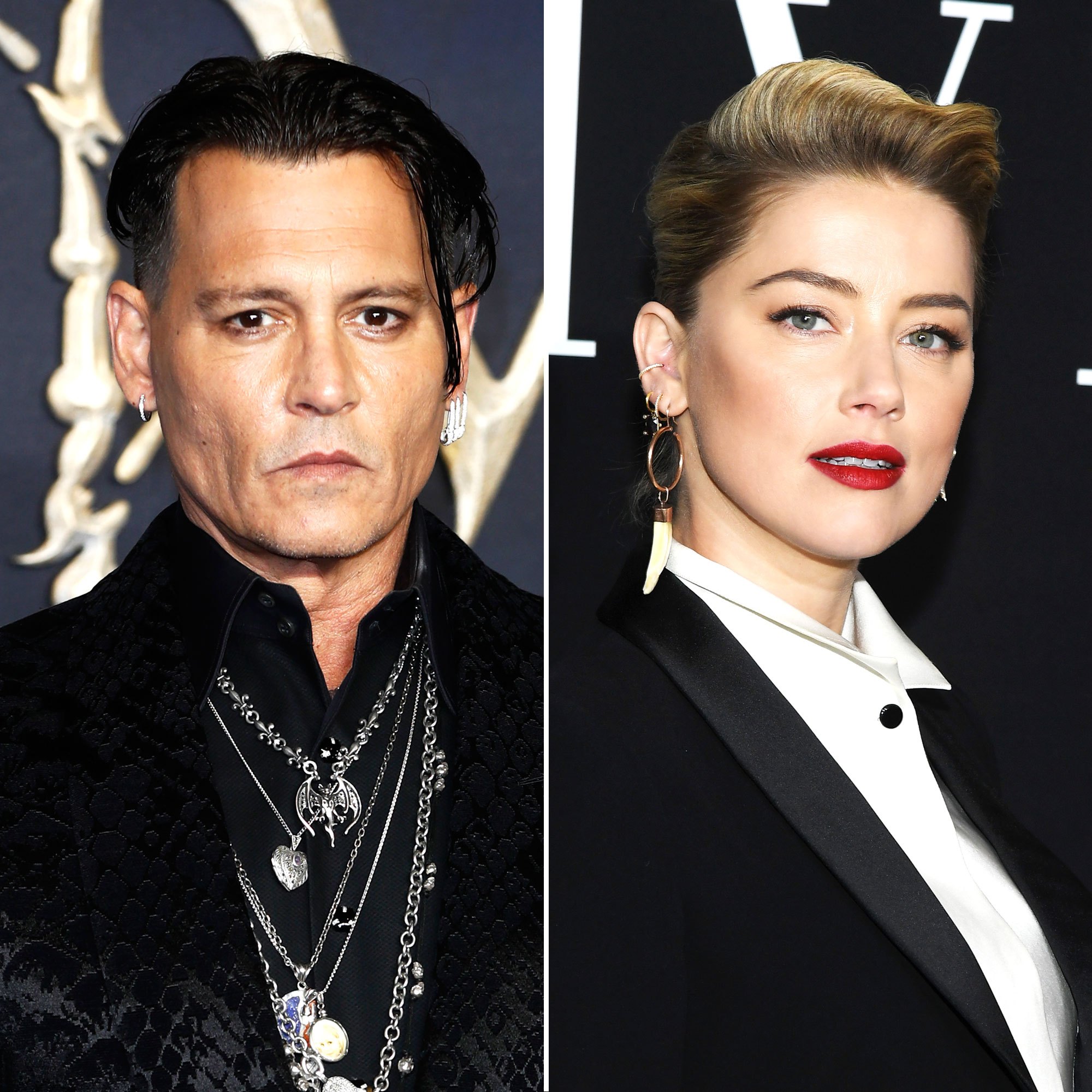
In June 2023, Amber Heard finalized her legal battle with Johnny Depp by paying him $1 million. This settlement followed the high-profile 2022 defamation trial in Virginia. Rather than Depp keeping the funds, he distributed the entire amount equally among five different charitable organizations, effectively closing a contentious chapter of legal history.
The Origin of the One Million Dollar Settlement
The payment of $1 million was not the original sum dictated by the jury in the Fairfax County, Virginia, courtroom. To understand why Amber Heard paid Johnny Depp exactly one million dollars, one must look back at the conclusion of the 2022 defamation trial. The jury initially awarded Depp $10 million in compensatory damages and $5 million in punitive damages. The punitive damages were immediately reduced to $350,000 to comply with Virginia’s statutory cap, bringing the total owed by Heard to $10.35 million. Conversely, the jury awarded Heard $2 million in compensatory damages for one count of defamation regarding statements made by Depp’s former attorney.
Following the verdict, both parties filed appeals. Legal experts at the time noted that the appeals process could have lasted years, incurring massive legal fees and prolonging the public scrutiny that both actors were eager to move past. In December 2022, Heard announced that she had reached a settlement with Depp. This agreement effectively replaced the multi-million dollar jury award with a single $1 million payment from Heard to Depp.
The decision to settle for a fraction of the original verdict was seen as a strategic move for both sides. For Heard, it capped her financial liability and allowed her to move to Spain to focus on her daughter and independent film projects. For Depp, his legal team stated that the case was never about the money, but about restoring his reputation. By accepting a $1 million settlement, he secured a formal "win" while demonstrating that financial gain was a secondary motive.
How the Payment Was Structured: The Role of Insurance
One of the most complex aspects of the "Amber Heard paid Johnny Depp one million dollars" narrative is where the money actually originated. It was widely reported that the payment was made by Heard’s insurance company, rather than from her personal bank accounts. Heard had been embroiled in separate legal disputes with her insurance providers, New York Marine and General Insurance Co. and Travelers Commercial Insurance Co., regarding who was responsible for her legal defense and the eventual judgment.
Under many homeowner and liability insurance policies, coverage is provided for defamation claims. However, California law (which often governed these policies) generally prohibits insurers from paying for "willful" acts of misconduct. The insurers initially argued that because the jury found Heard acted with "actual malice," they were not obligated to cover the damages.
The settlement of $1 million likely represented a compromise not just between Depp and Heard, but also involving the insurance carriers. By settling for $1 million—a figure that often aligns with the limits of specific liability policies—the parties avoided a secondary legal battle over insurance indemnity. This allowed the payment to be processed through New York Marine, ensuring Depp received the funds in mid-2023 without further exhausting Heard’s personal liquidity.
Where the Money Went: Johnny Depp’s Charitable Donations
Upon receipt of the $1 million in June 2023, Johnny Depp immediately moved to fulfill his promise of donating the settlement proceeds. He selected five charities that reflected his personal interests, historical film ties, and environmental concerns. Each organization received exactly $200,000.
1. Make-A-Film Foundation
This organization grants film-related wishes to children with life-threatening medical conditions. Depp had a long-standing relationship with the foundation, having previously starred in a short film titled The Black Ghiandola for a young filmmaker through the program. The $200,000 donation supported the foundation’s mission to pair critically ill children with professional actors and directors to create short cinematic works.
2. The Painted Turtle
Founded by Paul Newman, The Painted Turtle is a camp for children with serious medical conditions. It provides a life-changing experience at no cost to the families. Depp’s contribution was aimed at maintaining the camp’s facilities and ensuring that children with chronic illnesses could continue to enjoy traditional camp activities in a medically supervised environment.
3. Red Feather
Red Feather works alongside Indigenous communities to develop and implement sustainable housing solutions. Depp’s interest in Native American culture and history is well-documented, and this donation was intended to address the housing crisis on reservations, specifically focusing on renovations and the implementation of healthy home standards for many tribal members.
4. Tetiaroa Society
This non-profit is dedicated to the conservation of Tetiaroa, the private island in French Polynesia once owned by Marlon Brando. Depp, who was a close friend and protege of Brando, chose this charity to support environmental research and the protection of island ecosystems. The funds were directed toward programs that help local communities adapt to climate change and preserve biodiversity.
5. Amazonia Fund Alliance
The Amazonia Fund Alliance supports the preservation of the Amazon rainforest and the rights of the Indigenous people living within it. Depp’s $200,000 contribution was designated for reforestation efforts and the protection of the "lungs of the planet," aligning with global efforts to mitigate environmental degradation in South America.
Comparing the Verdict to the Actual Settlement
The discrepancy between the jury's verdict and the final payment is often a point of confusion. The table below outlines the financial shift from the courtroom to the final resolution.
| Feature | Original Jury Verdict (2022) | Final Settlement Amount (2023) |
|---|---|---|
| Owed by Heard to Depp | $10.35 Million (Post-Cap) | $1.00 Million |
| Owed by Depp to Heard | $2.00 Million | $0.00 (Waived) |
| Net Liability | $8.35 Million (Heard's debt) | $1.00 Million (Heard's payment) |
| Payment Source | Personal Assets/Insurance | Insurance Carrier |
| Recipient Outcome | Legal Judgment | Distributed to 5 Charities |
| Legal Status | Subject to Appeal | Case Dismissed / Finalized |
This table illustrates that while the trial resulted in a massive paper judgment, the practical reality was a negotiated settlement that prioritized closure over the collection of the full $8.35 million net difference.
Legal Implications and Precedents Set
The settlement between Heard and Depp provides a case study in how high-stakes defamation cases often conclude. While the public focuses on the trial testimony, the legal aftermath is frequently about "litigation fatigue" and risk management.
The Finality of "With Prejudice"
When the settlement was filed, the appeals were dismissed "with prejudice," meaning neither party could ever bring these specific claims or appeals back to court. For the legal system, this provided a clean break. It prevented the Virginia court system from being tied up in what promised to be a multi-year appellate process regarding the nuances of the First Amendment and anti-SLAPP (Strategic Lawsuit Against Public Participation) laws.
The Influence of Public Sentiment
By 2026, looking back at the 2022-2023 period, it is clear that public sentiment played a role in the settlement. The intense social media coverage created a "trial by TikTok" atmosphere. Settling for $1 million allowed Heard to exit the media cycle and Depp to frame himself as the magnanimous victor who donated his winnings. This outcome is often cited in modern legal circles as a "reputation management settlement."
The Aftermath in 2026: Career Paths and Public Perception
In the years following the $1 million payment, both actors have sought to redefine their careers. As of 2026, the legacy of the trial and the subsequent payment remains a milestone in their biographies.
Amber Heard relocated to Madrid, Spain, where she has maintained a lower profile while participating in independent film projects. The settlement allowed her to avoid the financial ruin that a $10 million judgment might have caused, giving her the space to rebuild her life outside the Hollywood spotlight. Her fans often point to the settlement as a necessary step to protect her mental health and family from further legal harassment.
Johnny Depp has experienced a selective career resurgence. While he has not returned to every major franchise he once led, he has focused on European cinema, directing, and music. The $1 million payment serves as a symbolic marker of his "vindication" in the eyes of his supporters. The fact that he did not keep the money is frequently used by his legal and PR teams to argue that the trial was a matter of principle rather than a financial shakedown.
Common Misconceptions About the Heard-Depp Payment
There are several persistent myths regarding the $1 million payment that require clarification.
- Misconception: Depp "let her off" for free. Depp did not waive the payment entirely. The $1 million was a required condition of the settlement. While it was significantly less than the $10 million verdict, it was a legally binding payment that served as an admission of the case's conclusion.
- Misconception: Heard paid the money out of her pocket. As noted earlier, the payment was primarily facilitated through her insurance coverage. This is a standard practice in civil litigation where a defendant has appropriate liability policies, though it required its own set of legal negotiations between Heard and her insurers.
- Misconception: The $1 million was for the charities only. While Depp chose to give the money away, the legal obligation was to pay him directly. He had full control over the funds once they were transferred. The charitable distribution was a personal choice made after the legal settlement was satisfied.
FAQ
Why was the settlement only $1 million when the jury awarded $10 million?
The $1 million figure was a negotiated settlement to end the appeals process. Appeals can be unpredictable, expensive, and time-consuming. By agreeing to $1 million, both parties reached a definitive conclusion, avoiding the risk that a higher court might overturn the original verdict or order a new trial.
Did Johnny Depp actually receive the money?
Yes, the money was paid by Amber Heard's insurance company to Johnny Depp's legal representatives in June 2023. Depp then directed the funds to be distributed to five selected charities.
Which charities received the $1 million?
The funds were split equally ($200,000 each) among the Make-A-Film Foundation, The Painted Turtle, Red Feather, Tetiaroa Society, and the Amazonia Fund Alliance.
Does this settlement mean Amber Heard admitted she lied?
No. In her statement regarding the settlement, Heard explicitly noted that she was not making any admissions or concessions. She described the settlement as "an act of settling" and not an admission of guilt or a "concession." She stated she had lost faith in the American legal system and chose to settle to control the terms of her life.
How did the insurance company end up paying?
Heard had liability insurance that covered defamation. Although there was a dispute over whether the "actual malice" finding excluded coverage, a settlement was eventually reached that allowed the insurer to pay the $1 million to resolve the claim, likely to avoid further litigation costs regarding the policy itself.
Practical Recommendation for Following Legal Settlements
When following high-profile legal settlements like the one between Amber Heard and Johnny Depp, it is essential to distinguish between a "judgment" and a "settlement." A judgment is a court-ordered amount, whereas a settlement is a private agreement that often results in a lower payment in exchange for the end of litigation. For those interested in the legal mechanics of celebrity cases, monitoring the "satisfaction of judgment" filings in the relevant court (in this case, Fairfax County Circuit Court) provides the most accurate record of when and how financial obligations are met.