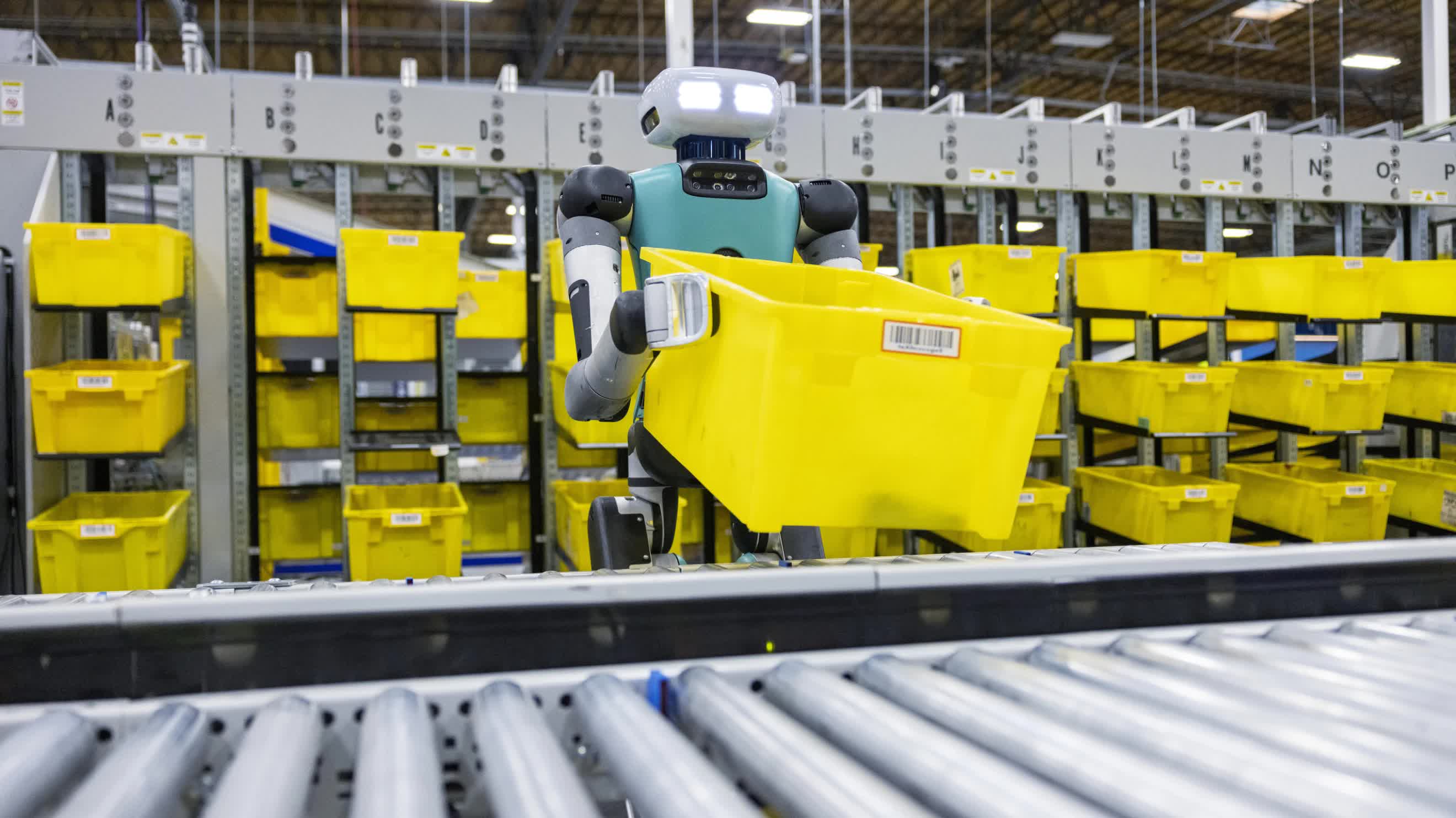
The Amazon warehouse industry is a multi-layered logistics ecosystem designed to facilitate the rapid storage, sorting, and distribution of goods through a combination of advanced robotics, artificial intelligence, and a vast human workforce. It operates as a proprietary supply chain that bridges the gap between global manufacturers and the "last mile" delivery to consumers' doorsteps.
The Anatomy of an Amazon Fulfillment Network
By 2026, the Amazon warehouse industry has evolved far beyond the traditional concept of "storage." It is a dynamic network categorized into specialized facilities, each serving a unique function within the supply chain. Understanding the industry requires a breakdown of these specific nodes, which collectively enable the speed of Prime delivery.
Fulfillment Centers (FC)
Fulfillment centers are the massive hubs where the majority of inventory is stored. These facilities can exceed one million square feet and house millions of items. Within an FC, the workflow is divided into "inbound" (receiving and stowing products) and "outbound" (picking, packing, and shipping). Amazon utilizes two primary types of FCs:
- Robotic Sortable: These facilities handle smaller items—books, electronics, and household goods—using a fleet of thousands of autonomous robots that move inventory pods to human workers.
- Non-Sortable: These handle larger or bulkier items, such as patio furniture, kayaks, or large appliances, requiring more manual handling or heavy-duty machinery like specialized forklifts.
Sortation Centers (SC)
Sortation centers act as the intermediary between fulfillment centers and delivery stations. Instead of storing inventory, these facilities focus on the rapid redirection of packages. Packages arrive from various FCs, are sorted by zip code or region using high-speed conveyor systems, and are then dispatched to the appropriate delivery station or third-party carrier (like UPS or USPS). This stage is critical for consolidating shipments and optimizing the transportation routes between major cities.
Delivery Stations (DS)
Delivery stations represent the final internal leg of the Amazon journey. Located near metropolitan areas, these smaller warehouses receive sorted packages from SCs and prepare them for "last mile" delivery. Here, packages are loaded onto delivery vans or given to "Amazon Flex" drivers. The focus in a DS is speed and volume, ensuring that orders transition from a long-haul truck to a local delivery vehicle in a matter of hours.
Specialized Facilities: IXDs and Amazon Air
The industry also includes Inbound Cross-Dock (IXD) facilities, which act as receiving hubs for vendors and third-party sellers. These facilities do not store goods for long; they break down massive shipments into smaller quantities and redistribute them to various fulfillment centers across the country. Additionally, Amazon Air hubs serve as the aviation nerve centers, managing the company's fleet of cargo aircraft to ensure cross-country delivery deadlines are met.
Inside the Machine: Robotics and Technology in 2026
The defining characteristic of the Amazon warehouse industry is its reliance on proprietary technology. In 2026, the integration of hardware and software has reached a level where human-robot collaboration is the standard operational procedure.
Autonomous Mobile Robots (AMRs)
The evolution of the "Kiva" robot has led to the deployment of Proteus, Amazon’s first fully autonomous mobile robot. Unlike previous versions that required caged-off areas for safety, Proteus uses advanced perception and navigation technology to move safely around human employees. These robots primarily move "GoCarts"—non-motorized wheeled transports used to move packages through the facility—reducing the physical strain on human workers.
Robotic Picking and the Sparrow Arm
For years, the "holy grail" of warehouse automation was the ability to pick individual, varied items from a bin—a task humans do effortlessly but robots struggle with due to the infinite variety of shapes and textures. By 2026, the Sparrow robotic arm has become a common sight in fulfillment centers. Using computer vision and AI, Sparrow can identify and handle millions of individual items, from a bottle of vitamins to a silk scarf, automating the "picking" process that was once entirely manual.
AI-Driven Inventory Placement
The "brain" of the warehouse is an AI system that predicts consumer demand with startling accuracy. Using machine learning, Amazon does not just store items where they fit; it stores them where they are likely to be needed. This is known as Regionalization. By analyzing local buying patterns, the AI ensures that popular items are stored in fulfillment centers closest to the predicted customers, drastically reducing the "miles per package" and enabling sub-same-day delivery speeds.
The Lifecycle of a Package: From Click to Doorstep
To understand the warehouse industry, one must follow the operational flow of a single order. This process is a symphony of synchronized movements that occurs in a timeframe often measured in minutes.
- Induct and Stow: When a product arrives at a fulfillment center, it is scanned and placed into a "pod." Amazon uses Random Stowage, a counter-intuitive system where items are placed wherever there is an open spot. The computer knows exactly where everything is, and this method maximizes every square inch of space.
- The Pick Stage: When a customer clicks "Buy Now," a robot is dispatched to fetch the pod containing that item. The robot carries the pod to a "pick station" where a human (or a Sparrow arm) removes the item.
- Packing and SLAM: The item moves via conveyor to a packing station. Once boxed, it passes through a SLAM (Scan, Label, Apply, Manifest) machine. This machine weighs the package in motion, prints a shipping label, and applies it with a puff of air in less than a second.
- Sorting and Dispatch: The package travels to a sortation center, where it is routed based on its destination zip code. Finally, it reaches the delivery station, where it is assigned to a specific delivery route.
Employment and Roles within the Warehouse Industry
Despite the high level of automation, the Amazon warehouse industry remains one of the largest employers in the logistics sector. The workforce is structured into "Tiers" ranging from entry-level associates to senior operations management.
Entry-Level Operations (Tier 1)
These roles include Stowers, Pickers, Packers, and Dock Workers. In 2026, these positions focus increasingly on "problem-solving" and interacting with robotic systems rather than pure manual labor. Amazon has invested heavily in WorkingWell programs, which use data to provide employees with ergonomic advice and guided physical stretches to prevent repetitive strain injuries.
Technical and Maintenance Roles
With thousands of robots per facility, the need for Reliability Maintenance Engineering (RME) has skyrocketed. These technicians are responsible for the upkeep of conveyors, AMRs, and robotic arms. This has created a new middle-class career path within the warehouse industry for those with mechanical and electrical certifications.
Management and Logistics Specialists
Operations Managers (L4-L7) oversee the flow of thousands of employees and millions of items. Their role is primarily data-driven, using real-time dashboards to identify bottlenecks in the "flow" of the building. They must balance labor costs, safety metrics, and "units per hour" (UPH) to meet strict corporate targets.
Comparative Analysis: Warehouse Facility Types
The following table summarizes the key differences between the primary nodes in the Amazon warehouse industry as of 2026.
| Facility Type | Primary Function | Inventory Duration | Level of Automation | Typical Size (Sq. Ft.) |
|---|---|---|---|---|
| Fulfillment Center (FC) | Long-term storage & picking | Days to Months | High (Robotic Arms/Pods) | 600,000 – 1,200,000+ |
| Sortation Center (SC) | Zip code sorting | Hours | Medium (Conveyors) | 300,000 – 600,000 |
| Delivery Station (DS) | Last-mile dispatch | 1 – 4 Hours | Low to Medium | 50,000 – 150,000 |
| Inbound Cross-Dock (IXD) | Bulk redistribution | < 24 Hours | Medium (High-speed sorting) | 500,000 – 800,000 |
Environmental and Social Impact
The scale of the Amazon warehouse industry brings significant responsibilities and challenges. As of 2026, the company continues to pursue its "Climate Pledge" goals, which have a direct impact on how warehouses are built and operated.
- Sustainability: Newer fulfillment centers are designed to be "all-electric." Rooftops are frequently covered in solar arrays, and the facility's heating and cooling systems are optimized by AI to reduce energy consumption during peak hours.
- Labor Relations: The industry has faced ongoing scrutiny regarding work pace and employee turnover. In response, Amazon has implemented more transparent performance metrics and "career choice" programs that pay for employees' college tuition, attempting to position warehouse work as a stepping stone rather than just a terminal job.
- Economic Footprint: When a new fulfillment center opens, it often becomes the largest employer in the county. While this brings jobs, it also puts pressure on local infrastructure, such as roads and public transit, leading to a complex relationship with municipal governments.
Future Outlook and Challenges
Looking beyond 2026, the Amazon warehouse industry is moving toward "lights-out" logistics—the concept of a facility that can operate with minimal human intervention for certain shifts. However, the complexity of the global supply chain means that human cognitive flexibility remains a vital component.
The primary challenge moving forward is the "Middle Mile" efficiency. While robotics have mastered the interior of the warehouse, the transition of goods between buildings still relies heavily on human-driven trucking. The integration of autonomous heavy-haul trucks and further expansion of the Amazon Air fleet are the next frontiers for the industry.
FAQs
What is the difference between an Amazon Warehouse and a Fulfillment Center?
In common parlance, they are used interchangeably, but "Fulfillment Center" is the specific technical term for a warehouse that stores and ships customer orders. Other "warehouses" in the network might only sort packages (Sortation Centers) or act as temporary holding areas for last-mile delivery (Delivery Stations).
Does Amazon use robots to replace humans?
While automation handles repetitive and physically demanding tasks like moving heavy pods or sorting boxes, humans are still required for complex tasks such as quality control, maintenance, and handling non-standard items. By 2026, the trend is "cobotics," where robots assist humans rather than replacing them entirely, though the total labor-per-package ratio continues to decrease.
How does Amazon manage such a massive inventory without losing items?
Amazon uses a system called "Computer-Assisted Manual Scanning." Every time an item moves, it is scanned. The system uses "Stow-on-Prime" logic where the computer suggests the most efficient location. If an item is misplaced, the AI identifies the discrepancy during the next picking cycle, and "Problem Solvers" are dispatched to rectify the inventory record.
Is working in an Amazon warehouse safe?
Amazon has faced criticism over safety, but in recent years, it has implemented extensive safety technology. This includes wearable tech that vibrates if an employee moves in a way that could cause injury and computer-vision systems that monitor forklift traffic to prevent collisions. Safety data is tracked as rigorously as productivity data.
Can third-party sellers use Amazon warehouses?
Yes, this is known as Fulfillment by Amazon (FBA). Third-party sellers send their products to Amazon's IXD facilities or Fulfillment Centers. Amazon handles the storage, picking, packing, shipping, and customer service for these products, allowing small businesses to leverage the massive warehouse infrastructure.
Practical Recommendation
For businesses looking to integrate with the Amazon warehouse industry, the most effective path is utilizing Fulfillment by Amazon (FBA). By doing so, your products become "Prime-eligible," which significantly increases visibility and conversion rates. However, it is essential to monitor your "Inventory Performance Index" (IPI). Amazon penalizes sellers for "slow-moving" inventory that takes up valuable warehouse space. To succeed, use data-driven forecasting to ensure you are only sending enough stock to cover 30–60 days of sales, thereby avoiding high storage fees while benefiting from the world's most advanced logistics network.