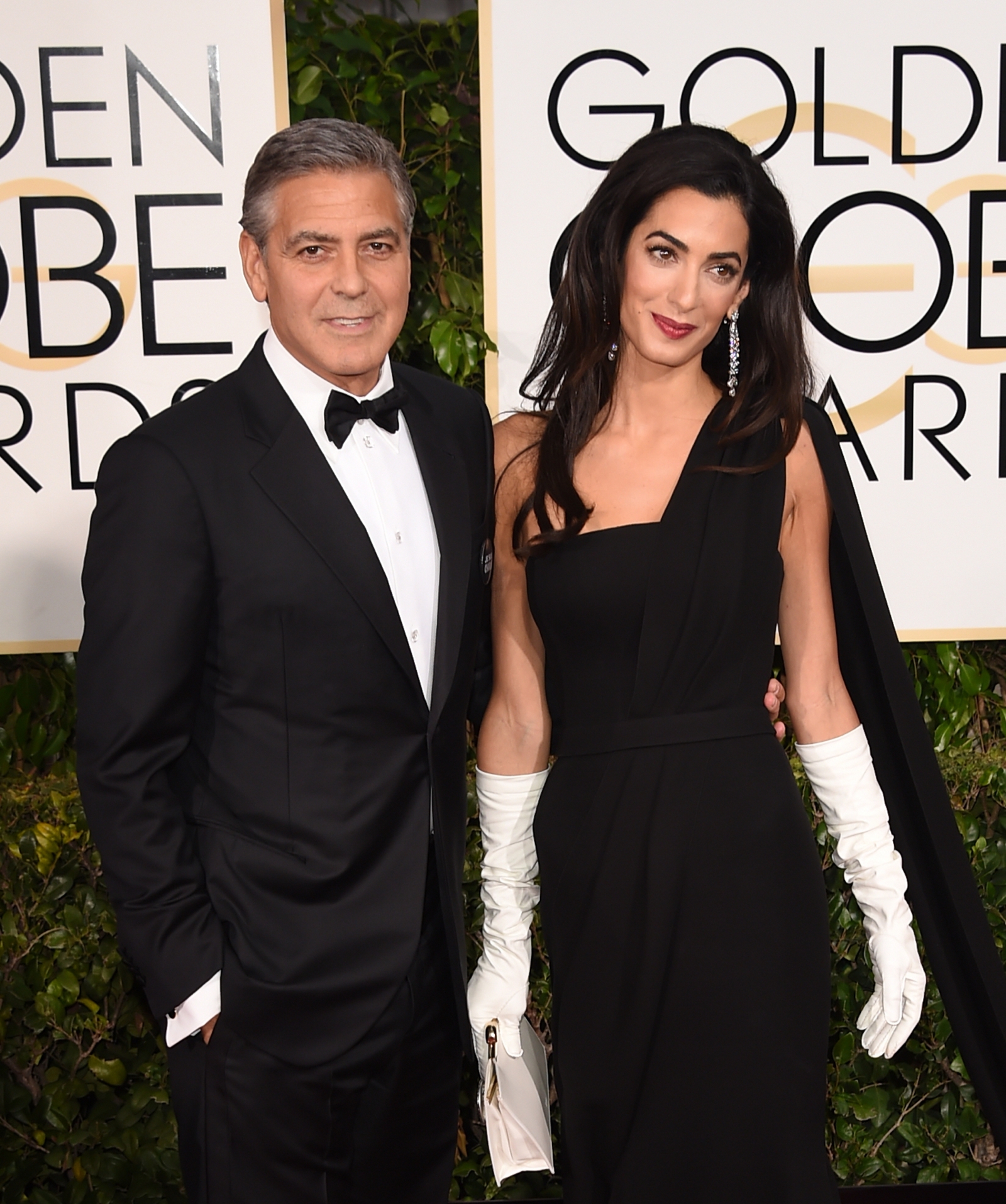
Amal Clooney (née Alamuddin) is a British-Lebanese international human rights lawyer, academic, and author whose background reflects a rich Middle Eastern cultural heritage. Born in Beirut during the Lebanese Civil War, she descends from a prominent Lebanese family featuring a patrilineal Druze lineage and a matrilineal Sunni Muslim heritage. Her family relocated to the United Kingdom in 1982, shaping her multicultural perspective and career in global legal advocacy.
Early Life and Cultural Heritage: From Beirut to Buckinghamshire
Amal Clooney was born on February 3, 1978, in Beirut, Lebanon, during a turbulent era marked by the escalation of the Lebanese Civil War. Her birth name, Amal, translates to "hope" in Arabic—a name chosen by her parents during a period of national upheaval.
When Amal was four years old in 1982, the intensifying conflict in Lebanon forced the Alamuddin family to flee Beirut. They relocated to the United Kingdom, settling in Gerrards Cross, Buckinghamshire, a suburb northwest of London. This migration was pivotal in shaping her identity: while raised within the British educational system, she maintained deep cultural connections to her native Lebanon, speaking fluent Arabic in addition to English and French.
Her upbringing exemplifies the broader story of the Lebanese diaspora—a global community known for preserving strong linguistic, familial, and cultural ties to the Levant while establishing high-achieving institutions in Europe and the Americas. Amal grew up in an intellectual household that prioritized academic rigor, political awareness, and cross-cultural communication, laying the groundwork for her eventual work in public international law.
Ancestral Lineage and Family Background
The Alamuddin and Miknas families are established within Lebanese society, each bringing distinct intellectual, professional, and cultural heritages to Amal Clooney's background.
- Alamuddin Family (Chouf / Baakleen)
- Ramzi Alamuddin (Father)
- Druze Heritage
- AUB Professor / Business Executive
- Ramzi Alamuddin (Father)
- Miknas Family (Tripoli, Lebanon)
- Bariaa Miknas (Mother)
- Sunni Muslim Heritage
- Foreign Editor / Political Journalist
- Bariaa Miknas (Mother)
The Alamuddin Family (Father’s Side)
Amal’s father, Ramzi Alamuddin, hails from Baakleen, a town in the Chouf District of Mount Lebanon. The Chouf region is historically recognized as the heartland of the Lebanese Druze community, where the Alamuddin family line has resided for generations.
Ramzi Alamuddin completed his Master of Business Administration (MBA) at the American University of Beirut (AUB). He served as an academic professor at AUB and spent decades as an executive in the travel and tourism industry, serving as vice president of the Universal Federation of Travel Agents' Associations (UFTAA). When civil conflict gripped Beirut, Ramzi managed international logistics and corporate operations before returning to academia in Lebanon in later years. The Alamuddin lineage in Lebanon includes prominent figures in jurisprudence, public service, and higher education.
The Miknas Family (Mother’s Side)
Amal’s mother, Bariaa Alamuddin (née Miknas), originates from Tripoli, a major coastal city in northern Lebanon with a predominantly Sunni Muslim population. Bariaa is an internationally recognized journalist, broadcast commentator, and public analyst.
For decades, Bariaa served as the foreign editor of the pan-Arab daily newspaper Al-Hayat. Her journalism career involved interviewing global leaders, heads of state, and international diplomats, including Margaret Thatcher, Bill Clinton, Fidel Castro, and Yasser Arafat. Beyond journalism, she founded International Communication Experts, a public relations and media consultancy agency. Bariaa has frequently appeared as an analyst on international television networks, offering commentary on Middle Eastern geopolitics and international relations. Her prominent position in international journalism exposed Amal to global politics, public affairs, and media relations from an early age.
Siblings and Extended Household Structure
Amal grew up in a blended family structure. She has one younger sister, Tala Alamuddin, who works as a fashion designer based in Singapore. Additionally, she has two elder half-brothers, Samer and Ziad, from her father’s first marriage. The extended family maintains an international presence, spanning the United Kingdom, Lebanon, Western Europe, and North America, combining Lebanese traditions with a global lifestyle.
Religious Roots: Navigating Druze and Sunni Traditions
To understand Amal Clooney’s religious background, one must examine the complex ethnoreligious matrix of Lebanon, a country that officially recognizes 18 distinct religious sects. Amal was raised by parents from different religious heritage traditions within this framework.
The Druze Tradition (Patrilineal Lineage)
Amal’s father, Ramzi, comes from a prominent Druze family. The Druze (Muwahhidun) represent an ethnoreligious group originating in the Middle East during the 11th century. Historically developing from Ismaili Shi'ism, the Druze faith evolved into a distinct monotheistic religion incorporating elements of Neoplatonism, Gnosticism, and Greek philosophy.
Key aspects of the Druze tradition include:
- Strict Monotheism: Known internally as al-Muwahhidūn ("The Unitarians"), the Druze emphasize the singular, indivisible nature of God.
- Esoteric Doctrine: The religious texts (Rasā'il al-hikmah or Epistles of Wisdom) are accessible primarily to an initiated group within the community called the Uqqāl ("the Wise"), while the uninitiated majority are known as Juhhāl.
- Social Endogamy and Non-Proselytization: The Druze community closed its doors to conversions in the 11th century. Religious identity is passed down through birth, and traditional norms historically encouraged marriage within the faith.
- Reincarnation: Druze theology holds a firm belief in the transmigration of the soul (taqammuṣ) upon death.
Because Druze identity relies on traditional lineage, descended individuals retain a recognized cultural link to the community even if they do not actively practice the esoteric rites.
The Sunni Muslim Tradition (Matrilineal Lineage)
Amal’s mother, Bariaa, belongs to a Sunni Muslim family from Tripoli. Sunni Islam represents the largest branch of Islam globally, adhering to the Sunnah (teachings and actions of the Prophet Muhammad) as preserved in traditional Hadith collections.
In Lebanon, the Sunni community historically forms a major political pillar of the state governance structure, centered in urban hubs such as Beirut, Tripoli, and Sidon. Growing up with a Sunni mother exposed Amal to Islamic cultural values, traditions, and the broad intellectual discourse of the broader Arab and Islamic world.
Personal Faith and Secular Internationalism
Despite her parents' distinct religious lineages, Amal Clooney has consistently maintained a private stance on her personal spiritual beliefs. She has not identified publicly as a practicing member of either the Druze or Islamic faiths. Instead, her public persona and career reflect a secular, cosmopolitan worldview rooted in universal human rights law, civil liberties, and international legal frameworks.
Her family home in England was characterized by intellectual debate, secular values, and cultural open-mindedness rather than strict adherence to religious orthodoxy. This interreligious background provided her with a nuanced understanding of Middle Eastern sectarian dynamics, which later informed her legal defense of persecuted religious minorities across the globe.
Summary Matrix: Amal Clooney’s Background, Ethnicity, and Heritage
| Background Dimension | Verified Attribute / Historical Context | Key Professional & Cultural Notes |
|---|---|---|
| Ethnicity | Lebanese (Arab) | Holds dual British and Lebanese citizenship; fluent in English, French, and Arabic. |
| Birthplace | Beirut, Lebanon | Born February 3, 1978; relocated to the UK in 1982 due to the Lebanese Civil War. |
| Father's Heritage | Druze Monotheistic Tradition | Ramzi Alamuddin; from Baakleen, Chouf District; MBA graduate and professor at AUB. |
| Mother's Heritage | Sunni Muslim Tradition | Bariaa Miknas Alamuddin; from Tripoli, Lebanon; foreign editor for Al-Hayat. |
| Primary Secondary Education | St. Paul’s Girls’ School | High-achieving private independent school in London, England. |
| Higher Education | Oxford University & NYU School of Law | BA in Jurisprudence (St Hugh's College, Oxford); Master of Laws (LL.M., NYU). |
| Legal Specialization | International Law & Human Rights | Doughty Street Chambers barrister; adjunct professor at Columbia Law School. |
| Philanthropic Leadership | Clooney Foundation for Justice | Co-founder; advocates for accountability for mass atrocities and media freedom. |
Educational Attainment and Professional Evolution
Amal Clooney’s multicultural background provided a strong foundation for an academic and legal career specializing in international law, extradition, and international criminal justice.
Academic Preparation in the UK and US
Amal attended St. Paul's Girls' School in Hammersmith, London, one of the United Kingdom's premier academic institutions. She subsequently earned an exhibition scholarship to study jurisprudence at St Hugh's College, Oxford, graduating with a Bachelor of Arts (BA) in Law in 2000.
To expand her expertise into international legal systems, she moved to the United States to pursue a Master of Laws (LL.M.) at the New York University School of Law. At NYU, she focused on international law and received the Jack J. Katz Memorial Award for excellence in entertainment law and legal writing. During her time at NYU, she worked for a semester as a judicial clerk at the United States Court of Appeals for the Second Circuit under Sonia Sotomayor, who was later appointed to the Supreme Court of the United States.
- St. Paul's Girls' School
- Primary Secondary Education (London)
- Oxford University (St Hugh's)
- BA in Jurisprudence (Graduated 2000)
- NYU School of Law (LL.M.)
- Master of Laws & Clerkship (Sonia Sotomayor)
- Admitted to NY Bar (2002) & UK Bar (2010)
- Senior Barrister at Doughty Street Chambers
High-Profile Legal Advocacy and Human Rights
Following her legal training, Amal qualified to practice law in New York in 2002 and was later called to the Bar of England and Wales (Inner Temple) in 2010. She joined Doughty Street Chambers in London, a prominent set of barristers' chambers specializing in human rights, civil liberties, and international law.
Her legal practice covers complex cases before international courts, including the International Court of Justice (ICJ), the International Criminal Court (ICC), and the European Court of Human Rights (ECHR). Key international proceedings and appointments include:
- Representation of Persecuted Minorities: Represented Nadia Murad and other Yazidi survivors of genocide perpetrated by ISIS, advocating for prosecution under international criminal law.
- Freedom of the Press: Served as lead counsel for journalists facing political prosecution, including Reuters journalists Wa Lone and Kyaw Soe Oo imprisoned in Myanmar, securing their eventual release.
- State Sovereignty and Human Rights: Advised the United Nations on Middle Eastern affairs, including serving as a counsel to the UN Special Envoy on Syria.
- Academic Appointments: Joined Columbia Law School as a visiting professor and co-taught courses on human rights and international criminal justice.
Her deep familiarity with Middle Eastern legal, political, and cultural dynamics has informed her advocacy on behalf of victims of armed conflict and state repression across the region and around the world.
Misconceptions Regarding Her Ethnicity and Heritage
Due to her global prominence and public attention following her 2014 marriage to American actor George Clooney, media reporting has sometimes generated confusion regarding her background.
Addressing Media Misclassifications
- Conflating Ethnicity with Religion: Media accounts occasionally mislabel her background by reducing her complex ancestry to a single religious label. While her father comes from a Druze background and her mother from a Sunni Muslim background, Amal herself was raised in a secular home environment and operates professionally within international legal frameworks.
- Geographic Heritage: Amal is sometimes referred to solely as British, omitting her Lebanese citizenship, native Arabic language skills, and active engagement with Middle Eastern affairs. She holds dual British-Lebanese nationality.
- Stereotyping Middle Eastern Professional Women: Media coverage historically focused heavily on her fashion choices or personal life rather than her extensive qualifications in public international law. Critics and legal scholars have noted that this initial coverage understated her academic background, multi-language advocacy skills, and legal career.
Understanding her true background requires acknowledging her identity as a British-Lebanese professional raised in an intellectual family, with ancestral roots that span two distinct religious traditions in Lebanon.
Frequently Asked Questions
What is Amal Clooney's ethnicity?
Amal Clooney is ethnically Lebanese (Arab). She holds dual citizenship in the United Kingdom and Lebanon. Born in Beirut, she speaks fluent Arabic, English, and French, maintaining close ties to her Middle Eastern heritage while living and working in Europe and the United States.
What are the religious backgrounds of Amal Clooney's parents?
Amal’s father, Ramzi Alamuddin, comes from a prominent Lebanese Druze family rooted in the Chouf District of Mount Lebanon. Her mother, Bariaa Miknas Alamuddin, belongs to a Sunni Muslim family from Tripoli, Lebanon. Her upbringing in London incorporated cultural elements from both backgrounds within a secular household.
Is Amal Clooney a practicing Druze or Muslim?
Amal Clooney has kept her personal religious convictions private and has not publicly identified as a practicing member of either the Druze or Islamic faiths. Her professional and public work is conducted through a secular framework centered on international human rights, civil liberties, and international law.
Why did Amal Clooney's family move from Lebanon to the United Kingdom?
The Alamuddin family left Beirut in 1982 when Amal was four years old to escape the intensifying Lebanese Civil War. They relocated to Buckinghamshire, England, where her parents established their professional careers and provided their children with a British education.
How did her family background influence her human rights law career?
Growing up in an intellectual, bilingual household with a foreign editor mother and an academic father exposed Amal to international politics, journalism, and Middle Eastern diplomacy early in life. Her family's experience as refugees fleeing civil conflict fostered an interest in refugee rights, international justice, and legal protections for persecuted groups.
Broader Significance of Her Legacy
Amal Clooney’s family background and heritage demonstrate the impact of the global Lebanese diaspora. By navigating the intersections of a Druze patrilineal ancestry, a Sunni Muslim matrilineal lineage, and a British legal education, she embodies a multicultural approach to advocacy.
Her career illustrates how personal background, regional knowledge, and rigorous training can converge to address complex global issues—from prosecuting international crimes to defending media freedoms and advocating for vulnerable communities worldwide.