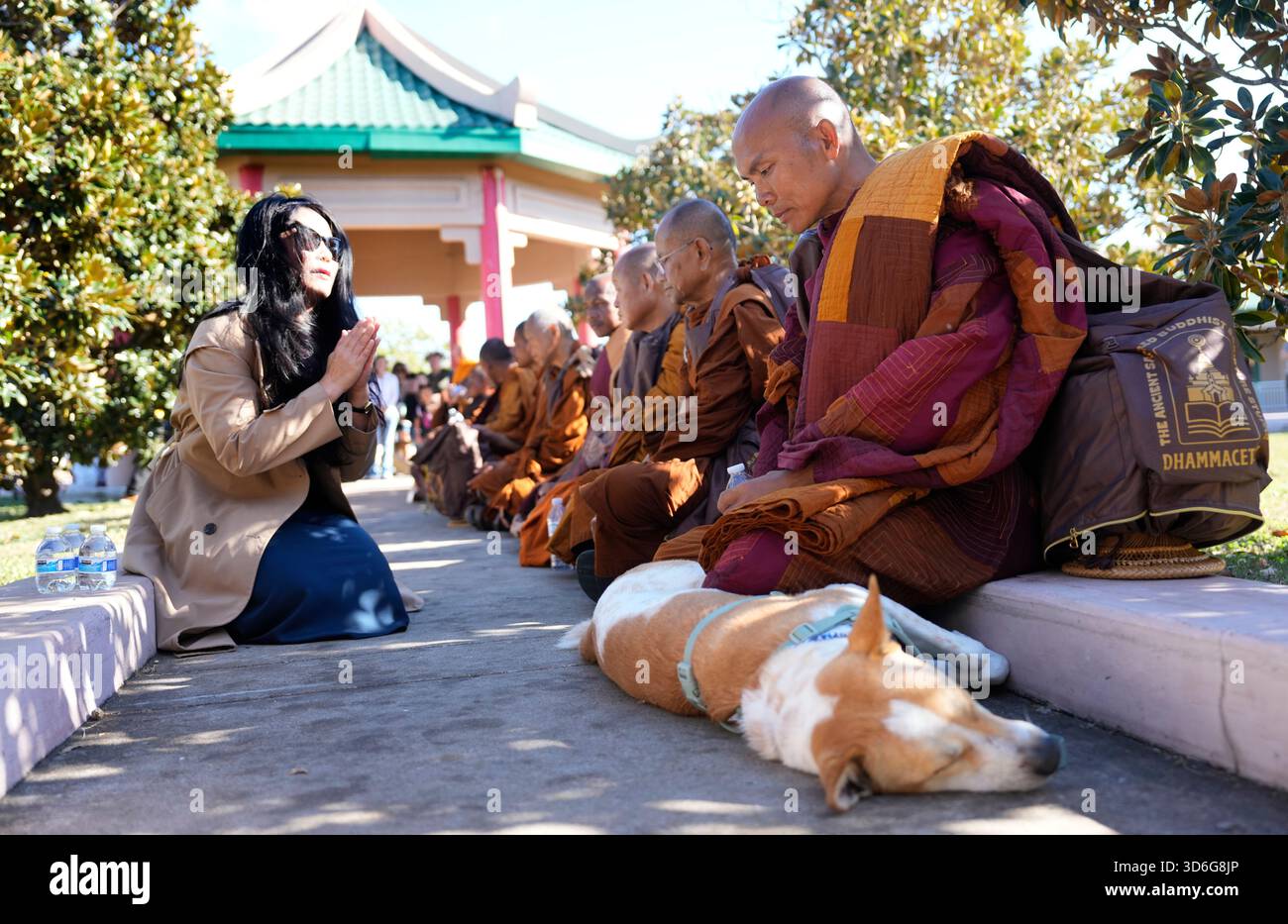
Aloka the Monk Dog was the beloved resident Golden Retriever at Bodhinyana Monastery in Western Australia. Known globally through the teachings of Ajahn Brahm, Aloka became a symbol of mindfulness and loving-kindness, living alongside the monastic community until his passing in 2023, leaving a lasting legacy of peace.
The Origins of a Canine Bodhisattva
In the quiet, eucalyptus-scented bushland of Serpentine, Western Australia, lies the Bodhinyana Buddhist Monastery. For years, this sanctuary for monks of the Thai Forest Tradition was also the home of one of the world's most famous "monastic" animals: Aloka. To understand the impact of Aloka, one must first understand the environment in which he was raised—a place of deep silence, rigorous meditation, and the practice of Metta, or loving-kindness.
Aloka arrived at the monastery as a young pup, donated by a supporter of the Buddhist Society of Western Australia (BSWA). His name, Aloka, is a Pali word meaning "light" or "illumination." From the outset, his presence was intended to be a source of joy for the community, but few anticipated just how deeply he would integrate into the spiritual fabric of the monastery. Unlike a typical household pet, Aloka was raised in an atmosphere of communal silence and renunciation. This unique upbringing shaped a temperament that many visitors described as "monk-like"—unusually calm, perceptive, and remarkably patient.
As we look back from the perspective of 2026, Aloka’s life serves as a case study in how environment and intention can influence the behavior of sentient beings. He was not merely a mascot; he was a silent participant in the Sangha (the spiritual community), reminding monastics and laypeople alike that the qualities of the Buddha—peace, presence, and kindness—are not exclusive to humans.
Life Inside Bodhinyana Monastery
Bodhinyana is a forest monastery where the monks follow a strict schedule of early morning chanting, meditation, and a single meal a day. Aloka adapted to this rhythm with surprising ease. While most dogs are characterized by their boundless energy and demand for attention, Aloka became famous for his ability to sit perfectly still during long Dhamma talks (spiritual discourses).
The Daily Routine of a Monk Dog
Aloka’s day typically began long before dawn, mirroring the schedule of the monks. While he did not join in the chanting, his presence at the monastery gates or in the meditation hall provided a grounding force for the practitioners. His interactions were governed by the principles of the monastery:
- Silence: Aloka was rarely heard barking. He communicated through presence and gentle movement.
- Patience: During the daily meal offering, where hundreds of visitors might gather, Aloka remained composed, never begging or intruding on the ritual space.
- Presence: He often sat at the feet of Ajahn Brahm during Friday night teachings, which were broadcast to millions worldwide via the BSWA YouTube channel.
This disciplined lifestyle did not mean Aloka was deprived of "doghood." He had ample space to roam the monastery grounds, deep in the Australian bush. However, the lack of chaotic stimuli—no shouting, no aggressive play, no television—resulted in a dog that seemed to exist in a state of perpetual meditation. For the monks, he was a "Dhammapala," a protector of the teachings, simply by being an embodiment of a calm mind.
Spiritual Lessons from a Golden Retriever
Ajahn Brahm, the Abbot of Bodhinyana and a world-renowned spiritual teacher, frequently used Aloka as a living metaphor in his teachings. Aloka provided a tangible example of several core Buddhist concepts that can often feel abstract to the layperson.
Unconditional Loving-Kindness (Metta)
One of the most profound lessons Aloka taught was the nature of unconditional love. In Buddhism, Metta is a love that does not seek to possess or change the other. Aloka greeted everyone—from high-ranking monastics to troubled visitors seeking solace—with the same quiet warmth. He did not judge a person’s past, their social status, or their level of meditation expertise. This "dog-view" was often cited by Ajahn Brahm as the closest many people would get to experiencing the pure, non-judgmental compassion of a Buddha.
The Power of Stillness
In a world increasingly dominated by digital distractions and "busy-ness," Aloka’s ability to simply be was revolutionary. Visitors often remarked that just watching Aloka sit on the veranda at Bodhinyana helped lower their heart rates. He was a master of Sati (mindfulness). When he was walking, he was just walking. When he was sitting, he was just sitting. He did not appear to be ruminating on the past or worrying about the future, providing a perfect mirror for practitioners struggling with the "monkey mind" during meditation.
Dealing with Fame and Ego
Despite being featured in international documentaries, social media clips, and books, Aloka remained entirely unaffected by his fame. This was a recurring theme in monastery talks: the "Monk Dog" had no ego to stroke. He didn't care about his "likes" on YouTube or how many people recognized him at the monastery gates. For the monastics, Aloka was a reminder that one can be known by many without losing one’s inner silence.
Aloka’s Physical and Spiritual Attributes
To appreciate why Aloka was so distinct from other Golden Retrievers, it is helpful to look at the specific traits he exhibited within the monastic context.
| Trait | Typical Domestic Dog | Aloka the Monk Dog |
|---|---|---|
| Reaction to Noise | Often barks, jumps, or becomes anxious. | Remained calm during bells, chanting, and crowds. |
| Social Interaction | Seeks constant active play and attention. | Offered a "quiet presence" and waited to be approached. |
| Dietary Habit | Often focused on treats and begging. | Fed on a controlled schedule; respected the monks' single meal. |
| Meditation Presence | Likely to be restless or distracting. | Known for sleeping or sitting still for 60+ minutes. |
| Territoriality | Often protective or aggressive toward strangers. | Welcomed thousands of global visitors with equanimity. |
The Legacy of a Gentle Departure
In September 2023, the global Buddhist community mourned the passing of Aloka. He had reached an advanced age for a Golden Retriever, having lived a full and peaceful life. His death was handled with the same mindfulness that characterized his life. The monks performed traditional chants, and messages of gratitude poured in from every corner of the globe—from the United Kingdom to Sri Lanka.
His passing became a teaching moment on Anicca (impermanence). Ajahn Brahm and other senior monks used the occasion to discuss the reality that all conditioned things must pass away. Even a "monk dog" is subject to the laws of nature. However, the grief felt by the community was tempered by the recognition of the "good Kamma" Aloka had created. Through his gentle presence, he had eased the suffering of thousands of people, making him a true servant of the Dhamma.
As of 2026, Aloka’s memory is preserved through the "Aloka Fund" and various memorial spaces within the monastery. His photos continue to circulate as memes of peace, and he is often mentioned in the same breath as historical monastery animals who were said to have attained high levels of rebirth due to their proximity to the holy life.
Practical Guidance: Visiting Bodhinyana and Honoring Aloka
While Aloka is no longer physically present at the monastery, the spirit of his practice remains. For those looking to connect with his legacy or visit the site where he lived, certain protocols apply.
- Respecting the Silence: Bodhinyana is a place of practice. Visitors are encouraged to maintain a quiet demeanor, reflecting the stillness that Aloka himself modeled.
- Supporting the Sangha: Aloka’s care was provided by the Buddhist Society of Western Australia. Supporting the society ensures that the monastery can continue to offer a sanctuary for all beings.
- Applying the "Dog Dhamma": One of the best ways to honor Aloka is to practice the qualities he embodied. This means practicing "Unconditional Metta" toward the animals and humans in your own life.
- Mindfulness with Pets: For pet owners, Aloka serves as an inspiration to create a calmer environment for their animals. Reducing loud noises and practicing meditation in the presence of pets can have a profound effect on their temperament.
The story of Aloka the Monk Dog transcends the simple tale of a pet. It is a narrative about the interconnectedness of all life and the possibility of finding peace regardless of the form one inhabits. He proved that you don't need to speak Pali or wear saffron robes to be a light in the world; sometimes, a wagging tail and a still heart are more than enough.
Frequently Asked Questions
Was Aloka the Monk Dog a vegetarian?
At Bodhinyana Monastery, the monks follow the traditional Vinaya rules, which means they eat what is offered to them, including meat (provided the animal was not specifically killed for them). However, the monastics are generally very mindful of animal welfare. Aloka’s diet was primarily a high-quality, balanced canine diet provided by the lay community. While many Buddhists choose vegetarianism, Aloka was fed based on his nutritional needs as a canine, though he lived in an environment where the "first precept" (abstaining from taking life) was strictly observed.
How did Aloka get his name?
His name was chosen by the monastic community. Aloka is a Pali word that means "light," "brightness," or "illumination." In Buddhist cosmology, Aloka-Kasina is a type of meditation involving light. The name was fitting because Aloka was often described as a "bright spot" in the day for both the monks and the many visitors who came to the monastery seeking relief from their troubles.
Can I see Aloka in any videos?
Yes, Aloka appeared in many of the Friday night Dhamma talk recordings hosted by the Buddhist Society of Western Australia. He can often be seen lying peacefully at the feet of Ajahn Brahm or wandering quietly in the background of monastery tours. These videos are archived on YouTube and remain a popular way for people to experience his calming influence even years after his passing.
Is there a new "monk dog" at Bodhinyana now?
While there are occasionally other animals that find sanctuary at the monastery, Aloka held a unique position. The monks do not "replace" animals as if they were equipment. The decision to bring another dog into the community depends on many factors, including the monastery's needs and the availability of a suitable animal that can thrive in a silent, monastic environment. Aloka’s "tenure" was a specific period in the monastery's history that remains highly cherished.
What breed of dog was Aloka?
Aloka was a Golden Retriever. This breed is known for its intelligence, gentle temperament, and "eager to please" nature, which made him an ideal candidate for a life among humans in a communal setting. His breed characteristics combined with his unique spiritual upbringing resulted in the extraordinary personality he was known for.
Summary Recommendation
For those moved by the story of Aloka, the most practical next step is to explore the "Dhamma of Dogs." Consider how the environment you provide for your own pets influences their mental state. Furthermore, watching the archived teachings of Ajahn Brahm where Aloka is present can serve as a "visual meditation," helping to cultivate the same sense of stillness that Aloka practiced throughout his life. If you find yourself in Western Australia, a visit to the Bodhinyana Monastery (during visiting hours) offers a chance to experience the profound peace that shaped this world-famous Golden Retriever.