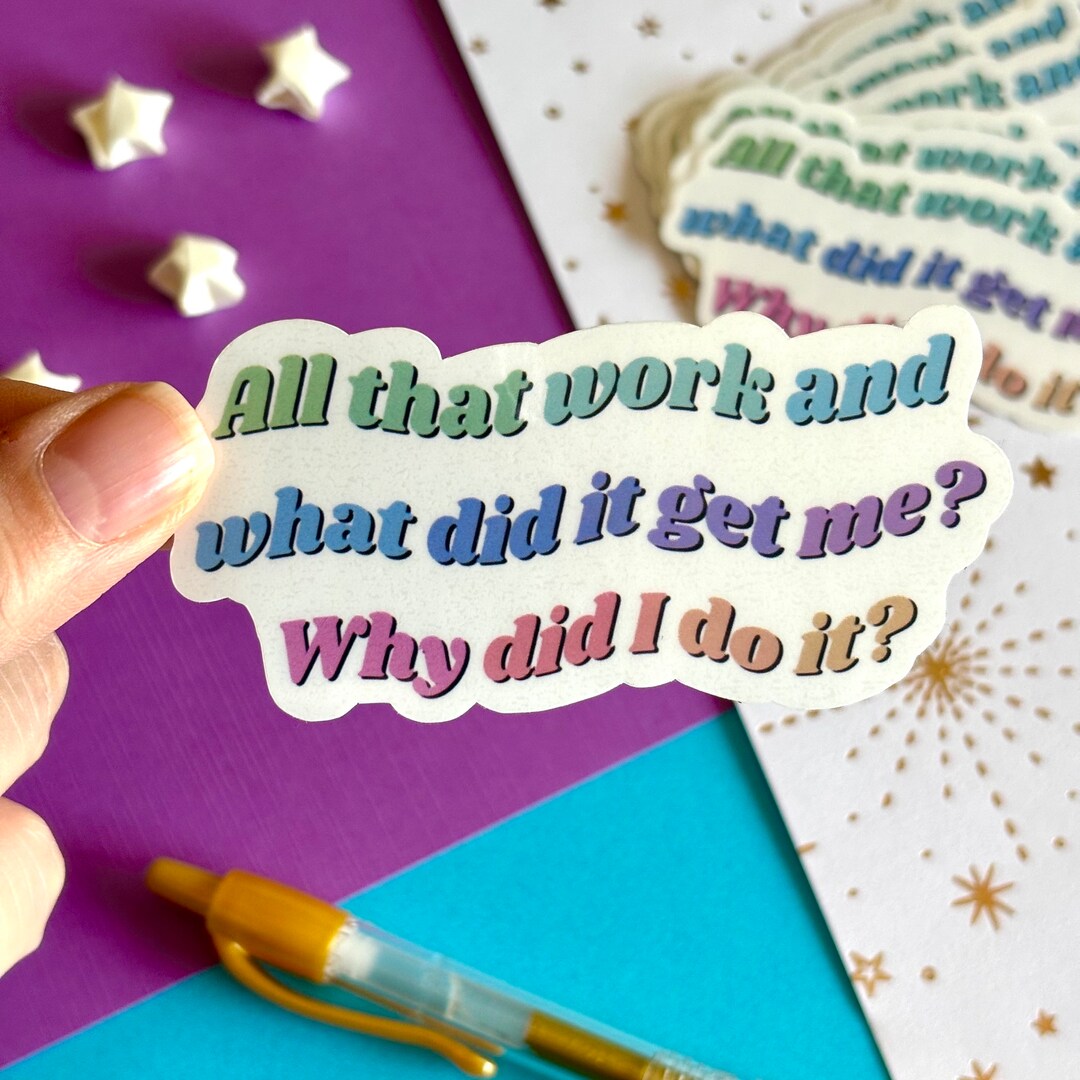
The lyric "All that work and what did it get me?" serves as the explosive opening to "Rose's Turn," the climactic musical number from the 1959 Broadway masterpiece Gypsy. This song, featuring lyrics by Stephen Sondheim and music by Jule Styne, depicts the psychological collapse and raw revelation of Mama Rose, a character often cited as the ultimate stage mother.
The Significance of "Rose’s Turn" in Musical Theater History
As of 2026, Gypsy remains a cornerstone of the American musical theater canon. The song "Rose's Turn" is not merely a solo; it is a "11 o'clock number" that redefines the narrative structure of the show. To understand the myths surrounding "all that work and what did it get me," one must first understand the technical and emotional weight the song carries.
In the context of the plot, Rose has spent her entire life vicariously living through her daughters, June and Louise. After Louise becomes the famous burlesque star Gypsy Rose Lee and asserts her independence, Rose is left alone on a bare stage. The song is her "turn"—both her moment in the spotlight she always craved and her psychological pivot toward a devastating reality.
The phrase "all that work" refers to the decades of traveling, scheming, sewing costumes, and aggressive stage-managing that Rose performed. However, the "myths" associated with this song often stem from a surface-level interpretation of these lyrics, ignoring the complex subtext that Sondheim and Styne carefully engineered.
Myth 1: The Song is a Literal Complaint About Financial Failure
A common misconception is that Rose is mourning a lack of financial return or a failed "investment" in her children. While the lyrics mention "all that work," the "get me" part of the phrase is deeply psychological, not fiscal.
The Emotional Currency
Rose’s "work" was a currency she used to buy a sense of self-worth. In her mind, if she made her daughters stars, she became the architect of greatness, thereby justifying her own existence. When she asks what it got her, she is realizing that she has no identity outside of her role as a mother/manager. The "nothing" she receives is the absence of a self.
The Rejection of Motherhood as a Sacrifice
One of the most profound "debunking" points is that the song reveals Rose’s "sacrifice" was actually a form of self-interest. Throughout the show, she claims everything she does is "for the kids." "Rose’s Turn" strips this mask away. By the time she reaches the climax of the song, she is screaming "For me! For me! For me!" This isn't a myth of failure; it is a confession of ego.
Myth 2: The Song Was Written to Be a Standalone Showstopper
Many casual listeners believe "Rose's Turn" was designed as a hit parade song similar to "Everything's Coming Up Roses." This is factually incorrect. "Rose's Turn" is a musical pastiche—a structural collage of every major theme that appeared earlier in the show.
Musical Architecture
The song utilizes fragments from:
- "May We Entertain You"
- "Some People"
- "Everything's Coming Up Roses"
- "Small World"
Stephen Sondheim specifically designed the lyrics to mirror Rose's fractured mental state. It is not a "song" in the traditional sense; it is a musicalized nervous breakdown. In 2026, theater historians continue to point to this as the moment musical theater transitioned from "musical comedy" into "musical drama," where the music itself acts as a diagnostic tool for the character's psyche.
Myth 3: The "Stutter" Ending Was Always in the Script
One of the most famous elements of the song is the terrifying moment toward the end where Rose attempts to sing the word "Momma" and becomes stuck, repeating the initial consonant in a rhythmic, mechanical stutter ("M-m-m-momma..."). Many believe this was a directive from the original songwriters.
The Jerome Robbins Influence
In reality, the iconic stutter was a directorial choice by Jerome Robbins, the original director and choreographer. Robbins wanted to visually and auditorily represent Rose’s brain "short-circuiting." While Jule Styne and Stephen Sondheim supported the choice, it was a piece of theatrical "business" rather than a foundational part of the sheet music.
Over the years, different performers have interpreted this moment with varying degrees of intensity. Some treat it as a literal stroke, while others treat it as a moment of pure, blinding ego where she cannot finish the word because she can no longer see herself as just a mother.
Myth 4: Any Powerhouse Singer Can "Own" the Song
There is a myth in the theater community that "Rose’s Turn" is simply about volume and vocal power. This is why it is often performed in cabarets and competitions by singers who can "belt" the high notes but miss the dramatic nuance.
Acting vs. Singing
The technical depth of the song requires an actress, not just a vocalist. The song is a journey from indignation to mania, then to a hollowed-out clarity. If a performer focuses only on the "all that work" belt, they fail to communicate the "what did it get me" tragedy. The song demands a controlled descent into madness.
| Performance Era | Notable Actress | Interpretation Style | Key "Rose's Turn" Characteristic |
|---|---|---|---|
| 1959 Original | Ethel Merman | Brassy, Indomitable | Pure vocal power and a sense of "unmovable" will. |
| 1974 Revival | Angela Lansbury | Vulnerable, Fragile | Focused on the psychological disintegration and maternal regret. |
| 2003 Revival | Bernadette Peters | Sensual, Delusional | Played Rose as a woman who used her charm as a weapon until it failed. |
| 2008 Revival | Patti LuPone | Explosive, Ferocious | A "scorched earth" approach that emphasized the character's anger. |
| 2015 London | Imelda Staunton | Terrifying, Clinical | A gritty, realistic depiction of a mental breakdown. |
Myth 5: The Lyric "All That Work" is a Modern Sample
In recent years, snippets of "Rose's Turn" have trended on social media platforms (like TikTok and Instagram) as "sound bites" for people complaining about their jobs or chores. This has created a myth among younger generations that the phrase is a modern pop sample or a generic meme.
Recontextualizing for 2026
It is important to preserve the historical context: the song is over 65 years old. When a modern creator uses the "all that work" audio to describe a failed gym routine or a cooking mishap, they are engaging in a form of cultural shorthand. However, the original intent is far darker. The "work" Rose refers to is the systematic manipulation of her family’s lives. Understanding this distinction prevents the trivialization of one of the most complex female characters in literature.
Technical Analysis: Why the Song Works
The reason the "all that work" opening is so effective is its intervallic structure. Jule Styne used aggressive, rising intervals that mimic a person shouting or demanding attention.
- The Intro: The brassy fanfare sets a "vaudeville" tone, which Rose immediately subverts with her bitter vocal entry.
- The Pacing: The song starts at a high emotional pitch and somehow finds room to escalate. This is a technical challenge for both the conductor and the performer.
- The "Turn": The bridge of the song shifts from talking about the kids to talking about Rose. The music shifts keys frequently, signifying her unstable footing.
The "Scrapbook" Effect
Sondheim’s lyrics are a "scrapbook" of Rose's life. By debunking the myth that these are just random lyrics, we see that every word has been earned. When she says "Everything's coming up Roses and Daffodils," she is quoting her own previous delusion from the end of Act I. The tragedy is that in the first act, she believed it; in the finale, she knows it’s a lie.
Comparison of Interpretations: Vocal vs. Dramatic
When analyzing "all that work and what did it get me," critics often split performances into two camps: the "Vocalists" and the "Actors."
- The Vocalist Approach: Focuses on the "money notes." These performances are thrilling to hear but can sometimes feel like a concert rather than a scene. The "work" mentioned feels like the work of a professional singer.
- The Actor Approach: Focuses on the "scars." These performances might have vocal imperfections, but they capture the desperation of a woman who has lost her grip on reality. The "work" mentioned feels like a lifetime of grime, cheap hotels, and disappointment.
In 2026, the trend in revivals has moved toward the "Actor" approach, emphasizing the grit of the character over the polish of the performance.
Common Misconceptions About the Song's Conclusion
A final myth to debunk is that the song ends in a "victory." Because the audience usually erupts in thunderous applause, there is a misconception that Rose has "won" or found redemption.
The "Silent" Bow
In many sophisticated productions, the applause is intentionally interrupted. Rose stands there, basking in the imaginary cheers of a phantom audience, only to realize that the theater is empty—or worse, that the audience is only clapping for her talent, not her as a person. The "turn" didn't get her love; it only got her attention.
The final dialogue between Rose and Louise that follows the song is crucial. Rose tells a story about a dream where her name was in lights. Louise, now the adult in the room, offers a cold but realistic comfort. The "work" didn't get Rose the stardom she wanted; it only got her a daughter who pities her.
Frequently Asked Questions
Who wrote the lyrics to "all that work and what did it get me"?
The lyrics were written by Stephen Sondheim. While many associate the music of Gypsy with the grand style of Jule Styne, the biting, clever, and psychologically grounded lyrics are pure Sondheim. It was one of his early successes before he became the primary composer/lyricist for his own shows.
Is "Rose's Turn" based on a true story?
Yes, Gypsy is based on the memoirs of Gypsy Rose Lee (Louise Hovick). While the musical takes creative liberties with the timeline and specific events, the character of Mama Rose is based on the real-life Mother Rose, who was notorious in the vaudeville circuit for her aggressive management and complex relationship with her daughters.
Why is the song called "Rose's Turn"?
The title has a double meaning. Primarily, it refers to a "turn" in vaudeville, which was the slang for an act or a performance slot. Secondly, it refers to Rose finally taking her "turn" in the spotlight after spending years standing in the wings watching her children perform.
Is the song "Rose's Turn" considered a monologue?
In technical theater terms, it is often referred to as a musical monologue. Because the character is alone on stage and the "action" of the song is an internal psychological shift, it functions exactly like a dramatic monologue, with the music providing the emotional subtext.
What is the most difficult part of the song to perform?
Musically, the "stutter" section and the final sustained belt are the most taxing. Dramatically, the most difficult part is the transition from "May We Entertain You" (the sweet, girlish theme) into the harsh reality of "Rose’s Turn." The performer must change their entire physical and vocal persona within a few bars of music.
Practical Recommendation for Students and Performers
If you are studying "all that work and what did it get me" for a performance or an academic paper in 2026, your first step should be to watch the 1962 film and the various recorded stage revivals (such as the 2015 Imelda Staunton version or the 2008 Patti LuPone version).
Avoid treating the lyrics as a generic anthem of frustration. Instead:
- Map the Themes: Identify where each musical fragment comes from earlier in the show.
- Analyze the Pronouns: Notice how the lyrics shift from "we" and "they" to "I" and "me."
- Contextualize the "Work": List the specific sacrifices Rose mentions (the "years of being 'Mama'") and decide whether the character believes those sacrifices were genuine or manipulative.
By debunking the myths of "Rose’s Turn," we honor the complexity of Sondheim and Styne's work and keep the legacy of Mama Rose alive for future generations of theater lovers.