The Garfield film franchise represents a fascinating case study in how a four-panel comic strip character can be adapted across multiple decades and varying animation technologies. From the early 2000s live-action hybrids to the high-budget animated spectacles of the 2020s, the "fat cat" has maintained a persistent, if polarizing, presence in cinema. This review examines the technical execution, narrative depth, and cultural impact of every major Garfield feature film released to date.
The Bill Murray Era: Hybrid Experiments (2004–2006)
The early 2000s were a period of experimentation for studios attempting to blend computer-generated imagery (CGI) with live-action environments. This era was defined by the casting of Bill Murray, a choice that seemed perfect on paper but became a source of industry legend.
Garfield: The Movie (2004)
Released in 2004, Garfield: The Movie was the first time Jim Davis’s creation stepped onto the big screen. Directed by Peter Hewitt, the film stars a CGI Garfield voiced by Bill Murray, interacting with a live-action world featuring Breckin Meyer as Jon Arbuckle and Jennifer Love Hewitt as Dr. Liz Wilson.
The narrative focuses on the arrival of Odie, the dim-witted but lovable dog, which disrupts Garfield’s comfortable lifestyle. The plot follows a traditional "rescue" arc after Odie is kidnapped by a television host named Happy Chapman (played by Stephen Tobolowsky). While the film was a significant box office success, grossing over $200 million worldwide, critical reception was largely negative.
From a technical perspective, the CGI in 2004 was groundbreaking for its time but has not aged particularly well. The "Uncanny Valley" effect is prominent; Garfield’s realistic fur texture often clashes with the cartoonish physics of his movements. However, Bill Murray’s deadpan delivery successfully captured the essence of the character’s apathy. Interestingly, Murray famously claimed he only took the role because he mistook the screenwriter, Joel Cohen, for Joel Coen of the acclaimed Coen Brothers.
Garfield: A Tail of Two Kitties (2006)
The success of the first film led to the 2006 sequel, Garfield: A Tail of Two Kitties. This installment moved the action to London and utilized the "Prince and the Pauper" trope. Garfield is mistaken for Prince, a royal cat who has inherited a castle, while Prince is mistaken for the ordinary house cat.
Directed by Tim Hill, the sequel doubled down on the slapstick humor of its predecessor. It introduced a wider cast of talking animals, voiced by heavyweights like Tim Curry and Billy Connolly. While the animation showed slight improvements in lighting and integration, the script was criticized for relying on tired British stereotypes and predictable plot points. Despite this, it remains a nostalgic staple for many who grew up in the mid-2000s, serving as a time capsule of the era's obsession with celebrity-voiced animal movies.
The Direct-to-Video CGI Trilogy (2007–2009)
Following the live-action sequels, the franchise pivoted toward fully animated, direct-to-video (DTV) releases. These films shifted away from Bill Murray, instead casting Frank Welker—the voice actor who had become the definitive voice of Garfield in The Garfield Show and various other media.
Garfield Gets Real (2007)
Garfield Gets Real marked a significant departure in storytelling. It introduced a "meta" narrative where the characters live in "Cartoon World" and work at a studio to produce the daily comic strips for the "Real World." Tired of the grind, Garfield escapes into the human world, only to realize that life without cartoon physics is dangerous and dull.
This film is technically interesting because it attempted to bridge the gap between the 2D comic look and 3D modeling. The script, written by Jim Davis himself, felt more aligned with the original comic's spirit than the theatrical films. It focused on the mechanics of humor and the philosophy of being a "character."
Garfield’s Fun Fest (2008)
Continuing the "Cartoon World" lore, Garfield’s Fun Fest focuses on an annual talent competition. The primary conflict arises when Garfield loses his "funny bone" and must embark on a journey to find the mystical "funny water." While the animation quality remained consistent with high-end television standards of 2008, the story was thinner than Garfield Gets Real. It aimed squarely at a younger demographic, prioritizing colorful visuals and musical numbers over the sardonic wit older fans expected.
Garfield’s Pet Force (2009)
The final entry in the DTV trilogy, Garfield’s Pet Force, saw the characters transformed into superheroes to fight an interdimensional villain named Vetvix. This film leaned heavily into the "Pet Force" book series. As of 2026, this remains the most action-oriented entry in the franchise. While the CGI was dated by the time of its 3D theatrical limited release in some territories, the film is notable for its creative character designs and high-stakes (by Garfield standards) plot.
The Modern Theatrical Revival (2024)
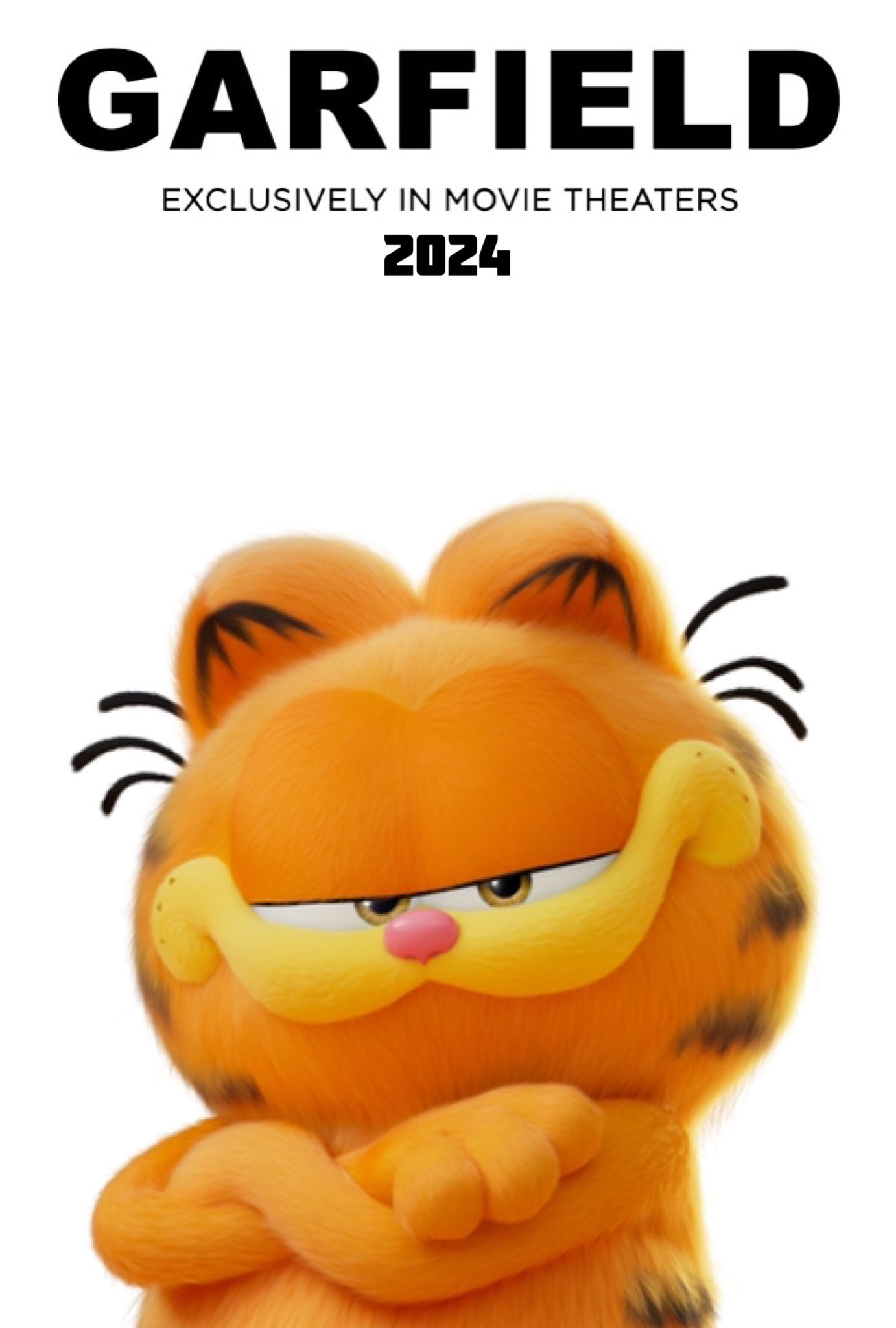
After a long hiatus from the silver screen, Alcon Entertainment and Sony Pictures released a new theatrical feature simply titled The Garfield Movie in May 2024. This version represented a complete "hard reboot" of the cinematic universe.
The Garfield Movie (2024)
Directed by Mark Dindal (known for The Emperor's New Groove), the 2024 film replaced the hybrid look with high-fidelity, stylized 3D animation that more closely mimicked modern comic aesthetics. Chris Pratt took over the title role, a casting decision that sparked intense online debate similar to his role in The Super Mario Bros. Movie.
The plot diverges from the typical "house cat" antics to tell an origin story and an outdoor adventure. It introduces Garfield's estranged father, Vic, voiced by Samuel L. Jackson. The film focuses on a high-stakes heist that forces Garfield and Odie out of their comfort zone.
Technical and Narrative Analysis:
- Animation Style: The film utilized a vibrant, squash-and-stretch animation style that allowed for much more expressive physical comedy than the 2004 hybrid.
- Voice Acting: While Chris Pratt’s performance was more energetic than Bill Murray’s, some fans felt it lost the signature "boredom" of the character. Samuel L. Jackson provided a strong emotional anchor as Vic.
- Critical Standing: Critics generally viewed it as a superior technical achievement compared to the 2004 film, though some felt the "heist" plot was a generic vehicle for a character who is traditionally defined by his lack of activity.
As of 2026, the 2024 film is considered the current benchmark for the franchise, successfully modernizing the brand for a generation of viewers who may not have been familiar with the original comic strips.
Comparison of Major Garfield Films
The following table provides a quick reference for comparing the different eras of Garfield on film.
| Film Title | Release Year | Format | Primary Voice | Director |
|---|---|---|---|---|
| Garfield: The Movie | 2004 | Live-Action/CGI | Bill Murray | Peter Hewitt |
| A Tail of Two Kitties | 2006 | Live-Action/CGI | Bill Murray | Tim Hill |
| Garfield Gets Real | 2007 | CGI (DTV) | Frank Welker | Mark A.Z. Dippé |
| Garfield's Fun Fest | 2008 | CGI (DTV) | Frank Welker | Mark A.Z. Dippé |
| Garfield's Pet Force | 2009 | CGI (DTV) | Frank Welker | Mark A.Z. Dippé |
| The Garfield Movie | 2024 | CGI (Theatrical) | Chris Pratt | Mark Dindal |
The Evolution of Voice: Murray vs. Welker vs. Pratt
One of the most debated aspects of the Garfield movies is the vocal performance. Because Garfield's voice in the iconic 1980s TV specials was defined by the late Lorenzo Music, every subsequent actor has been measured against that bar.
- Bill Murray: Murray opted for a dry, cynical tone that relied on his natural comedic persona. It fit the "lazy" aspect of the character but lacked the specific rhythmic cadence of Lorenzo Music’s version.
- Frank Welker: Welker, a veteran of the industry, provided a bridge between the old and the new. His performance was the most "traditionally" Garfield, maintaining a balance between grumpiness and occasional enthusiasm for food.
- Chris Pratt: Pratt’s interpretation is the most controversial because it is the most distinct. His Garfield is younger and more vocal, losing some of the internal monologue feel of the comics in favor of a more active, conversational protagonist.
Production Challenges and Studio Shifts
The journey of Garfield through cinema reflects broader changes in the film industry. The first two films were produced by 20th Century Fox, focusing on the celebrity-driven, family-film model of the early 2000s. The direct-to-video era was managed by Paws Inc. in collaboration with smaller animation houses, focusing on brand consistency and lower-risk distribution.
The 2024 revival by Alcon Entertainment signaled a shift toward "tentpole" animation—films designed to compete with the likes of Illumination and DreamWorks. This required a higher budget, a more complex narrative, and a massive marketing campaign. For more detailed production history and financial data, Box Office Mojo provides extensive records on the theatrical performances of these titles.
Common Criticisms and Successes
Across all versions, the Garfield movies face a recurring challenge: how to make a character whose primary traits are laziness and apathy the protagonist of an action-packed movie.
Common Successes:
- Visual Fidelity: Each era has pushed the boundaries of how Garfield is rendered, culminating in the 2024 film’s beautiful art direction.
- Supporting Cast: The inclusion of characters like Odie, Nermal, and Pooky remains consistent, providing a familiar framework for fans.
- Universal Themes: The movies successfully tap into universal themes of family, the struggle of change, and the love of comfort food.
Common Criticisms:
- Pacing: The 90-minute format often forces Garfield to be more active than his comic-strip counterpart, which some purists find jarring.
- Product Placement: Especially in the 2004 and 2024 films, critics noted heavy-handed commercial tie-ins.
- Departure from Source: The "heist" or "adventure" plots often feel like generic scripts with a Garfield skin applied to them.
Frequently Asked Questions
Which Garfield movie is considered the best?
Opinions vary by generation. Older fans often prefer the 2004 Bill Murray film for its nostalgia and deadpan humor. However, from a technical and storytelling perspective, the 2024 The Garfield Movie is generally regarded as the most polished and cohesive film in the series.
Why didn't Bill Murray return for more movies?
Bill Murray has expressed mixed feelings about the films over the years, often jokingly citing his mistake regarding the screenwriter. By the time the direct-to-video trilogy began, the production model had shifted to lower-budget voice casting, and Murray's involvement was no longer financially or creatively aligned with the studio's direction.
Are the direct-to-video movies canon?
The concept of "canon" in Garfield is loose. The DTV movies (Gets Real, Fun Fest, Pet Force) exist in their own self-contained "Cartoon World" continuity. They do not directly impact the stories of the theatrical films.
Is there a sequel planned for the 2024 movie?
As of early 2026, while there have been discussions regarding a sequel following the commercial success of the 2024 film, no official production start date has been announced. The focus remains on streaming performance and merchandise sales.
Who voiced Garfield in the original TV specials?
Lorenzo Music was the original voice of Garfield in the beloved TV specials like A Garfield Christmas and the series Garfield and Friends. His voice remains the gold standard for many fans of the original strip.
Summary of Recommendations
If you are a newcomer to the world of Garfield, The Garfield Movie (2024) is the best starting point for a modern cinematic experience. It offers high-quality animation and an accessible story. For those looking for a nostalgic trip back to the early 2000s, Garfield: The Movie (2004) remains a cultural landmark of the hybrid animation era. If you prefer the specific humor of Jim Davis and the meta-commentary of the comic world, the direct-to-video Garfield Gets Real is an underrated gem worth exploring on streaming platforms.