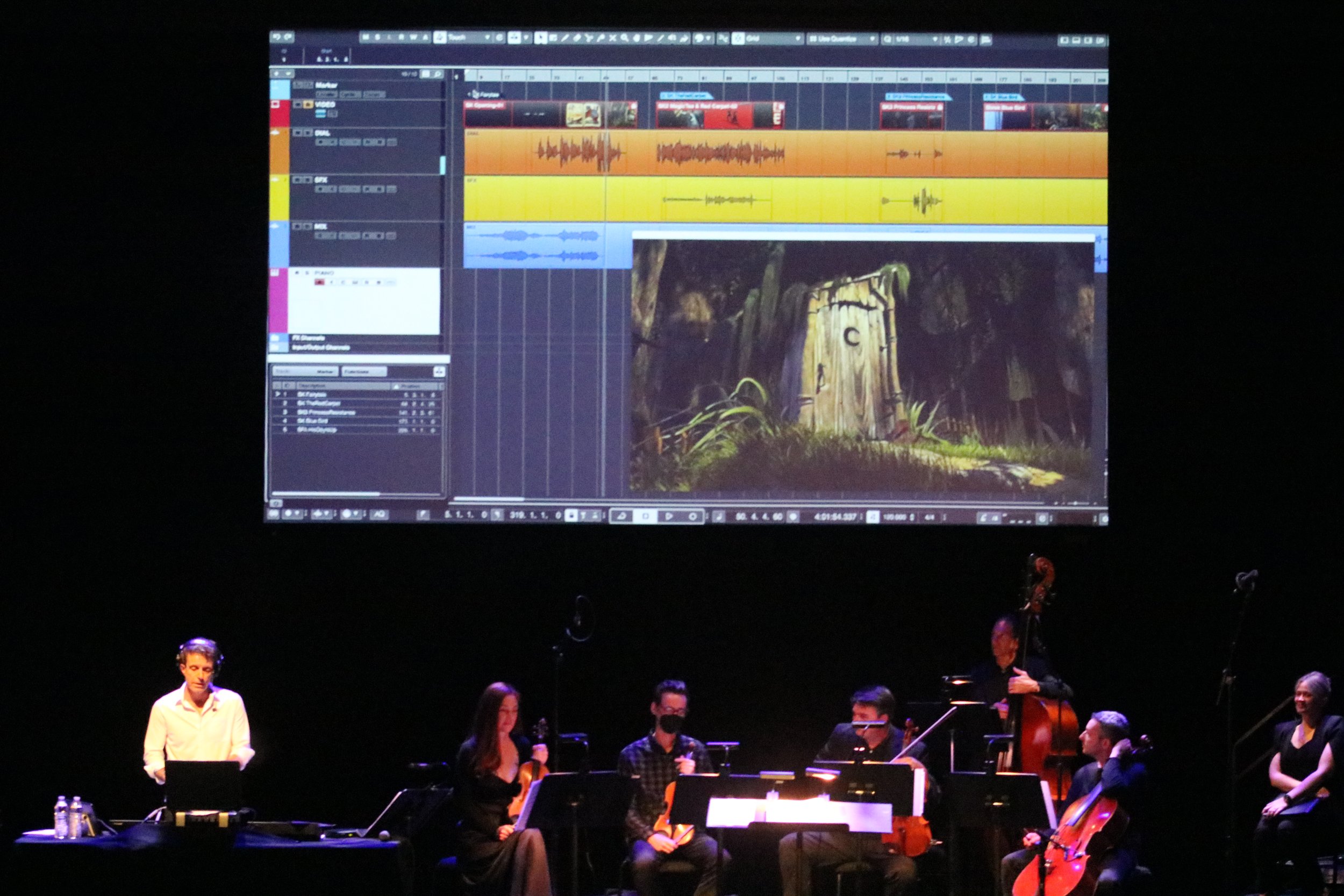
Alec Puro is a prominent American composer and musician whose career spans decades of influential work in film, television, and the recording industry. Originally gaining fame as the drummer for the synth-rock band Deadsy, Puro transitioned into full-time scoring, becoming a sought-after voice for both intimate independent cinema and major network television productions.
By 2026, the landscape of film scoring has undergone significant technological and structural shifts, yet Alec Puro remains a foundational figure. His ability to blend organic instrumentation with modern electronic textures has allowed him to navigate the evolving demands of streaming platforms and traditional cinema alike. Understanding his trajectory requires a look at his early beginnings in the Los Angeles music scene, his breakthrough into the world of Sundance-style indie dramas, and his eventually massive footprint in television syndication.
The Evolution from Performer to Composer
The journey of Alec Puro is a quintessential study in artistic evolution. Before becoming a fixture in Hollywood scoring stages, Puro was widely recognized as the drummer for Deadsy, a band that occupied a unique niche in the late 1990s and early 2000s "intergalactic" synth-rock movement. This background in performance and rhythm-based composition provided a crucial foundation for his later work. Unlike composers who come from a strictly classical conservatory background, Puro’s sensibilities were forged in the rehearsal spaces of Los Angeles and on international tour stages.
This "performer’s intuition" is evident in his scores. There is a tactile, rhythmic quality to his music that often prioritizes emotional resonance over mathematical complexity. When he began his transition into film scoring in the mid-2000s, he brought with him a deep understanding of how music interacts with a collective audience experience. His early work was characterized by a willingness to experiment with non-traditional sounds, a trait that helped him stand out in a field often dominated by orchestral tropes.
The transition was not merely a change in job title but a complete reimagining of his relationship with sound. Where a drummer focuses on the "heartbeat" of a song, a film composer must focus on the "soul" of a scene. Puro’s ability to translate the energy of the stage into the subtlety of the screen remains one of his most significant professional achievements.
Defining the Indie Film Sound: 2009–2015
If there is a specific era that solidified Alec Puro’s reputation as a "composer’s composer," it was his prolific run in the independent film circuit during the late 2000s and early 2010s. This period saw the rise of a certain "Sundance aesthetic"—films that were grounded, character-driven, and required music that felt personal rather than cinematic in the traditional, bombastic sense.
The Vicious Kind and The Art of Getting By
One of his early critical successes was the 2009 film The Vicious Kind, starring Adam Scott. The score was noted for its raw, understated quality, perfectly mirroring the volatile emotions of the characters. It was here that Puro demonstrated his mastery of the "minimalist emotional" style. By using sparse arrangements, he allowed the dialogue and performances to breathe, providing a musical safety net rather than an overbearing emotional guide.
In 2011, Puro composed the score for The Art of Getting By (originally titled Homework), starring Freddie Highmore and Emma Roberts. This project allowed him to flex his melodic muscles, creating a soundscape that captured the whimsical yet melancholic essence of adolescent transition. The score blended indie-pop sensibilities with traditional scoring techniques, a hallmark of his work that would continue to evolve over the next decade.
Collaboration with Lee Toland Krieger
Puro’s collaborative relationship with director Lee Toland Krieger (notably on The Vicious Kind) highlighted the importance of director-composer synergy. In the indie world, where budgets are often tight and every creative decision is magnified, Puro became known as a composer who could deliver a high-value, emotionally resonant score regardless of the technical constraints. This period of his career proved that he could carry the weight of a feature film’s emotional arc entirely on the back of his compositions.
Television Success: From Sitcoms to Multi-Season Dramas
While his film work earned him critical acclaim, Alec Puro’s television career brought his music into millions of homes weekly. The requirements of television scoring—fast turnarounds, thematic consistency over hundreds of episodes, and the ability to pivot between comedy and drama—tested and refined his capabilities.
The Black-ish Era
Perhaps his most recognizable contribution to the television landscape is his work on the ABC hit series Black-ish. Scoring a sitcom requires a delicate balance; the music must facilitate the comedy without becoming a caricature. Puro’s work on Black-ish was rhythmically driven and modern, reflecting the contemporary cultural themes of the show. Over its eight-season run, his music became an integral part of the show’s DNA, helping to define the pace and tone of the Johnson family's world.
The Fosters and Good Trouble
Transitioning to the world of hour-long drama, Puro’s work on The Fosters and its spin-off Good Trouble showcased his ability to handle long-form character development. These shows dealt with complex social issues, necessitating a score that could pivot from warmth and familial love to tension and heartbreak. By the time Good Trouble concluded its run in 2024, Puro had composed thousands of cues for the franchise, demonstrating a level of creative stamina that few in the industry can match.
By 2026, these scores continue to be studied by aspiring television composers for their "economical storytelling"—the ability to establish a mood in under ten seconds to accommodate the fast-paced editing of modern broadcast and streaming television.
Gramoscope Music: The Entrepreneurial Shift
Beyond his individual credits, Alec Puro has had a significant impact on the industry through Gramoscope Music, a full-service music production company and boutique library he founded. As the industry moved toward a hybrid model of bespoke scoring and high-end licensing, Gramoscope became a vital resource for editors and producers.
Gramoscope represents a strategic evolution in Puro’s career. Recognizing that the demand for high-quality music in the streaming era (Netflix, Hulu, Disney+, etc.) was outstripping the capacity of individual composers, he built a collective of talent. This allowed him to scale his creative vision. Gramoscope isn't just a library; it is a curation of "composer-led" music that avoids the generic pitfalls of standard stock audio.
For the modern filmmaker in 2026, Gramoscope provides a bridge between the high cost of a custom score and the low quality of royalty-free tracks. This venture has solidified Puro’s status not just as a creative, but as a business leader within the music-for-media ecosystem.
Technical Philosophy and Scoring Style
Alec Puro’s "sound" is often described as organic-hybrid. While he is proficient with modern digital audio workstations (DAWs) and sample libraries, he consistently returns to live instruments to provide the "soul" of his scores.
Instrumentation and Texture
Puro often utilizes:
- Prepared Pianos: Muting or altering piano strings to create percussive, bell-like tones.
- Vintage Synthesizers: Using analog gear to provide warmth that digital plug-ins sometimes lack.
- Guitars and Dulcimers: Often played in non-traditional ways to create textural pads rather than melodic leads.
- Live String Quartets: Even on smaller budget projects, he often advocates for at least a few live players to add the human imperfection that makes a score feel "real."
The "Subtle" Approach
A defining characteristic of a Puro score is what it doesn't do. He famously avoids "mickey-mousing"—a term for music that mimics every physical action on screen. Instead, he focuses on the subtext. If a character is smiling but feeling internal dread, Puro’s music will play the dread. This psychological depth is why he has remained a favorite for directors working in the "Prestige TV" and indie film genres.
Comparison of Key Projects
The following table highlights the diversity of Alec Puro’s portfolio, showing how he adapts his musical language to fit different genres and formats.
| Project Title | Medium | Genre | Primary Musical Tone | Key Contribution |
|---|---|---|---|---|
| The Vicious Kind | Film | Drama | Raw, Acoustic, Melancholic | Established his indie-film "voice." |
| Black-ish | TV | Comedy | Rhythmic, Modern, Urban | Defined the sound of a modern family sitcom. |
| The Art of Getting By | Film | Rom-Com/Drama | Whimsical, Indie-Pop | Blended song-style melodies with film scoring. |
| The Fosters | TV | Drama | Warm, Piano-led, Earnest | Created a long-running thematic identity for a family saga. |
| Higher Ground | Film | Drama | Spiritual, Atmospheric | Proved his ability to score complex, faith-based narratives. |
| Good Trouble | TV | Drama | Electronic, Contemporary | Modernized the sound of the "Fosters" universe for a younger demo. |
The 2026 Industry Landscape and Puro's Place Within It
As of 2026, the role of the film composer has been complicated by the rise of AI-assisted composition and the shrinking of mid-tier film budgets. However, Alec Puro has maintained his relevance by doubling down on the "human element." In an era where "functional" music can be generated by algorithms, the demand for music with a specific point of view has actually increased for high-end productions.
Puro has also adapted to the "Global Streamer" model. Since 2024, his work has increasingly focused on international co-productions, where the music must translate across cultural boundaries while maintaining a localized feel. His experience with Gramoscope has also positioned him well to navigate the complex rights-management issues that have become a focal point of the industry in the mid-2020s.
Furthermore, his background as a drummer has kept him at the forefront of the "rhythm-first" scoring trend. Modern trailers and high-tension dramas in 2026 rely heavily on percussion-driven tension, a style that is second nature to someone who spent their formative years behind a drum kit.
Frequently Asked Questions
How did Alec Puro transition from Deadsy to film scoring?
The transition was a gradual process of moving from the collaborative environment of a band to the solitary, service-oriented world of the studio. Puro leveraged his connections in the Los Angeles creative community and began scoring short films and smaller indie projects to build a portfolio. His ability to produce high-quality demos from his home studio during the early 2000s gave him a competitive edge as the industry moved away from massive studio-only productions.
What is Alec Puro's most famous work?
While "fame" is subjective, his work on Black-ish is undoubtedly his most-heard material due to the show's long run and global syndication. In the film world, The Vicious Kind and The Art of Getting By are considered his seminal works, as they defined the "Puro sound"—an intimate, emotionally intelligent style that became a staple of early 21st-century independent cinema.
Does Alec Puro still work with live musicians?
Yes. Despite the advances in high-end sample libraries by 2026, Puro remains a vocal advocate for live performance. He frequently uses a hybrid approach, layering live soloists (cello, violin, or guitar) over digital foundations to ensure that the music has the "breathing" quality that only a human performer can provide.
What is Gramoscope Music?
Gramoscope Music is a company founded by Alec Puro that provides custom scoring, music supervision, and a curated production music library. It serves as a creative hub that allows Puro to oversee multiple projects simultaneously while providing a platform for other composers to contribute to high-level film and television productions.
Has Alec Puro won any awards?
Throughout his career, Puro has been recognized with numerous BMI Film & TV Awards, particularly for his consistent and impactful work on long-running series like Black-ish and The Fosters. His film scores have also contributed to several movies that won awards at major festivals like Sundance.
The Future of the "Puro Sound"
As Alec Puro continues his work into the late 2020s, his legacy is defined by adaptability. He has successfully navigated the shift from physical media to digital downloads, and from broadcast television to the fractured world of streaming. His career serves as a blueprint for the modern "hybrid composer"—someone who is equal parts artist, technician, and entrepreneur.
For those looking to enter the world of film scoring, Puro’s career offers a vital lesson: the tools and platforms will always change, but the ability to tell a story through sound remains the most valuable skill a composer can possess. Whether it is the frantic beat of a sitcom transition or the haunting silence of a dramatic close-up, Alec Puro’s music continues to provide the emotional pulse of the stories we watch.
Practical Recommendation: For filmmakers and students of composition, studying Puro’s scores for The Vicious Kind alongside Black-ish provides an excellent masterclass in "tonal flexibility." Observing how he uses similar rhythmic foundations to achieve vastly different emotional outcomes is key to mastering the craft of modern scoring.