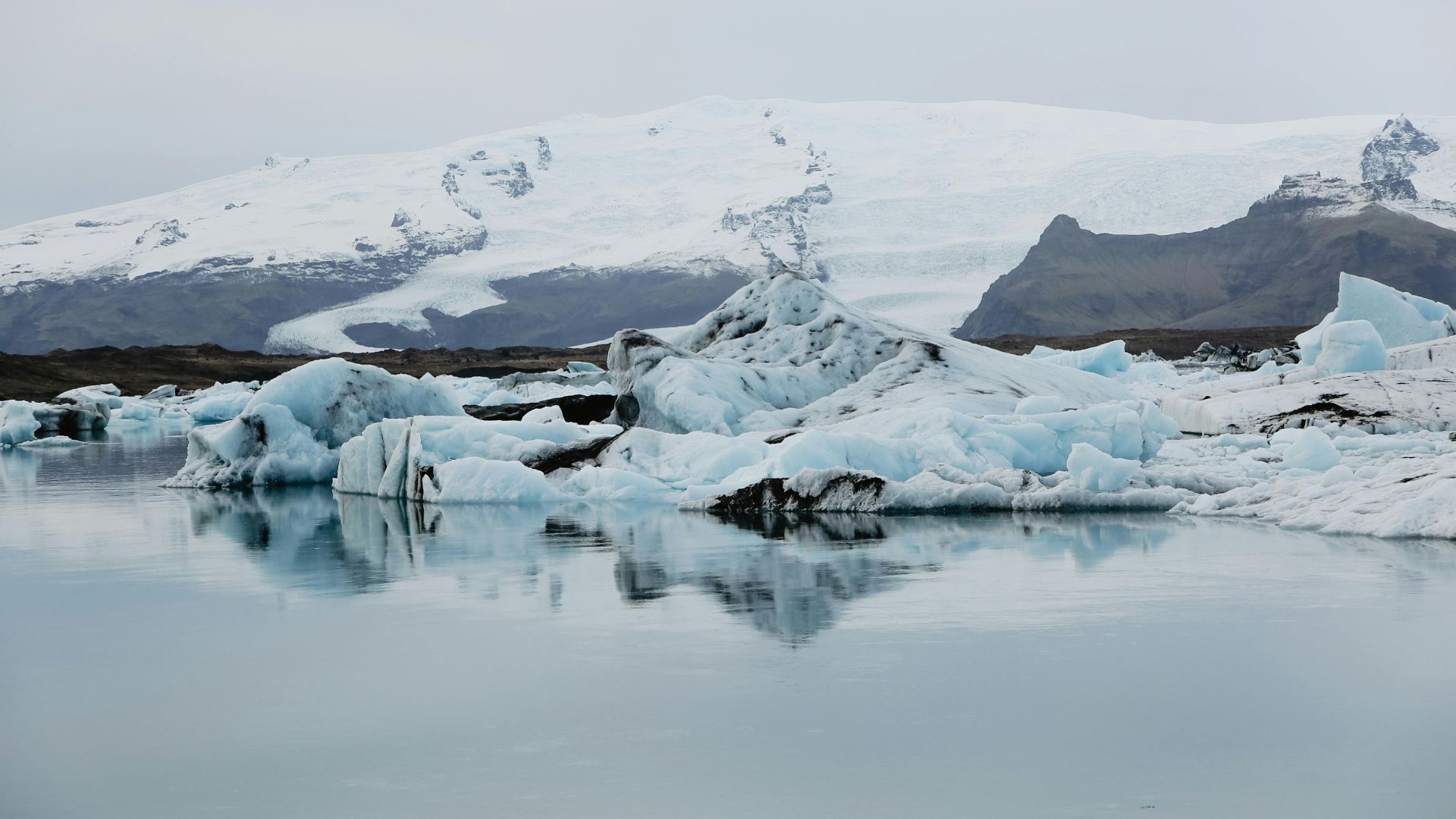
Many people are surprised to learn that Alaska, a land synonymous with glaciers, snow, and dense temperate rainforests, is home to a vast desert ecosystem. The Arctic Desert of Alaska is not a landscape of shifting sand dunes or sweltering heat, but rather a hyper-arid region defined by its extremely low levels of precipitation. By scientific definition, a desert is classified by its moisture levels—specifically, receiving less than 10 inches (250 millimeters) of annual precipitation—rather than its ambient temperature.
Defining the Arctic Desert
The primary reason for the Arctic Desert’s existence is the cold temperatures inherent to high latitudes. Air at the poles is significantly colder than air at the equator; because cold air cannot hold as much water vapor as warm air, the atmosphere above the Arctic regions is inherently dry.
When people envision the Arctic, they often picture constant snowfall. While some parts of the Arctic do experience significant accumulation, the specific regions designated as the Arctic Desert in Alaska are areas where the climate is so cold that the air is virtually devoid of moisture. Because the moisture cannot be replenished by evaporation or weather patterns moving in from the ocean, the landscape remains arid. This leads to the paradox of a "frozen desert," where the ground is covered in ice and permafrost, yet the region receives less moisture than the Mojave or Sahara deserts.
Geography and Scope: Where is the Arctic Desert?
In Alaska, the Arctic Desert is primarily located along the northern coastline, specifically across the North Slope. This region, situated north of the Brooks Range, experiences a distinct climatic divide. The Brooks Range acts as a physical barrier, forcing moisture out of air masses moving from the south. By the time these air masses pass over the mountains and descend into the North Slope, they have lost most of their humidity, creating a rain shadow effect that exacerbates the already dry conditions of the high Arctic.
Unlike the rugged topography of interior Alaska, the North Slope is characterized by the Arctic Coastal Plain. This is a low-lying, flat landscape dominated by tundra. During the short summer months, the top layer of soil—the active layer—thaws, creating vast wetlands, ponds, and marshes. Despite this abundance of surface water, the region is technically a desert because the actual annual precipitation levels remain below the threshold required to categorize it otherwise.
The Science of Aridity in Cold Climates
To understand why Alaska contains a desert, one must move beyond the common assumption that deserts are "hot and dry." The classification is purely meteorological.
- Evaporation vs. Precipitation: In a traditional hot desert, the rate of evaporation is much higher than the rate of precipitation. In the Arctic Desert, the rate of precipitation is incredibly low. Because the air is so cold, very little snow or rain falls throughout the year.
- Moisture Capacity: As previously noted, the Clausius-Clapeyron relation dictates that the water-holding capacity of the atmosphere decreases as temperature drops. The extreme cold of the Alaskan North Slope limits the amount of water the air can transport from the oceans to the land.
- The Role of Permafrost: Permafrost, or permanently frozen ground, plays a critical role in the ecology of the Arctic Desert. Because the ground remains frozen year-round just a few inches or feet below the surface, water cannot percolate into the earth. This is why the region can support a tundra ecosystem—mosses, lichens, and grasses—despite the lack of annual precipitation. The water that is present is "trapped" on the surface, preventing the landscape from looking like the dry, dusty plains of the Southwestern United States.
Comparing Global Deserts
The categorization of the Arctic as a desert is part of a larger global classification. The two largest deserts on Earth are the Antarctic Desert and the Arctic Desert. When looking at the following comparison, it becomes clear how Alaska fits into the broader environmental spectrum.
| Desert Type | Primary Characteristic | Average Annual Precipitation | Typical Landscape |
|---|---|---|---|
| Arctic (Alaska) | Extremely Cold | < 10 inches | Tundra, Ice, Permafrost |
| Subtropical (Sahara) | Extremely Hot | < 4 inches | Sand, Rocky Plateaus |
| Coastal (Atacama) | Arid/Maritime | < 1 inch | Salt Flats, Fine Sand |
| Rain Shadow (Mojave) | Seasonal/Dry | 2–6 inches | Scrub Brush, Cactus |
Ecological Adaptations in the Arctic Desert
Life in the Alaskan Arctic Desert has adapted to a "physiological drought." While there is technically ice, it is frozen and unavailable to plants. Therefore, vegetation in this region must behave similarly to plants in hot, arid environments. They have developed deep root systems or stay extremely low to the ground to avoid the abrasive, drying wind.
- Tundra Vegetation: Mosses and lichens are the dominant flora. These species are highly resilient to freezing temperatures and can enter a dormant state quickly if conditions become too dry or cold.
- Wildlife Migration: Large mammals, such as the Porcupine caribou herd, rely on the vastness of the tundra to find limited grazing spots. They are nomadic, constantly moving to find pockets of vegetation that have been nourished by the brief thaw of the active soil layer.
- The Seasonal Pulse: The "desert" transforms rapidly in late June and July. As the 24-hour sunlight hits the tundra, the active layer thaws, and the region experiences a brief, intense burst of biological activity. Flowers bloom and insects hatch in a matter of weeks, taking advantage of the fleeting moisture before the freeze returns in late August.
Common Misconceptions
A frequent point of confusion for those visiting or studying Alaska is the presence of snow. If it snows in Alaska, how can it be a desert?
The critical distinction is that snowfall is a form of precipitation. In the Arctic Desert, the total accumulation of water equivalent from all snowfall throughout the entire year is still lower than the arid classification limit. Furthermore, much of the snow that sits on the Arctic Coastal Plain is actually "drifted" snow, moved by high-velocity winds from other regions, rather than snow that fell directly from the sky in that specific location. In meteorological terms, the Arctic Desert is a "cold desert," characterized by its dryness rather than the absence of ice.
Frequently Asked Questions
Is the Arctic Desert the same as the Arctic Tundra? They are often discussed together, but they are not the same. The Arctic Tundra is a biome defined by its vegetation and permafrost, while the Arctic Desert is a meteorological classification based on precipitation levels. Much of the Arctic Tundra is located within the Arctic Desert.
Does the Arctic Desert have any sand dunes? Generally, no. Because the ground is dominated by permafrost and covered with tundra vegetation, the surface is stable. While there are some inland regions of Alaska with localized "sand sheets" or dunes, these are usually glacial outwash features and are not typical of the vast Arctic Desert landscape.
How does the Arctic Desert affect the global climate? The Arctic Desert is a critical indicator of global climate health. Because it is so sensitive to temperature shifts, changes in the Arctic reflect broader planetary changes. The albedo effect—where the white ice and snow reflect sunlight back into space—is vital to keeping the planet cool. As the Arctic warms, this reflective surface diminishes.
Can you visit the Arctic Desert in 2026? Yes, travel to the North Slope is possible, though it is logistically challenging. Areas like the Arctic National Wildlife Refuge or the town of Utqiaġvik provide access to these environments. Prospective visitors must account for extreme weather, the need for specialized gear, and the high cost of remote travel.
Is the Arctic Desert growing or shrinking? Due to climate change, some regions of the Arctic are seeing increased precipitation in the form of rain rather than snow. As temperatures rise, the air is able to hold more moisture, which may eventually lead to a shift in how these regions are classified. Researchers are currently monitoring these trends to determine the long-term impact on the permafrost.
Conclusion and Next Steps
Understanding that Alaska contains a desert is essential for comprehending the complexity of the northern climate. It forces us to redefine our understanding of aridity and highlights the delicate balance between temperature and moisture. For those interested in exploring this region, the best approach is to research the specific ecological zones of the North Slope through the U.S. Fish and Wildlife Service or local geological surveys. If you are planning a research trip or a documentary project, prioritize visiting during the short summer window to witness the biological transition that defines this unique, frozen, and arid landscape.