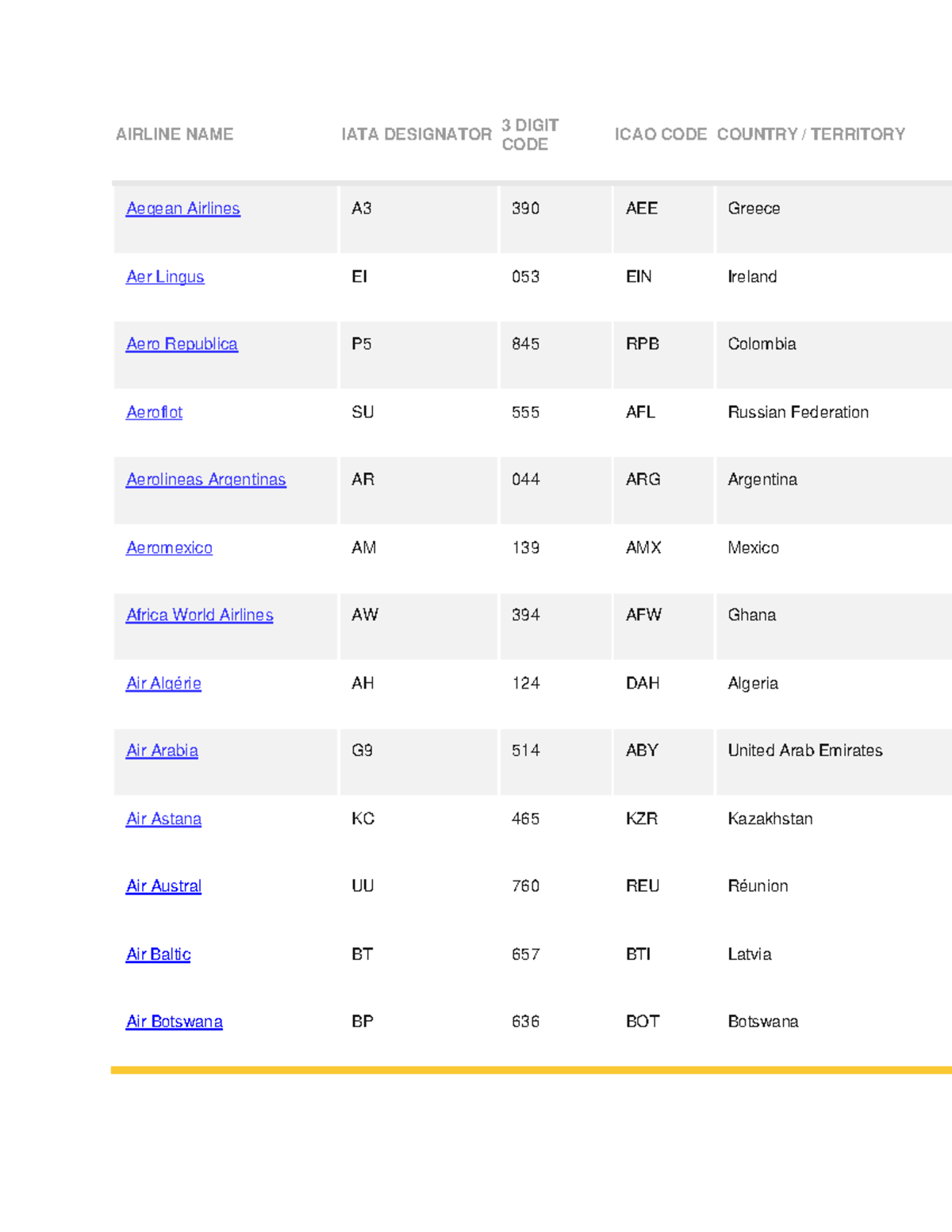
An aircraft code is a standardized alphanumeric or symbolic identifier used to classify, track, and manage civil and military aviation assets. These codes typically refer to International Civil Aviation Organization (ICAO) aircraft type designators, registration markings, or transponder squawk codes. Understanding these identifiers is essential for pilots, air traffic controllers, and aviation logistics professionals to ensure safe communication, legal compliance, and accurate navigation within global airspace.
The Taxonomy of Aircraft Identification
In aviation, the term "aircraft code" is rarely singular. It refers to a multi-layered system designed to provide varying levels of information depending on the context of the operation. To navigate the complexities of aviation communication, one must distinguish between designators for administrative, operational, and physical identification.
ICAO Aircraft Type Designators
The most common reference to an "aircraft code" in technical documentation is the ICAO Doc 8643 designation. This is a two-to-four-character alphanumeric code assigned to specific models of aircraft. For example, a Boeing 737-800 is identified as B738. These codes are critical for flight planning; they inform air traffic control (ATC) about the performance characteristics of the aircraft, such as its wake turbulence category, cruise speed, and equipment capabilities.
Registration Markings (Tail Numbers)
Every aircraft registered in a state must carry a unique registration mark, often referred to as the "tail number." While this acts as the aircraft’s legal license plate, it is not an "aircraft code" in the technical designator sense. It is a unique identifier tied to the aircraft’s Certificate of Airworthiness and national registry. In radio communications, this code is used by pilots to establish their identity during interactions with ATC.
Transponder Squawk Codes
Operational codes, known as "squawk codes," are four-digit octal numbers assigned to aircraft by ATC. Unlike type designators or registration numbers, these are transient. A pilot inputs these codes into the aircraft's transponder (secondary surveillance radar) to provide ATC with a clearer picture of the aircraft's position, altitude, and intent.
The Role of ICAO Doc 8643 in Modern Flight Planning
The International Civil Aviation Organization (ICAO) maintains the definitive registry of aircraft type designators. These codes are not merely arbitrary labels; they serve as the shorthand language of the global aviation infrastructure.
Standardized Performance Data
When a dispatcher files a flight plan using an ICAO designator, the system automatically pulls the aircraft's technical profile. This profile includes:
- Wake Turbulence Category: Light, Medium, Heavy, or Super. This data allows ATC to apply mandatory separation minima between aircraft to prevent upset caused by wingtip vortices.
- Approach Category: Based on the aircraft's speed at the threshold, determining the visibility and ceiling requirements for instrument approaches.
- Navigation Capabilities: Whether the aircraft is equipped with Required Navigation Performance (RNP) or Area Navigation (RNAV) systems.
Consistency in International Operations
Without universal codes, cross-border navigation would be impossible. If a French-registered aircraft enters German airspace, the German ATC system must recognize the performance characteristics of that aircraft instantly. The ICAO code acts as a common denominator, ensuring that regardless of the aircraft’s country of origin, the flight data remains interpretable by every flight management computer and radar station along the route.
Operational Use of Transponder Codes
Transponder codes (squawk codes) are the primary way ATC distinguishes one radar blip from another on a screen. While the transponder emits a signal, the assigned four-digit code acts as the address.
Universal Emergency and Status Codes
Certain codes are reserved for universal usage, meaning they have the same meaning in every corner of the globe. Pilots are trained to memorize these for immediate action during system failures or security threats:
- 7700: Emergency. Used to signal a distress situation to all surrounding radar stations.
- 7600: Communication Failure (NORDO). Used when the aircraft's radio equipment has failed, instructing ATC to use light signals or pre-arranged procedures.
- 7500: Unlawful Interference. A silent alert used to inform authorities that the aircraft is being hijacked or is under duress.
Discrete Codes and Hand-offs
Most flight codes assigned by ATC are "discrete" codes. As an aircraft moves from one ATC sector to another, the controller may issue a "squawk code change." This is a security and tracking measure to prevent radar confusion when two aircraft tracks cross or fly in proximity. It ensures that the controller can continuously associate the radar target with the specific flight plan filed for that aircraft.
Comparative Overview of Aviation Identification Codes
| Identifier Type | Purpose | Authority | Durability |
|---|---|---|---|
| ICAO Type Designator | Technical performance profiling | ICAO | Permanent |
| Registration Mark | Legal ownership and nationality | National Authority | Life of aircraft |
| Squawk Code | Radar tracking and identification | ATC (Local) | Flight-specific |
| ADS-B Address | Digital broadcast identification | Civil Aviation Agency | Permanent (Hex) |
The Impact of ADS-B on Traditional Coding
With the widespread adoption of Automatic Dependent Surveillance-Broadcast (ADS-B), the way we define "aircraft code" is evolving. Every aircraft equipped with ADS-B is assigned a 24-bit ICAO address. This is a unique, permanent binary code (represented in hexadecimal) that identifies the aircraft to ground stations and other aircraft equipped with traffic collision avoidance systems (TCAS).
Unlike a squawk code, which is dynamic, the 24-bit address is hard-coded into the aircraft's avionics. This provides a more reliable method of tracking than traditional radar, as it relies on GPS coordinates broadcast by the aircraft itself. In 2026, the reliance on these digital codes has become the bedrock of the NextGen and SESAR (Single European Sky ATM Research) initiatives, which aim to reduce separation distances and increase overall airspace capacity.
Common Challenges and Troubleshooting
Despite the sophistication of these systems, errors in the use of aircraft codes can lead to significant operational delays or safety incidents.
Input Errors
The most common mistake occurs during pre-flight data entry. Entering an incorrect ICAO type designator into the Flight Management System (FMS) can result in a flight plan rejection by the local Aeronautical Information Service (AIS). If the code is not recognized, the system will not know how to process the aircraft's speed, range, or wake turbulence, effectively grounding the flight until the error is corrected.
Transponder Misconfiguration
Pilots often encounter issues with transponder "mode" selection. If a transponder is set to the wrong mode (e.g., Mode A only instead of Mode S), the aircraft may be visible on radar but missing critical altitude or identification data. This forces ATC to query the pilot repeatedly, increasing radio congestion and workload during high-density flight phases.
Addressing the "Unknown Code"
If a pilot is unsure of their specific aircraft's code or needs to verify an ICAO designator, they must consult the official ICAO Doc 8643 database. Reliance on third-party aviation apps or unofficial databases can result in the use of deprecated or incorrect codes, which complicates communications with international ATC units.
Frequently Asked Questions
What is the difference between an ICAO code and an IATA code?
An ICAO code (e.g., B738) is used for technical, operational, and regulatory purposes in flight planning and ATC. An IATA code (e.g., 738) is used primarily for commercial and scheduling purposes, such as airline ticketing, baggage handling, and airport display screens.
How do I find the correct ICAO designator for a newly manufactured aircraft?
You should consult the official ICAO Doc 8643 database, which is updated regularly. If a designator does not yet exist for a new aircraft model, the manufacturer must apply to the ICAO for the assignment of a new code before the aircraft can enter service.
Can a pilot change their squawk code without being instructed?
No. Pilots should only change their squawk code under explicit instruction from an air traffic controller, or in the event of an emergency (e.g., setting the code to 7700). Changing a code without permission can lead to a loss of target correlation on the controller’s radar display.
Does the 24-bit ICAO address change when the aircraft is sold?
Yes. When an aircraft is sold and re-registered in a different country, the 24-bit ICAO address must be updated in the aircraft's transponder, as this code is tied to the state of registry.
What should I do if my transponder fails mid-flight?
If your transponder fails, immediately inform the current ATC sector. They will often request you to perform a transponder reset if applicable. If it remains inoperative, they may provide alternative routing or instructions to maintain safety, potentially moving you into different airspace to accommodate the lack of secondary surveillance.
Next Actions for Aviation Professionals
To ensure compliance and operational safety, always cross-reference your flight planning data with the latest ICAO bulletins. Before every flight, verify that the transponder is loaded with the correct ICAO 24-bit address and that the FMS reflects the current, official ICAO type designator for your specific airframe. If you operate internationally, maintain a current copy of the ICAO regional supplementary procedures, as these often dictate how specific aircraft codes are prioritized during busy transitions between sovereign airspaces.