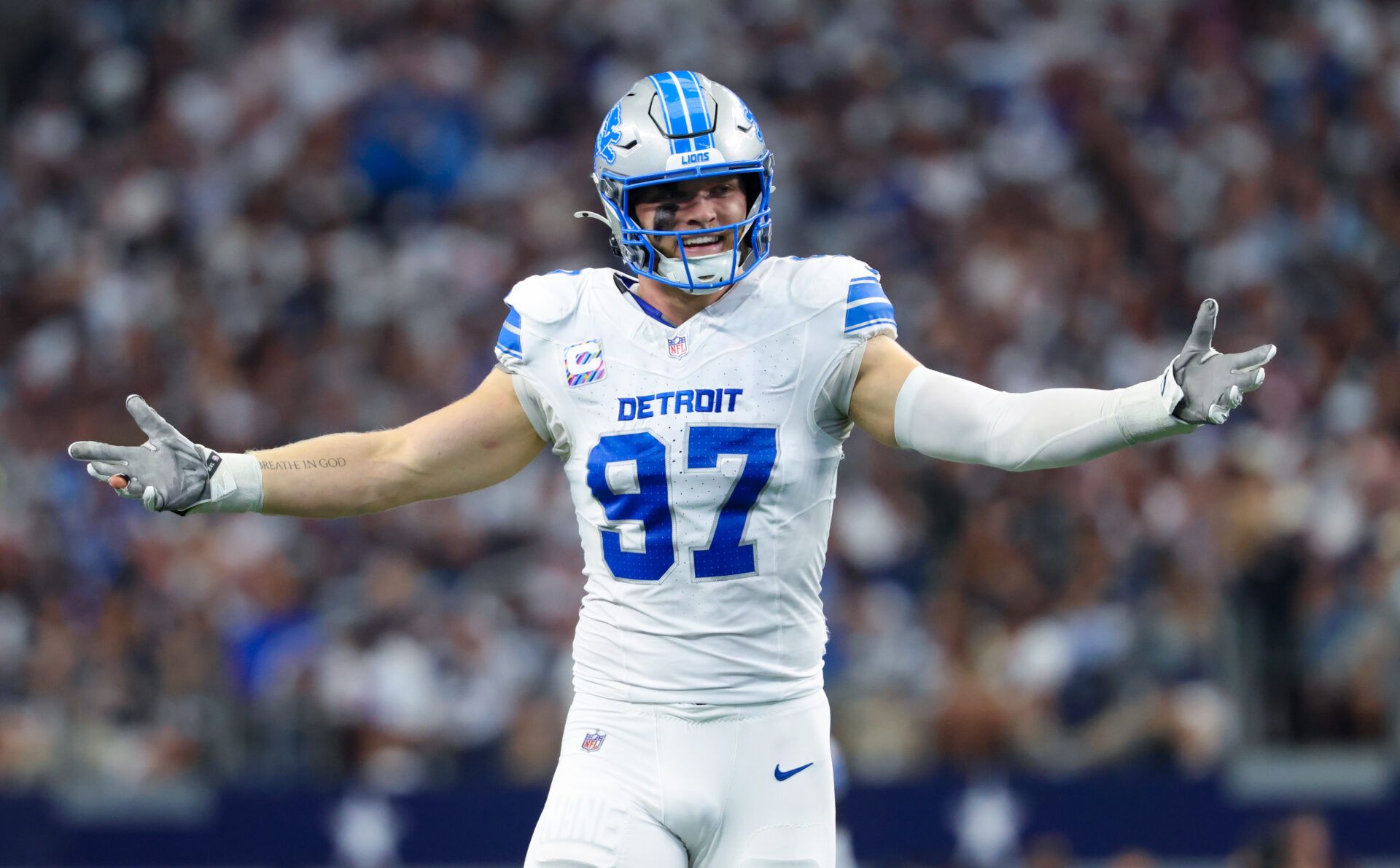
Aidan Hutchinson broke his hand during the 2020 college football season while playing for the University of Michigan. The injury occurred during a game against Indiana, necessitating season-ending surgery. While he later faced a more severe leg injury in 2024, the hand fracture remains a significant chapter in his medical history and developmental trajectory.
The History of Aidan Hutchinson’s Hand Injury
To understand the resilience of Detroit Lions defensive end Aidan Hutchinson, one must look back at the pivotal moments of his collegiate career. In November 2020, during a season already complicated by the global pandemic, Hutchinson suffered a significant fracture in his hand during Michigan's matchup against Indiana. At the time, Hutchinson was a rising star, but the injury forced an immediate halt to his momentum.
The injury was not a simple hairline fracture that could be taped up for a return in the second half. Medical evaluations quickly determined that the structural integrity of the hand was compromised, requiring surgical intervention to ensure long-term functionality. This was a "fork in the road" moment. Hutchinson chose to undergo surgery immediately, effectively ending his 2020 campaign.
While the 2020 season was a disappointment for the Wolverines, this period of forced absence allowed Hutchinson to focus on strength conditioning and technical study. When he returned in 2021, he was not only healed but physically transformed, leading to a record-breaking season that saw him become a Heisman Trophy finalist and the number two overall pick in the 2022 NFL Draft.
Anatomical Breakdown: What Happens When a Defensive Lineman Breaks a Hand?
For an elite pass rusher like Hutchinson, the hands are the primary tools of the trade. They are used for the "long arm" stab, the "swim" move, the "rip," and the "club-and-twitch" maneuvers necessary to bypass 300-pound offensive tackles. When a bone in the hand—typically a metacarpal or a phalanx—is fractured, the player loses the ability to generate leverage and sustain a grip.
The Biomechanics of the Injury
In the trenches of the NFL and high-level NCAA play, hand injuries often occur due to "crush" forces or "hyperextension." When a defensive end attempts to strike the chest plate of an offensive lineman, if the hand is not perfectly aligned, the force of the collision (often exceeding 1,000 pounds of pressure) is transferred directly into the small bones of the hand.
A fracture in the second or third metacarpal is particularly devastating for a pass rusher. These bones provide the stability needed for the "punch." A break here results in:
- Loss of Kinetic Transfer: The energy generated by the legs and torso cannot be effectively transferred into the opponent.
- Grip Failure: The inability to "latch" onto jerseys or shoulder pads makes it impossible to "shed" blocks effectively.
- Instability in the 3-Point Stance: Placing weight on a fractured hand during the pre-snap stance is excruciating and mechanically unstable.
Surgical Intervention and the Recovery Timeline
Hutchinson’s 2020 surgery likely involved the placement of small plates and screws to stabilize the fracture site. This is a common procedure in professional sports known as internal fixation. The goal is to allow the bone to heal in perfect alignment while permitting early range-of-motion exercises to prevent stiffness.
The Standard Recovery Phases for NFL Players
- Inflammatory Phase (Days 1–7): Post-surgery management focuses on reducing swelling and protecting the incision.
- Reparative Phase (Weeks 2–6): Soft callus formation begins. During this time, the player remains in a protective cast or splint.
- Remodeling Phase (Weeks 6–12): The bone hardens. In 2020, Hutchinson utilized this time for intensive physical therapy to regain grip strength.
- Return to Contact (Post-Week 12): For a defensive lineman, this involves "heavy bag" work to test the hand's ability to withstand repetitive impact.
By the time the 2021 season arrived, Hutchinson’s hand was functionally stronger than it was prior to the break. The surgical hardware often remains in the hand permanently unless it causes irritation to the surrounding tendons.
Comparing the Hand Injury to the 2024 Leg Fracture
As we evaluate Hutchinson's career from the vantage point of 2026, the 2020 hand injury serves as a precursor to his recovery from a much more harrowing injury. On October 13, 2024, Hutchinson suffered a fractured tibia and fibula during a game against the Dallas Cowboys.
While both injuries required surgery, the implications were vastly different. The hand injury was a localized orthopedic issue that primarily affected technical execution. The 2024 leg fracture was a systemic blow to his mobility and explosive power. However, the mental blueprint for recovery was established during that 2020 hand rehab. Hutchinson’s ability to return to elite form in 2025 and 2026 is often attributed by analysts to the discipline he learned while recovering from his broken hand in college.
Comparison of Major Injuries
| Feature | 2020 Hand Fracture | 2024 Tibia/Fibula Fracture |
|---|---|---|
| Primary Impact | Technical hand-fighting and shedding blocks | Explosive speed, leverage, and lateral agility |
| Surgical Necessity | High (Plates/Screws) | Critical (Intramedullary Rod/Nails) |
| Recovery Duration | 3–4 Months | 8–12 Months |
| Long-term Risk | Minimal (Arthritis in hand) | Moderate (Loss of "twitch" or ankle mobility) |
| Career Trajectory | Led to Heisman-caliber 2021 season | Challenged his status as the NFL's premier DE |
Impact on Performance: Shedding Blocks and Hand Fighting
Aidan Hutchinson's "bread and butter" as a pass rusher is his violent hand usage. When a player returns from a hand fracture, there is often a psychological barrier to overcome. They must trust that the bone will not re-break when they strike an opponent's hard plastic pads.
Technical Adaptation
Following his hand injury, Hutchinson became even more meticulous with his hand placement. Coaches noted that his "punch" became more precise. When you can't rely on raw durability, you rely on accuracy. He began utilizing the "cross-chop" move more frequently, which minimizes direct impact on the palm and instead uses the side of the hand and forearm to clear the offensive lineman's arms.
In the seasons leading up to 2026, this technical proficiency has made him one of the most difficult players to block in the league. Even as he aged and dealt with the 2024 leg injury, his hands remained his "equalizer."
Equipment and Protection: Playing with a "Club"
In some instances, NFL players will attempt to play through a broken hand by wearing a "club"—a heavy, padded cast that protects the hand but renders the fingers useless. We saw this with players like J.J. Watt and Jason Pierre-Paul.
Hutchinson and the Michigan medical staff decided against this in 2020. The rationale was simple: a defensive end who cannot use his fingers to grab and pull is significantly less effective. By opting for surgery and a full recovery, Hutchinson ensured that he wouldn't develop "bad habits" or compensatory movements that could lead to shoulder or elbow injuries.
In 2026, modern protective equipment has advanced significantly. Players now use custom-molded carbon fiber splints that are thinner and stronger than the casts used in the early 2020s, allowing for greater wrist mobility while still protecting previous fracture sites.
Lessons in Resilience: Hutchinson’s Path to 2026
The narrative of Aidan Hutchinson is one of overcoming physical setbacks. The 2020 hand injury was the first time the football world saw his "obsessive" approach to rehabilitation. In 2026, he is often cited by younger players as the gold standard for how to handle "the grind" of injury recovery.
His path highlights a critical reality of the NFL: availability is just as important as ability. By treating his hand surgery with the same intensity as a playoff game, Hutchinson preserved his career longevity. He proved that a broken hand does not define a player’s ceiling; rather, it provides a baseline for their mental toughness.
Frequently Asked Questions
Did Aidan Hutchinson play in the NFL with a broken hand?
No, his primary hand fracture occurred during his junior year at the University of Michigan in 2020. He underwent season-ending surgery and did not return to the field until the 2021 season. He has dealt with minor finger dislocations and "jammed" hands in the NFL, but nothing of the same magnitude as the 2020 break.
Which hand did Aidan Hutchinson break?
Hutchinson suffered the fracture in his right hand. As a right-handed dominant player, this was particularly challenging as the right hand is often the "lead" hand in his pass-rush moves and is used for initial contact against offensive tackles.
How did the hand injury affect his NFL Draft stock?
The injury had a negligible impact on his draft stock because he returned for the 2021 season and performed at a historic level. Scouts were more impressed by his recovery and subsequent dominant performance than they were concerned about the injury itself. It actually served as "proof of concept" for his durability and work ethic.
Does a broken hand cause long-term issues for defensive ends?
While the bone itself heals to be as strong (or stronger) than before, the secondary concern is post-traumatic arthritis in the small joints of the hand. In 2026, Hutchinson manages this through advanced recovery protocols, including cryotherapy and specialized hand-strengthening routines to maintain joint lubrication and flexibility.
What was the most serious injury of Aidan Hutchinson's career?
While the 2020 hand injury was significant, his 2024 fractured tibia and fibula was far more serious. The leg injury required a much longer recovery period and posed a greater threat to his career-defining explosiveness and lateral movement.
Final Recommendation for Observers and Athletes
For those tracking the career of Aidan Hutchinson or athletes facing similar hand injuries, the key takeaway is the importance of early surgical intervention and meticulous grip-strength rehabilitation. Attempting to play through a structural hand fracture often leads to diminished performance and secondary injuries. As Hutchinson demonstrated between 2020 and 2026, taking the necessary time to heal correctly is the most effective way to ensure a high-performance return to the field.