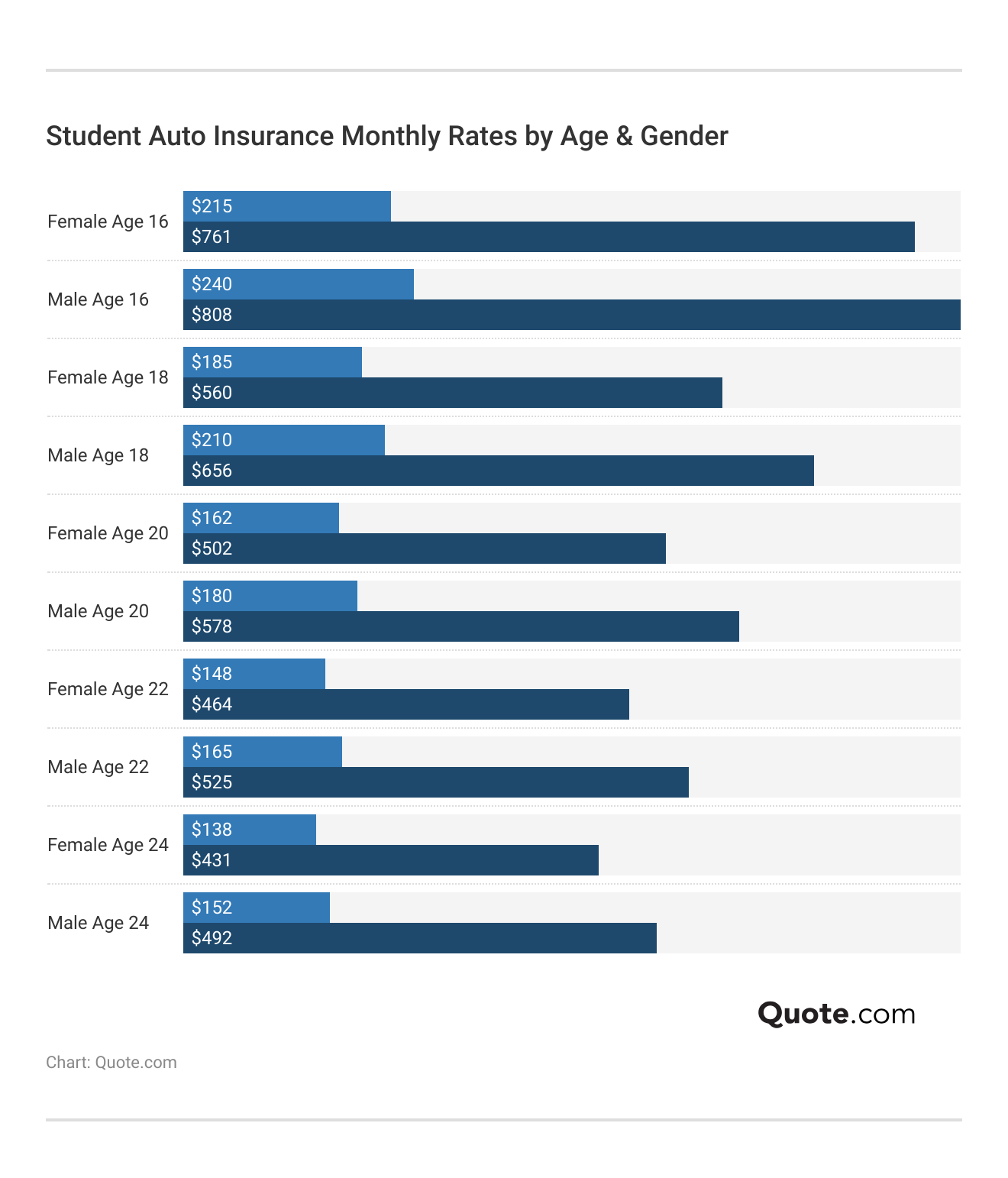
Securing affordable student auto insurance requires a combination of leveraging existing policy discounts, maintaining a clean driving record, and choosing the right coverage levels. Students can significantly reduce premiums by opting to remain on a parent’s policy, completing defensive driving courses, or selecting vehicles with lower insurance risk profiles, all while maintaining good academic standing to qualify for specific student-focused rate reductions.
Understanding the Insurance Landscape for Students
Auto insurance premiums are primarily determined by risk assessment. For insurers, students—particularly those under the age of 25—represent a higher statistical risk due to limited driving experience. Because insurance companies operate on actuarial data that correlates age and experience with the frequency of accidents and claims, premiums for younger drivers are historically among the highest in the market.
In 2026, the marketplace for student insurance remains competitive, but it is heavily influenced by state-mandated minimums and the specific profile of the driver. Understanding how insurers calculate "risk" is the first step toward finding affordability. Factors include your age, the vehicle’s safety ratings, your credit-based insurance score (where permitted by state law), and your geographic location. Navigating these factors requires a methodical approach to policy selection rather than simply choosing the cheapest provider.
Staying on a Parent’s Policy vs. Independent Coverage
One of the most effective ways to maintain affordability is by remaining on a parent’s or guardian’s policy. In most jurisdictions, insurance companies allow students to stay on a family plan as long as they reside at the same address or are away at school but still considered part of the household.
Benefits of the Family Plan
- Multi-Car Discounts: Adding a student to an existing policy often qualifies the household for multi-car discounts, which can lower the per-vehicle premium.
- Bundling Opportunities: Parents often bundle home and auto policies; adding a student can sometimes be absorbed into these existing loyalty discounts.
- Higher Liability Limits: Family policies often carry higher liability coverage limits, which provide better financial protection for the student in the event of a significant accident.
When to Consider Independent Coverage
If the student owns their own vehicle and is no longer a dependent, or if the parents have a high volume of accidents or moving violations that would spike the premiums for the entire household, an independent policy becomes necessary. In such cases, the student must establish their own "insurance score," which takes time to build.
The Impact of Academic Performance
Many national insurance carriers offer a "Good Student Discount." This is a standard incentive provided to students who maintain a specific grade point average (GPA), typically a 3.0 (B average) or higher, or who rank in the top percentage of their class.
Insurers offer this discount because data suggests that students who are academically disciplined are also more responsible and cautious drivers. To capitalize on this, you must be prepared to provide official documentation, such as a recent report card or a transcript, during the underwriting process. This discount is usually applicable to high school and full-time college students up to the age of 25.
Selecting the Right Vehicle for Lower Premiums
The vehicle you drive is often as important as your driving record when it comes to insurance costs. Insurers categorize vehicles based on the cost of parts, the frequency of theft for that specific model, and the safety ratings provided by agencies such as the Insurance Institute for Highway Safety (IIHS).
Key Vehicle Factors
- Safety Features: Modern vehicles equipped with advanced driver-assistance systems (ADAS), such as automatic emergency braking, lane-keeping assist, and blind-spot monitoring, often qualify for specific safety discounts.
- Repairability: Vehicles with readily available, inexpensive parts are cheaper to insure than luxury or imported vehicles, which require specialized labor and costly replacement parts.
- Theft Rates: High-theft models carry higher comprehensive premiums because they represent a higher financial liability for the insurer.
Comparing Coverage Levels and Deductibles
Affordability is not just about the lowest monthly payment; it is about balancing risk and cost. Choosing a policy with a higher deductible can lower your premium, but you must ensure you have the cash reserves to cover that deductible should a claim arise.
| Coverage Type | Purpose | Financial Impact |
|---|---|---|
| Liability Only | Covers damages to others | Lowest premium, high personal risk |
| Collision | Covers your car in an accident | Increases premium, essential for newer cars |
| Comprehensive | Covers theft, fire, and weather | Moderate premium increase |
| Gap Insurance | Covers the difference on a loan | Small added cost, high protection |
For students driving older, lower-value vehicles, dropping collision and comprehensive coverage may be a logical way to save money. However, if the car is financed, the lender will almost certainly require full coverage, leaving you with little room to adjust these limits.
Essential Steps to Lower Your Premium
Beyond academic and vehicle factors, you can take active steps to minimize costs through proactive maintenance of your insurance profile.
1. Maintain a Clean Driving Record
A single speeding ticket or at-fault accident can increase your rates for three to five years. Avoiding moving violations is the single most effective way to keep premiums stable as you transition from a new driver to a more experienced one.
2. Complete Defensive Driving Courses
Many insurers provide rate reductions for students who complete a certified defensive driving or "safe driver" course. These programs teach hazard recognition and collision avoidance, providing tangible proof to the insurer that the driver is investing in their own safety.
3. Telematics and Usage-Based Insurance (UBI)
In 2026, many carriers offer programs that use a mobile app or a plug-in device to monitor driving habits—such as hard braking, rapid acceleration, and speed. For safe drivers, this can result in significant discounts. If you are a cautious driver, UBI is often the fastest way to drop rates below standard market averages.
4. Shop Around Periodically
Insurance markets change. A carrier that was affordable two years ago may have adjusted their rating algorithm. Requesting quotes from multiple insurers every time your policy is up for renewal—or at least once every 12 months—ensures you are not overpaying due to automatic renewals or lack of market comparison.
Professional Advice and Jurisdictional Limitations
Insurance regulations are set at the state level in the United States and vary significantly by country. What is legal or standard in one state may be prohibited or mandated in another. For instance, some states prohibit the use of credit scores in determining premiums, while others allow it. Always review your policy documents to understand the specific exclusions, coverage limits, and state-specific mandates that apply to your situation.
Furthermore, insurance is a transfer of financial risk. While the goal is to find an "affordable" policy, never reduce your liability limits to the bare minimum if you have significant personal assets or if your state allows for extensive lawsuits following an accident. A minimum-coverage policy that costs less per month can lead to catastrophic financial ruin if you are found liable for damages that exceed your policy limits. Consult with a licensed insurance agent or broker who can provide personalized guidance based on your financial standing and local regulatory environment.
Frequently Asked Questions
Does my GPA really affect my insurance rate?
Yes, for many carriers, a GPA of 3.0 or higher qualifies you for a Good Student Discount. This is based on actuarial statistics that indicate higher academic performance correlates with lower risk-taking behavior behind the wheel.
Can I get cheaper insurance if I drive an older car?
Yes. Older cars are generally cheaper to insure because their actual cash value is lower, meaning the insurer has less to pay out in the event of a total loss. However, you should evaluate whether the cost of potential repairs outweighs the savings on premiums.
Should I choose a higher deductible to save money?
Increasing your deductible is a viable way to reduce your monthly premium, but it shifts more financial responsibility to you in the event of an accident. Only choose a higher deductible if you have an emergency fund capable of covering that amount immediately.
Do I need gap insurance?
If you have a loan or lease on your vehicle, gap insurance covers the "gap" between the car's current market value and the amount you owe the lender. If your car is totaled, this prevents you from having to pay off a loan for a vehicle you can no longer drive.
Does being on my parents' insurance help me build my own history?
Generally, no. Your insurance history is tied to the policyholder. If you eventually need to get your own policy, you may be treated as a "new" driver by some insurers, though many will accept a letter of prior insurance as proof of driving experience.
Next Actions
To begin securing an affordable rate, start by requesting a copy of your current policy to identify your exact coverage limits. Contact your current provider to ask specifically about the "Good Student" or "Defensive Driving" discounts. If the quotes remain high, reach out to an independent insurance agent who can pull comparisons from multiple carriers simultaneously, ensuring you find the best value for your specific demographic and driving profile.