Aetna Medicare Supplement plans in 2019 were private insurance policies designed to bridge the "gaps" in Original Medicare (Part A and Part B). These plans, also known as Medigap, helped beneficiaries cover out-of-pocket costs such as deductibles, copayments, and coinsurance. By 2019, Aetna—operating through various subsidiaries like Continental Life and American Continental—offered a robust selection of standardized plans, most notably Plans A, F, G, and N, providing financial predictability for millions of seniors.
Understanding the Role of Medigap in 2019
To understand Aetna’s 2019 offerings, one must first understand the structure of Medicare during that period. Original Medicare is composed of Part A (Hospital Insurance) and Part B (Medical Insurance). While these provide foundational coverage, they do not pay for everything. For instance, Part B typically only covers 80% of approved medical expenses, leaving the beneficiary responsible for the remaining 20%.
In 2019, Medicare Supplement plans were standardized by the federal government and labeled with letters (A through N). This standardization meant that a Plan G offered by Aetna had the exact same core benefits as a Plan G offered by any other carrier. The primary differences between providers were premium costs, customer service quality, and household discount availability. Aetna established itself as a leader in this space by offering competitive pricing and a streamlined claims process, which often integrated directly with Medicare's billing systems.
Why Aetna Was a Primary Choice in 2019
Aetna’s presence in the 2019 Medicare market was bolstered by its acquisition by CVS Health, which was finalized in late 2018. This merger created a massive healthcare entity with the resources to offer stable premiums and comprehensive support.
One of the defining features of Aetna’s 2019 Medigap portfolio was its use of subsidiaries. Depending on the state of residence, a policyholder might have seen their plan issued under:
- Continental Life Insurance Company of Brentwood, Tennessee (CLI)
- American Continental Insurance Company (ACI)
- Aetna Health and Life Insurance Company (AnL)
- Aetna Life Insurance Company (ALIC)
These subsidiaries allowed Aetna to navigate various state regulations effectively while maintaining a high A.M. Best financial strength rating, which signaled to consumers that the company was capable of paying claims reliably over the long term.
Detailed Breakdown of Aetna’s 2019 Plan Options
In 2019, Aetna focused on the most popular standardized plans. While they offered several options, the bulk of enrollment was concentrated in Plans F, G, and N.
Plan F: The "All-In" Option
Plan F was the most comprehensive Medicare Supplement plan available in 2019. It covered 100% of the gaps in Original Medicare, including the Part A and Part B deductibles. For a policyholder with Aetna Plan F, there were virtually no out-of-pocket costs for Medicare-covered services.
However, 2019 was a pivotal year for Plan F. Because of the Medicare Access and CHIP Reauthorization Act of 2015 (MACRA), Plan F was scheduled to be phased out for "newly eligible" Medicare beneficiaries starting January 1, 2020. This meant that individuals turning 65 in 2019 were among the last group able to enroll in Plan F without restriction.
Plan G: The Value Leader
By 2019, Plan G had become Aetna’s most recommended plan for many brokers. The only difference between Plan G and Plan F was that Plan G did not cover the Medicare Part B deductible. Once the beneficiary paid that annual deductible out-of-pocket, Plan G functioned identically to Plan F, covering 100% of all other gaps. Because the premium savings for Plan G often exceeded the cost of the Part B deductible, it was frequently the more cost-effective choice.
Plan N: Lower Premiums with Small Copays
Plan N was designed for beneficiaries who wanted lower monthly premiums and were willing to pay small copayments for some services. In 2019, Aetna Plan N required:
- Up to a $20 copay for some office visits.
- Up to a $50 copay for emergency room visits that did not result in an inpatient admission.
- The beneficiary to pay the Part B deductible and any Part B excess charges.
Plan A: The Basic Core
Plan A provided the most basic level of coverage, focusing on hospital coinsurance and the 20% coinsurance for Part B. It did not cover the Part A or Part B deductibles, nor did it cover skilled nursing facility coinsurance. Aetna typically offered this plan as a baseline required by law in most states.
The 2019 Benefits Comparison Table
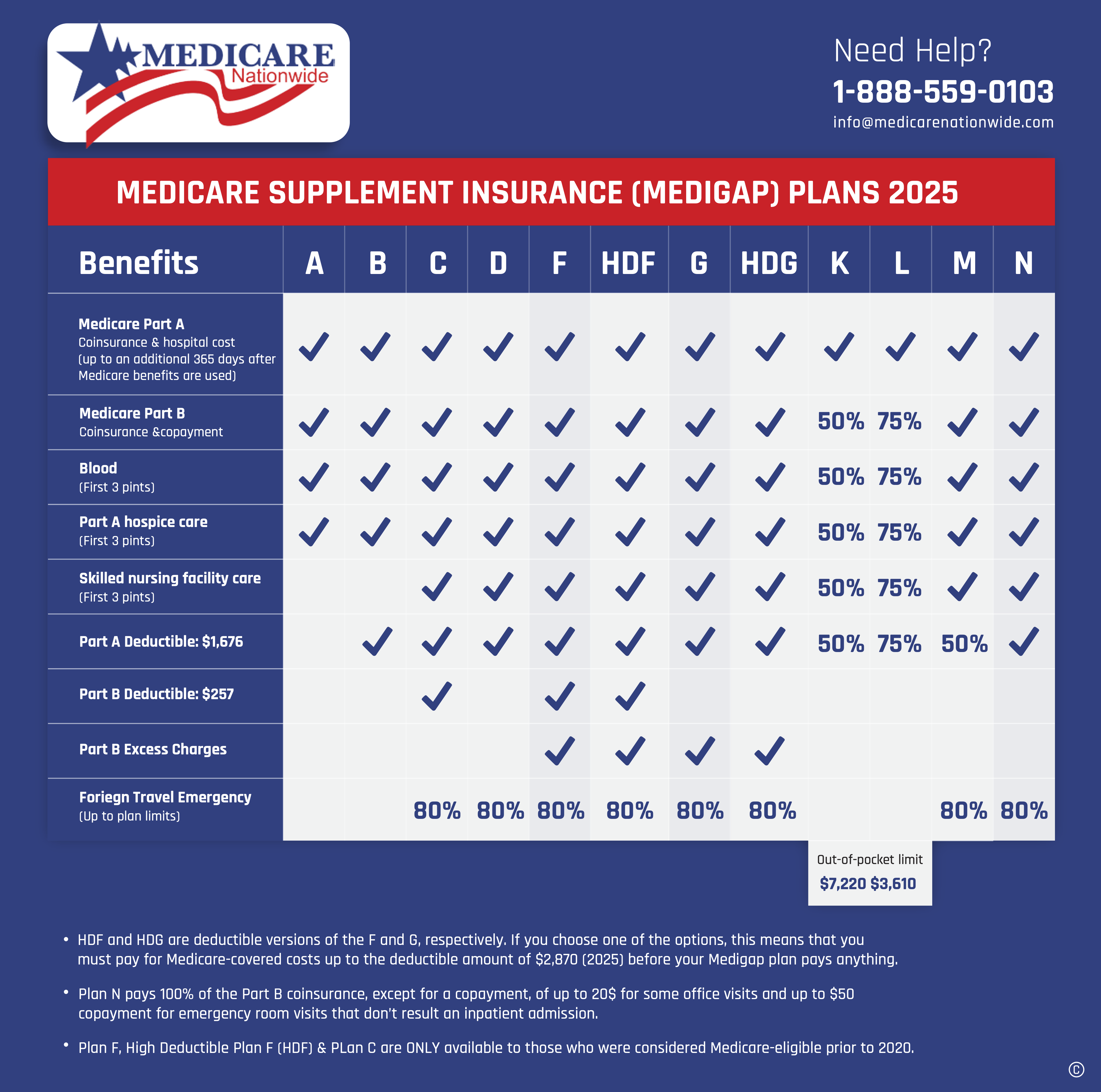
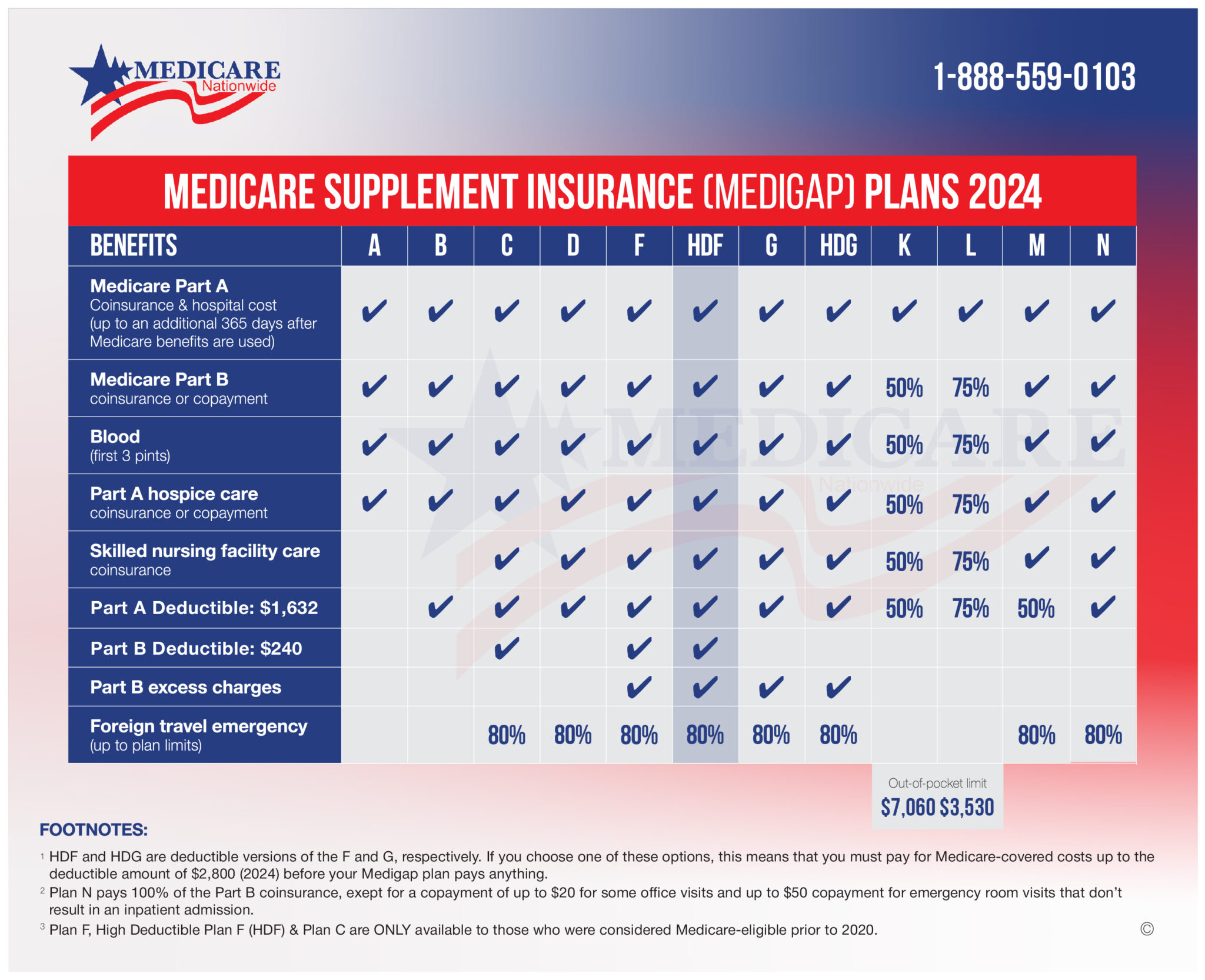
The following table outlines the coverage levels for the primary Aetna Medicare Supplement plans available in 2019.
| Benefit | Plan A | Plan F | Plan G | Plan N |
|---|---|---|---|---|
| Part A Coinsurance & Hospital Costs | 100% | 100% | 100% | 100% |
| Part B Coinsurance or Copayment | 100% | 100% | 100% | 100%* |
| Blood (First 3 Pints) | 100% | 100% | 100% | 100% |
| Part A Hospice Care Coinsurance | 100% | 100% | 100% | 100% |
| Skilled Nursing Facility Coinsurance | No | 100% | 100% | 100% |
| Part A Deductible | No | 100% | 100% | 100% |
| Part B Deductible | No | 100% | No | No |
| Part B Excess Charges | No | 100% | 100% | No |
| Foreign Travel Exchange (up to 80%) | No | 80% | 80% | 80% |
*Plan N pays 100% of the Part B coinsurance, except for a copayment of up to $20 for some office visits and up to a $50 copayment for emergency room visits.
Cost Factors for Aetna Medigap Plans in 2019
The premiums for Aetna Medicare Supplement plans were not uniform across the country. Several factors influenced what a beneficiary paid in 2019.
Pricing Models
Aetna used three primary methods for pricing their plans, depending on state regulations:
- Community-Rated: Everyone in the same geographic area pays the same premium, regardless of age.
- Issue-Age-Rated: The premium is based on the age you are when you first buy the policy. It will not increase because you get older, though it may increase due to inflation.
- Attained-Age-Rated: This was the most common model for Aetna in 2019. The premium starts low but increases as the policyholder ages.
Household Discounts
One of Aetna's most competitive advantages in 2019 was the household discount. In many states, if two people lived in the same residence (and in some cases, if they were both enrolled in an Aetna plan), they could receive a discount on their monthly premiums, often ranging from 7% to 12%.
Enrollment Timing
The best time to enroll in an Aetna Medigap plan in 2019 was during the Medigap Open Enrollment Period. This six-month window began the month a person turned 65 and was enrolled in Part B. During this time, Aetna was required to accept the applicant regardless of their health status (guaranteed issue). Outside of this window, applicants often had to undergo medical underwriting, which could lead to higher premiums or a denial of coverage based on pre-existing conditions.
Eligibility and Enrollment Requirements
To have been eligible for an Aetna Medicare Supplement plan in 2019, a consumer must have met the following criteria:
- Enrolled in Medicare Part A and Part B: You cannot have a Medigap plan if you only have one part of Original Medicare.
- Residency: You must have lived in a state where Aetna (or its subsidiaries) was licensed to sell the specific plan.
- Age: While most beneficiaries were 65 or older, some states required carriers to offer at least one plan to those under 65 who were eligible for Medicare due to disability or End-Stage Renal Disease (ESRD).
It is also important to note that a beneficiary could not have both a Medicare Advantage plan and a Medicare Supplement plan at the same time. If a person was switching from Medicare Advantage back to Original Medicare in 2019, they typically needed a "trial right" or a qualifying event to enroll in an Aetna Medigap plan without medical underwriting.
The Long-Term Perspective: 2019 Plans in 2026
As we look back from 2026, those who enrolled in Aetna Medicare Supplement plans in 2019 have seen their policies evolve. If you purchased a Plan F or Plan G in 2019, your coverage remains essentially the same today, provided you have continued to pay your premiums.
The standardization of Medigap plans means that federal law protects your benefits. Even though Plan F is no longer available to those who became eligible for Medicare after 2020, those who already had the plan in 2019 are "grandfathered" in. However, many policyholders who remained in Plan F have seen higher premium increases compared to those in Plan G, primarily because the "risk pool" for Plan F is closed to younger, healthier entrants.
In 2026, many individuals who started with Aetna in 2019 still hold their policies because of Aetna's stable claims-paying history and the convenience of the CVS-Aetna network. However, the price of these plans has naturally increased over the last seven years due to the rising costs of healthcare and the age of the policyholders.
Frequently Asked Questions
Did Aetna Medicare Supplement plans in 2019 cover prescription drugs?
No. Since 2006, Medicare Supplement plans have not been allowed to include prescription drug coverage. Beneficiaries in 2019 typically paired their Aetna Medigap plan with a standalone Medicare Part D prescription drug plan.
Can I still switch to an Aetna Plan F if I was eligible for Medicare in 2019?
Yes. If you were eligible for Medicare prior to January 1, 2020, you are still eligible to apply for Plan F today, in 2026. However, unless you have a "guaranteed issue" right, you will likely have to answer medical questions and pass underwriting to be accepted by Aetna.
What happened to my Aetna 2019 plan if I moved to a different state?
Medicare Supplement plans are portable. If you moved within the United States, your Aetna plan generally traveled with you. However, your premium might have been adjusted based on the cost of living and healthcare in your new zip code.
Does Aetna Plan G cover the Part B excess charges?
Yes. One of the reasons Plan G was popular in 2019 is that it covered 100% of Part B excess charges. These charges occur when a provider is allowed to charge up to 15% more than the Medicare-approved amount. While rare, Plan G protects you from these unexpected costs.
Why did my Aetna premium increase even though my benefits stayed the same?
Premiums for Medigap plans typically increase annually for two reasons: your age (if you have an attained-age policy) and medical inflation. Even though the 2019 benefit structure hasn't changed, the cost of the medical services Aetna pays for has risen.
Practical Recommendation for Policyholders
If you currently hold an Aetna Medicare Supplement plan that was originally issued in 2019, it is wise to perform an annual "rate check." While your benefits are guaranteed by federal law, the premium you pay is subject to change. In 2026, you may find that other plans, or even newer iterations of Aetna plans, offer similar coverage at a lower price point.
However, before canceling a 2019-era policy, ensure you can qualify for a new one. Unless you live in a state with "birthday rules" or "anniversary rules" (such as California, Oregon, or New York), you will likely need to pass a medical background check to switch plans. If your health has declined since 2019, your best course of action is usually to keep your current Aetna policy, as it cannot be canceled by the insurer as long as you pay your premiums.