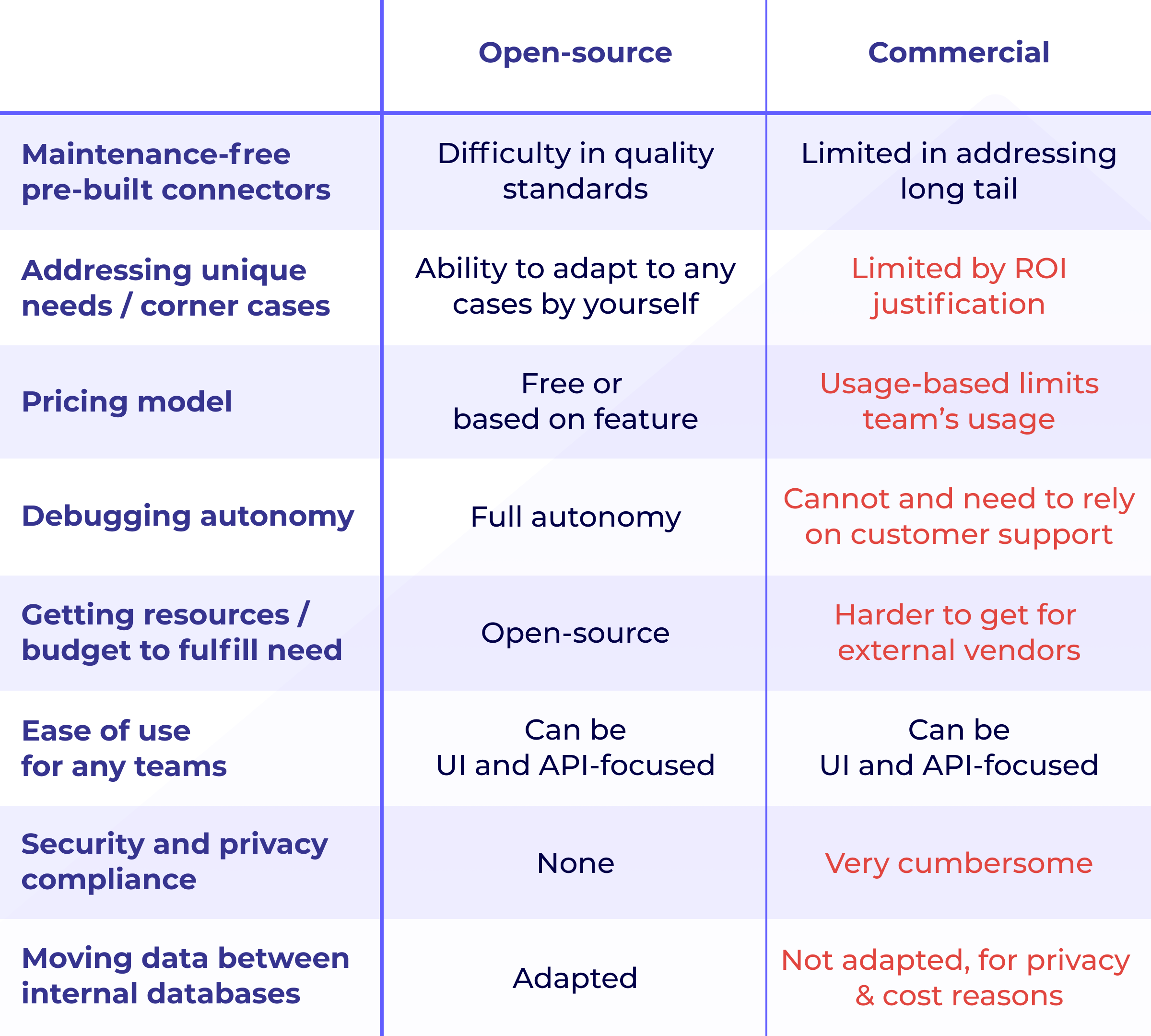
Open source software delivers a dual advantage, combining cost-effective business strategies with robust technical innovation, flexibility, and security through collaborative development.
The digital transformation of modern enterprises relies heavily on the foundational shift from proprietary, closed-source ecosystems to open source software (OSS). Organizations across industries—from agile tech startups to multinational financial institutions—increasingly integrate open source projects into their core infrastructure. Examining the advantages of open source reveals a multi-dimensional value proposition. Beyond the obvious financial savings of bypassing costly licensing fees, open source offers strategic business advantages, such as vendor independence and rapid time-to-market. Simultaneously, it provides deep technical benefits, including transparent codebases, rigorous peer review, highly customizable architectures, and freedom from proprietary lock-in.
Understanding these dynamics requires looking past generalized software marketing claims to analyze the distinct operational, economic, and engineering mechanisms that drive open source success. Whether evaluating an operating system kernel, a database management system, a container orchestration platform, or an enterprise programming language, decision-makers must weigh both the business model and the technical engineering paradigm.
Defining Open Source: The Foundations of Collaborative Innovation
To evaluate the advantages of open source, one must first define what distinguishes it from proprietary software. Open source software is published under licenses that grant users the legal right to inspect, modify, and distribute the source code to anyone for any purpose. These licenses—governed by bodies like the Open Source Initiative (OSI)—ensure that the software remains universally accessible, preventing any single entity from monopolizing or suddenly restricting access to the codebase.
The collaborative model behind open source shifts software development from closed corporate research and development labs to global ecosystems of independent developers, competing enterprises, and academic institutions. This distributed model accelerates the pace of innovation. Instead of relying on a finite internal engineering team, an open source project benefits from thousands of contributors who patch bugs, optimize algorithms, write documentation, and build integrations.
Key Characteristics of Open Source Ecosystems
- Source Code Transparency: The raw code is publicly viewable, enabling deep auditing and understanding of underlying mechanisms.
- Modifiability and Forking: Users can alter the code to suit exact operational needs or create entirely new projects (forks) if the community diverges in vision.
- Community Governance: Many projects are managed by neutral foundations—such as the Apache Software Foundation or the Cloud Native Computing Foundation (CNCF)—ensuring fair play and preventing single-vendor dominance.
- Meritocratic Contribution: Influence within a project is typically earned through code quality, active participation, and peer recognition rather than corporate hierarchy.
Business Advantages of Open Source Software
The financial and strategic incentives for adopting open source are central to modern corporate IT budgeting. While open source is frequently summarized as "free software," the primary economic advantages extend far beyond zero-dollar acquisition costs.
Strategic Business Advantages
- Cost Efficiency
- Elimination of recurring per-seat licensing fees and predictable cost structures.
- Vendor Independence
- Freedom from proprietary ecosystem traps, preventing arbitrary price hikes.
- Acceleration & Agility
- Faster proof-of-concept deployment and reduced procurement friction.
- Talent Acquisition
- Attraction of top-tier engineers who prefer working with cutting-edge open technologies.
Total Cost of Ownership (TCO) and Financial Predictability
The most immediate business attraction of open source is the elimination of upfront licensing costs. In a proprietary software model, organizations face steep capital expenditures (CapEx) for licenses scaled by user counts, CPU cores, or server deployments. Open source shifts these economics. Software can be downloaded and deployed across infinite nodes without licensing friction.
However, financial evaluation must account for Total Cost of Ownership (TCO). While licenses are free, operational expenses (OpEx) shift toward infrastructure management, internal training, enterprise support subscriptions, and specialized engineering talent. Even with these operational overheads, open source consistently delivers a lower TCO over a multi-year lifecycle because organizations only pay for the services, hosting, and support they actually consume, rather than mandatory licensing tiers.
Elimination of Vendor Lock-In
Vendor lock-in occurs when an organization becomes heavily dependent on a single proprietary vendor’s ecosystem, making migration to a competitor prohibitively expensive or technically impossible. Proprietary vendors leverage this dependency to enact aggressive price increases, alter terms of service, or discontinue vital features.
Open source inherently mitigates vendor lock-in. Because the source code is universally accessible and governed by permissive or copyleft licenses, an organization always retains the legal right to maintain, host, or fork the software independently. If a commercial provider of open-source support raises prices or changes its service level agreement (SLA), the enterprise can transition to a competing support provider or manage the infrastructure internally using existing in-house talent.
Rapid Innovation and Time-to-Market
In competitive markets, the speed at which an organization can prototype, test, and deploy applications dictates commercial success. Proprietary software procurement often involves lengthy bureaucratic procurement cycles, legal reviews of restrictive End User License Agreements (EULAs), and rigid negotiation phases.
Open source bypasses these bottlenecks. Engineers can immediately download a tool, test its viability in a staging environment, and integrate it into a development pipeline within minutes. This friction-free acquisition model accelerates innovation, enabling engineering teams to build products and services faster than competitors constrained by slow proprietary procurement channels.
Technical Benefits of Open Source Architecture
While business leaders focus on cost and agility, engineering teams prioritize technical superiority, stability, and control. Open source architectures deliver distinct technical advantages that directly impact application performance, security posture, and system reliability.
Architectural Flexibility and Customization
Proprietary software is built for a generalized market, forcing organizations to adapt their internal workflows to fit the constraints of the software. When a required feature or optimization is missing, developers must submit feature requests to the vendor and wait months—or years—for a product roadmap update, with no guarantee of delivery.
Open source provides absolute architectural freedom. Because the source code is fully accessible, developers can inspect every function, identify bottlenecks, and write custom patches or modules tailored specifically to their workload requirements. If an enterprise needs a specialized database connector or a unique security encryption wrapper, engineers can implement it directly into the codebase without external permission.
Superior Security Through Code Transparency
A common misconception in early computing was "security through obscurity"—the belief that keeping source code secret makes software harder to hack. Modern cybersecurity consensus completely rejects this view. Security vulnerabilities in proprietary codebases often remain hidden for years, discovered only by malicious actors who exploit them in the wild.
Open source follows Linus’s Law, popularized by Eric S. Raymond: "Given enough eyeballs, all bugs are shallow." Because thousands of independent security researchers, enterprise engineers, and automated scanners continuously inspect open source codebases, vulnerabilities are frequently discovered and patched faster than in closed environments. While open source projects are not immune to security flaws (as evidenced by historical supply-chain vulnerabilities), the speed of remediation and the transparency of patch management provide a vastly superior defensive posture.
Interoperability and Standards Compliance
Proprietary vendors often create closed data silos to keep customers trapped within their proprietary ecosystems, utilizing custom data formats and proprietary APIs that resist integration with external tools.
Open source projects are built on collaborative standards. They typically embrace open APIs, standardized data formats, and universally accepted protocols. This focus on interoperability ensures that open source components integrate seamlessly into hybrid cloud environments, multi-vendor infrastructures, and modern microservices architectures.
Comparing Open Source and Proprietary Software
| Evaluation Metric | Open Source Software (OSS) | Proprietary Software |
|---|---|---|
| Acquisition Cost | Typically free of licensing fees; optional paid support/hosting. | High upfront and recurring licensing fees per user/core. |
| Source Code Access | Fully transparent, auditable, and modifiable. | Obscured binaries; source code is legally restricted. |
| Customization | Unlimited; developers can modify or fork code freely. | Limited to vendor-provided configuration options and APIs. |
| Vendor Dependency | Low; easily shifted to alternative support providers or self-hosted. | High; locked into a single vendor's roadmap and pricing model. |
| Security Model | Community-driven peer review and rapid patch deployment. | Centralized security team with opaque vulnerability disclosures. |
| Support Options | Community forums, documentation, and enterprise commercial SLAs. | Direct vendor support tied to active licensing tiers. |
Evaluating the Risks and Challenges of Open Source Adoption
Despite the overwhelming business and technical advantages, adopting open source software is not without challenges. Successful integration requires understanding and mitigating potential operational risks.
Support, Governance, and Lifecycle Management
Unlike proprietary software, where a single vendor guarantees support through a contractual agreement, open source support varies by project. Smaller or abandoned open source projects may lack active maintenance, leaving organizations exposed to unpatched security vulnerabilities or compatibility breaks during operating system updates. Enterprises must carefully vet open source dependencies, favoring projects backed by recognized foundations, active contributor communities, or commercial enterprises offering enterprise-grade SLAs.
Compliance and Intellectual Property Licensing
Open source does not mean "anything goes." Codebases are bound by specific legal licenses that dictate how the software can be used, modified, and distributed.
- Permissive Licenses (such as MIT, Apache 2.0, and BSD) impose minimal restrictions, allowing commercial use and modification without forcing downstream code to remain open source.
- Copyleft Licenses (such as GPL and AGPL) require that any derivative work or application incorporating the code must also be made open source under the same license terms.
Organizations must implement automated software composition analysis (SCA) tools to scan codebases, ensuring legal compliance and preventing intellectual property disputes.
Frequently Asked Questions
Is open source software truly free?
While open source software does not charge licensing fees for acquisition, it is not entirely "free" in terms of total cost of ownership. Organizations incur costs related to infrastructure hosting, internal engineering management, security compliance, and optional commercial support subscriptions. However, the financial investment is typically lower and more scalable than proprietary licensing models.
How does open source ensure better security if anyone can view the code?
Code transparency allows both malicious actors and defensive security researchers to examine the source. Because open source projects are scrutinized by large, global communities of independent developers and automated security auditors, vulnerabilities are frequently exposed and patched rapidly. In contrast, proprietary software relies on secrecy, which often leaves undiscovered vulnerabilities hidden until exploited maliciously.
What is vendor lock-in, and how does open source prevent it?
Vendor lock-in occurs when an organization becomes entirely dependent on a single vendor's proprietary technology, making switching costs prohibitively high. Open source prevents this by granting users permanent ownership of the source code and the legal right to fork the project, migrate to competing support providers, or self-host without artificial contractual restrictions.
Can open source software be used securely in commercial enterprises?
Yes. The vast majority of Fortune 500 enterprises, financial institutions, and government agencies rely heavily on open source infrastructure, including Linux operating systems, PostgreSQL databases, and Kubernetes orchestration. Enterprise-grade open source adoption requires governance policies, continuous vulnerability scanning, and engagement with commercial vendors who provide certified builds and guaranteed support SLAs.
Conclusion and Strategic Next Actions
The convergence of business agility and technical superiority makes open source software a foundational pillar of modern enterprise architecture. By eliminating restrictive licensing costs, preventing vendor lock-in, and providing transparent, customizable, and secure codebases, open source empowers organizations to innovate faster and maintain control over their technological future.
To capitalize on these benefits, organizations should establish a formalized open source program office (OSPO) or governance framework. Begin by auditing existing software dependencies, assessing licensing compliance, and identifying legacy proprietary systems that can be migrated to open alternatives. By balancing open source adoption with rigorous lifecycle management, enterprises can maximize efficiency, security, and long-term technological resilience.