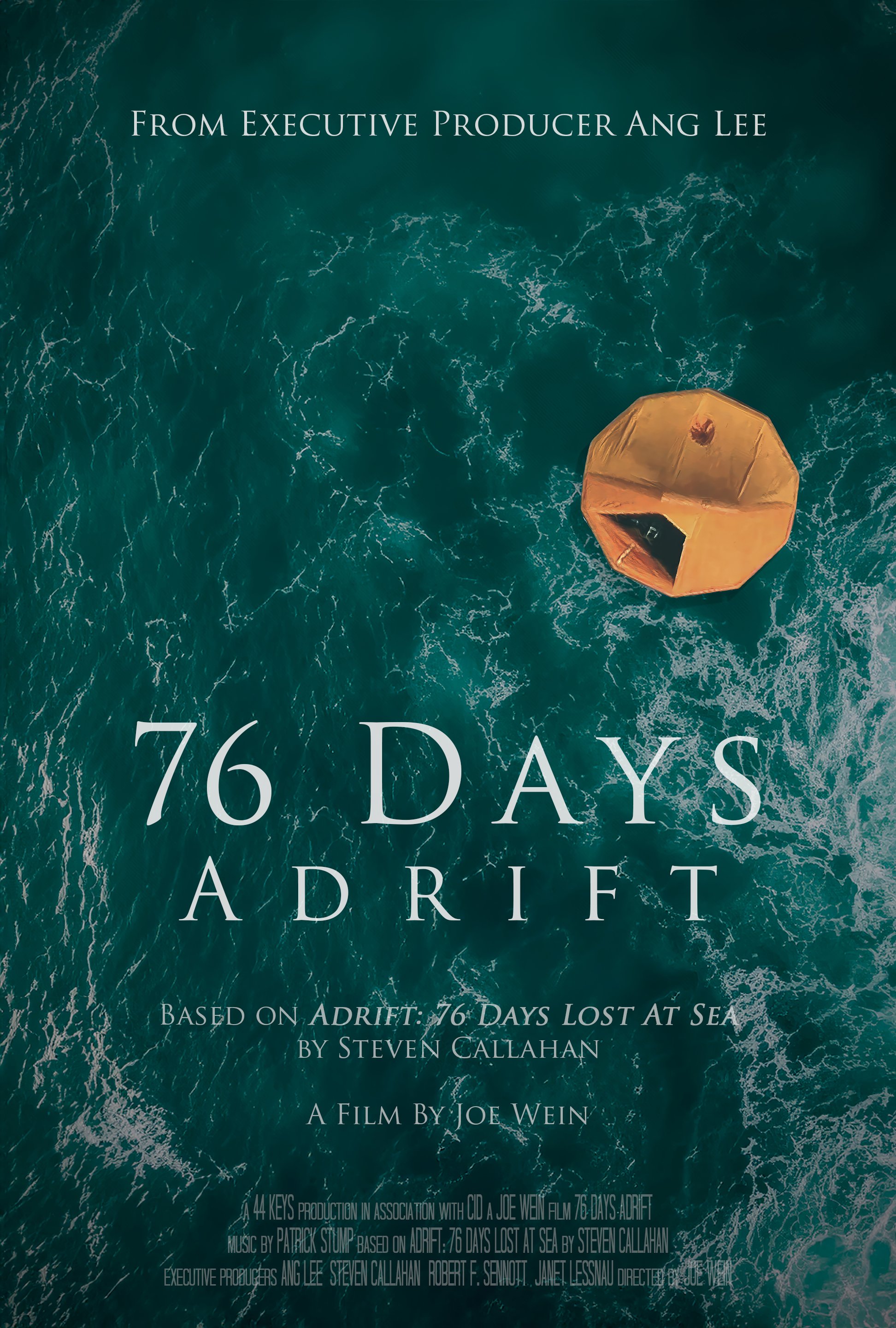
In 1982, American sailor Steven Callahan survived 76 days adrift in a six-foot inflatable liferaft across 1,800 nautical miles of the Atlantic Ocean after his sailboat sank. Utilizing solar stills for fresh water, spearfishing for nourishment, and performing critical raft repairs, Callahan’s ordeal remains one of history’s most extraordinary documented feats of maritime survival.
The Voyage and the Sinking of the Napoleon Solo
In January 1982, Steven Callahan—a 29-year-old American naval architect, writer, and experienced sailor—set out from El Hierro in the Canary Islands bound for the Caribbean. He was sailing solo aboard the Napoleon Solo, a 21-foot (6.5-meter) sloop that he had designed and built himself. Callahan had recently completed the single-handed Mini Transat race from England to the Canaries, despite experiencing structural repairs along the way. His goal was to complete a full transatlantic crossing back to the Americas.
On the night of February 4, 1982, approximately 450 miles west of the Canary Islands, a severe Atlantic gale struck. In the pitch darkness, a sudden, catastrophic collision occurred. Callahan suspected his hull collided with a whale or a submerged shipping container. Ocean water poured violently into the cabin, threatening to take the vessel down in minutes.
Realizing the boat was doomed, Callahan acted with remarkable composure despite the chaotic conditions:
- Deploying the Liferaft: He immediately launched his six-person Avon inflatable liferaft into the rough waters.
- Diving into the Flooded Cabin: Callahan dove repeatedly into the submerged cabin of the sinking Napoleon Solo to retrieve vital equipment, despite the danger of being trapped as the boat settled lower into the water.
- Securing the Ditch Bag: He managed to secure a pre-packed emergency kit (the "ditch bag") containing survival tools, distress flares, navigation charts, and a manual on ocean survival.
Shortly after Callahan cut the painter line linking his liferaft to the boat, the Napoleon Solo vanished beneath the ocean waves, leaving him alone in the open ocean with minimal supplies and thousands of miles of open water ahead of him.
Critical Salvage Operations and Immediate Survival Gear
The equipment Callahan managed to retrieve during those harrowing minutes proved to be the difference between life and death. While his emergency equipment was modest by modern satellite-monitored standards, it provided the structural foundation for his survival strategy.
| Key Survival Gear Salvaged |
|---|
| Avon 6-Person Inflatable Liferaft (with overhead canopy) |
| Solar Stills (Inflatable units for seawater desalination) |
| Speargun & Short Spear (For harvesting pelagic fish) |
| Emergency Position-Indicating Radio Beacon (EPIRB - limited range) |
| Copy of "Sea Survival" by Dougal Robertson |
| Cushion, Sleeping Bag, & Basic First-Aid Components |
| Solar Still Operating Instructions & Repair Kit Patch Set |
Although Callahan possessed an Emergency Position-Indicating Radio Beacon (EPIRB), 1980s satellite technology was not continuously monitoring the specific commercial frequencies his unit transmitted on in that part of the Atlantic. After activating the beacon for several days without response, he realized no rescue vessels were being dispatched to his location. He was floating in the South Equatorial Current, which moves slowly westward toward the West Indies, thousands of miles away.
To survive the journey, Callahan had to transition from expecting a speedy rescue to preparing for an extended oceanic drift that could take months.
Essential Survival Mechanics: Water, Food, and Raft Maintenance
Surviving on the open ocean requires balancing three continuous demands: securing fresh water, obtaining adequate calories, and maintaining the structural integrity of the floating craft. Over the course of 76 days, Callahan engineered solutions to each of these challenges.
Solar Stills and Water Production
Dehydration is the primary cause of death for castaways. Callahan carried three solar stills—inflatable plastic bladders designed to vaporize seawater using sun warmth and condense pure freshwater into collection bags.
However, the stills were fragile, prone to leakage, and frequently damaged by rough seas. Callahan had to continuously repair them using tape, string, and flexible membranes. When the solar stills failed or produced low yields on cloudy days, he rigged improvised rain catchers using the liferaft canopy, funneling every drop of rainwater into plastic storage containers. Through careful rationing, he maintained an average intake of roughly one pint of water per day, enough to sustain basic renal function.
Spearfishing and Pelagic Ecosystem Utilization
With only a few days of emergency rations onboard, Callahan relied on the ecosystem that gradually formed beneath his raft. The floating raft acted as a fish-aggregating device (FAD), attracting barnacles, small triggerfish, and eventually large schools of Dorado (mahi-mahi).
Using a modified speargun, Callahan hunted the dorado and triggerfish that swam beneath the raft floor. He adapted his technique to avoid damaging the rubber floor of the liferaft with the spear tip. He ate every portion of the fish to maximize nutrient absorption:
- Flesh: Eaten raw or dried in the sun to preserve calories for days when hunting was impossible.
- Organs: Livers and internal organs supplied essential vitamins, preventing vitamins deficiencies like scurvy.
- Fluid: He squeezed fluid from the fish vertebrae and chewed fish eyes to gain extra hydration when water production was low.
Ecosystem Development Beneath the Raft:
- Liferaft Bottom
- Goose Barnacles (Attached to fabric floor)
- Small Triggerfish (Feeding on barnacles)
- Dorado / Mahi-Mahi (Hunting triggerfish)
- Steven Callahan (Spearfishing Dorado)
Critical Raft Repairs in Shark-Infested Waters
On Day 43, Callahan suffered a structural catastrophe. While attempting to spear a large dorado, the spear line snapped, and the struggling fish drove the sharp speargun point into the raft’s lower buoyancy tube, causing a major puncture.
The lower tube deflated rapidly, reducing the raft's buoyancy by half and leaving Callahan submerged in saltwater inside the craft. For 36 days, he struggled to maintain pressure in the raft using a manual foot pump while trying to engineer a permanent patch on a wet, degraded synthetic rubber surface.
After numerous failed attempts with standard adhesive patches, Callahan invented an improvised mechanical clamp. Using a plastic fork-like tool, string, and fabric patches, he created a rigid compression seal that held the leak in check. This allowed him to reinflate the lower chamber fully—a feat of emergency engineering that saved his life.
The Psychological Battle and Physical Toll
While the physical logistics of water and food were constant, the psychological burden of extreme isolation proved equally taxing. Callahan documented his mental state in a journal kept on waterproof paper, recording his highs, lows, and cognitive coping mechanisms.
Mental Resilience and Emotional Attachment
To avoid sinking into despair, Callahan broke his daily existence into structured routines: inspecting the raft, operating the solar stills, drying fish, repairing gear, and logging navigational estimates.
Over time, he developed a complex psychological relationship with the marine life beneath his boat. He began referring to the dorados as his "doggies," viewing them simultaneously as companions that kept him sanity-bound and as necessary sustenance for his survival.
He experienced severe emotional distress whenever a fish escaped or when sharks damaged his gear. Large oceanic whitetip sharks and hammerheads frequently circled the raft, bumping against the thin rubber floor and attempting to take fish off his spear line.
Physical Degradation and Medical Challenges
The human body is not built to withstand continuous immersion in salt water under intense solar radiation. By the second month of drift, Callahan was suffering from:
- Salt Sores: Continuous contact with saltwater caused deep, painful ulcers across his legs, buttocks, and back.
- Severe Emaciation: His body consumed its muscle tissue and fat reserves. By the end of the ordeal, he had lost over 40 pounds (nearly one-third of his total body mass).
- Hyperthermia and Exposure: Sunburn combined with temperature swings created constant physical discomfort.
The Rescue Off Guadeloupe
By mid-April 1982, Callahan’s rough navigational charts indicated that the South Equatorial Current had carried him across the Atlantic into the vicinity of the Caribbean islands.
On April 20, 1982—the 76th day of his drift—Callahan spotted the peak of Marie-Galante, a small island southeast of Guadeloupe. The raft was drifting toward the island’s outer reefs, but his weakened physical state made maneuvering impossible.
Timeline of the 76-Day Drift (1982):
- Feb 04: Napoleon Solo sinks; Callahan boards Avon liferaft ~450 mi west of Canaries.
- Feb 10: EPIRB battery depleted; Callahan realizes no rescue ship is coming.
- Mar 15: Solar stills degradation; rainwater harvesting becomes top priority.
- Mar 18 (Day 43): Raft wall punctured by spear shaft; lower chamber deflates.
- Apr 10: Improvised mechanical patch successfully seals lower raft tube.
- Apr 20 (Day 76): Spotted by Guadeloupe fishermen off Marie-Galante; rescued.
Birds circling the liferaft and the high concentration of fish feeding beneath it attracted local fishermen from Marie-Galante. Spotting the battered liferaft surrounded by birds, the fishermen approached and found Callahan. He was emaciated, covered in salt sores, and barely able to stand, but fully conscious and articulate.
The fishermen brought Callahan ashore, where he was rushed to a local hospital. After several days of intensive intravenous rehydration, wound care, and gradual nutritional recovery, he was out of danger. His liferaft had covered over 1,800 nautical miles (3,300 kilometers) of open ocean.
Comparative Analysis of Historic Ocean Survival Feats
Steven Callahan’s 76-day survival is often compared to other famous maritime survival events. The table below illustrates how his drift compares with other notable unassisted open-ocean survival incidents in modern history.
| Survival Event | Year | Duration | Vessel Used | Key Survival Factors | Outcome |
|---|---|---|---|---|---|
| Poon Lim | 1942 | 133 days | Wooden Raft | Carried emergency rations, caught rain, fished using wire | Rescued by Brazilian fishermen off South America |
| Dougal Robertson & Family | 1972 | 38 days | Liferaft & Wooden Dinghy | Drank turtle blood, hunted flying fish, navigated toward land | Rescued by Japanese fishing vessel Toka Maru |
| Steven Callahan | 1982 | 76 days | Inflatable Liferaft | Solar stills, spearfishing, improvised mechanical raft repairs | Rescued off Marie-Galante, Guadeloupe |
| Maurice & Maralyn Bailey | 1973 | 117 days | Inflatable Liferaft | Drank turtle blood, harvested fish, survived raft degradation | Rescued by Korean fishing vessel Tae Chang No. 55 |
| Jose Salvador Alvarenga | 2012–2014 | 438 days | Small Fishing Skiff | Drank turtle blood/rain, ate seabirds and raw fish | Stranded on Ebon Atoll, Marshall Islands |
Publication, Legacy, and Impact on Maritime Safety
Following his recovery, Callahan documented his experience in his 1986 memoir, Adrift: Seventy-Six Days Lost at Sea. The book became a critical success, spending 36 weeks on The New York Times Bestseller list. It remains one of the seminal texts on wilderness survival and offshore seamanship.
Contributions to Maritime Safety Technology
As a professional naval architect, Callahan used his survival experience to advocate for specific changes in marine safety equipment:
- Liferaft Design Improvements: He identified flaws in standard commercial liferaft inflation systems, canopy stability, and repair kit contents, influencing manufacturers to supply more robust patch designs.
- Integrated Survival Kits: His experience demonstrated the necessity of packing heavy-duty spearguns, multiple desalination tools, and specialized survival manuals in ocean-crossing safety packs.
- Beacon Technology Evolution: Callahan’s ordeal highlighted the blind spots of early EPIRB systems, contributing to the development of the global COSPAS-SARSAT satellite system, which provides modern sailors with precise, real-time GPS beacon tracking.
Consultation on Life of Pi
In the late 2000s, director Ang Lee approached Steven Callahan to serve as the chief survival consultant for the feature film adaptation of Yann Martel’s novel Life of Pi (released in 2012). Callahan designed the survival gear used by the main character, taught actor Suraj Sharma how to handle fish and rig gear on a raft, and ensured that the physical realities of floating in an ocean environment were portrayed accurately on screen.
Frequently Asked Questions
How did Steven Callahan get fresh water while adrift for 76 days?
Callahan relied on two main water sources: inflatable solar stills that distilled freshwater from seawater using sunlight condensation, and improvised rain collectors made from the liferaft canopy. On days when water production was low, he also extracted fluids from the flesh, organs, and eyes of fish he caught.
What caused Steven Callahan’s boat, the Napoleon Solo, to sink?
On the night of February 4, 1982, during a gale off the Canary Islands, Callahan's 21-foot vessel suffered a severe collision below the waterline. Callahan believed the boat struck either a whale or a floating steel shipping container, which ruptured the hull and flooded the cabin within minutes.
How did Callahan repair his damaged liferaft at sea?
After accidental speargun damage punctured the lower buoyancy chamber of his raft on Day 43, standard rubber patches failed due to the wet, salt-caked surface. Callahan engineered a mechanical seal using a plastic fork-like tool, string, and cloth patches to clamp the tear shut from the inside out, allowing the chamber to hold air again.
What book did Steven Callahan write about his experience?
Callahan wrote Adrift: Seventy-Six Days Lost at Sea, published in 1986. The book detailed his day-to-day physical and psychological struggles, offering insights into human resilience and oceanic survival.
How far did Steven Callahan drift during his 76 days at sea?
He drifted approximately 1,800 nautical miles (3,300 kilometers) across the Atlantic Ocean, starting roughly 450 miles west of the Canary Islands and ending near the island of Marie-Galante in Guadeloupe.
Practical Takeaways for Modern Ocean Sailors
Steven Callahan’s 76-day survival story provides timeless safety lessons for offshore sailors, blue-water cruisers, and expeditioners.
| Offshore Survival Preparation |
|---|
| 1. Maintain a Dedicated Grab Bag: Keep survival gear, satellite beacons, and water makers in a flotation bag near the companionway. |
| 2. Redundant Water Desalination: Carry both manual reverse-osmosis hand pumps and solar stills; do not rely solely on vessel tanks. |
| 3. Mechanical Raft Patch Kits: Include rigid clamps and mechanical plugs in liferaft kits alongside traditional adhesives. |
| 4. Modern Satellite Tracking: Ensure vessels carry modern 406 MHz EPIRBs with integrated GPS and AIS personal locator beacons. |
Understanding how Callahan adapted to his environment demonstrates that survival depends as much on equipment preparation and technical problem-solving as it does on mental willpower. By maintaining daily routines, inventing practical tools, and managing his water supply, Callahan turned an emergency into one of the most instructively documented survival victories in maritime history.