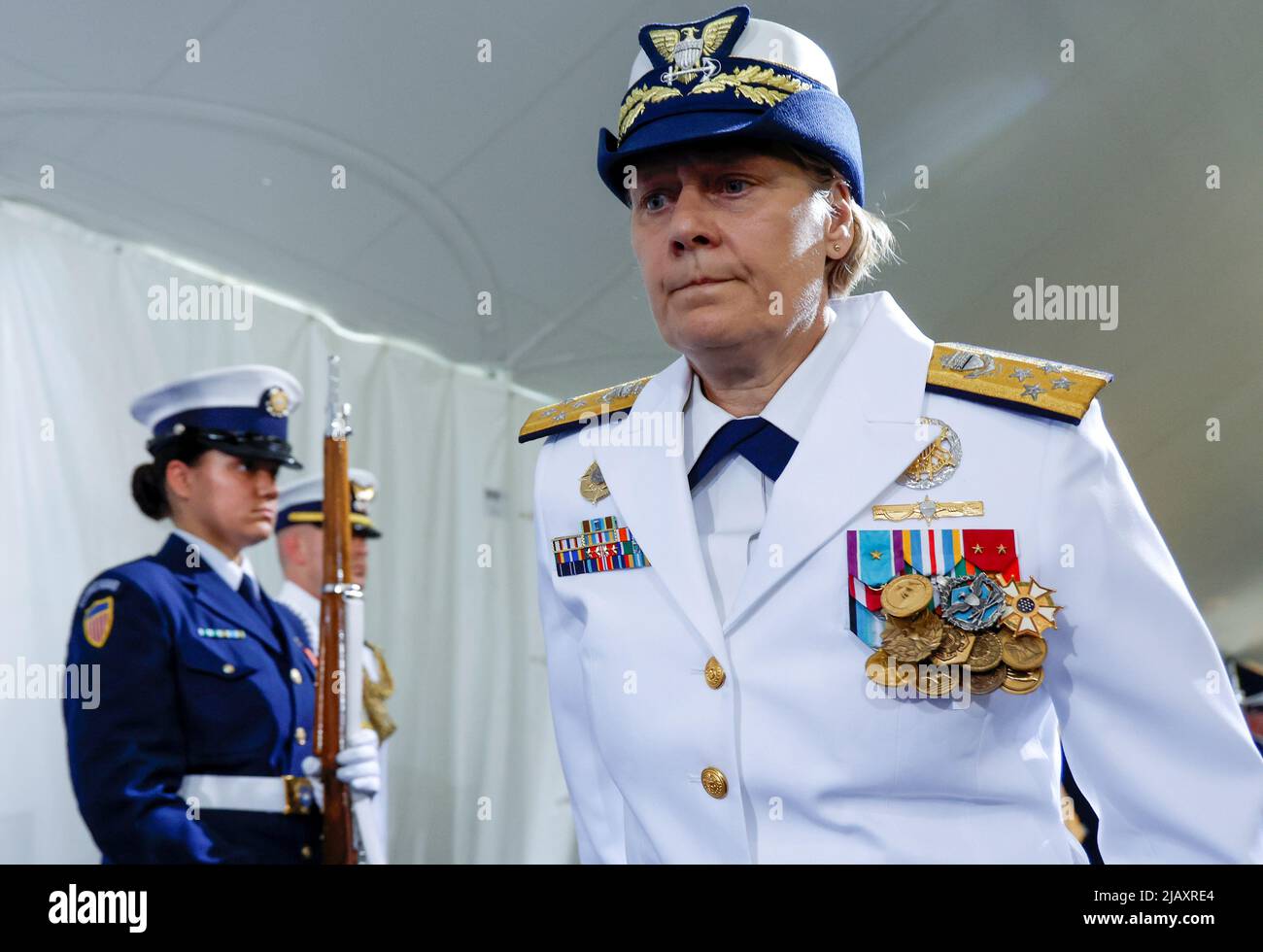
Admiral Linda L. Fagan is the 27th Commandant of the United States Coast Guard, serving as the first woman to lead a branch of the U.S. Armed Forces. While she leads the Coast Guard rather than the U.S. Navy, her role is vital to national maritime strategy, global security, and the integration of sea-service operations.
The Historic Appointment of Admiral Linda L. Fagan
The transition of leadership within the United States maritime services reached a historic milestone on June 1, 2022, when Admiral Linda L. Fagan assumed the duties of the Commandant of the Coast Guard. Her appointment was not merely a change in personnel but a significant cultural and operational shift for the U.S. military. Nominated by President Joe Biden and confirmed unanimously by the Senate, Fagan broke a "glass ceiling" that had existed since the founding of the American military.
In her capacity as Commandant, Admiral Fagan oversees the senior-most leadership of the Coast Guard, an organization with more than 42,000 active-duty members, 7,000 reservists, and 8,000 full-time civilians. As of 2026, her tenure has been defined by a period of intense modernization and a strategic pivot toward "Great Power Competition." Her leadership style is often described as collaborative and "people-centric," focusing on the health of the workforce as much as the readiness of the fleet.
Clarifying the Command: Coast Guard vs. Navy Leadership
There is often confusion regarding the specific branch Admiral Fagan leads. While the Coast Guard and the Navy are both maritime services, they operate under different departments and authorities. Admiral Linda L. Fagan leads the United States Coast Guard (USCG), which resides within the Department of Homeland Security during peacetime.
The United States Navy (USN) is led by the Chief of Naval Operations (CNO). As of 2026, Admiral Lisa Franchetti serves as the CNO, having also made history as the first woman to lead the Navy. Together, Fagan and Franchetti represent a historic era where two of the nation’s three maritime services (including the Marine Corps) are or have been led by women.
The Role of the Commandant of the Coast Guard
The Commandant is the highest-ranking officer of the Coast Guard and is a four-star Admiral. Unlike the Chief of Naval Operations, who is a member of the Joint Chiefs of Staff but does not have operational command of Navy forces (which falls to Combatant Commanders), the Commandant of the Coast Guard exercises direct operational control over the service. Fagan is responsible for the Coast Guard's multifaceted mission, which includes search and rescue, drug interdiction, environmental protection, and port security.
The Role of the Chief of Naval Operations (CNO)
The CNO is the professional head of the Navy and acts as the principal advisor to the President and the Secretary of the Navy on the conduct of naval warfare. The CNO’s primary focus is on the "man, train, and equip" functions of the fleet. While Admiral Fagan and the CNO work closely under the "National Fleet" policy, their legal authorities (Title 10 for the Navy vs. Title 14 for the Coast Guard) differ significantly.
Key Initiatives Under Admiral Fagan’s Leadership
Since taking command, Admiral Fagan has focused on three primary pillars: transforming the workforce, sharpening competitive edge, and advancing the mission through technology. As we look at the progress made by 2026, these initiatives have fundamentally altered the trajectory of the service.
Workforce Modernization and "Tomorrow’s Coast Guard"
Admiral Fagan inherited a service facing significant recruitment and retention challenges, a trend seen across all military branches in the early 2020s. To combat this, she launched the "Workforce Transition" initiative. This program focused on:
- Flexible Career Paths: Allowing members to move between active and reserve components more easily.
- Lateral Entry: Recruiting specialists from the private sector (such as cyber experts or mechanics) and granting them rank based on their civilian experience.
- Modernizing Housing and Childcare: Recognizing that family stability is a key driver for retention, Fagan directed significant budget increases toward improving Coast Guard housing and expanding childcare subsidies.
Technological Integration and Cyber Defense
Under Fagan’s leadership, the Coast Guard has prioritized its "Cyber Command." As maritime trade becomes increasingly digitized, the threat of cyber-attacks on American ports has grown. Fagan has overseen the deployment of Cyber Protection Teams that work with port authorities to harden infrastructure against foreign actors. Furthermore, she has championed the use of Unmanned Surface Vehicles (USVs) for long-range surveillance, allowing the Coast Guard to monitor vast areas of the ocean without the high cost of a manned cutter.
Strategic Impact on Global Maritime Security
Admiral Fagan’s leadership extends far beyond U.S. coastal waters. The Coast Guard is a unique instrument of national power because it possesses both military and law enforcement authorities. This allows Fagan to deploy resources in ways the Navy sometimes cannot.
The Indo-Pacific Strategy
A major hallmark of Fagan’s tenure has been the increased presence of Coast Guard cutters in the Indo-Pacific region. By partnering with nations like the Philippines, Vietnam, and Palau, the Coast Guard helps build local capacity for fisheries enforcement and search and rescue. This "Coast Guard diplomacy" serves as a counterweight to maritime coercion in the South China Sea, promoting a rules-based international order without the escalatory footprint of a heavy destroyer.
Arctic Sovereignty and the Polar Security Cutter
As the Arctic ice retreats, opening new shipping lanes, Fagan has been a vocal advocate for the Polar Security Cutter (PSC) program. The U.S. has long trailed Russia in icebreaking capability. Fagan’s administration has focused on accelerating the delivery of these heavy icebreakers to ensure that the United States can maintain a year-round presence in the High North, protecting economic interests and national sovereignty.
Career Milestones and the Path to Four Stars
Admiral Fagan’s rise to the top of the Coast Guard was built on a foundation of operational excellence and strategic leadership. A 1985 graduate of the U.S. Coast Guard Academy, her career spans over 40 years of service.
- Early Sea Time: Fagan served aboard the USCGC Polar Star, a heavy icebreaker, gaining firsthand experience in the harsh environments of the Antarctic.
- Sector Command: She served as Commander of Sector New York, where she was responsible for the safety and security of one of the world's busiest ports.
- Pacific Area Commander: Before becoming Vice Commandant, she led the Coast Guard’s Pacific Area, overseeing all missions from the Rocky Mountains to the East Coast of Africa.
- Vice Commandant: In 2021, she became the 32nd Vice Commandant, the first woman in the Coast Guard to achieve the rank of four-star Admiral.
Fagan holds multiple advanced degrees, including a Master of Science in Occupational Safety from the New York Institute of Technology and a Master of Science in National Resource Strategy from the Industrial College of the Armed Forces. This academic background has informed her approach to the complex regulatory and safety missions of the service.
Comparison of Maritime Leadership Roles
To understand how Admiral Fagan’s leadership interacts with the Navy, it is helpful to compare the two organizations' primary characteristics.
| Feature | U.S. Coast Guard (Led by Fagan) | U.S. Navy (Led by Franchetti) |
|---|---|---|
| Department | Homeland Security (DHS) | Defense (DoD) |
| Primary Mission | Law Enforcement, Life-Saving, Regulatory | Power Projection, Deterrence, Sea Control |
| Legal Authority | Title 14 & Title 10 | Title 10 |
| Fleet Composition | Cutters, Patrol Boats, Icebreakers | Aircraft Carriers, Submarines, Destroyers |
| Personnel Size | Approx. 57,000 (including reserves/civilians) | Approx. 400,000+ |
| Global Focus | Coastal security, Arctic, Indo-Pacific partner building | Deep-sea combat operations, global carrier presence |
Leading Through Times of Change: Challenges and Solutions
Despite her successes, Admiral Fagan’s leadership has been tested by systemic challenges. As of 2026, two major issues remain at the forefront of her agenda: aging infrastructure and the "recruiting shortfall."
Addressing the Maintenance Backlog
The Coast Guard operates some of the oldest ships in the U.S. military. While new cutters are being built, Fagan has had to manage a massive maintenance backlog. Her solution has been a "Service Life Extension Program" (SLEP) for older 210-foot and 270-foot cutters, ensuring they remain seaworthy until the newer Offshore Patrol Cutters (OPC) can join the fleet in significant numbers.
Cultural Transformation
Fagan has been a staunch advocate for changing the culture of the Coast Guard regarding sexual assault and harassment. Following several high-profile investigations into past failures at the Coast Guard Academy, she implemented the "Accountability and Transparency" initiative. This policy revamped how the service handles reports of misconduct, prioritizing victim support and ensuring that commanders are held responsible for the climate within their units.
The Future of Maritime Leadership Toward 2027
As Admiral Fagan approaches the later stages of her initial four-year term in 2026, her legacy is already taking shape. She has transitioned the Coast Guard from a service primarily focused on post-9/11 port security to one that is a critical player in global geopolitical competition.
Her focus on "Unlocking the Coast Guard’s Full Potential" is not just a slogan but a roadmap for a more agile, technologically advanced, and inclusive service. By the end of her tenure, the Coast Guard is expected to have a significantly modernized fleet and a workforce that reflects the diversity of the nation it protects.
Frequently Asked Questions
Does Admiral Linda Fagan lead the U.S. Navy?
No, Admiral Linda L. Fagan is the Commandant of the United States Coast Guard. The U.S. Navy is led by the Chief of Naval Operations (CNO), Admiral Lisa Franchetti. While both are maritime services, they have different missions and fall under different government departments (DHS for the Coast Guard and DoD for the Navy).
What was Admiral Fagan's historic achievement in 2022?
Admiral Fagan became the first woman to lead a branch of the U.S. Armed Forces and the first female four-star Admiral in the U.S. Coast Guard. Her confirmation marked the first time a woman held the senior-most position in any American military service.
What are the "Title 10" and "Title 14" authorities?
Title 10 of the U.S. Code governs the armed forces, including the Navy, and focuses on military operations. Title 14 governs the Coast Guard specifically, giving it the unique authority to perform federal law enforcement duties, such as boarding vessels and making arrests, which the Navy cannot typically do under the Posse Comitatus Act.
How does the Coast Guard support the Navy in 2026?
The Coast Guard and Navy operate under a "National Fleet" plan. In 2026, this involves the Coast Guard providing specialized capabilities that the Navy lacks, such as heavy icebreaking, shallow-water drug interdiction, and maritime law enforcement training for foreign allies. In times of war, the Coast Guard can be transferred to the Department of the Navy.
Where did Admiral Fagan attend school?
Admiral Fagan graduated from the United States Coast Guard Academy in 1985. She also holds master's degrees from the New York Institute of Technology and the Industrial College of the Armed Forces (now the Dwight D. Eisenhower School for National Security and Resource Strategy).
Practical Recommendation for Interested Parties
For those looking to follow the developments of the Coast Guard under Admiral Fagan’s leadership, the most direct source of information is the official United States Coast Guard website. Researchers and students should look for the "Commandant's Intent" documents, which provide the strategic framework for the service's operations through 2026 and beyond. Additionally, the U.S. Naval Institute provides independent analysis of how Fagan's Coast Guard integrates with the broader naval fleet and national defense objectives.