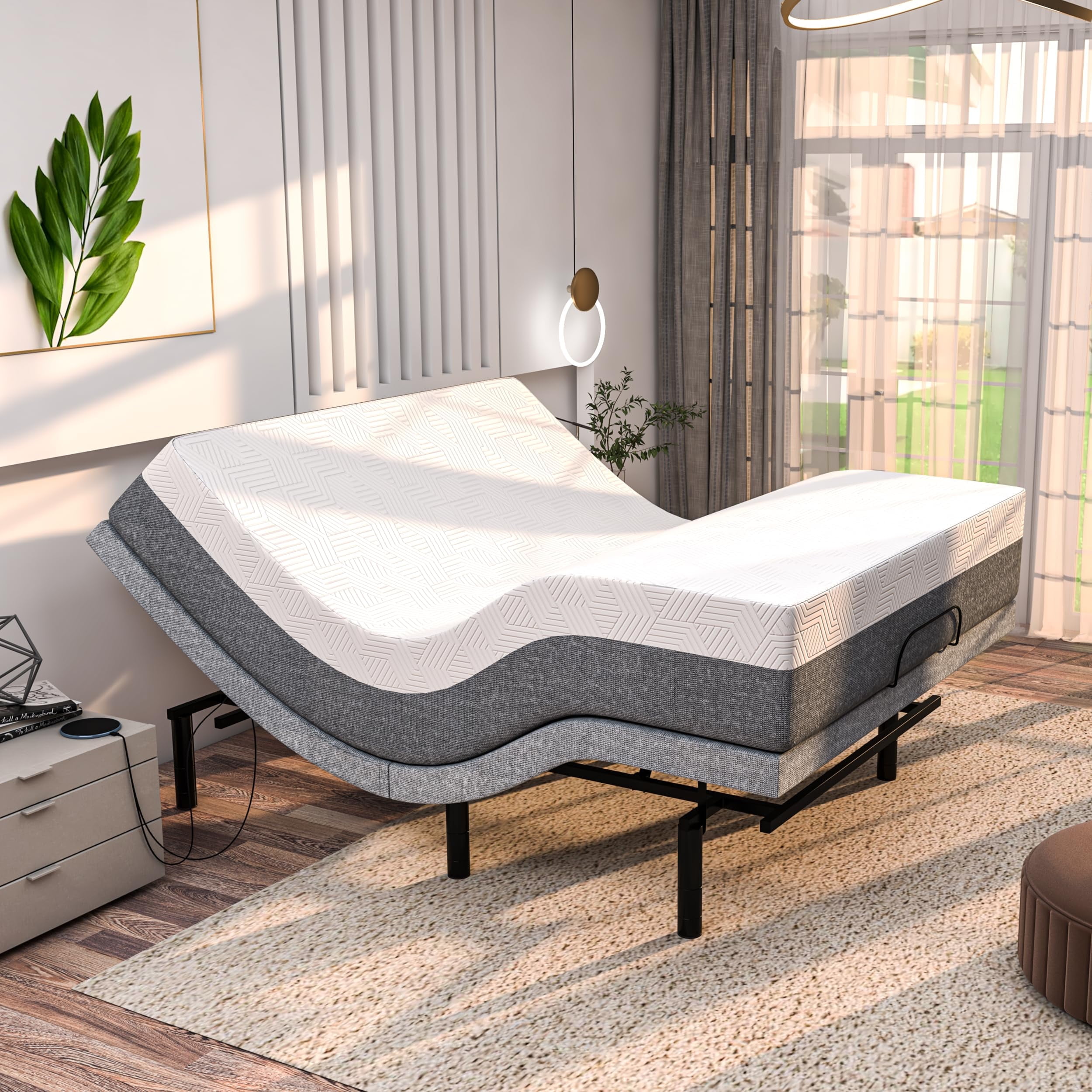
An adjustable mattress provides customized support through either internal air chambers that modify firmness or a construction designed to articulate on a motorized power base. For consumers in 2026, these systems offer targeted relief for back pain, snoring, and poor circulation by allowing precise control over sleep posture and surface tension.
Identity and Scope of Modern Adjustable Mattresses
To understand the 2026 adjustable mattress market, consumers must first distinguish between the two primary categories often grouped under this label: adjustable-firmness mattresses and adjustable-base compatible mattresses. While they serve different primary functions, the high-end consumer market increasingly integrates both into a single "smart sleep system."
Adjustable-Firmness (Smart Air) Mattresses
These mattresses utilize internal air chambers instead of traditional metal coils or solid foam cores. By adding or removing air via a remote or smartphone app, users can change the mattress from plush to firm in seconds. In 2026, these models have evolved to include multi-zone adjustment, allowing for different firmness levels under the shoulders, lumbar region, and hips. This technology is particularly beneficial for sleepers whose support needs change due to injury, pregnancy, or fluctuating weight.
Adjustable-Base Compatible Mattresses
These are typically high-quality memory foam, latex, or hybrid mattresses engineered with specific "flex zones." Unlike traditional innerspring mattresses, which can be damaged by bending, these models are designed to move in tandem with a motorized frame. This allows the sleeper to elevate their head or feet. When reviewing these for purchase, the "mattress" and the "base" are often sold separately, though their performance is entirely interdependent.
The Rise of Integrated Biofeedback Systems
A significant development in 2026 is the inclusion of biometric sensors embedded within the mattress layers. These sensors track heart rate, respiratory patterns, and movement. The "adjustable" aspect here is often automated; the mattress can subtly increase lumbar support or tilt the head upward if it detects the vibrations of snoring or a transition into a specific sleep stage.
Core Features and Technical Performance Metrics
When evaluating an adjustable mattress, performance is measured by more than just comfort. Technical specifications regarding motor noise, response time, and material durability are the true indicators of long-term value.
Pressure Relief and Spinal Alignment
The primary mechanical goal of an adjustable mattress is to maintain the spine's natural curvature while neutralizing pressure points. In hybrid adjustable models, this is achieved through a combination of pocketed coils—which provide individual reaction to weight—and high-density memory foam. Reviewers in 2026 prioritize "hysteresis," a measure of how foam recovers its shape. Low-quality foams lose their supportive properties when bent frequently on an adjustable base, leading to "hammocking."
Motor Mechanics and Noise Displacement
For mattresses paired with power bases, the quality of the motor is paramount. Modern units utilize whisper-quiet DC motors. Consumers should look for "shroud-protected" mechanisms that prevent dust accumulation and reduce decibel levels to below 45 dB during operation. A high-quality review must consider the "Wall-Hugger" feature, which ensures that as the head of the bed rises, the mattress slides back toward the wall, keeping the sleeper within reach of their nightstand.
Thermal Regulation Technologies
One historical drawback of foam-heavy adjustable mattresses was heat retention. As of 2026, top-tier reviews focus on "phase-change materials" (PCM) and graphite-infused lattices. These materials actively pull heat away from the body. Because adjustable mattresses often wrap around the sleeper when in a "zero-gravity" position, airflow is restricted; therefore, advanced cooling covers are no longer a luxury but a functional necessity for restorative sleep.
Health and Wellness Benefits: Why Consumers Switch
The transition from a flat, static mattress to an adjustable system is frequently driven by specific health requirements. Understanding these benefits helps consumers justify the higher price point associated with these units.
Mitigation of Acid Reflux and GERD
Sleeping at a slight incline (typically 6 to 8 inches) uses gravity to keep stomach acid from entering the esophagus. For consumers suffering from Gastroesophageal Reflux Disease (GERD), an adjustable mattress is often more effective and comfortable than using "wedge" pillows, which can cause neck strain and hip misalignment.
Respiratory Support and Sleep Apnea
Obstructive sleep apnea and heavy snoring are often exacerbated by sleeping flat on the back, which allows soft tissue to collapse into the airway. By elevating the torso, adjustable mattresses help keep airways open. Many 2026 models feature an "Anti-Snore" preset that can be triggered by a partner or an automated sensor, providing a non-invasive way to improve sleep quality for both individuals in the bed.
Circulatory Health and Edema
For individuals with lower-limb swelling (edema) or varicose veins, the ability to elevate the legs above the heart level is critical. This "feet-up" position encourages venous return and reduces pressure on the lower cardiovascular system. This is a primary reason why adjustable beds are a staple in medical recovery environments and are now becoming standard in residential master bedrooms.
Comparative Analysis of Adjustable Mattress Types
The following table compares the three most common configurations available to consumers in 2026.
| Feature | Smart Air Adjustable | High-Density Memory Foam | Natural Latex Hybrid |
|---|---|---|---|
| Primary Benefit | Dynamic firmness control | Deep pressure mapping | Durability and "bounce" |
| Adjustment Method | Internal air chambers | External motorized base | External motorized base |
| Average Lifespan | 10–15 years (parts replaceable) | 7–10 years | 15–20 years |
| Motion Isolation | Excellent (Dual zones) | Superior | Moderate |
| Cooling Profile | High (Air circulation) | Variable (Requires gel/PCM) | Naturally Breathable |
| Maintenance | Requires pump/hose checks | Rotational only | Heavy; difficult to move |
Operational Limitations and Ownership Considerations
While the benefits are extensive, a transparent consumer review must address the potential drawbacks and hidden costs of adjustable sleep systems.
Mechanical Failure and Warranty Complexity
Unlike a traditional mattress, an adjustable system has "points of failure" including pumps, remote controls, control boxes, and lift motors. Consumers should carefully examine warranty terms. Often, the mattress foam has a 10-year warranty, but the electronic components may only be covered for 1 to 3 years. According to the Federal Trade Commission (FTC), understanding the difference between "full" and "limited" warranties is essential for high-ticket electronic goods.
The "Split King" Dilemma
For couples with different sleep preferences, the "Split King" (two Twin XL mattresses side-by-side) is the standard recommendation. While this allows for independent adjustment, it creates a gap in the center of the bed, which can be uncomfortable for couples who prefer to cuddle. Furthermore, a Split King requires specialized linens, which are often more expensive and harder to find than standard King sheets.
Weight and Setup Logistics
Adjustable bases and multi-chamber air mattresses are significantly heavier than standard beds. A Queen-sized power base can weigh upwards of 200 pounds. This makes DIY setup difficult and moving the bed to a different room a major undertaking. Consumers should prioritize retailers that offer "White Glove Delivery," which includes assembly and the removal of old bedding.
Suitability: Who Should Invest in an Adjustable Mattress?
An adjustable mattress is a significant investment, often costing between $2,000 and $6,000 for a complete system in 2026. It is most suitable for:
- Chronic Pain Sufferers: Those with lower back pain or fibromyalgia who need to shift positions frequently to find relief.
- Lifestyle Users: Consumers who use their bed for reading, working on a laptop, or watching media, as the upright support is far superior to stacked pillows.
- The Aging Population: Individuals looking to "age in place" benefit from the "Stand Assist" features found on many 2026 adjustable bases, which tilt the bed to help the user exit safely.
- Couples with Different Needs: Those who have vastly different firmness preferences or sleep schedules.
Conversely, "stomach sleepers" rarely find value in adjustable bases, as elevating the head or feet while prone can lead to severe spinal hyperextension. Similarly, those on a tight budget may find that a high-quality static mattress paired with a simple mattress topper provides sufficient comfort without the mechanical overhead.
Frequently Asked Questions
Do adjustable mattresses require special sheets?
Standard sheets work for single-piece adjustable mattresses (Queen/King). However, if you have a "Split King" or "Split Cal King" configuration, you must purchase specific sheet sets that include two separate fitted sheets. Additionally, look for sheets with "deep pockets" or elastic straps to prevent them from popping off the corners when the bed is articulated.
Can I use my existing headboard and footboard?
In most cases, yes. Most adjustable bases are designed to fit inside standard bed frames. They are "zero-clearance," meaning the legs can be removed or adjusted so the base sits directly on the slats of your current frame or stands independently within it. However, you should measure the interior dimensions of your frame to ensure a 1/2-inch clearance on all sides.
How long do the motors in adjustable beds typically last?
In 2026, high-quality DC motors are rated for approximately 10,000 to 15,000 cycles. For the average user, this translates to roughly 10 to 15 years of daily use. To maximize lifespan, avoid sitting on the head or foot sections while they are in motion or in an elevated position, as this puts undue strain on the gears.
Is an adjustable mattress worth the cost for a side sleeper?
Yes, side sleepers often benefit from a slight elevation of the head to reduce shoulder pressure and a slight elevation of the knees to keep the hips squared. This "contoured" side-sleeping position can prevent the arm from "falling asleep" and reduce morning stiffness in the pelvic region.
Are air-chamber mattresses loud when adjusting?
While older models had loud, vibrating pumps, 2026 technology uses insulated, dampened compressors. They still make a soft humming sound during the inflation process, but most are now quiet enough to be used in the middle of the night without waking a partner.
Final Recommendation for Consumers
When shopping for an adjustable mattress in 2026, do not buy based on "smart" gimmicks alone. Prioritize the quality of the core support material—whether it is GOTS-certified organic latex or medical-grade memory foam. Verify that the adjustable base has a "battery backup" feature so the bed can be lowered during a power outage. Finally, always insist on a sleep trial of at least 90 days; the physiological benefits of an adjustable system often take three to four weeks to become fully apparent as your body realigns.