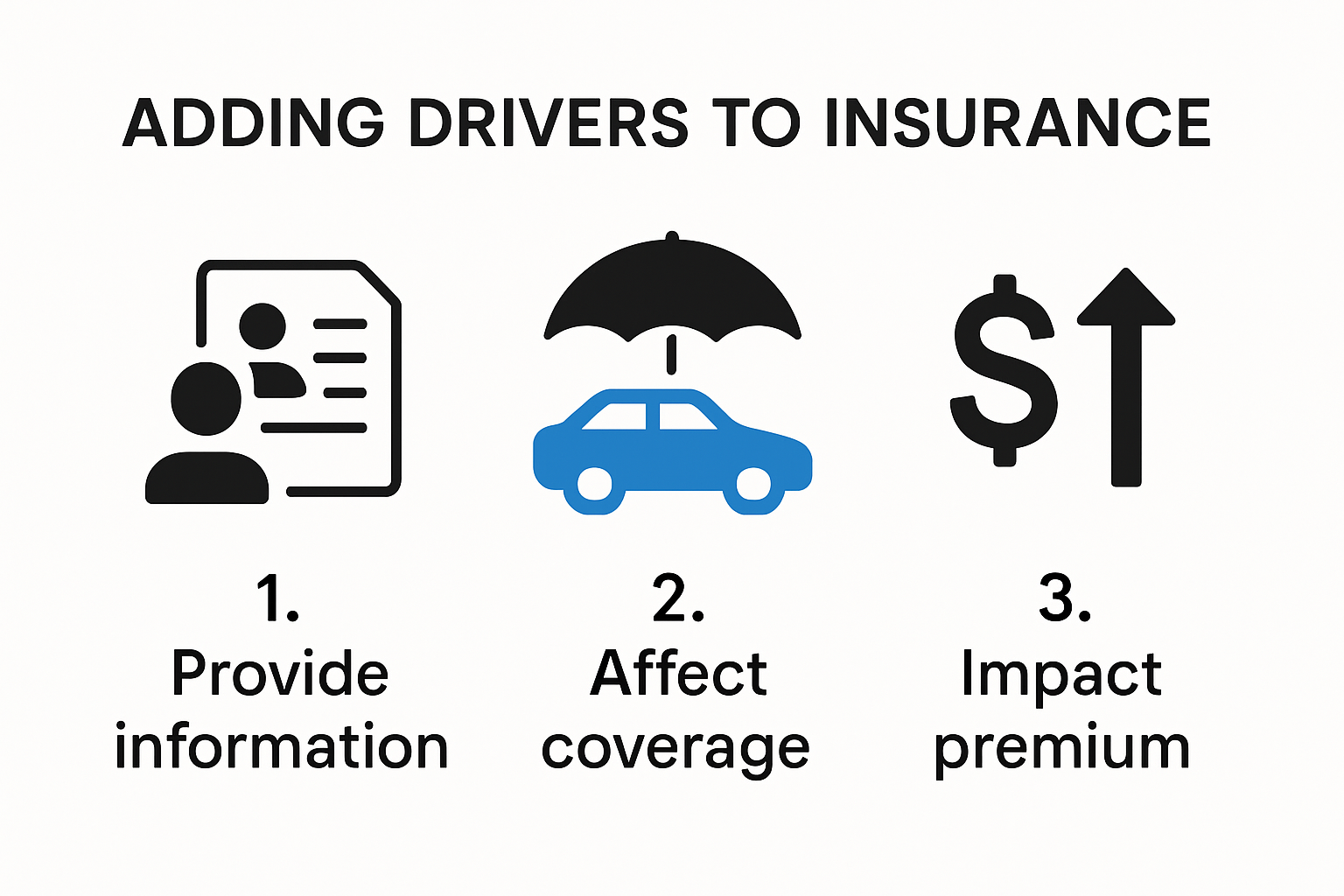
Adding a named driver to your auto insurance policy is a fundamental process that ensures all individuals who regularly operate your vehicle are legally and financially covered in the event of an accident. When you add a driver, you are formally notifying your insurance carrier that another person will be behind the wheel, which allows the insurer to assess the risk profile of that individual and adjust premiums accordingly. This step is critical for maintaining valid coverage, as failing to list a regular driver can lead to denied claims or policy cancellation.
Understanding the Role of a Named Driver
A named driver is an individual specifically listed on your auto insurance policy who is authorized to drive your insured vehicle. In most jurisdictions, insurance companies operate under a "permissive use" or "named driver" structure. While some policies cover occasional drivers—such as a friend borrowing your car once a year—insurance carriers mandate that anyone living in your household who holds a driver’s license or anyone who operates your vehicle on a frequent basis must be disclosed.
The importance of this designation cannot be overstated. Insurance premiums are calculated based on a complex matrix of risk factors, including the driver's age, driving history, credit score, and previous claims. By adding a named driver, the insurer calculates a new risk profile for your household. While this often results in a premium increase, it provides the necessary legal protection required to satisfy state financial responsibility laws and protects your assets in the event of a liability claim.
Prerequisites for Adding a Driver
Before contacting your insurance agent or logging into your carrier’s portal, you must gather specific information. Insurers require verified data to underwrite the risk accurately. Preparing these details ahead of time simplifies the process and reduces the likelihood of clerical errors that could cause future coverage issues.
- Driver’s License Information: You will need the full legal name, date of birth, and driver’s license number of the person being added. The insurer will use this to pull their motor vehicle report (MVR).
- Driving History: Be prepared to provide details regarding any accidents, traffic violations, or DUIs in the past three to five years. Insurers will discover this information independently, but transparency ensures the initial quote is accurate.
- Relationship to Policyholder: Insurers classify drivers by their relationship to the primary policyholder (e.g., spouse, child, roommate). This classification impacts the rating tier of the policy.
- Vehicle Usage: You may be asked how frequently the new driver will use the vehicle and whether they have access to other vehicles.
The Step-by-Step Process for Updating Your Policy
The process of adding a driver is generally straightforward but requires a formal request to your insurance company. You should approach this by contacting your provider directly through their established customer service channels.
1. Contact Your Agent or Use the Online Portal
Most modern insurers provide a customer dashboard where you can request an addition to your policy. If you have an independent insurance agent, a simple phone call or email is usually sufficient to start the process.
2. Review the Updated Declaration Page
Once you submit the request, the insurer will issue an updated "declaration page." This document summarizes your coverage, the premiums, and the list of drivers on the policy. Verify that the new driver’s information is spelled correctly and that the policy effective date is accurate.
3. Evaluate Premium Changes
Adding a driver, especially a younger or less experienced one, often results in a premium increase. Take this time to ask your agent about potential discounts. For example, some insurers offer "good student" discounts for young drivers or defensive driving course credits that can help offset the cost.
4. Confirm Coverage Activation
Ensure that you receive confirmation that the coverage is active. It is a common mistake to assume that sending an email to an agent constitutes immediate coverage. Always wait for the endorsement document or a written confirmation from the company before allowing the new driver to operate the vehicle.
Comparing Impact on Premiums
The financial impact of adding a driver varies significantly based on the driver's profile. Insurance companies assess risk through actuarial data, which identifies trends in accident frequency for specific demographics.
| Driver Type | Typical Impact on Premium | Primary Risk Factor |
|---|---|---|
| Spouse/Partner | Low to Moderate | Household risk aggregation |
| Teenager (16-18) | High | Lack of experience/Accident statistics |
| Young Adult (19-25) | Moderate | Improving statistics; maturity |
| Roommate/Non-relative | Variable | Depends on the driver's individual MVR |
| Occasional Driver | Low | Frequency of vehicle access |
Addressing Common Scenarios and Complications
Adding a Teen Driver
Adding a teenage driver is notoriously the most expensive scenario. Statistics consistently show that younger drivers have higher rates of motor vehicle accidents. To mitigate costs, many parents choose to keep the teen on their own policy but inquire about "exclusion" or specific student-driver discounts. Always verify if your insurer allows "per-mile" insurance options, which can be more cost-effective if the teen drives infrequently.
Excluding a Driver
In some jurisdictions, if you have a household member with a particularly poor driving record, your insurer might require you to "exclude" them from the policy. An excluded driver is someone who lives in your home but is specifically barred from driving your vehicle. If an excluded driver operates your car and causes an accident, the insurance company will likely deny all claims related to that incident, leaving you personally liable.
International Licenses
If you are adding a driver who holds a license from another country, the process may be more complex. Many domestic insurers require that the driver eventually obtain a local driver’s license within a set timeframe (often 30 to 90 days of residency). Without a local license, some insurers will not list the person as a permanent driver, potentially affecting your coverage if they are involved in a collision.
Legal and Financial Risks of Non-Disclosure
A significant risk in auto insurance is "material misrepresentation." This occurs when you fail to disclose a regular driver who resides in your household to keep your premiums artificially low. Insurance companies use sophisticated data-mining tools to check household records and property deeds. If they discover an undisclosed driver after a major claim, they may take the following actions:
- Retroactive Premium Collection: Requiring you to pay the difference in premiums dating back to when the driver should have been added.
- Claim Denial: Refusing to pay for damages resulting from an accident involving the undisclosed driver.
- Policy Rescission: Canceling your policy entirely and labeling you a "high-risk" driver, which makes obtaining insurance from other carriers in the future significantly more expensive.
Frequently Asked Questions
Does adding a driver to my policy affect my no-claims bonus? Yes, it can. If the newly added driver is involved in an at-fault accident, it typically counts against the policy's claims history. This can reduce or eliminate the no-claims bonus you have accrued over the years, leading to a substantial increase in your renewal premium.
Can I add a driver for only a few weeks? Some insurance companies allow for short-term or temporary additions, but this is less common than standard annual policies. If a guest is visiting and needs to use your car, check your policy’s "permissive use" clause. In many cases, occasional use by a licensed guest is covered without needing an official addition, provided they do not live in your household.
Do I need to add a friend who drives my car occasionally? Generally, if a friend who does not live with you drives your car on a rare, isolated basis, you do not need to add them to your policy. However, if they become a "frequent" user—even if they do not live with you—you are obligated to inform your insurer. Definitions of "frequent" vary, so consult your policy documents or your agent for the exact threshold.
What happens if the person I add has a bad driving record? The insurance company will evaluate the risk. If the driver has multiple accidents or moving violations, your premium will increase to reflect that higher risk. In extreme cases, the insurer may refuse to cover the vehicle if that specific individual is added. If this happens, you may need to shop for a different carrier that specializes in high-risk drivers.
Is it cheaper to add a child to my policy or have them get their own? Usually, it is cheaper to include a young driver on a parent's policy due to "multi-car" and "multi-driver" discounts. When a young driver gets their own policy, they lose the benefit of these household discounts and must pay the full rate as a standalone, inexperienced driver, which is almost always more expensive.
Professional Guidance and Next Actions
Before finalizing your decision, review your current policy's declaration page to identify exactly who is currently covered. If you have determined that a household member or frequent driver needs to be added, follow these steps:
- Request a Quote: Ask your current insurer for a "what-if" scenario regarding the premium increase. This allows you to budget accordingly.
- Comparison Shop: Use the opportunity of a policy change to get quotes from at least two other reputable carriers. The rate increase from your current provider might make a different company more competitive overall.
- Document Everything: Once you add the driver, keep a digital or physical copy of the amended policy endorsement.
- Annual Review: Set a recurring calendar reminder to review your list of drivers once a year. If a listed driver moves out or stops using the vehicle, notify your insurer immediately to have them removed and potentially lower your premiums.
Disclaimer: Insurance laws and carrier guidelines vary by state and individual provider. The information provided here is for educational purposes. Always consult with a licensed insurance professional or your specific policy documents to understand the unique requirements applicable to your situation.