An ad words campaign is a structured advertising strategy within the Google Ads ecosystem where businesses bid on specific keywords to display clickable advertisements on search results and partner networks. By organizing ads into themed groups and setting parameters for budgets, audiences, and locations, advertisers can target high-intent users at the exact moment they search for products or services.
Understanding the Foundation of an Ad Words Campaign
Although the platform was rebranded as Google Ads in 2018, the term "AdWords" remains deeply embedded in the industry lexicon, representing the core search-based advertising model that revolutionized digital marketing. In 2026, an ad words campaign is no longer just about selecting a handful of keywords; it is a sophisticated, AI-driven operation that balances human intent with machine learning algorithms.
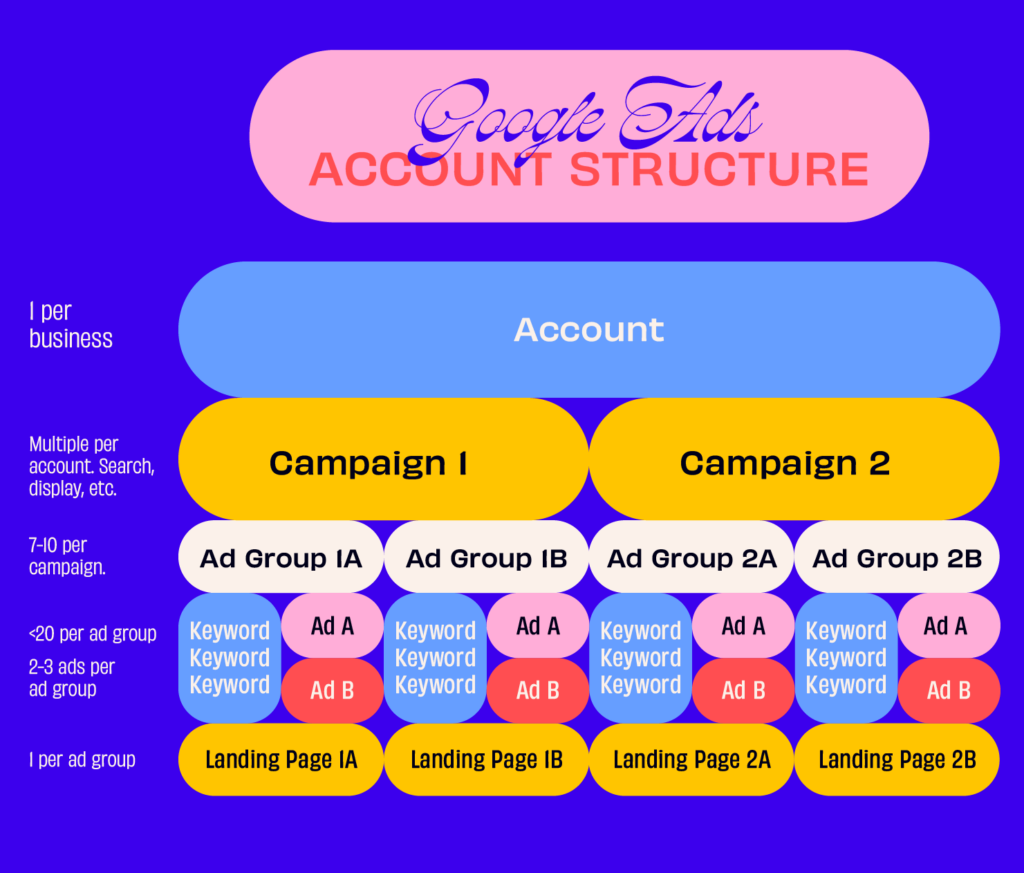
At its core, a campaign is the highest level of organization within your advertising account (below the account level itself). It is where you define your primary objectives, such as driving website traffic, generating leads, or increasing sales. Each campaign contains ad groups, which further narrow down the focus to specific products or services, housing the actual ad copy and the keyword targets that trigger them.
The transition toward automated systems in 2026 has made the structural integrity of a campaign more important than ever. While Google’s AI handles much of the "heavy lifting" regarding bid adjustments and creative combinations, the human advertiser remains responsible for the strategic direction, data inputs, and high-level optimization that prevent budget waste.
Structural Components of a Modern Campaign
To build a successful ad words campaign, one must understand the hierarchy and the individual parts that contribute to the whole. A failure in one area—such as poor landing page relevance or a mismatched bidding strategy—can undermine the performance of the entire campaign.
The Account Hierarchy
- Account: Your unique ID linked to an email, billing information, and user permissions.
- Campaign: Where you set the budget, geographic targeting, and campaign type (e.g., Search, Display, Performance Max).
- Ad Group: A sub-folder within the campaign that groups related keywords and ads together. For example, if your campaign is for "Running Shoes," one ad group might focus on "Trail Running Shoes" and another on "Marathon Shoes."
- Ads and Keywords: The specific creative elements shown to the user and the search terms that prompt those ads to appear.
Keywords and Match Types
Keywords are the bridge between a user's query and your offer. In 2026, match types have evolved to focus more on "semantic intent" rather than just syntax.
- Exact Match: Matches the specific meaning of a query.
- Phrase Match: Matches queries that include the meaning of your keyword, providing a balance of reach and control.
- Broad Match: The default setting that uses AI to show your ad for any search related to your keyword, including synonyms and related topics.
Ad Assets (Formerly Extensions)
Ad assets are additional pieces of information that expand your ad, making it more useful to users and increasing your Click-Through Rate (CTR). These include site link assets (links to specific pages), call assets, and location assets. In 2026, many of these are dynamically generated by the system based on the content of your website, though manual control is still recommended for brand consistency.
Step-by-Step Configuration: From Setup to Launch
Launching an ad words campaign requires a methodical approach. Rushing through the setup often leads to "default setting traps" where Google may prioritize reach over your specific ROI goals.
1. Define Your Goal
Before touching the interface, define what success looks like. Are you looking for immediate phone calls, or are you building an email list? Google’s "Smart Campaigns" often prompt you to select a goal first, which then dictates which features are available to you.
2. Select Your Campaign Type
While "Search" is the traditional ad words campaign format, 2026 advertisers frequently utilize "Performance Max." However, for those seeking maximum control over search terms and specific messaging, a standard Search Network campaign remains the gold standard.
3. Geographic and Language Targeting
Precision is key. If you only ship to the continental United States, ensure your targeting is not set to "All countries and territories." Furthermore, use the "Presence" setting rather than "Presence or Interest" if you want to avoid showing ads to people who are merely researching your location from afar.
4. Setting the Daily Budget
The daily budget is the average amount you are willing to spend each day. It is important to note that Google may spend up to double your daily budget on days with high traffic, but it will never exceed your monthly charging limit (Daily Budget × 30.4).
Strategic Bidding and Budgeting in 2026
Bidding is the mechanism that determines your ad's position and cost. In the current 2026 landscape, the "Auction" is a multi-variant calculation involving your bid, your Quality Score, and the expected impact of your ad assets.
Automated vs. Manual Bidding
- Target CPA (Cost Per Acquisition): You tell the system how much you are willing to pay for a conversion, and it adjusts bids in real-time to meet that goal.
- Target ROAS (Return on Ad Spend): Ideal for e-commerce, this strategy focuses on the value of the conversion rather than just the count.
- Maximize Conversions: The system tries to get as many conversions as possible within your specified budget.
- Manual CPC (Cost Per Click): Though less common in 2026, it allows for granular control over every cent spent on specific keywords.
The Role of Quality Score
Quality Score is a diagnostic tool (graded 1-10) that tells you how well your ad quality compares to other advertisers. It is calculated based on three factors:
- Expected Click-Through Rate (CTR): How likely people are to click your ad.
- Ad Relevance: How closely your ad matches the intent behind a user's search.
- Landing Page Experience: How relevant and transparent your website is to the person who clicked.
A higher Quality Score can lead to lower prices and better ad positions. Even if a competitor bids more than you, a superior Quality Score can allow your ad words campaign to outrank them.
Ad Creative and Copywriting for Maximum Conversion
In 2026, the primary format for search ads is the Responsive Search Ad (RSA). Instead of writing a single static ad, you provide multiple headlines and descriptions, and Google’s machine learning tests different combinations to see which performs best for different users.
Principles of Effective Ad Copy
To stand out in a crowded Search Engine Results Page (SERP), your copy must be more than just descriptive; it must be psychological.
- Include Keywords in Headlines: This creates immediate visual "scent" for the user, confirming your ad is relevant to their search.
- Focus on Benefits, Not Just Features: Don't just say "We have 24/7 support"; say "Get help whenever you need it so your business never stops."
- Strong Call to Action (CTA): Be explicit about the next step. "Shop Now," "Get a Free Quote," or "Book an Appointment" are clear and actionable.
- Use Social Proof: Mentioning "Over 10,000 satisfied customers" or "Rated 4.8 stars" builds immediate trust.
Leveraging AI Assets
By 2026, Google Ads integrated AI can suggest images and headlines based on your URL. While these are helpful starting points, human refinement is necessary to ensure the brand voice remains authentic and that the AI hasn't hallucinated claims about your services.
Advanced Optimization and Performance Analysis
A campaign is not a "set it and forget it" project. Continuous optimization is what separates profitable accounts from those that merely break even.
Negative Keyword Lists
One of the most powerful tools in an ad words campaign is the negative keyword list. This tells Google where not to show your ads. For example, if you sell "luxury watches," you should add "cheap," "free," and "repair" as negative keywords to avoid wasting budget on users who have no intention of buying a high-end timepiece.
Conversion Tracking and Data Privacy
With the full retirement of third-party cookies by 2026, successful advertisers rely on first-party data and Server-Side Tagging. Ensuring your conversion tracking is accurate is the only way to feed the bidding algorithms the data they need to optimize. If the system doesn't know which clicks turned into sales, it cannot find more people like those buyers.
| Campaign Type | Primary Goal | Best For | Technical Complexity |
|---|---|---|---|
| Search | Sales / Leads | High-intent users looking for specific terms | Moderate |
| Display | Brand Awareness | Visual ads on 2M+ websites/apps | Low |
| Performance Max | Multi-channel ROI | All-in-one automation across YouTube, Search, and Gmail | High (Data-dependent) |
| Video (YouTube) | Consideration | Engaging audiences via video content | Moderate |
| Shopping | Product Sales | E-commerce with direct product images and pricing | High (Requires Feed) |
Common Challenges and Troubleshooting
Even a well-planned ad words campaign can encounter hurdles. Identifying the root cause requires looking at specific metrics.
- High Clicks, Low Conversions: This usually indicates a "disconnect" between the ad and the landing page. If your ad promises a discount and the landing page doesn't mention it, users will bounce.
- Low Impression Share: This means your ads are eligible to show but aren't appearing. This is typically due to a budget that is too low or a Quality Score that is non-competitive.
- High CPC (Cost Per Click): If your industry is highly competitive (like legal or insurance), CPCs can be astronomical. To counter this, focus on long-tail keywords—specific 3-4 word phrases—that have less competition but higher intent.
Frequently Asked Questions
How long does it take for a new ad words campaign to see results?
While ads can start appearing within hours of approval, most campaigns require a "learning period" of 7 to 14 days. During this time, Google’s algorithms gather data on user behavior. It is critical not to make major changes during this phase, as it resets the learning process. Significant performance stability usually occurs after the first 30 days of consistent data collection.
What is the minimum budget for an ad words campaign?
There is no official minimum, but a budget that is too low will prevent the campaign from gathering enough data to optimize. A practical rule of thumb is to set a daily budget that is at least 10 times your expected cost-per-click. If a click costs $2.00, a $20/day budget allows for enough daily interaction to provide statistically significant results over a month.
Why is my ad not showing even though the campaign is active?
Several factors can cause this. Your bid might be too low to enter the auction, your geographic targeting might be too narrow, or your ad may be stuck in the "Under Review" status. Additionally, if you frequently search for your own keywords but don't click on your ads, Google may stop showing them to you to protect your CTR and because it perceives the ad as irrelevant to your personal browsing habits.
Can I run an ad words campaign without a website?
Technically, you can use "Call-only" ads or link to a social media profile, but it is highly discouraged. A dedicated, optimized landing page is essential for a high Quality Score and a professional user experience. Without a website you control, you lose the ability to track conversions accurately and provide the specific information users need to make a purchasing decision.
How do negative keywords save money?
Negative keywords act as a filter. If you are a high-end furniture store, adding the negative keyword "rent" ensures you don't pay for clicks from people looking for "furniture for rent." By eliminating these irrelevant searches, your budget is preserved for users who are more likely to convert, thereby lowering your overall Customer Acquisition Cost (CAC).
Recommendations for Next Actions
To successfully launch or refine your ad words campaign in 2026, begin by auditing your conversion tracking. Ensure that every valuable action—whether a form fill, a purchase, or a phone call—is being recorded and sent back to the Google Ads platform via secure, privacy-compliant methods like Google's Enhanced Conversions.
Once tracking is verified, focus on your Ad Relevance. Review your ad groups to ensure that the keywords in each group are tightly themed to the ad copy. For more information on structuring your account for the latest AI-driven features, consult the official Google Ads Help Center. If your campaign is already running, prioritize your "Optimization Score" recommendations, but evaluate each one manually to ensure it aligns with your specific business margins rather than just Google’s volume goals.