Individuals over 60 can obtain life insurance without a medical exam by utilizing Simplified Issue policies, Guaranteed Issue coverage, Accelerated Underwriting, Final Expense plans, Group Life conversions, No-Exam Term Life, or No-Exam Guaranteed Universal Life. These options replace physical examinations with digital data checks, health questionnaires, or graded benefit structures to provide immediate or near-immediate coverage.
Securing life insurance after age 60 was once a cumbersome process involving nurse visits, blood draws, and weeks of waiting. However, as of 2026, the insurance industry has largely shifted toward "fluidless" underwriting. This evolution allows seniors to bypass the traditional paramedical exam while still securing significant death benefits to protect their families, cover debts, or fund estate taxes. Whether you are in excellent health and simply want to avoid needles, or you have chronic conditions that make a physical exam risky for your insurability, there is a pathway to coverage tailored to your specific needs.
1. Simplified Issue Life Insurance
Simplified Issue life insurance is the most common "middle ground" for seniors. It eliminates the medical exam but still requires you to answer a detailed health questionnaire. In 2026, insurance carriers use sophisticated algorithms to verify your answers in real-time against third-party databases.
When you apply for a Simplified Issue policy, the insurer typically checks your Medical Information Bureau (MIB) report, your prescription drug history (often called a "script check"), and your Motor Vehicle Report (MVR). Because the insurer still assesses your risk through these questions and data points, they can offer relatively high coverage amounts—often up to $500,000 or even $1 million for those in the 60–70 age bracket.
The primary benefit of Simplified Issue is speed. Because there is no lab work to process, approval can occur in as little as 24 to 48 hours. However, honesty is critical. If a "script check" reveals you are taking medication for a condition you did not disclose on the application, the insurer may deny coverage or adjust the premium significantly. This type of policy is ideal for seniors who are in relatively good health but have minor, well-managed conditions like hypertension or controlled Type 2 diabetes.
2. Guaranteed Issue Life Insurance
Guaranteed Issue (GI) life insurance is designed for seniors who may be "uninsurable" through traditional means. As the name suggests, acceptance is guaranteed regardless of your health history. There are no medical exams and, crucially, no health questions.
For individuals over 60 who have survived cancer, are dealing with end-stage renal disease, or have significant heart issues, GI policies are often the only viable option. However, these policies come with two significant trade-offs:
- Graded Death Benefits: Most GI policies feature a "waiting period," usually two years. If the insured passes away from natural causes during these first 24 months, the beneficiaries do not receive the full death benefit. Instead, they typically receive a refund of all premiums paid plus a small amount of interest (often 10%). If death occurs due to an accident, the full benefit is usually paid immediately.
- Lower Coverage Limits: Because the insurer is taking on a high level of risk without any medical vetting, coverage amounts are generally capped between $5,000 and $25,000.
While expensive on a "per thousand" basis of coverage, Guaranteed Issue provides essential peace of mind for those who simply need to ensure their funeral and final expenses do not become a burden to their children.
3. Accelerated Underwriting (AU)
Accelerated Underwriting represents the cutting edge of the life insurance industry in 2026. It is not a specific "product" like Simplified Issue, but rather a high-tech process used for standard Term or Permanent life insurance.
For a senior over 60 who is in excellent health, AU allows them to apply for the same low-cost policies that usually require an exam, but the "exam requirement" is waived based on a predictive risk score. The insurance company’s AI analyzes your credit history, public records, and health databases to determine if you are a "low-risk" candidate.
If you qualify for "acceleration," you get the best possible rates (Preferred or Preferred Best) without ever seeing a nurse. If the data is inconclusive or suggests a higher risk, the insurer might "pivot" you back to a traditional exam. For healthy 60-year-olds, this is the most cost-effective way to get $1 million or more in coverage without a physical.
4. Final Expense or Burial Insurance
Final Expense insurance is a specialized form of whole life insurance marketed specifically to the 50–85 age demographic. These policies are almost always "no-exam." They are designed to cover the specific costs associated with a funeral, a small remaining debt, or a legacy gift for grandchildren.
Final Expense policies are categorized into three levels based on your answers to a few health questions:
- Level Benefit: Full coverage from day one. This is for seniors with manageable health issues.
- Graded Benefit: Partial coverage in year one (e.g., 30%), more in year second (e.g., 70%), and full coverage in year three.
- Modified Benefit: Similar to Guaranteed Issue, where only premiums are returned during the first two years.
The advantage of Final Expense insurance is that it is Permanent. Unlike term insurance, which expires after a set number of years, Final Expense coverage stays in place for your entire life, provided you pay the premiums. The cash value component also grows over time, which can be accessed via a policy loan if an emergency arises in your later years.
5. Group Life Insurance Conversions
Many individuals over 60 are still working or have recently retired. If you have life insurance through an employer, you may have the option to "convert" that group coverage into an individual permanent policy when you leave the company or retire.
In many jurisdictions and under most large group contracts, the right to convert is guaranteed. This means you can move from a group policy to an individual policy without a medical exam or health questions, regardless of your current health status.
There are two main things to watch for with conversions:
- The Deadline: You usually have a very narrow window (often 31 days) after leaving your job to exercise this right.
- The Cost: Group life is cheap because it is subsidized by the employer. Individual conversion policies are usually whole life products and are priced based on your current age, making them significantly more expensive than the group rates you were used to paying.
6. No-Exam Term Life Insurance
Term life insurance provides coverage for a specific period—typically 10, 15, or 20 years. For a 60-year-old, a 15-year term can provide protection until age 75, covering the years when a mortgage might still be active or when a spouse is still dependent on retirement savings that haven't fully matured.
In 2026, many carriers offer "No-Exam Term" specifically for seniors. These are different from Simplified Issue because they focus on larger face amounts and have stricter health qualifications, even though they skip the physical.
If you are 60 and looking for $500,000 to cover a remaining mortgage, a no-exam term policy is often the most logical choice. It offers a fixed premium for the duration of the term. Just be aware that if you outlive the term (e.g., you live past 75 or 80), the coverage ends, and getting a new policy at that age will be much more difficult and costly.
7. Guaranteed Universal Life (GUL) with No-Exam Options
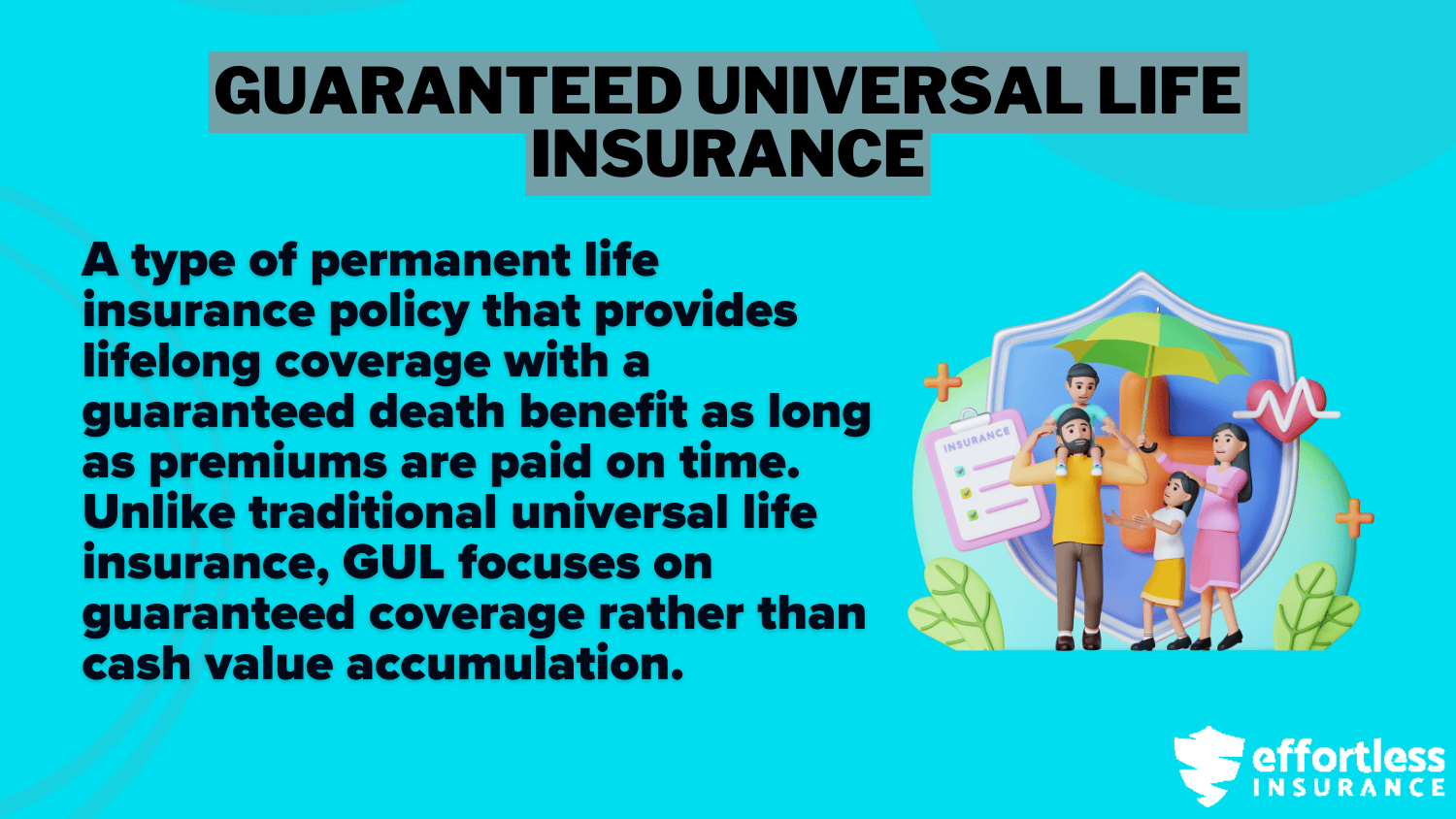
Guaranteed Universal Life is often described as "Whole Life Light." It is a permanent policy that does not expire as long as premiums are paid, but it does not focus on building cash value. Instead, it focuses on keeping the premium as low as possible while guaranteeing a death benefit up to a specific age, such as 90, 95, or even 121.
Several insurers now offer "Express" versions of GUL for those over 60. These are no-exam policies that allow you to lock in a permanent death benefit with a much lower premium than a standard Whole Life policy.
GUL is an excellent tool for estate planning. If you are over 60 and want to ensure there is a tax-free payout for your heirs to cover inheritance taxes or to leave a specific legacy, a No-Exam GUL provides the permanence of Whole Life without the extreme cost or the requirement of a medical exam.
Comparison of No-Exam Life Insurance Options for Seniors
| Policy Type | Typical Age Limit | Max Coverage (Est.) | Health Questions? | Best Used For |
|---|---|---|---|---|
| Simplified Issue | Up to 80 | $500,000+ | Yes (Detailed) | Moderate coverage for healthy seniors. |
| Guaranteed Issue | Up to 85 | $25,000 | No | Seniors with serious health conditions. |
| Final Expense | Up to 85 | $50,000 | Yes (Basic) | Funeral and burial costs. |
| Accelerated Underwriting | Up to 70 | $1,000,000+ | Yes (Extensive) | Lowest rates for very healthy seniors. |
| Group Conversion | N/A | Varies (Employer limit) | No | Transitioning from work to retirement. |
| No-Exam Term | Up to 75 | $500,000 | Yes (Detailed) | Covering a mortgage or specific debt. |
| No-Exam GUL | Up to 80 | $250,000 | Yes (Detailed) | Permanent legacy or estate planning. |
Critical Factors for Seniors Choosing No-Exam Policies
When navigating the insurance market after 60, the absence of a medical exam does not mean the absence of scrutiny. It is vital to understand the underlying mechanics of how these policies are priced and issued.
The Role of Data in 2026 Underwriting
Today, insurance companies are less interested in your current blood pressure reading from a nurse and more interested in your long-term health trends. According to the National Association of Insurance Commissioners (NAIC), insurers use "big data" to assess lifestyle risks. They look at your history of prescription fills to see if you are "compliant" with your doctor's orders. For example, if you were prescribed cholesterol medication but only filled it twice in three years, an insurer might view you as a higher risk than someone with higher cholesterol who takes their medication religiously.
Understanding the "Contestability Period"
Every life insurance policy, including no-exam versions, has a two-year contestability period. During these first 24 months, the insurance company has the right to investigate the original application if the insured passes away. If they discover you lied about a health condition (like smoking or a heart diagnosis) to avoid an exam, they can deny the claim. After two years, the policy becomes "incontestable" in most states, meaning the claim must be paid even if errors were made on the application, barring outright fraud.
The Cost of Convenience
It is a financial reality that no-exam policies are generally more expensive than "fully underwritten" policies (those with exams). The insurer is charging a higher premium to account for the uncertainty of not having your lab results. If you are in exceptional health, you might save 15–25% on your premiums by opting for a medical exam. However, for most seniors, the convenience and the certainty of approval without the risk of a "surprise" lab result make no-exam options the preferred choice.
Common Mistakes to Avoid
- Waiting Too Long: Life insurance premiums increase every year as you age. A 60-year-old will pay significantly less than a 65-year-old for the exact same policy.
- Choosing "Guaranteed Issue" When You Don't Have To: Many seniors assume that because they have one health condition (like a previous heart stent), they must get a Guaranteed Issue policy. This is a mistake. You may still qualify for a Simplified Issue policy, which is cheaper and offers immediate full coverage.
- Ignoring the "Replacement" Rules: If you are over 60 and thinking about canceling an old policy to get a new "no-exam" one, be careful. Newer policies have new contestability periods. Always consult a financial professional before replacing existing coverage.
Frequently Asked Questions
Can I get life insurance at 65 if I am a smoker without an exam?
Yes, you can. However, smoking status is one of the "primary" questions on every Simplified Issue and Term application. You will be put into a "Tobacco" rating class, which typically costs 2 to 3 times more than a non-tobacco rate. If you choose a Guaranteed Issue policy, your smoking status won't affect approval, but the coverage amounts will be much lower.
Does "No Medical Exam" mean no health questions?
Generally, no. Only Guaranteed Issue policies have no health questions. Simplified Issue, Final Expense, and Accelerated Underwriting all require you to answer questions about your medical history, recent hospitalizations, and current medications. The "no exam" part simply means no needles, no scales, and no nurse visits.
How long does the approval process take in 2026?
Thanks to automated underwriting systems, many no-exam policies offer "instant decision" capabilities. For Accelerated Underwriting or Simplified Issue, you can often find out if you are approved within 15 minutes to 48 hours. Guaranteed Issue policies are typically processed as soon as the first premium payment is verified.
Are no-exam policies available for people over 80?
Yes, but the options narrow significantly. After age 80, coverage is almost exclusively limited to Final Expense or Guaranteed Issue whole life policies. Face amounts are usually capped at $10,000 to $15,000, and the cost per month is relatively high.
What happens if I die during the waiting period of a Guaranteed Issue policy?
If you have a policy with a "graded death benefit" (typical for Guaranteed Issue) and you die of natural causes (like a heart attack or cancer) during the first two years, your beneficiaries will not receive the full death benefit. They will receive all the money you paid in premiums, plus a set interest rate (usually 10%). After the two-year mark, the full benefit is paid for any cause of death.
Practical Recommendation
If you are over 60 and seeking life insurance without a medical exam, your first step should be to gather your medical data. Have a list of your current medications and dosages ready.
Start by applying for Accelerated Underwriting or Simplified Issue first. These offer the best value and the highest coverage amounts. Only move toward Guaranteed Issue or Graded Benefit plans if you are declined for the first two options due to severe health issues. Working with an independent broker who has access to multiple "senior-specialty" carriers is the most efficient way to compare rates and find the carrier whose "no-exam" criteria best match your specific health profile.