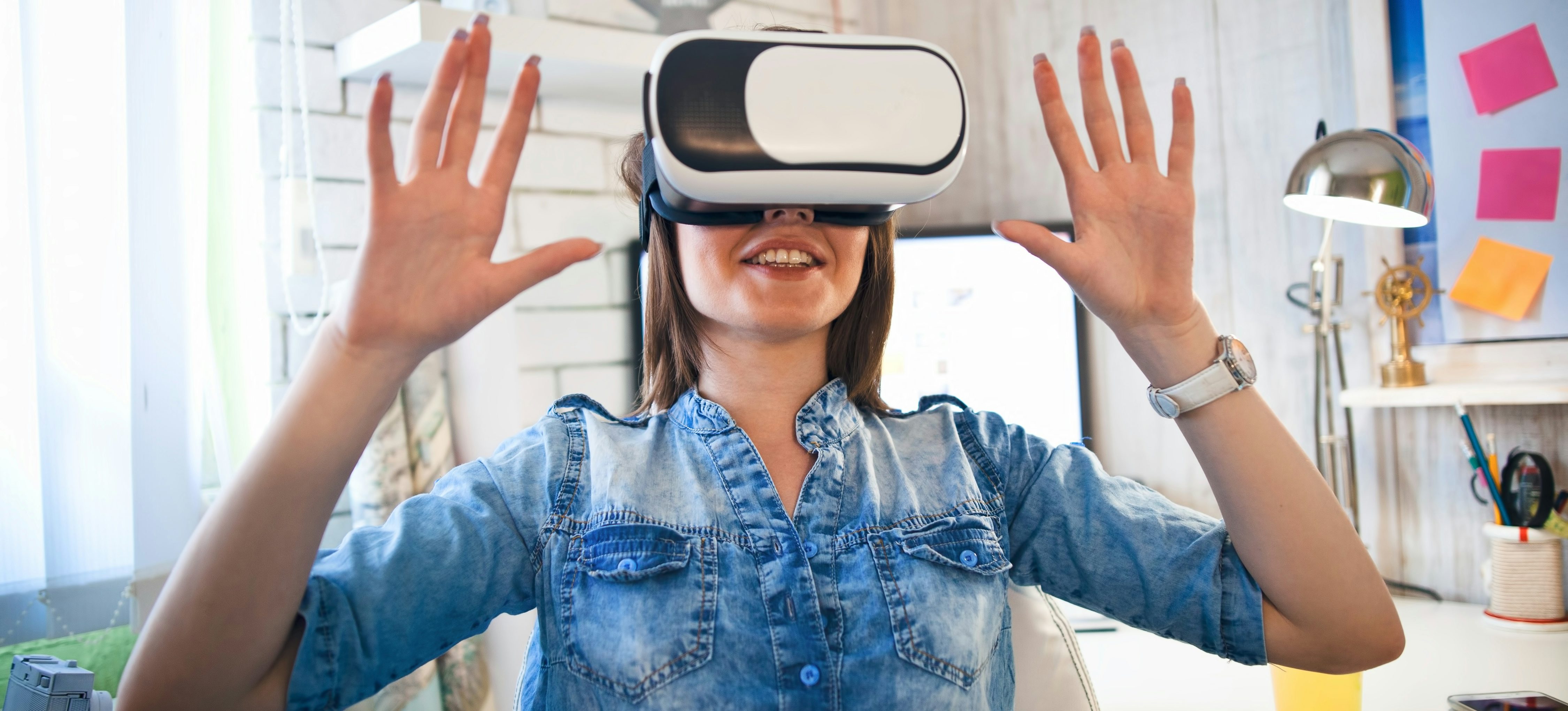
A virtual image is an optical phenomenon created when light rays appear to originate from a point behind a mirror or lens, though they do not actually converge there. Unlike real images, virtual images cannot be projected onto a screen because the light rays do not physically meet at the image's location.
In optics, understanding the behavior of light as it interacts with surfaces is essential for interpreting the images we encounter in daily life. Whether you are checking your reflection in a bathroom mirror or peering through a magnifying glass, you are interacting with virtual images. These images are always upright, meaning they maintain the same orientation as the object, and they exist in a space that human vision perceives as being "behind" the optical element.
1. Plane Mirrors: The Everyday Reflection
The most common example of a virtual image is the reflection seen in a standard plane mirror. When you look into a mirror, light rays from your face strike the surface and reflect according to the law of reflection (angle of incidence equals angle of reflection). Your brain interprets these divergent reflected rays as originating from a point behind the mirror. This creates a virtual image that is exactly the same size as the object and located at the same distance behind the mirror as the object is in front of it.
The image is laterally inverted, which is why your right hand appears to be your reflection’s left hand. Because the light rays do not actually pass through the mirror surface to form the image, it is classified as virtual. This application is fundamental to domestic, architectural, and safety mirrors used in vehicles.
2. Concave Mirrors: The Magnifying Mirror
Concave mirrors are spherical mirrors that curve inward. When an object is placed between the focal point and the mirror’s pole, the concave mirror produces a virtual, upright, and magnified image. This is the operating principle behind cosmetic mirrors used for grooming or shaving.
When you bring your face close to a concave vanity mirror, the curvature of the glass alters the path of the reflected light. The rays diverge after reflection, and your eyes trace them back to a point behind the mirror, forming a larger, virtual representation of your skin or features. If you move the object beyond the focal point, the image would eventually flip and become real, but the "magnifying" function specifically relies on this virtual image zone.
3. Convex Mirrors: The Wide-Angle View
Convex mirrors curve outward, like the back of a shiny metal spoon. They are frequently used in parking garages, hallways, and as passenger-side rearview mirrors on cars to provide a wider field of view. A convex mirror always produces a virtual, upright, and diminished (smaller) image, regardless of how close the object is to the mirror.
Because the surface curves outward, light rays strike the mirror and are reflected over a broader angle. When our eyes trace these reflected paths back to a virtual point behind the mirror, we see a "shrunken" version of the surroundings. This reduction in size is exactly what allows the mirror to pack a larger panoramic view into a small, portable surface, providing critical safety information to drivers about blind spots.
4. Simple Magnifying Glasses (Convex Lenses)
A magnifying glass utilizes a convex lens to create a virtual image. When you place an object at a distance less than the focal length of the lens, the light rays passing through the lens diverge on the other side. When viewed through the lens, these rays appear to originate from a larger, upright, and virtual image positioned on the same side of the lens as the object.
This is why, when you hold a magnifying glass to a page of text, the letters appear significantly larger and upright. If you move the lens further away from the paper, you reach the focal point, where the image becomes blurred or transitions into a real (and inverted) image. The virtual image is the primary utility of the simple microscope or handheld magnifier.
5. The Eyepiece of an Optical Microscope
Compound microscopes are designed to magnify very small specimens. The system consists of an objective lens and an eyepiece (or ocular lens). The objective lens creates a real, magnified image inside the body tube of the microscope. The eyepiece then acts as a simple magnifying glass, taking that real image and creating a final virtual image for the observer's eye.
By the time the light reaches your retina, the virtual image is highly magnified, allowing researchers and students to see intricate details of biological cells or material structures. The observer sees this final, virtual version, which is why the image appears upright relative to the real intermediate image formed inside the microscope.
6. Galilean Telescopes
The Galilean telescope, historically attributed to Galileo Galilei in the early 17th century, uses a combination of a convex objective lens and a concave eyepiece. The convex objective lens gathers light to form a real image, but the concave lens intercepts these rays before they reach their focal point.
The result is a virtual, upright image. Because this configuration produces an upright view, it remains popular in modern "opera glasses" or compact field binoculars. The primary advantage of the Galilean design is its relative simplicity and the fact that it preserves the orientation of the scene, which is often preferred for terrestrial observation compared to the inverted images produced by Keplerian (astronomical) telescopes.
7. Virtual Images in Modern Head-Up Displays (HUDs)
In modern automotive and aviation engineering, head-up displays project data—such as speed, navigation, or altitude—onto the windshield. The system uses a specialized optical projector and a combiner (the windshield itself) to create a virtual image that appears to "float" a few meters in front of the vehicle.
This is a sophisticated application of virtual imaging. By placing the light source strategically, the system creates an image that the driver’s eyes can focus on simultaneously with the road ahead. Because the image is virtual, it doesn't block the driver's view of the actual road; instead, it superimposes information onto the real-world scene, reducing the time the driver must look away from the road to check dashboard instrumentation.
Comparative Summary of Virtual Image Systems
The following table summarizes how different optical instruments produce virtual images and their primary characteristics.
| Optical Device | Element Type | Image Size | Typical Use Case |
|---|---|---|---|
| Plane Mirror | Flat | Same as object | Personal reflection, signaling |
| Concave Mirror | Inward curve | Magnified | Cosmetic, shaving mirrors |
| Convex Mirror | Outward curve | Diminished | Security, vehicle blind spots |
| Magnifying Glass | Convex Lens | Magnified | Reading, detailed inspection |
| Microscope Ocular | Eyepiece Lens | Magnified | Laboratory research |
| Galilean Telescope | Concave Eyepiece | Upright/Virtual | Opera glasses, compact optics |
| Head-Up Display | Projector/Mirror | Scaled/Floating | Automotive safety, aviation |
Frequently Asked Questions (FAQ)
Can a virtual image be captured on a camera sensor? Yes. Even though a virtual image cannot be projected onto a flat screen (like a wall), the optics within a camera lens can take the light rays originating from a virtual image and refocus them onto the camera's image sensor. The sensor treats these rays just as it would rays from a real object, effectively "capturing" the image.
Why does a virtual image appear to be behind the mirror? This is a result of how the human brain processes light. Your brain assumes that light travels in straight lines. When reflected light rays enter your eyes, your brain traces those paths backward in a straight line to where the rays would have intersected if the mirror were not there. This mental projection creates the perception of an image existing in the space behind the reflective surface.
What is the fundamental difference between real and virtual images? The primary difference is the physical convergence of light. A real image occurs when light rays actually meet at a point, meaning the image can be displayed on a surface like film or a wall. A virtual image occurs when light rays only appear to meet at a point; there is no light at the position of the image.
Are all upright images virtual? In standard optical systems involving a single mirror or lens, yes, virtual images are upright. However, in complex optical systems with multiple lenses (like a compound microscope or an erecting telescope), you can technically have systems that flip and re-flip images. Generally, if you see an upright image produced by a single lens or mirror, you are looking at a virtual image.
Is it possible to touch a virtual image? No. Because the light rays do not actually converge at the location of the virtual image, there is nothing there to touch. If you attempt to reach behind a mirror to touch the "virtual" reflection of an object, you will only encounter the backing of the mirror or empty space.
Next Steps for Optical Experimentation
To verify these principles, you can conduct simple experiments at home. Use a standard kitchen spoon to observe both the convex side (producing a small, virtual, upright image of yourself) and the concave side (producing a magnified, virtual, upright image when close, and an inverted, real image when moved further away). Engaging with these physical manifestations of optics will provide a clearer understanding of how lenses and mirrors manipulate light to create the world we see.