When converting 7:30 AM PDT to CST, the result is 8:30 AM CST. This represents a one-hour difference between Pacific Daylight Time (UTC-7) and Central Standard Time (UTC-6). This specific conversion is common for those coordinating between the West Coast during summer months and regions that remain on Standard Time year-round.
Understanding the Mathematical Difference
To perform a "7 30 pdt to cst conversion" accurately, one must first understand the relationship between these two time zones in terms of their offset from Coordinated Universal Time (UTC).
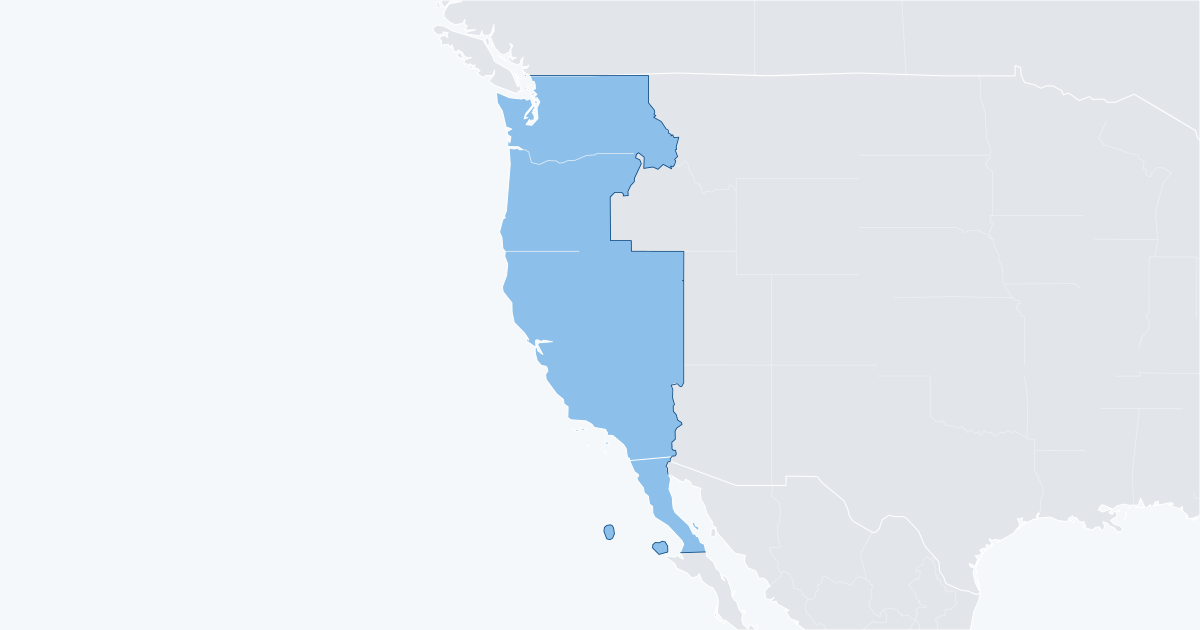
Pacific Daylight Time (PDT) is seven hours behind UTC (UTC-7). This time is typically observed in the western United States, Canada, and parts of Mexico during the warmer months of the year, starting from the second Sunday in March through the first Sunday in November.
Central Standard Time (CST) is six hours behind UTC (UTC-6). While many regions in the Central time zone switch to Central Daylight Time (CDT, UTC-5) in the summer, certain jurisdictions and technical systems stay on CST year-round. Because CST is only six hours behind the prime meridian while PDT is seven, CST is exactly one hour ahead of PDT.
The Calculation Logic
If you are standing in Los Angeles at 7:30 AM during the summer of 2026 (PDT), a clock in a region observing Central Standard Time (such as Regina, Saskatchewan, which stays on CST all year) would show 8:30 AM.
The formula is simple: [Time in PDT] + 1 Hour = [Time in CST]
Defining the Entities: PDT vs. CST
To ensure a successful "7 30 pdt to cst conversion," it is vital to distinguish between "Standard" and "Daylight" designations. Misunderstanding these labels is the most frequent cause of scheduling errors in professional and logistical environments.
What is Pacific Daylight Time (PDT)?
PDT is the daylight saving version of Pacific Time. In 2026, the transition to PDT occurred on March 8. It will remain the active time zone for the West Coast until November 1, 2026. The primary purpose of PDT is to extend evening daylight by shifting the clocks forward one hour from Pacific Standard Time (PST, UTC-8).
Major cities observing PDT include:
- Los Angeles, California
- Seattle, Washington
- Vancouver, British Columbia
- Las Vegas, Nevada
- San Francisco, California
What is Central Standard Time (CST)?
CST is the standard time used in the Central time zone, which sits in the middle of North America. In the United States and most of Canada, CST is only active during the winter months. However, the search for "7 30 pdt to cst conversion" often implies a cross-season or cross-regional comparison.
Major regions that utilize or are referenced by CST include:
- Chicago, IL (During winter months only)
- Dallas, TX (During winter months only)
- Winnipeg, MB (During winter months only)
- Regina, Saskatchewan (Observed all year, effectively functioning as the "standard" reference for UTC-6)
- Central America (Many countries in Central America stay on UTC-6 year-round)
The DST Complexity: Why PDT and CST Rarely Meet
Under normal circumstances in 2026, most of North America moves its clocks in unison. When California moves from PST to PDT, Illinois moves from CST to CDT.
If both regions are observing Daylight Saving Time, the difference is two hours:
- 7:30 AM PDT (UTC-7)
- 9:30 AM CDT (UTC-5)
However, the specific request for a "7 30 pdt to cst conversion" suggests a scenario where the destination is specifically on Standard Time (UTC-6). This occurs in two primary situations:
- Geographic Exceptions: You are communicating with a region like Saskatchewan or parts of Mexico that do not observe Daylight Saving Time.
- Technical Synchronization: You are working with a server or database that is hard-coded to Central Standard Time (UTC-6) regardless of the season.
In these specific instances, the 1-hour gap is the correct interval to use.
PDT to CST Conversion Table (24-Hour Format)
The following table provides a quick reference for converting various times from Pacific Daylight Time to Central Standard Time. This is particularly useful for project managers and logistics coordinators working in 2026.
| Pacific Daylight Time (PDT) | Central Standard Time (CST) | Difference |
|---|---|---|
| 12:00 AM (Midnight) | 1:00 AM | +1 Hour |
| 4:00 AM | 5:00 AM | +1 Hour |
| 7:30 AM | 8:30 AM | +1 Hour |
| 9:00 AM | 10:00 AM | +1 Hour |
| 12:00 PM (Noon) | 1:00 PM | +1 Hour |
| 3:30 PM | 4:30 PM | +1 Hour |
| 5:00 PM | 6:00 PM | +1 Hour |
| 7:30 PM | 8:30 PM | +1 Hour |
| 11:00 PM | 12:00 AM (Next Day) | +1 Hour |
Technical Implementation and ISO 8601
For developers and system administrators in 2026, converting "7 30 pdt to cst" requires attention to ISO 8601 formatting and UTC offsets. Using "CST" and "PDT" as strings can lead to ambiguity in code, as some libraries may interpret these differently depending on the locale.
To represent 7:30 AM PDT in a technically robust format, you would use:
2026-07-15T07:30:00-07:00
To represent the equivalent time in CST:
2026-07-15T08:30:00-06:00
Why UTC is the Gold Standard
Coordinated Universal Time (UTC) does not change for Daylight Saving Time. It is the steady heartbeat of global timekeeping. When performing a "7 30 pdt to cst conversion," it is best to convert PDT to UTC first (+7 hours) and then subtract the CST offset (-6 hours).
- Start: 07:30 PDT
- Convert to UTC: 07:30 + 07:00 = 14:30 UTC
- Convert to CST: 14:30 - 06:00 = 08:30 CST
This three-step process ensures that you never miscalculate the direction of the shift.
Impact on Business and Scheduling in 2026
In 2026, the global workforce is more distributed than ever. A "7 30 pdt to cst conversion" is not just a math problem; it’s a business necessity. If a team in San Francisco (PDT) schedules a meeting for 7:30 AM to catch a colleague in Central America or Saskatchewan (CST), the 8:30 AM start time is generally manageable.
Early Morning Syncs
A 7:30 AM PDT start time is often the earliest "standard" meeting slot for West Coast workers. For those in the CST zone, 8:30 AM is a prime start-of-day time. This overlap is highly efficient for:
- Daily Stand-ups: Aligning software development sprints.
- Financial Market Prep: Getting ready for the opening of trade sessions.
- Logistics Check-ins: Confirming morning departures and arrivals for shipping fleets.
Common Mistakes to Avoid
- The 2-Hour Trap: Do not assume Central Time is always two hours ahead. If the person you are calling is in Chicago during July, they are in CDT, not CST. In that case, 7:30 AM PDT is 9:30 AM CDT.
- Mobile Device Automation: Most smartphones update automatically based on location. However, if you manually set a "CST" clock on your device while in a "CDT" region, your calendar invites may be off by an hour.
- Seasonal Transitions: Be wary of the weeks in March and November. Different countries (like Mexico vs. the USA) sometimes switch to Daylight Saving on different weekends, which can temporarily change a 1-hour difference to 0 or 2 hours.
Frequently Asked Questions
Is 7:30 PDT the same as 7:30 CST?
No. There is a one-hour difference. 7:30 AM PDT is 8:30 AM CST. CST is "ahead" because its offset (UTC-6) is closer to the prime meridian than the PDT offset (UTC-7).
Does 7:30 PDT to CST conversion change in the winter?
Technically, the "PDT" and "CST" labels themselves define the season. In the winter, you would likely be converting PST (Pacific Standard Time) to CST. PST is UTC-8 and CST is UTC-6, meaning there is a two-hour difference in the winter (7:30 AM PST = 9:30 AM CST).
Which cities are always in CST?
Regina and Saskatoon in Saskatchewan, Canada, are the most prominent examples of cities that stay on CST (UTC-6) year-round. This makes them a frequent target for "PDT to CST" conversions during the summer months.
How do I convert 7:30 PM PDT to CST?
Using the same one-hour addition, 7:30 PM PDT becomes 8:30 PM CST.
What is the 24-hour equivalent of 7:30 AM PDT?
In 24-hour time, 7:30 AM is 07:30. When converted to CST, it becomes 08:30.
Why does "7 30 pdt to cst conversion" matter for international travel?
Travelers flying from the West Coast (PDT) to regions like Central America (which often uses CST) need to account for this hour to ensure they don't miss connecting flights or ground transportation. Even a one-hour difference can disrupt a tight itinerary.
Practical Recommendation for 2026
When scheduling a meeting or setting a deadline based on a 7:30 PDT to CST conversion, always include the UTC offset in your invitation. For example, write: "Meeting at 7:30 AM PDT (UTC-7) / 8:30 AM CST (UTC-6)."
This transparency removes the ambiguity of "Standard" versus "Daylight" labels and ensures that all participants, regardless of their local government's specific Daylight Saving rules in 2026, can calculate the correct time relative to the global standard. For the most reliable results, use a digital calendar tool that allows you to set the specific time zone for the event, which will automatically adjust the display for all attendees based on their current location.