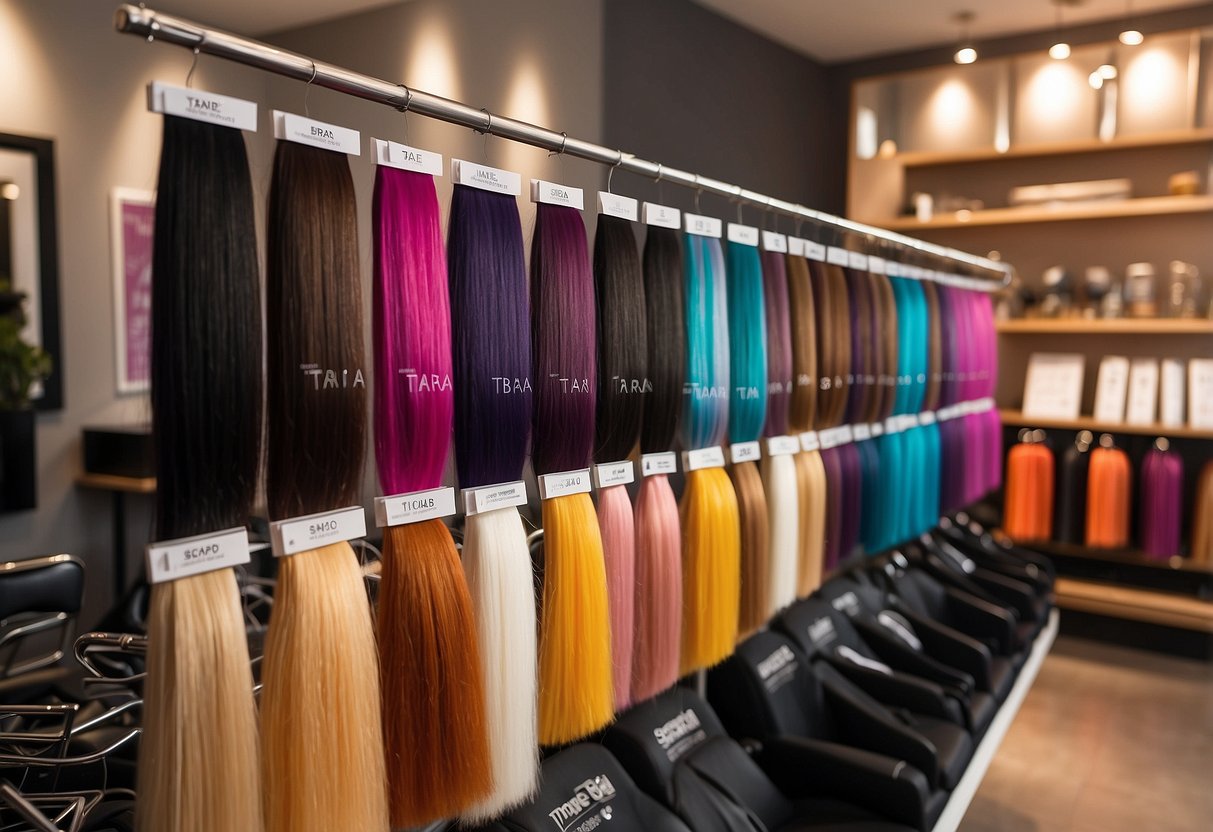
Finding the best quality hair extensions requires evaluating hair origin, cuticle alignment, texture consistency, weight distribution, and construction methods. High-grade extensions use ethically sourced human hair with intact cuticles that flow in a single direction, ensuring longevity, natural movement, and seamless blending with natural locks.
Investing in hair extensions can completely transform your hairstyle by adding instant length, volume, and dynamic color dimensions without altering your natural hair. However, the beauty and longevity of your investment depend heavily on the quality of the product you choose. With a saturated market offering everything from synthetic strands to low-grade human hair blends, identifying superior craftsmanship requires a trained eye. Evaluating hair quality is not merely about how soft a bundle feels in the package; it requires a deep technical understanding of hair processing, harvesting methods, and structural engineering.
The year 2026 continues to see a rise in transparent sourcing and advanced manufacturing techniques within the beauty industry. Consumers now demand rigorous standards regarding ethical collection and long-term durability. To help you navigate this complex market, this guide explores the five most reliable methods to identify the absolute best quality hair extensions available today, ensuring your investment looks natural, feels comfortable, and stands the test of time.
1. Examine the Hair Origin and Cuticle Alignment
The foundation of any exceptional hair extension lies in its raw biological source and how that hair is handled during harvesting. When manufacturers refer to high-grade extensions, the conversation inevitably centers on Remy and virgin human hair with intact cuticles.
Understanding Remy Versus Non-Remy Hair
Remy hair is considered the gold standard in the hair extension industry. The defining characteristic of Remy hair is that all strands are collected with the cuticles running in the exact same direction—from root to tip. Because the cuticles lie flat and face downward, the hair mimics natural hair growth. This alignment prevents the strands from tangling, matting, or catching on one another.
Non-Remy hair, by contrast, is often gathered from various sources, including hair brushes, salon floors, and multiple donors. Because the root and tip directions are mixed, the cuticles oppose each other. To make non-Remy hair manageable, manufacturers strip the cuticles away using harsh acid baths and coat the remaining core with a heavy silicone layer. While this hair feels remarkably soft and silky out of the box, the silicone coating washes away after a few washes, revealing dry, tangled, and brittle hair underneath.
The Significance of Virgin Hair
Within the category of Remy hair, virgin hair represents the purest form available. Virgin hair has never been chemically processed, dyed, bleached, or permed. It retains its natural strength, elasticity, and sheen. When purchasing extensions, look for explicit confirmation that the hair is 100% virgin human hair, as this guarantees it will accept custom coloring and styling tools just like your own natural hair.
2. Perform the Burn and Touch Tests
Before committing to a large financial investment or installing a full head of extensions, performing physical verification tests can immediately expose synthetic fibers or blended materials.
The Burn Test
Synthetic fibers and protein-based human hair react entirely differently to heat. While you may not always be able to perform this test in a retail boutique, reputable suppliers or independent laboratories rely on it to verify material composition:
- Human Hair: Burns slowly, emits an odor similar to burning human hair or feathers, and turns into a fine, powdery ash that crumbles easily between your fingers.
- Synthetic Hair: Melts quickly, curls or catches fire rapidly, emits a chemical or melting plastic smell, and hardens into a hard, non-powderable plastic bead.
- Animal Hair Blends (e.g., Yak or Horsehair): Often mixed into low-cost alternatives, these burn with a similar protein smell to human hair but tend to leave a coarser, darker ash and exhibit unusual texture patterns.
The Touch, Sight, and Sound Tests
Human hair has a distinct texture and visual profile that machinery struggles to replicate perfectly:
- Luster: High-quality human hair does not possess an unnatural, plastic-like shine. Instead, it features a healthy, subtle sheen that catches light naturally.
- Texture Check: Run your fingers up the hair shaft (from tip to root). With true Remy hair where cuticles face downward, you should feel a slight resistance or roughness. If your fingers glide upward effortlessly, the cuticles have been chemically stripped or the hair is synthetic.
- Sound: Listen to the hair. High-density, thick human hair bundles produce a soft, dense, rustling sound, whereas cheap synthetic fibers often make a sharp, artificial swishing sound.
3. Analyze Density, Weight, and Thickness from Root to Tip
The structural integrity of a hair extension bundle or weft is defined by its density profile and how weight is distributed across the strands. Poorly constructed extensions suffer from thin, wispy ends, which immediately give away their artificial nature once installed.
Double-Drawn Versus Single-Drawn Construction
Hair naturally tapers toward the ends. When hair is gathered from a donor, the bundle is thick at the top and thin at the bottom. Manufacturers process these bundles into two distinct categories:
| Feature | Single-Drawn Extensions | Double-Drawn Extensions |
|---|---|---|
| Length Consistency | Varies; contains shorter hairs mixed throughout the length. | Uniform; shorter hairs are manually removed. |
| End Appearance | Tapered, natural-looking, thinner ends. | Thick, blunt, full-volume ends from top to bottom. |
| Cost | More affordable, common in standard retail packs. | Premium pricing due to labor-intensive sorting. |
| Best Suited For | Individuals seeking a natural, layered feathering effect. | Those desiring maximum thickness, drama, and luxury volume. |
While single-drawn hair is not inherently low quality, double-drawn hair represents superior craftsmanship because it requires significantly more labor to sort and align lengths by hand. When evaluating extensions, check the density of the bottom two inches. If the ends feel sparse, you will likely need to cut a significant amount off the bottom to achieve a realistic look.
4. Evaluate Weft Construction and Attachment Quality
The method used to secure the hair into a weft, tape, tip, or clip dictates how long the extensions will last, how comfortable they feel against your scalp, and how prone they are to shedding.
Analyzing Machine Wefts Versus Hand-Tied Wefts
For traditional sew-in or track-based extensions, the construction of the weft is critical:
- Machine Wefts: Created using heavy sewing machines to fold and stitch the hair roots together. They are durable and thick but can feel bulky or stiff against the scalp, and they are prone to shedding at the cut ends if snipped improperly.
- Hand-Tied Wefts: Meticulously crafted by hand, resulting in an ultra-thin, flexible seam that lays completely flat against the head. They offer superior comfort and a more natural fall, though they cannot be cut horizontally without unraveling.
Inspecting Tape-Ins, Micro-Links, and Clip-Ins
If you prefer alternative application methods, inspect the hardware:
- Tape-Ins: The medical-grade adhesive tape should be matte, flexible, and secure. Cheap tape will feel sticky, slide out easily, or leave a gummy residue that damages natural hair.
- I-Tip/Micro-Links: The keratin or silicone tips must be hard and securely sealed to prevent shedding during installation.
- Clip-Ins: Look for silicone strips sewn along the base of the clips. This lining prevents the metal clips from slipping out of fine hair and cushions the scalp from tension breakage.
5. Assess Lifespan, Durability, and Sourcing Ethics
The ultimate test of hair extension quality is longevity. Premium human hair extensions, when properly maintained with sulfate-free products and thermal protectants, should last anywhere from six months to over a year. Low-grade alternatives typically degrade, tangle permanently, and become unmanageable within four to six weeks.
Sourcing Transparency and Ethical Standards
In the modern beauty industry, ethical sourcing is a core component of quality. High-end brands pride themselves on transparent supply chains, ensuring that donors are compensated fairly for their hair. Avoid brands that offer suspiciously cheap human hair; globally, premium virgin hair is a valuable commodity, and pricing that seems too good to be true usually indicates unethical collection practices or synthetic blending.
Cost-Benefit Analysis
While investing in top-tier hair extensions requires a higher upfront cost, it proves more economical over time. Cheap extensions require frequent replacement every few weeks, whereas premium Remy or virgin hair extensions can be reinstalled multiple times, maintained with conditioning treatments, and styled repeatedly without losing structural integrity.
Frequently Asked Questions
Can I dye or bleach high-quality hair extensions?
Yes, if you purchase 100% virgin human hair extensions that have not been chemically treated. Because the cuticles remain intact and healthy, professional colorists can lift or deposit color safely. However, bleaching processed Remy or non-type virgin hair can cause severe structural damage, resulting in brittleness and breakage. Always test a small strand before processing an entire set.
Why do my hair extensions tangle after a few weeks?
Tangling usually occurs for two reasons: the hair is non-Remy with inverted cuticles, or the protective silicone coating has washed away, exposing dry, damaged cortex layers. To prevent premature tangling, use sulfate-free shampoos, sleep in a silk bonnet, and apply deep-conditioning treatments weekly to maintain moisture balance.
What is the difference between Remy hair and virgin hair?
All virgin hair is Remy hair, but not all Remy hair is virgin hair. Remy hair simply means all cuticles face the same direction, but the hair may have been previously dyed or permed. Virgin hair means the hair is strictly Remy and has never undergone any chemical processing, coloring, or texturizing.
How often should hair extensions be washed?
Hair extensions do not receive natural sebum oils from the scalp, meaning they dry out faster than natural hair. Washing them too frequently strips away essential moisture. Aim to wash extensions every 10 to 15 wears, or whenever product buildup becomes noticeable, using lukewarm water and moisturizing, sulfate-free formulas.
Are synthetic hair extensions ever worth buying?
Synthetic extensions are suitable for temporary styling, costume use, or budget-friendly Halloween outfits because they hold styles well in humid weather. However, they cannot tolerate heat styling tools, have a short lifespan, and lack the natural movement and breathability required for daily wear.
Conclusion
Identifying the best quality hair extensions is an exercise in detail, patience, and structural evaluation. By prioritizing 100% Remy or virgin hair with aligned cuticles, checking for double-drawn density, inspecting robust weft construction, and verifying ethical sourcing, you ensure an investment that looks indistinguishable from your natural hair. Take the time to examine product specifications, ask suppliers detailed sourcing questions, and invest in proper maintenance routines to maximize the lifespan and beauty of your chosen extensions.