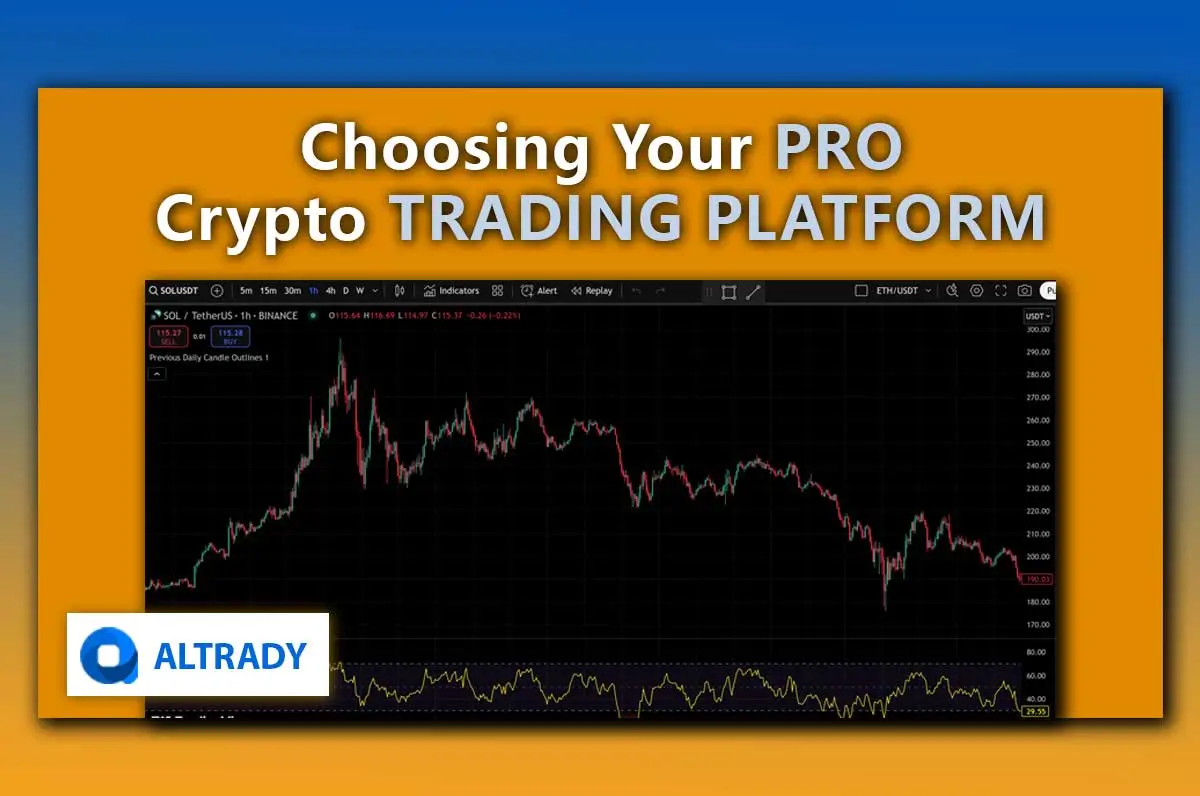
Choosing the best platform for algorithmic trading requires evaluating execution speed, data feed reliability, supported programming languages, broker integration, and transparent pricing structures to match your trading strategy and technical expertise.
Entering the realm of algorithmic trading requires moving away from traditional, manual point-and-click brokerage accounts toward specialized infrastructure engineered for automated execution. Whether you are a retail trader deploying simple moving-average crossovers or a quantitative researcher running complex statistical arbitrage models, your choice of trading platform will dictate your performance, risk management capabilities, and overall profitability. Selecting the wrong platform can introduce costly latency, limit your strategy design, or impose prohibitive fees that erode your margins.
Because the market features an array of proprietary software, cloud-based environments, and broker-integrated terminals, finding the right fit can feel overwhelming. To cut through the noise, you must evaluate solutions based on a structured, objective framework. Below are five essential ways to choose the best platform for algorithmic trading, ensuring your technical setup aligns precisely with your financial objectives.
1. Evaluate Execution Speed and Infrastructure Latency
The foundational pillar of any algorithmic trading platform is its execution speed. In automated trading, latency refers to the time delay between a system generating a trading signal and that order being executed by the exchange or liquidity provider. Even if your strategy is theoretically sound, high latency can cause severe slippage, turning profitable backtests into unprofitable live trades.
When examining execution speed, distinguish between network latency, processing latency, and broker-routing latency. Network latency depends on how close your platform's servers are to the major exchanges, such as Equinix data centers in Secaucus, New Jersey, or London. Processing latency relates to how efficiently the platform compiles and executes your code. Broker-routing latency involves how quickly the broker pushes your order downstream to market makers or electronic communication networks (ECNs).
To properly evaluate infrastructure performance, look for platforms that offer:
- Co-location services or virtual private server (VPS) hosting near exchange hubs.
- Direct Market Access (DMA), which bypasses intermediary order routing.
- Support for FIX (Financial Information eXchange) protocol, the global standard for real-time electronic financial data exchange.
If you are trading high-frequency strategies or short-term momentum models, millisecond differences matter immensely. Conversely, if you run daily swing trading algorithms, ultra-low latency takes a back seat to stability and broad asset class coverage.
2. Assess Data Feed Quality and Historical Depth
An algorithm is only as good as the data fed into it. Flawed, delayed, or incomplete market data will corrupt both your historical backtesting and your real-time decision-making. Therefore, scrutinizing the platform's data feed ecosystem is a non-negotiable step in your evaluation process.
A robust platform must provide access to clean, tick-by-tick or high-resolution bar data across all asset classes you intend to trade, whether equities, foreign exchange, cryptocurrencies, or futures. Look closely at how the platform handles historical data depth. Can you download ten years of minute-level data to stress-test your strategy across multiple market cycles, including black swan events and prolonged bear markets?
Furthermore, check whether the data feed includes Level 2 market depth (order book data) and Time & Sales records. Without these granular metrics, you cannot build algorithms that rely on order flow, liquidity imbalances, or tape reading. Finally, investigate whether the data comes bundled with the platform subscription or requires costly third-party vendors like Bloomberg, Reuters, or IQFeed.
3. Verify Programming Language Flexibility and API Robustness
Algorithmic trading platforms utilize various programming languages and application programming interfaces (APIs) to let traders build, test, and deploy strategies. Your technical proficiency and the complexity of your models will determine which language environment suits you best.
Platforms generally fall into three categories regarding programming support:
- Proprietary Scripting Languages: Languages like EasyLanguage (TradeStation) or Pine Script (TradingView) are purpose-built for trading. They are relatively easy to learn and optimize for financial calculations, but they lack the general-purpose flexibility of mainstream languages.
- Industry-Standard Languages: Platforms that support Python, C++, C#, or Java offer immense power and versatility. Python, in particular, dominates the quantitative finance space due to its rich ecosystem of libraries for data science, machine learning, and statistical analysis (such as Pandas, NumPy, and Scikit-Learn).
- Visual Strategy Builders: Drag-and-drop builders allow non-programmers to construct logic flows without writing code. While accessible, they often restrict advanced customization, complex loop structures, and external library integration.
Ensure that the platform's API is well-documented, stable, and actively maintained. A poorly supported API will lead to frustrating disconnections, missing error logs, and unpredictable execution failures during volatile market sessions.
4. Analyze Broker Independence Versus Integrated Solutions
A critical structural decision when selecting an algorithmic trading platform is choosing between an independent, multi-broker platform and a broker-provided proprietary platform. Each architecture presents distinct operational advantages and compromises.
| Platform Type | Advantages | Disadvantages | Best Suited For |
|---|---|---|---|
| Independent Platforms (e.g., MetaTrader, NinjaTrader, QuantConnect) | Multi-broker compatibility, advanced charting, robust backtesting engines, cross-asset diversification. | Requires managing separate data and broker accounts; potential integration friction; subscription costs. | Quantitative traders who want flexibility, multi-broker setups, and advanced technical analysis tools. |
| Broker-Provided Platforms (e.g., Interactive Brokers TWS, TradeStation) | Seamless end-to-end execution, unified margin accounts, lower total friction, often free with active trading. | Locked into a single ecosystem; migrating strategies to another broker requires rewriting code. | Retail traders seeking simplicity, lower overhead costs, and direct trade execution without middleware. |
If you plan to test multiple brokers to find the best fills or regulatory protections, an independent platform with multi-broker APIs is vital. If you prefer streamlined operations with minimal software touchpoints, an integrated broker terminal may be the more practical route.
5. Calculate Total Cost of Ownership and Fee Structures
Algorithmic trading introduces unique cost structures that extend far beyond standard retail brokerage commissions. Hidden fees can quickly accumulate, turning a winning paper strategy into a losing live operation. When evaluating platforms, calculate the Total Cost of Ownership (TCO) by breaking down all potential expenses.
Consider the following cost components:
- Platform Licensing or Subscription Fees: Monthly or annual fees for software access, advanced toolkits, or premium interfaces.
- Data Feed Subscriptions: Additional charges for real-time exchange feeds, historical tick data, and specialized fundamental datasets.
- Execution and Commission Costs: Per-trade commissions, maker-taker fees on crypto exchanges, or contract-based futures fees.
- Infrastructure Overhead: Expenses for dedicated Virtual Private Servers (VPS) or cloud instances required to keep your algorithms running 24/7 without interruption.
- Backtesting Compute Credits: Some cloud-native platforms charge based on the computational power consumed during intensive machine learning training or historical optimization runs.
Always balance these costs against your expected trading volume and account size. A platform with a high monthly subscription fee might make economic sense for a high-volume futures trader, but it would rapidly deplete a small retail account.
Comparison of Popular Algorithmic Trading Platforms
To ground these five principles in reality, examine how major platforms compare across key technical vectors:
| Platform | Primary Language Support | Main Asset Classes | Data & Backtesting Engine | Target User Profile |
|---|---|---|---|---|
| Interactive Brokers (TWS) | Python, Java, C++, API | Equities, Options, Futures, Forex, Bonds | Comprehensive historical data; moderate backtesting speed | Advanced retail and institutional traders seeking deep market access. |
| QuantConnect | Python, C# | Equities, Crypto, Forex, Futures | Cloud-based; tick-resolution data; massive compute scaling | Quantitative developers and algorithmic researchers. |
| MetaTrader (MT4/MT5) | MQL4, MQL5 | Forex, CFDs, Cryptos, Futures | Local tester; extensive marketplace of third-party Expert Advisors (EAs) | Retail forex and CFD traders utilizing automated scripts. |
| NinjaTrader | C#, NinjaScript | Futures, Forex | High-performance desktop backtesting and strategy builder | Active futures traders requiring deep DOM (Depth of Market) integration. |
Frequently Asked Questions
Do I need to know how to code to use an algorithmic trading platform?
Not necessarily, but it depends heavily on your chosen platform. Many modern platforms offer visual, drag-and-drop strategy builders or use simplified scripting languages like TradingView's Pine Script. However, building robust, institutional-grade strategies that handle complex risk management, machine learning, and multi-threaded execution generally requires proficiency in languages like Python or C#.
What is the difference between backtesting and paper trading?
Backtesting involves running your trading algorithm against historical market data to see how it would have performed in the past. Paper trading (forward testing) runs your algorithm in real-time using live market data, but executes orders with simulated, virtual money rather than real capital. Both steps are crucial; backtesting proves historical viability, while paper trading validates live execution mechanics and uncovers latency or slippage issues.
Can I run my algorithms 24/7 on my home computer?
While technically possible, running live algorithms from a standard home desktop or laptop is strongly discouraged. Consumer internet connections can drop, home power supplies can fail, and operating system updates can trigger unannounced reboots. Instead, algorithmic traders typically deploy their strategies on a dedicated Virtual Private Server (VPS) hosted in a secure data center near their broker's servers.
How much capital do I need to start algorithmic trading?
Capital requirements vary widely depending on the asset class and broker. You can begin paper trading and backtesting with zero financial capital on many cloud platforms. For live trading, retail forex or crypto platforms may allow accounts starting at $100 to $500, whereas futures or multi-asset portfolio platforms often require minimum balances of $2,000 to $10,000+ to meet regulatory margin requirements and ensure proper risk diversification.
Are cloud-based platforms safer than desktop installations?
Neither is universally "safer," as they present different operational trade-offs. Cloud-based platforms offer superior uptime, scalable computing power for heavy machine learning models, and immunity to local hardware failures. Desktop installations provide greater local control over your code, complete data privacy, and independence from cloud provider service outages, though they require you to manage your own backup and server infrastructure.
Next Steps for Setting Up Your Trading Environment
Begin your journey by listing your core strategy requirements—such as asset classes, expected trade frequency, and preferred programming languages—and shortlist two or three platforms that meet those criteria. Take advantage of free trials, demo accounts, and cloud sandboxes to stress-test their APIs, analyze execution speeds, and verify data feed accuracy before committing real capital to automated live markets.