In 2026, the top five Nasdaq-100 holdings—NVIDIA, Microsoft, Apple, Amazon, and Alphabet—continue to define the global equity landscape. These companies are ranked based on their market capitalization, dominance in generative AI infrastructure, enterprise software integration, and resilient consumer ecosystems, providing investors with a blueprint for large-cap growth and stability.
The Evolution of the Nasdaq-100 Index in 2026
The Nasdaq-100 Index remains the primary benchmark for the world's most innovative non-financial companies. By 2026, the index has undergone several rebalancing cycles to manage the concentration of its largest members, yet the "Big Five" still command a significant portion of the total index weight. Understanding these holdings is not merely a study of stock prices; it is an analysis of the digital architecture that powers the global economy.
For investors, the Nasdaq represents a "modified market capitalization-weighted" index. This means that while the largest companies exert the most influence, the index uses specific methodology rules to prevent any single stock from completely overwhelming the performance of the other 95+ constituents. As we navigate the economic environment of 2026, characterized by stabilized interest rates and the widespread commercialization of artificial intelligence, these top five holdings have transitioned from "growth stories" to "foundational utilities."
Investing in these holdings requires an understanding of their 2026 context: the shift from experimental AI to operational AI, the maturity of the spatial computing market, and the continued expansion of cloud-based infrastructure. The following rankings reflect their strategic importance and financial health in the current 2026 market.
1. NVIDIA (NVDA): The Infrastructure Powerhouse
NVIDIA enters 2026 as the undisputed leader in the semiconductor and AI infrastructure space. While the explosive "AI gold rush" of 2023 and 2024 has transitioned into a more mature replacement and expansion cycle, NVIDIA’s data center business remains the primary engine of the Nasdaq’s growth.
The Shift to Sovereign AI and Specialized Silicon
By 2026, NVIDIA has moved beyond just selling H100 and Blackwell GPUs. The company has successfully diversified into "Sovereign AI," helping nation-states build their own localized computing clusters to ensure data privacy and national security. This has created a new, non-cyclical revenue stream that buffers the company against fluctuations in commercial tech spending.
Furthermore, the introduction of the "Rubin" architecture in late 2025 has set a new standard for energy efficiency in data centers. In an era where power consumption is the primary bottleneck for AI expansion, NVIDIA’s ability to deliver more FLOPS (floating-point operations per second) per watt has solidified its competitive moat against challengers like AMD and internal silicon projects from Google and Amazon.
Financial Resilience and Software Integration
NVIDIA’s CUDA software platform continues to be its greatest asset. By 2026, millions of developers are deeply entrenched in the CUDA ecosystem, making the cost of switching to alternative hardware prohibitively high. For investors, this translates to high margins and predictable cash flow. Despite the inherent volatility of the semiconductor industry, NVIDIA’s 2026 valuation is increasingly supported by recurring software revenue from its AI Enterprise suite.
2. Microsoft (MSFT): The Enterprise AI Standard
Microsoft holds its position as a top Nasdaq holding through its masterful integration of AI across its entire software stack. In 2026, Microsoft Copilot has evolved from a novelty assistant into a core productivity requirement for Fortune 500 companies.
Azure’s Dominance and the OpenAI Partnership
The partnership with OpenAI, which reached new milestones in 2025, remains a cornerstone of Microsoft’s strategy. Azure AI services have become the preferred environment for enterprises to build and deploy proprietary models. By 2026, Azure has significantly narrowed the market share gap with Amazon Web Services (AWS), driven by its first-mover advantage in generative AI tooling.
Microsoft’s revenue model in 2026 is increasingly driven by "AI seat expansion." Rather than just selling Windows or Office licenses, the company now generates substantial ARPU (average revenue per user) growth through high-margin AI add-ons. This "land and expand" strategy makes Microsoft one of the most stable long-term holdings for conservative growth investors.
Cybersecurity as a Growth Vector
Another critical pillar for Microsoft in 2026 is its security business. As cyber threats become more sophisticated through the use of malicious AI, Microsoft’s integrated security platform has become an essential purchase for global enterprises. This segment provides a defensive layer to the stock, ensuring that even during periods of reduced discretionary spending, Microsoft’s core services remain "must-haves."
3. Apple (AAPL): The Consumer Ecosystem and Services Giant
In 2026, Apple remains a dominant force in the Nasdaq-100, though its narrative has shifted significantly from hardware sales to high-margin services and ecosystem stickiness.
The Maturity of Spatial Computing
By 2026, the Vision Pro and its more affordable successors have moved past the "early adopter" phase. Spatial computing is now a meaningful contributor to Apple’s Wearables, Home, and Accessories segment. Investors monitor Apple not just for iPhone units, but for its ability to define the next generation of personal computing interfaces.
The iPhone remains the world's most profitable consumer electronics product, supported in 2026 by an "AI-driven upgrade cycle." With the integration of advanced on-device processing (Apple Intelligence), users are finding more reasons to upgrade to newer hardware that can handle localized, private AI tasks that competitors struggle to replicate without cloud reliance.
The Services Moat
Apple’s Services segment—comprising the App Store, iCloud, Apple Music, and Apple Pay—continues to grow at a double-digit rate in 2026. This recurring revenue stream provides a valuation floor that few other tech companies can match. The company’s focus on user privacy has become a major marketing advantage, allowing it to charge a premium in a world where data security is a top consumer concern.
4. Amazon (AMZN): Efficiency, Ads, and AWS
Amazon’s position in the top five is secured by its dual-engine growth: the continued dominance of AWS and the massive scaling of its high-margin advertising business.
AWS and the Second Wave of Cloud Migration
In 2026, AWS is benefiting from the "second wave" of cloud migration, where legacy industries (manufacturing, healthcare, and government) are finally moving their core workloads to the cloud to take advantage of AI-driven analytics. Amazon’s custom chips, such as Trainium and Inferentia, provide a cost-effective alternative to NVIDIA hardware, attracting budget-conscious enterprise clients.
Logistics Automation and Advertising
The retail side of Amazon has seen a margin revolution by 2026. The widespread deployment of humanoid robotics (developed through the Amazon Industrial Innovation Fund) in fulfillment centers has significantly reduced the cost-to-serve. Simultaneously, Amazon’s advertising business has become a juggernaut, rivaling Google and Meta. By leveraging first-party purchase data, Amazon offers advertisers a conversion rate that is unmatched in the digital space.
For investors, Amazon represents a play on both infrastructure and consumer behavior. Its ability to generate massive free cash flow in 2026 allows it to continue reinvesting in moonshot projects like Project Kuiper (satellite internet), which is beginning its commercial rollout this year.
5. Alphabet (GOOGL/GOOG): The Data and Research Leader
Alphabet rounds out the top five, having successfully defended its search moat against generative AI challengers while expanding its footprint in autonomous driving and life sciences.
The Evolution of Search
In 2026, Google Search is more integrated and conversational than ever. Despite early fears of "Search Generative Experience" (SGE) cannibalizing ad revenue, Alphabet has proven that AI-enhanced search actually increases user engagement and provides more precise targeting for advertisers. YouTube also remains the dominant video platform, successfully monetizing "Shorts" to compete with TikTok and other social media rivals.
Waymo and the "Other Bets" Maturity
Alphabet’s "Other Bets" are no longer just speculative. Waymo, the autonomous driving unit, has expanded to over a dozen major cities by 2026, providing a tangible pathway to a massive new revenue stream in the robotaxi market. Google Cloud has also achieved consistent profitability, serving as a strong third-place contender in the cloud wars, particularly for companies focused on data analytics and open-source AI models.
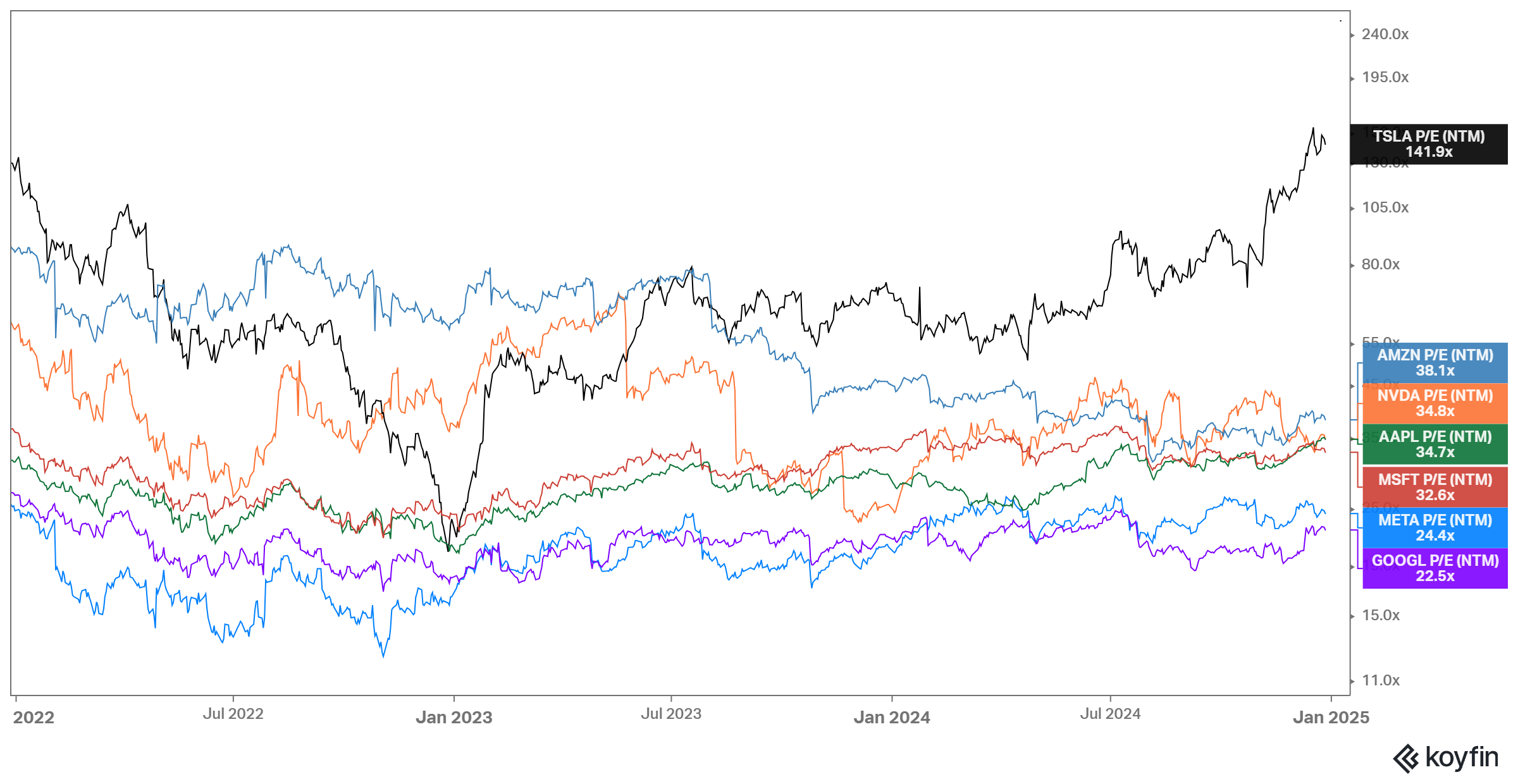
Alphabet’s valuation in 2026 often appears more attractive on a P/E (Price-to-Earnings) basis compared to its peers, making it a favorite for value-conscious growth investors. Its massive cash reserves allow for aggressive share buybacks, providing additional support for the stock price.
Comparative Analysis of the Top 5 Holdings (2026 Estimates)
| Company | Ticker | Primary Driver (2026) | Risk Level | 2026 Strategic Focus |
|---|---|---|---|---|
| NVIDIA | NVDA | AI Infrastructure/Sovereign AI | Medium-High | Chip efficiency and software lock-in |
| Microsoft | MSFT | Enterprise AI Integration (Copilot) | Low-Medium | Expanding Azure margins and Security |
| Apple | AAPL | Services & Spatial Computing | Low | Privacy-led ecosystem and Wearables |
| Amazon | AMZN | AWS & Ad Revenue | Medium | Logistics automation and satellite internet |
| Alphabet | GOOGL | AI-Enhanced Search & Waymo | Medium | Defending Search moat and Cloud growth |
Investment Considerations for the Nasdaq in 2026
While these five holdings represent the pinnacle of corporate success, investors must approach the Nasdaq-100 with a clear strategy. The 2026 market is different from the zero-interest-rate environment of the early 2020s.
Concentration Risk
Even with the Nasdaq’s rebalancing rules, these five stocks represent nearly 40% of the index's movement. An investor buying a Nasdaq-100 ETF (like QQQ) is heavily concentrated in these names. While this has been a winning strategy for a decade, it leaves the portfolio vulnerable to regulatory shifts or "Big Tech" antitrust actions, which remain a persistent headline risk in 2026.
Interest Rate Sensitivity
Although the Federal Reserve has stabilized rates in 2026, these growth-oriented companies remain sensitive to the "discount rate." When rates are higher, the present value of their future earnings is lower. Investors should monitor the Federal Reserve’s official statements for any signs of a pivot that could affect tech valuations.
Regulatory and Antitrust Landscape
In 2026, the Department of Justice (DOJ) and European regulators continue to scrutinize the dominance of the "Big Five." Potential outcomes include mandatory interoperability for messaging services, changes to app store fee structures, or even forced divestitures of certain business units. Investors should review SEC EDGAR filings for "Risk Factors" (Item 1A) in the annual 10-K reports to understand the specific legal challenges each company faces.
Frequently Asked Questions
Which Nasdaq holding is best for dividends in 2026?
Apple and Microsoft remain the most reliable dividend payers among the top five. While their yields are historically low (typically under 1%), they have a long track record of annual dividend increases. For investors seeking yield, these companies are "dividend growers" rather than high-yield plays, focusing on returning capital through a mix of dividends and aggressive share buybacks.
Why is NVIDIA ranked first for growth?
NVIDIA is ranked first because it sits at the "chokepoint" of the AI economy. Every other company in the top five—Microsoft, Google, Amazon—is a major customer of NVIDIA. Until a competitor can match NVIDIA’s software-hardware integration (CUDA), NVIDIA remains the primary beneficiary of the global shift toward accelerated computing.
Is the Nasdaq-100 too top-heavy for a new investor?
Concentration is a double-edged sword. It has led to significant outperformance compared to the S&P 500 over the last 15 years, but it increases volatility. A new investor in 2026 might consider "equal-weighted" Nasdaq ETFs if they are concerned about the dominance of the top five, though historically, the market-cap-weighted version has outperformed.
How do I track changes in these holdings?
The holdings and their weights are updated quarterly. You can find the most current data directly on the Nasdaq-100 Index page. Monitoring these weights is essential for understanding how much exposure you have to any single company.
What is the biggest risk to these holdings in 2026?
Beyond regulation, the biggest risk is "AI fatigue." If enterprises do not see a clear Return on Investment (ROI) from the billions spent on AI infrastructure and software in 2024 and 2025, there could be a significant pull-back in spending, which would hit NVIDIA and Microsoft the hardest.
Practical Recommendation for Investors
For those looking to gain exposure to the 5 Nasdaq top holdings in 2026, the most efficient method remains a low-cost exchange-traded fund (ETF). Rather than attempting to time the individual entries for all five stocks, an investment in a broad Nasdaq-100 fund ensures that you capture the growth of these leaders while maintaining exposure to the next generation of tech companies currently ranked 6th through 100th.
Investors should maintain a long-term horizon (5+ years) and utilize dollar-cost averaging to mitigate the volatility inherent in high-growth technology sectors. Always verify your portfolio's total exposure—many diversified mutual funds already hold large positions in these exact stocks, and you may already be more "tech-heavy" than you realize.