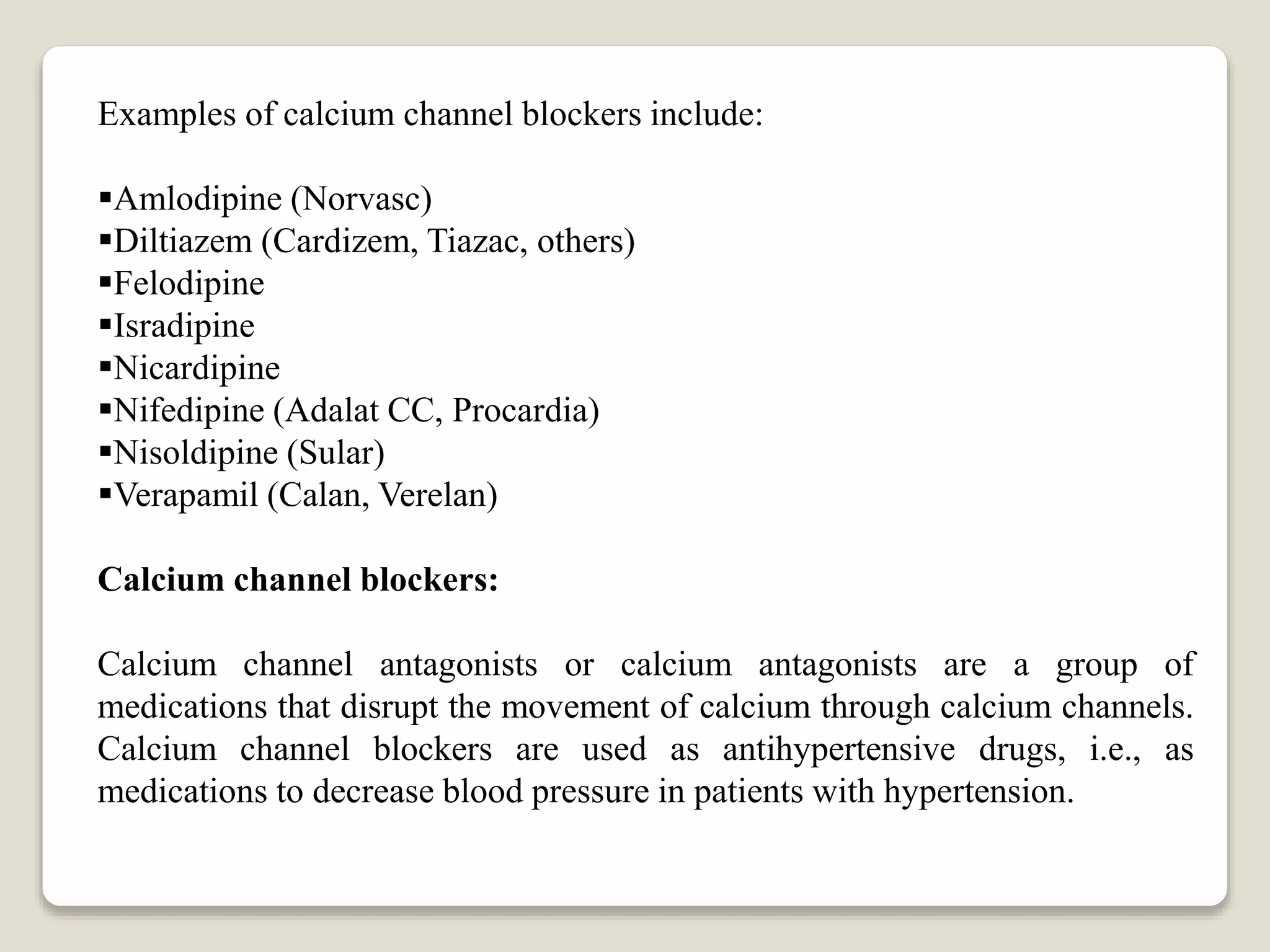
Dihydropyridine calcium channel blockers (DHP CCBs) are a distinct class of cardiovascular medications primarily used to treat hypertension, chronic stable angina, and vasospastic conditions. Five notable examples are amlodipine, nifedipine, felodipine, nicardipine, and isradipine. These medications lower blood pressure by selectively targeting L-type calcium channels in arterial smooth muscle, leading to coronary and systemic vasodilation.
Professional Medical Disclaimer
The following information is intended solely for educational and informational purposes and does not constitute medical advice, diagnosis, or treatment. Pharmaceutical treatments for cardiovascular conditions must always be prescribed, adjusted, and monitored by a qualified healthcare professional. Never discontinue or modify prescribed cardiovascular medications without consulting your healthcare provider.
Understanding Dihydropyridine Calcium Channel Blockers
Calcium channel blockers (CCBs) are classified into two broad pharmacological categories: dihydropyridines (DHPs) and non-dihydropyridines (non-DHPs). The fundamental distinction between these two subclasses lies in their chemical structure, tissue selectivity, and physiological effects on the cardiovascular system.
Dihydropyridines are characterized by a central 1,4-dihydropyridine ring structure. Functionally, DHPs exhibit high selectivity for vascular smooth muscle L-type calcium channels compared to cardiac tissue. By blocking the influx of extracellular calcium ions through voltage-gated L-type channels into the smooth muscle cells lining peripheral arteries and coronary vessels, DHPs inhibit muscle contraction. This action triggers smooth muscle relaxation, leading to peripheral arterial vasodilation, a reduction in systemic vascular resistance (SVR), and a drop in arterial blood pressure.
In contrast, non-dihydropyridines—such as verapamil (a phenylalkylamine) and diltiazem (a benzothiazepine)—exhibit significant affinity for L-type calcium channels located directly in the myocardium and cardiac conduction tissues (the sinoatrial and atrioventricular nodes). Consequently, non-DHPs exert marked negative inotropic (reducing heart muscle contractility) and negative chronotropic (slowing heart rate) effects.
Because dihydropyridines act primarily on vascular beds with minimal direct suppression of cardiac conduction or myocardial contractility at therapeutic doses, they are preferred when blood pressure reduction is required without slowing the heart rate or worsening baseline cardiac conduction block.
To explore detailed pharmacological mechanisms, consult the comprehensive StatPearls resource on Calcium Channel Blockers hosted by the National Center for Biotechnology Information (NCBI).
5 Examples of Dihydropyridine Calcium Channel Blockers
While all dihydropyridine calcium channel blockers share the underlying mechanism of vascular L-type channel blockade, individual agents differ significantly in their pharmacokinetics, duration of action, tissue selectivity, available routes of administration, and specific clinical applications.
- Calcium Channel Blockers (CCBs)
- Dihydropyridines (Vascular Selective)
- Amlodipine
- Nifedipine
- Felodipine
- Nicardipine
- Isradipine
- Non-Dihydropyridines (Cardioselective / Dual)
- Verapamil
- Diltiazem
- Dihydropyridines (Vascular Selective)
1. Amlodipine
Amlodipine (commonly known by brand names such as Norvasc) is one of the most widely prescribed antihypertensive medications globally. Its distinguishing clinical feature is its remarkably long elimination half-life, which ranges from 30 to 50 hours in healthy individuals and can extend even further in patients with hepatic impairment or the elderly.
Key Pharmacological Characteristics:
- Route of Administration: Oral (tablets).
- Half-Life: ~30–50 hours.
- Dosing Frequency: Once daily.
- Onset of Action: Gradual, reaching peak plasma concentration within 6 to 12 hours.
Primary Indications and Clinical Utility:
Amlodipine is approved for the treatment of essential hypertension, chronic stable angina, and vasospastic (Prinzmetal’s) angina. Because of its slow rate of association and dissociation with the calcium channel receptor site, amlodipine produces a smooth, gradual onset of vasodilation. This slow onset prevents rapid drops in blood pressure and minimizes the risk of reflex tachycardia, a reflex increase in heart rate triggered by sudden sympathetic activation. Its once-daily dosing regimen supports high rates of patient compliance.
2. Nifedipine
Nifedipine (brand names include Procardia, Procardia XL, and Adalat CC) was the prototype dihydropyridine introduced into clinical medicine. Historically available as short-acting, immediate-release liquid capsules, nifedipine is now predominantly prescribed in extended-release (ER or XL) formulations to ensure safe, sustained blood pressure control.
Key Pharmacological Characteristics:
- Route of Administration: Oral (extended-release formulations).
- Half-Life: ~2 hours (immediate-release); extended formulations provide 24-hour therapeutic coverage.
- Dosing Frequency: Once daily for extended-release formulations.
Primary Indications and Clinical Utility:
Extended-release nifedipine is indicated for essential hypertension and vasospastic angina. Immediate-release nifedipine is generally restricted or contraindicated for routine hypertensive care because rapid arterial dilation can trigger severe reflex tachycardia and dangerous hemodynamic fluctuations.
Beyond general hypertension, extended-release nifedipine plays a vital role in specialized clinical scenarios:
- Obstetrics: It is widely used off-label as a first-line agent for managing gestational hypertension and preeclampsia, as well as a tocolytic agent to suppress pre-term labor.
- Raynaud’s Phenomenon: Nifedipine is one of the primary pharmacological therapies used to reduce the frequency and severity of vasospastic attacks in peripheral digits exposed to cold or stress.
3. Felodipine
Felodipine (brand name Plendil) is a second-generation dihydropyridine characterized by exceptionally high vascular selectivity. In preclinical and clinical evaluations, felodipine demonstrates a significantly greater ratio of vascular smooth muscle inhibition relative to myocardial depression compared to first-generation agents.
Key Pharmacological Characteristics:
- Route of Administration: Oral (extended-release tablets).
- Half-Life: ~11 to 16 hours (terminal elimination half-life).
- Dosing Frequency: Once daily.
Primary Indications and Clinical Utility:
Felodipine extended-release is used primarily for the treatment of hypertension, either as monotherapy or in combination with other antihypertensive agents such as ACE inhibitors or thiazide diuretics. Because felodipine undergoes extensive first-pass hepatic metabolism via the cytochrome P450 3A4 (CYP3A4) enzyme system, its bioavailability is sensitive to metabolic inhibitors or inducers. Its high vascular specificity makes it an effective option for elderly patients or individuals with comorbid conditions where cardiac suppression must be strictly avoided.
4. Nicardipine
Nicardipine (brand name Cardene) possesses distinct pharmacological properties due to its high solubility and dual availability in both oral and intravenous (IV) formulations. It displays pronounced selectivity for coronary and cerebral vascular beds.
Key Pharmacological Characteristics:
- Route of Administration: Oral (capsules/extended-release) and Intravenous (continuous infusion).
- Half-Life: ~8 to 14 hours (oral); short effective half-life during IV titrations.
- Dosing Frequency: Twice or thrice daily (oral immediate-release); continuous titrated infusion (IV).
Primary Indications and Clinical Utility:
While oral nicardipine is prescribed for chronic hypertension and angina, its intravenous formulation (Cardene IV) is extensively utilized in acute care, intensive care units, and emergency departments. Intravenous nicardipine allows precise, rapid, titratable blood pressure management in critical settings, including:
- Hypertensive Emergencies: Conditions where rapid blood pressure reduction is mandatory to prevent acute end-organ damage.
- Acute Ischemic and Hemorrhagic Stroke: Maintaining strict blood pressure control to prevent hematoma expansion or reperfusion injury.
- Perioperative Blood Pressure Control: Managing intraoperative and postoperative hypertension during cardiac and vascular surgical procedures.
Guidelines on emergency cardiovascular care and stroke management are published by the American Heart Association (AHA), highlighting the role of continuous IV infusions in target-driven blood pressure lowering.
5. Isradipine
Isradipine (formerly marketed under the brand name DynaCirc) is a dihydropyridine calcium channel blocker recognized for its potent vasodilation paired with a favorable hemodynamic profile. Research indicates that while isradipine effectively reduces peripheral resistance, it produces negligible effects on cardiac conduction tissue and exhibits low affinity for cardiac muscle cells.
Key Pharmacological Characteristics:
- Route of Administration: Oral (capsules and controlled-release formulations).
- Half-Life: ~8 hours.
- Dosing Frequency: Twice daily (immediate-release) or once daily (controlled-release).
Primary Indications and Clinical Utility:
Isradipine is indicated for the management of mild-to-moderate essential hypertension. Clinical trials have demonstrated its effectiveness in lowering both systolic and diastolic blood pressure without causing significant sodium retention or reflex heart rate spikes when properly titrated. Although prescribed less frequently today than amlodipine or extended-release nifedipine, isradipine remains a valuable alternative for patients who require effective blood pressure control but experience specific intolerance to other agents.
Detailed Comparison of 5 Dihydropyridine CCBs
The table below summarizes the key pharmacological differences, routes of administration, elimination half-lives, and primary clinical applications among the five dihydropyridine calcium channel blockers discussed.
| Drug Name | Common Brand Name(s) | Primary Route(s) | Elimination Half-Life | Primary Clinical Indications | Key Distinguishing Features |
|---|---|---|---|---|---|
| Amlodipine | Norvasc | Oral | 30–50 hours | Essential hypertension, chronic stable angina, vasospastic angina | Ultra-long duration of action; smooth, gradual onset minimizes reflex tachycardia. |
| Nifedipine | Procardia XL, Adalat CC | Oral | ~2 hours (IR); 24-hr efficacy (ER) | Hypertension, vasospastic angina, Raynaud's, severe gestational HTN | Extended-release formulation mandatory for hypertension; widely used in pregnancy and Raynaud's. |
| Felodipine | Plendil | Oral | 11–16 hours | Essential hypertension | Extremely high vascular selectivity relative to cardiac tissue; once-daily ER dosing. |
| Nicardipine | Cardene, Cardene IV | Oral, Intravenous | 8–14 hours (oral) | Acute hypertensive crises, perioperative HTN, chronic hypertension | Intravenous form allows precise titratable control in critical care and acute stroke settings. |
| Isradipine | DynaCirc | Oral | ~8 hours | Mild-to-moderate essential hypertension | Highly potent arterial vasodilation with minimal cardiac conduction interference. |
Mechanism of Action and Hemodynamic Effects
To understand how dihydropyridines control blood pressure, it is necessary to examine their molecular interactions within vascular tissues.
- Extra-arterial Space
- Voltage-Gated L-Type Ca2+ Channel (Blocked by Dihydropyridine CCB)
- Intracellular Vascular Smooth Muscle
- Reduced Intracellular Calcium
- Decreased Myosin Light Chain Kinase Activation
- Smooth Muscle Relaxation & Vasodilation
- Decreased Systemic Vascular Resistance (SVR)
- Decreased Systemic Blood Pressure
- L-Type Calcium Channel Inhibition: In vascular smooth muscle cells, membrane depolarization opens voltage-gated L-type calcium channels, permitting an influx of extracellular calcium.
- Calmodulin Binding: Internalized calcium binds to calmodulin, forming a complex that activates myosin light-chain kinase (MLCK).
- Phosphorylation: MLCK phosphorylates myosin light chains, facilitating cross-bridge formation between actin and myosin filaments, which causes muscle contraction.
- Dihydropyridine Blockade: Dihydropyridine molecules bind to specific transmembrane domains (the alpha-1 subunit) of the L-type channel in its inactivated state, preventing calcium influx.
- Vasodilation: Decreased intracellular calcium concentration reduces MLCK activity, producing smooth muscle relaxation, arterial dilation, reduced total peripheral resistance, and lower systemic blood pressure.
Because dihydropyridines primarily affect resistance arteries rather than capacitance veins, they decrease cardiac afterload (the pressure against which the left ventricle must pump blood) while having little direct effect on cardiac preload (venous return).
Clinical Indications Across Cardiovascular Conditions
DHP CCBs are essential components of modern cardiovascular therapy. National and international hypertension guidelines, including those from the American College of Cardiology (ACC) and the American Heart Association (AHA), consistently recommend CCBs as first-line initial therapy alongside thiazide diuretics and ACE inhibitors or ARBs.
1. Essential Hypertension
DHP CCBs are effective as monotherapy or combination therapy for blood pressure management across diverse patient populations. They are notably effective in black patients and older adults, populations that often present with low baseline plasma renin activity where ACE inhibitors alone may be less effective as initial monotherapy.
2. Angina Pectoris
By reducing systemic arterial pressure, DHP CCBs decrease myocardial wall tension and myocardial oxygen demand. Additionally, by dilating major coronary arteries and arterioles, they enhance blood flow to ischemic regions of the heart muscle. They are indicated for:
- Chronic Stable Angina: Used when beta-blockers are contraindicated or insufficient.
- Vasospastic (Prinzmetal's) Angina: DHP CCBs prevent coronary artery spasms, serving as a primary treatment strategy.
3. Peripheral Vasospastic Disorders (Raynaud's Phenomenon)
Primary and secondary Raynaud's phenomenon involve abnormal vasospasms of the digital arteries in response to cold or emotional distress. DHP CCBs, particularly extended-release nifedipine and amlodipine, dilate peripheral arterioles, reducing the severity, frequency, and pain of cold-induced ischemic vasospasms.
4. Hypertensive Emergencies and Acute Stroke Management
Intravenous nicardipine is a standard option in acute care settings. Its predictable dose-response relationship and rapid onset and offset allow emergency care clinicians to achieve precise target blood pressures without causing sudden, uncontrolled hypotension.
Detailed evidence-based treatment algorithms can be reviewed via the ACC/AHA Clinical Practice Guidelines.
Side Effects, Precautions, and Safety Considerations
While dihydropyridine calcium channel blockers are generally well tolerated, their vasodilatory mechanism gives rise to a distinct set of potential adverse effects and drug interactions.
- Pharmacological Action: Peripheral Arterial Vasodilation
- Hydrostatic Pressure Differential
- Pre-capillary Dilation > Post-capillary
- Peripheral Edema (Swelling in lower extremities)
- Pre-capillary Dilation > Post-capillary
- Rapid Arterial Dilation
- Sympathetic Reflex Activation
- Reflex Tachycardia (Palpitations & increased pulse)
- Sympathetic Reflex Activation
- Hydrostatic Pressure Differential
Common Adverse Effects
- Peripheral Edema: Dependent edema (swelling in the lower legs, ankles, and feet) is the most frequent side effect of DHP CCBs, particularly with amlodipine and nifedipine at higher doses. This edema results from selective pre-capillary arteriolar dilation, which increases capillary hydrostatic pressure and causes fluid to shift into the interstitial space. It is not a result of sodium or fluid retention by the kidneys.
- Reflex Tachycardia: Rapid vasodilation can trigger a compensatory increase in sympathetic tone, raising the heart rate. This effect is pronounced with short-acting agents and significantly reduced with long-acting formulations like amlodipine or extended-release nifedipine.
- Flushing and Headache: Direct arterial vasodilation in the cutaneous and cerebral vascular beds can cause facial flushing, warmth, and light-to-moderate headaches.
- Gingival Hyperplasia: Long-term administration of dihydropyridines, especially nifedipine, can cause overgrowth of gum tissue (gingival hyperplasia), requiring strict oral hygiene and dental monitoring.
- Dizziness and Orthostatic Hypotension: Secondary to blood pressure reduction, particularly when initiating therapy or titrating doses upward.
Major Drug Interactions and Precautions
- CYP3A4 Enzyme Inhibitors and Inducers: Most dihydropyridines (including amlodipine, nifedipine, and felodipine) are extensively metabolized in the liver by the CYP3A4 enzyme.
- Inhibitors: Co-administration with strong CYP3A4 inhibitors—such as ketoconazole, clarithromycin, ritonavir, or grapefruit juice—can substantially increase plasma concentrations of the drug, escalating the risk of severe hypotension and edema.
- Inducers: Strong CYP3A4 inducers like rifampin, carbamazepine, and St. John's wort can decrease drug levels, rendering the antihypertensive therapy ineffective.
- Heart Failure Considerations: In patients with severe heart failure with reduced ejection fraction (HFrEF), certain calcium channel blockers can increase adverse cardiovascular events due to subtle negative inotropic effects. However, extended clinical trials have demonstrated that amlodipine is safe for use in patients with underlying heart failure when required to manage concomitant hypertension or angina.
- Severe Aortic Stenosis: Caution is necessary when prescribing potent vasodilators to patients with severe aortic stenosis, as peripheral vasodilation can diminish coronary perfusion pressure without a corresponding increase in cardiac output.
Dihydropyridines vs. Non-Dihydropyridines
Understanding the clinical differences between DHP and non-DHP calcium channel blockers is essential for safe cardiovascular prescribing.
- Calcium Channel Blocker Class Comparison
- Dihydropyridines (DHPs)
- Primary Target: Peripheral Arteries
- Main Effect: Vasodilation
- Heart Rate Impact: Minimal / Reflex
- Clinical Use: Hypertension, Angina
- Examples: Amlodipine, Nifedipine
- Non-Dihydropyridines (non-DHPs)
- Primary Target: Heart (SA/AV Nodes, Myocardium)
- Main Effect: Slows Heart Rate & Conduction
- Heart Rate Impact: Direct Suppression (Bradycardia)
- Clinical Use: Atrial Fibrillation, Angina
- Examples: Verapamil, Diltiazem
- Dihydropyridines (DHPs)
Tissue Target and Selectivity
- Dihydropyridines (e.g., Amlodipine, Nifedipine): High affinity for vascular smooth muscle; low affinity for cardiac conduction tissues.
- Non-Dihydropyridines (Verapamil, Diltiazem): High affinity for cardiac cells and conduction tissue. Verapamil is the most cardioselective, whereas diltiazem exhibits intermediate effects on both heart muscle and vascular tone.
Heart Rate and Conduction Effects
- Dihydropyridines: Do not slow AV node conduction. They rarely cause bradycardia and may occasionally trigger reflex tachycardia.
- Non-Dihydropyridines: Depress SA node automaticity and delay AV node conduction. They are used clinically to control ventricular response rates in supraventricular arrhythmias, such as atrial fibrillation, but carry a risk of causing symptomatic bradycardia or heart block.
Combination Therapy with Beta-Blockers
- Dihydropyridines: Can be safely combined with beta-blockers (e.g., atenolol, metoprolol). In fact, combining a DHP CCB with a beta-blocker is a standard clinical strategy: the beta-blocker blunts any reflex tachycardia induced by the DHP, while the DHP lowers systemic vascular resistance.
- Non-Dihydropyridines: Combining verapamil or diltiazem with beta-blockers presents a significant risk of severe bradycardia, high-grade AV block, and acute heart failure exacerbation due to additive negative chronotropic and inotropic effects.
To review clinical pharmacology data on drug interactions and class profiles, consult the official U.S. Food and Drug Administration (FDA) Drug Databases.
Practical Administration Guidance and Patient Monitoring
To optimize therapeutic outcomes and minimize adverse effects when managing patients on dihydropyridine calcium channel blockers, clinical best practices recommend the following steps:
- Blood Pressure and Pulse Monitoring: Regularly measure resting blood pressure and heart rate. Evaluate for orthostatic changes during dose titrations, especially in older adults.
- Edema Assessment: Inspect lower extremities for pitting edema at each follow-up visit. If significant edema occurs:
- Evaluate whether the dose can be reduced.
- Consider adding an ACE inhibitor or ARB, which dilates post-capillary venules, lowering capillary pressure and reducing CCB-induced peripheral edema.
- Counseling on Dietary Interactions: Inform patients taking orally administered dihydropyridines (especially felodipine and nifedipine) to avoid consuming large quantities of grapefruit or grapefruit juice, which inhibits intestinal CYP3A4 metabolism and increases systemic drug absorption.
- Adherence to Extended-Release Formulations: Instruct patients not to crush, chew, or split extended-release tablets or capsules (such as Procardia XL or Plendil), as breaking the matrix mechanism causes rapid release of the entire dose, potentially leading to severe hypotension and reflex tachycardia.
- Dental Hygiene Maintenance: Encourage consistent daily toothbrushing, flossing, and regular dental cleanings to prevent and monitor for drug-induced gingival hyperplasia.
Frequently Asked Questions
What makes dihydropyridine calcium channel blockers different from non-dihydropyridines?
Dihydropyridines (such as amlodipine and nifedipine) target and dilate peripheral vascular smooth muscle with minimal direct effect on the heart muscle or heart rate. Non-dihydropyridines (verapamil and diltiazem) focus on cardiac tissue, reducing heart rate, slowing AV node conduction, and decreasing cardiac contractility.
Why is immediate-release nifedipine avoided in routine hypertension management?
Immediate-release nifedipine causes rapid, unpredictable arterial vasodilation. This abrupt drop in blood pressure can trigger severe reflex sympathetic activation, causing rapid tachycardia and sharp fluctuations in cardiac workload, which have been associated with an increased risk of myocardial ischemia and stroke. Consequently, only extended-release formulations are recommended for managing chronic hypertension.
How does amlodipine help reduce peripheral edema when combined with an ACE inhibitor?
Amlodipine dilates pre-capillary arterioles, which increases fluid pressure in the small capillaries and causes fluid to leak into surrounding leg tissues (edema). ACE inhibitors or ARBs dilate post-capillary venules. Combining an ACE inhibitor or ARB with amlodipine balances pressures across the capillary bed, reducing fluid leakage and mitigating lower-extremity swelling.
Can dihydropyridine CCBs be taken safely during pregnancy?
Extended-release nifedipine is one of the most widely used and well-studied oral antihypertensives for managing hypertension in pregnant patients, including preeclampsia and gestational hypertension. However, medication selection during pregnancy must always be directed by an obstetric clinician.
Why should patients avoid grapefruit juice while taking certain DHP CCBs?
Grapefruit juice inhibits the intestinal enzyme CYP3A4, which normally breaks down dihydropyridines before they enter the bloodstream. Inhibiting this enzyme allows more of the active drug to enter circulation, significantly increasing plasma drug levels and elevating the risk of severe hypotension, headaches, and lower-extremity edema.
Summary and Key Takeaways
Dihydropyridine calcium channel blockers represent a foundational class of cardiovascular medications designed to lower systemic vascular resistance through targeted L-type calcium channel inhibition in vascular smooth muscle.
- 5 Key Examples: Amlodipine, Nifedipine, Felodipine, Nicardipine, and Isradipine.
- Primary Utility: Treating essential hypertension, chronic stable angina, vasospastic angina, and Raynaud's phenomenon.
- Formulation Advantages: Long half-life agents (amlodipine) and extended-release formulations (nifedipine XL, felodipine ER) provide continuous 24-hour blood pressure control while preventing rapid reflex tachycardia.
- Acute Care Role: Intravenous nicardipine is a key agent for precisely managing acute hypertensive crises and stroke perioperatively.
- Key Safety Considerations: Monitor patients for peripheral edema, advise against breaking extended-release tablets, and emphasize avoiding CYP3A4 inhibitors like grapefruit juice.
For tailored cardiovascular treatment recommendations and drug selection, consult a licensed healthcare professional.