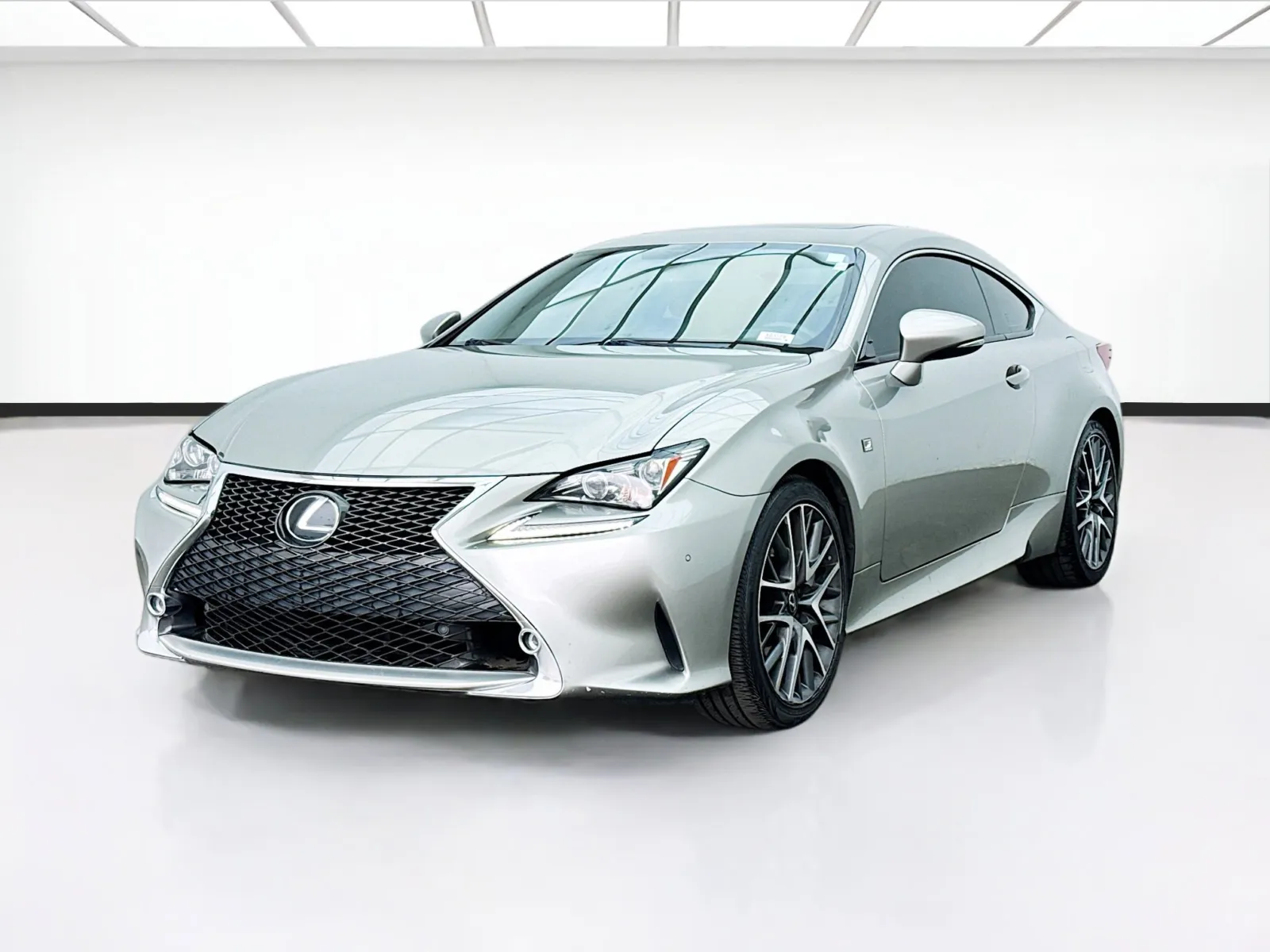
The Lexus RC 350 achieves a 0-60 mph acceleration time of 5.8 seconds for Rear-Wheel Drive (RWD) models and 6.0 seconds for All-Wheel Drive (AWD) variants. These figures are produced by a 3.5-liter naturally aspirated V6 engine delivering 311 horsepower, emphasizing linear power delivery over the aggressive burst of turbocharged competitors.
The Lexus RC 350 occupies a unique niche in the luxury sport coupe market. As of 2026, it remains one of the few remaining options for enthusiasts seeking a high-displacement, naturally aspirated V6 in a segment increasingly dominated by small-capacity turbocharged engines and hybrid powertrains. While its 0-60 mph times may not lead the class in raw acceleration, the performance profile of the RC 350 is defined by its grand touring capabilities, structural rigidity, and a specific mechanical "purity" that modern forced-induction rivals often lack.
To understand the 0-60 mph performance of the RC 350, one must look beyond a single number. The vehicle’s weight, transmission logic, and drivetrain configuration all play critical roles in how that power is translated to the pavement.
The Heart of the Performance: The 3.5L 2GR-FKS V6 Engine
The foundational element of the RC 350’s performance is the 2GR-FKS engine. This 3.5-liter V6 is a masterclass in reliability and consistent power delivery. Unlike its turbocharged peers, which may suffer from "turbo lag" (a delay in power delivery while the turbocharger spools), the RC 350 offers an immediate, linear response to throttle input.
Power and Torque Specifications
The engine produces 311 horsepower at 6,600 RPM and 280 lb-ft of torque at 4,800 RPM. This high-revving nature means that to achieve the best 0-60 mph times, the driver must be willing to push the engine toward the upper end of the tachometer. The torque curve is relatively flat, but the peak does not arrive until later in the rev range compared to a turbocharged engine, which might provide peak torque as low as 1,500 RPM.
D-4S Injection System
A key technical detail of the RC 350 is the D-4S (Direct-injection 4-stroke gasoline engine Superior version) system. This utilizes both direct and port fuel injection. At lower loads, it uses both to optimize fuel economy and stability; under high-performance demands, such as a 0-60 mph sprint, it shifts focus to direct injection to cool the intake air and allow for a higher compression ratio, maximizing power output.
Analyzing the 0-60 mph Sprint: RWD vs. AWD
The performance of the RC 350 varies significantly based on which wheels are driven. This is not just a matter of traction; it involves entirely different transmission systems and weight distributions.
Rear-Wheel Drive (RWD) Dynamics
The RWD RC 350 is the "sprinter" of the family, clocking in at 5.8 seconds for the 0-60 mph dash. It benefits from an 8-speed Sport Direct-Shift automatic transmission. This gearbox is designed to offer quick shifts and features G-force Artificial Intelligence (G-AI) Shift Control, which selects the optimum gear during spirited driving based on lateral G-forces. The RWD model is also lighter, which reduces the inertia the engine must overcome from a standstill.
All-Wheel Drive (AWD) Dynamics
The AWD RC 350 covers the 0-60 mph sprint in approximately 6.0 to 6.1 seconds. Interestingly, while the AWD system provides superior traction off the line (reducing wheel spin on slippery surfaces), it carries a weight penalty of roughly 150 pounds. Furthermore, the AWD model utilizes a 6-speed automatic transmission rather than the 8-speed found in the RWD version. The wider gear spacing of the 6-speed transmission is slightly less efficient at keeping the engine in its "power band" during a flat-out acceleration run.
Weight: The Performance Bottleneck
One of the most discussed "details" of the RC 350 performance is its curb weight. The RC 350 is built on a "triple-link" chassis architecture: the front end is derived from the Lexus GS, the mid-section from the IS Convertible (for increased rigidity), and the rear from the IS sedan.
While this results in exceptional structural stiffness and a quiet cabin, it makes the RC 350 heavy.
- RC 350 RWD: ~3,748 lbs
- RC 350 AWD: ~3,891 lbs
In a 0-60 mph context, this weight is the primary reason the RC 350 trails competitors like the BMW 430i or Audi A5, which often weigh 200–300 pounds less. The RC 350 requires more energy to move its mass, which blunts its initial "launch" feel despite having a larger, more powerful engine than the base-model German four-cylinders.
Comparative Performance Metrics (2026 Context)
To understand where the RC 350 sits in the current 2026 automotive landscape, we must compare it to its primary luxury coupe rivals.
| Vehicle | Engine Type | Horsepower | 0-60 mph (est.) | Drivetrain |
|---|---|---|---|---|
| Lexus RC 350 | 3.5L V6 (NA) | 311 hp | 5.8s | RWD |
| BMW 430i | 2.0L I4 (Turbo) | 255 hp | 5.5s | RWD |
| Audi A5 S-line | 2.0L I4 (Turbo) | 261 hp | 5.3s | AWD |
| Infiniti Q60 | 3.0L V6 (Turbo) | 300 hp | 5.2s | RWD |
| Lexus RC F | 5.0L V8 (NA) | 472 hp | 4.2s | RWD |
As the table illustrates, the RC 350 is slower to 60 mph than many of its turbocharged 4-cylinder rivals. However, the experience of the RC 350 is often preferred by those who value the sound and smooth progression of a V6 over the "punchy" but sometimes buzzy nature of a turbo-four.
F Sport Enhancements and Handling Performance
The performance of the RC 350 is often examined through the lens of the F Sport trim. While the F Sport does not increase the engine's horsepower, it fundamentally changes how the car handles the speed it generates.
Adaptive Variable Suspension (AVS)
The F Sport package includes AVS, which monitors and controls the damping force at all four wheels simultaneously. In "Sport S+" mode, the suspension firms up significantly. While this doesn't change the 0-60 mph time, it improves the car's composure during high-speed transitions and heavy braking, making the 0-60-0 (acceleration followed by a full stop) experience much more controlled.
Torsen Limited-Slip Differential
Available on the RWD F Sport models, the Torsen LSD is a mechanical detail that significantly aids performance. By shifting power to the wheel with the most grip during a corner or a hard launch, it minimizes inside-wheel spin. For a driver attempting a 0-60 mph run on a less-than-perfect surface, the LSD can be the difference between a clean launch and wasted motion.
Real-World Driving: Beyond the Track Sheet
In real-world conditions, the RC 350’s performance is characterized by its "Grand Touring" (GT) nature. The 0-60 mph time of 5.8 seconds is fast enough to feel "quick" in highway merging and overtaking scenarios, but the car never feels high-strung.
Transmission Tuning
The 8-speed automatic in the RWD model is tuned for smoothness. In "Normal" mode, it can feel hesitant to downshift, which might lead a casual driver to believe the car is slower than it is. Switching to Sport or Sport+ mode sharpens the throttle response and holds gears longer, allowing the driver to access the V6's power more readily.
Aerodynamics
The RC 350 features a drag coefficient (Cd) of approximately 0.28 to 0.30 depending on the specific trim. Lexus engineers utilized aero-stabilizing fins on the underbody and side mirrors to reduce turbulence. While these have a negligible effect on 0-60 mph times, they contribute to the car’s stability at the higher speeds reached immediately after the 60 mph mark.
Maintenance and Longevity of Performance
A critical detail often overlooked in performance examinations is the "degradation" of speed over time. Because the RC 350 uses a naturally aspirated engine, it is less susceptible to the performance loss common in aging turbocharged cars (such as boost leaks or carbon buildup on intake valves).
The 2GR-FKS engine is widely regarded as a "300,000-mile engine." For a buyer in 2026, this means that an RC 350 is likely to deliver the same 5.8-second 0-60 mph performance ten years from now as it does today, provided basic maintenance is followed. This "performance reliability" is a hallmark of the Lexus brand.
Common Modifications to Improve Acceleration
For owners looking to shave a few tenths off the 0-60 mph time, the RC 350 responds well to a few specific modifications. While the engine is highly optimized from the factory, the following changes are common:
- Cold Air Intake: Replacing the factory airbox can improve throttle response and provide a more aggressive intake growl, though actual horsepower gains are usually within the 5-10 hp range.
- Exhaust Systems: A high-flow cat-back exhaust reduces backpressure. Given the RC 350's weight, every bit of liberated horsepower helps the power-to-weight ratio.
- Lightweight Wheels: Since the RC 350 is heavy, reducing "unsprung mass" by installing lighter forged wheels can actually improve the 0-60 mph feel more than a minor engine tune, as it requires less energy to rotate the wheels.
Frequently Asked Questions
Is the Lexus RC 350 considered a fast car?
In the context of modern sports cars, the RC 350 is "quick" rather than "fast." Its 5.8-second 0-60 mph time is comparable to a modern hot hatch or a luxury executive sedan. It is designed for spirited daily driving and comfortable long-distance cruising rather than competitive track racing.
Why does the AWD RC 350 have a 6-speed transmission instead of an 8-speed?
The 6-speed transmission in the AWD model is a packaging necessity. The hardware required for the all-wheel-drive system (specifically the transfer case and front driveshaft) occupies space that would interfere with the 8-speed transmission housing used in the RWD model. Consequently, Lexus utilizes the proven 6-speed unit for AWD applications.
Does the RC 350 require premium fuel for maximum performance?
Yes. To achieve the advertised 311 horsepower and the 5.8-second 0-60 mph time, Lexus specifies the use of 91 octane (premium) gasoline or higher. Using lower-octane fuel may cause the engine's knock sensors to retard ignition timing, resulting in reduced power output and slower acceleration.
How does the RC 350 performance compare to the RC 300?
The RC 300 RWD uses a 2.0-liter turbocharged four-cylinder engine (241 hp), while the RC 300 AWD uses a detuned version of the 3.5-liter V6 (260 hp). The RC 350 is significantly faster than both, with a 0-60 mph time that is roughly 1.0 to 1.5 seconds quicker than the base RC 300 RWD.
Can the RC 350 handle track days?
While the RC 350 is capable of track use, particularly in F Sport trim, its weight and brake setup are optimized for the street. On a technical track, the weight will cause the tires and brakes to overheat more quickly than a lighter car like a Toyota GR86 or a BMW 2 Series.
Final Recommendation: Is the RC 350 Right for You?
If your primary goal is to "win" stoplight-to-stoplight races or post the fastest possible 0-60 mph times on social media, the Lexus RC 350 may not be the ideal choice. Competitors with smaller, turbocharged engines often offer more immediate "torque-punch" and slightly faster acceleration numbers.
However, if you prioritize mechanical longevity, linear power delivery, and a refined grand touring experience, the RC 350 is excellent. Its performance is best appreciated not in a vacuum of statistics, but in the way it maintains its composure at high speeds and the reliability of its V6 powertrain. For the driver who wants a stylish, bulletproof coupe that is "quick enough" to be fun without the maintenance headaches of high-strung European turbo engines, the RC 350 remains a premier choice in 2026.