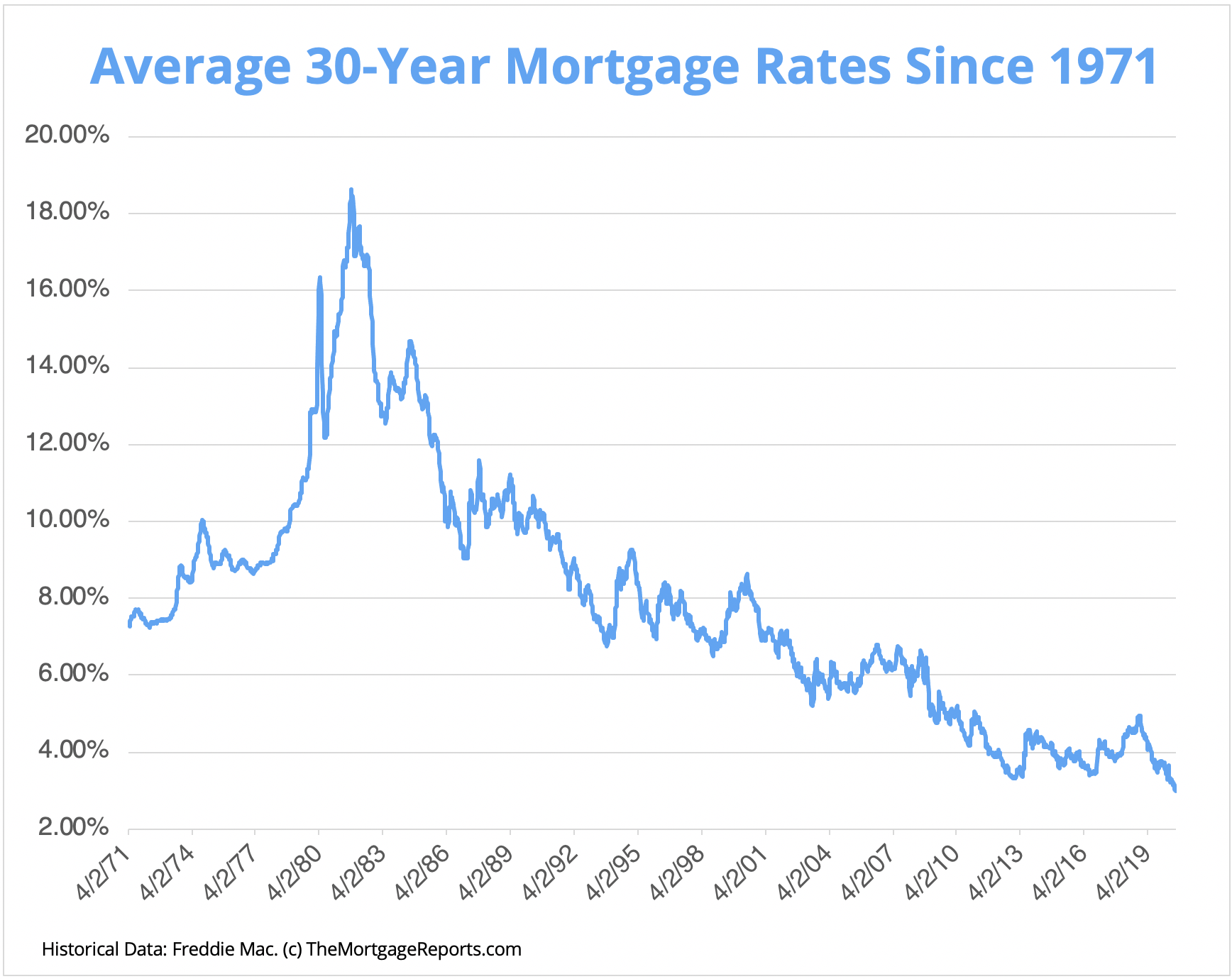
A 30-year fixed VA loan is a government-backed mortgage guaranteed by the Department of Veterans Affairs that offers eligible service members, veterans, and surviving spouses a fixed interest rate and predictable monthly payments spread over a standard three-decade repayment term.
Navigating the landscape of home financing can be daunting, but for those who have served in the United States military, specialized programs exist to make homeownership significantly more accessible. Among these options, the 30-year fixed VA loan stands as the most popular and enduring choice for buyers looking to purchase or refinance a primary residence. By understanding how this financial product works, what it costs, and how to qualify, military homebuyers can leverage their earned benefits to secure long-term housing stability without facing the traditional barriers imposed by conventional mortgages.
Understanding the Foundation of VA Home Loans
The VA home loan program was established in 1944 as part of the Servicemen's Readjustment Act—commonly known as the G.I. Bill. The core purpose of the program is to provide returning service members with a pathway to civilian life that includes homeownership, a milestone that might otherwise be out of reach due to the financial strains of military service.
Unlike traditional loans originated entirely through private lenders and sold on the secondary market, VA loans carry a distinct government guarantee. The U.S. Department of Veterans Affairs guarantees a portion of the loan—typically 25% for borrowers with full entitlement. This guarantee acts as a form of insurance for private lenders, such as banks, credit unions, and specialized mortgage companies. Because the federal government promises to reimburse the lender for a substantial portion of the loss if the borrower defaults, lenders can offer much more favorable terms than standard conventional loans.
The "30-year fixed" component refers to the amortization schedule and the behavior of the interest rate over time:
- 30-Year Term: The loan is structured to be paid off over 360 monthly payments, spreading the principal balance across three decades to keep monthly payment amounts lower and more manageable.
- Fixed Interest Rate: The interest rate agreed upon at closing remains constant for the entire life of the loan. This protects the borrower from market fluctuations, ensuring that principal and interest payments do not change regardless of how high inflation or market rates climb decades into the future.
Key Benefits of the 30-Year Fixed VA Mortgage
The popularity of the 30-year fixed VA loan stems from a robust suite of financial advantages designed specifically to accommodate the unique financial profiles of military families, who may move frequently or face deployment disruptions.
Zero Down Payment Requirement
One of the most powerful features of the program is the ability to finance 100% of the purchase price. While conventional loans typically require down payments ranging from 3% to 20% to avoid private mortgage insurance (PMI), qualified VA borrowers can buy a home with zero money down. This eliminates the arduous task of saving tens of thousands of dollars for a down payment, allowing families to enter the housing market years sooner.
Elimination of Private Mortgage Insurance (PMI)
Conventional lenders require buyers to pay private mortgage insurance whenever a down payment is less than 20%. This monthly fee protects the lender, not the borrower, and adds hundreds of dollars to the monthly payment. VA loans do not charge PMI because the federal government's partial guarantee already mitigates the lender's risk. This translates to significant monthly savings over the 30-year life of the loan.
Competitive Interest Rates
Because the government backs the loan, private lenders view VA mortgages as lower-risk investments. Consequently, average interest rates on 30-year fixed VA loans frequently trend lower than those for conventional mortgages. Over a 30-year horizon, even a fractional difference in the interest rate can result in tens of thousands of dollars saved in total interest charges.
Relaxed Credit and Debt-to-Income Standards
The VA itself does not set a minimum credit score requirement, though individual lenders may establish their own baseline thresholds (often starting around 580 to 620). Furthermore, the program utilizes flexible underwriting guidelines that look at the borrower's entire financial picture, including residual income—a calculation that ensures the family has sufficient cash left over each month after paying taxes, shelter expenses, and maintenance to cover basic living costs.
Limited Closing Costs and No Prepayment Penalties
The VA regulates the closing costs that lenders can charge borrowers, protecting them from excessive, unnecessary fees. Additionally, VA loans never carry prepayment penalties. Borrowers can make extra payments toward their principal balance each month, pay off the loan early, or refinance without facing financial penalties from the lender.
Eligibility and Certificate of Eligibility (COE)
Not everyone automatically qualifies for a VA loan. Borrowers must meet specific service requirements established by federal law and obtain official documentation proving their eligibility.
Service Requirements
Generally, an individual must meet minimum active-duty service lengths, which vary depending on the era of service:
- Wartime: Typically 90 consecutive days of active service.
- Peacetime: Typically 181 continuous days of active service.
- National Guard and Reserves: Generally 6 years of service, or 90 days of active service under Title 10 or Title 32 orders (with at least 30 consecutive days under specific sections).
- Surviving Spouses: Unremarried surviving spouses of veterans who died while in service or from a service-connected disability, or spouses of service members listed as missing in action or prisoners of war.
Obtaining the Certificate of Eligibility (COE)
Before a lender can approve a 30-year fixed VA loan, the borrower must present a Certificate of Eligibility (COE). The COE is an official document from the Department of Veterans Affairs that confirms the applicant's eligibility status and shows how much entitlement they have available.
Borrowers can obtain their COE through several methods:
- Online via the VA Portal: Veterans can log into the official VA eBenefits or VA.gov portal using a verified login to download and print their COE instantly.
- Through the Lender: Most approved VA lenders have direct access to the Automated Certificate of Eligibility (ACE) system, allowing them to pull the COE on behalf of the borrower within minutes during the initial application phase.
- By Mail: Borrowers can fill out VA Form 26-1880 (Request for a Certificate of Eligibility) and mail it to the appropriate VA regional loan center, though this method has a significantly longer processing time.
Understanding the VA Funding Fee
While the VA loan program saves borrowers money through zero down payments and no PMI, it does involve a mandatory one-time government charge known as the VA Funding Fee.
This fee directly supports the sustainability of the VA loan program, ensuring that future generations of veterans can access zero-down-payment mortgages without relying on taxpayer appropriations. The fee is calculated as a percentage of the total loan amount and varies based on several distinct factors:
- Whether the borrower is using their entitlement for the first time or a subsequent time.
- The size of the down payment (if any is made).
- The category of service member (regular military versus National Guard or Reserves).
| Loan Type / Down Payment | First-Time Use | Subsequent Use |
|---|---|---|
| Less than 5% down | 2.15% | 3.3% |
| 5% to 9.9% down | 1.50% | 1.5% |
| 10% or more down | 1.25% | 1.25% |
| Manufactured Home | 1.00% | 1.00% |
Note: Borrowers receiving VA disability compensation for a service-connected disability are legally exempt from paying the VA funding fee entirely.
Borrowers are not required to pay the funding fee in cash at the closing table. In the vast majority of transactions, the funding fee is financed directly into the total loan amount, increasing the monthly mortgage payment by a nominal amount over the course of the 30 years.
Step-by-Step Mortgage Process
Applying for and closing a 30-year fixed VA loan follows a structured path that combines standard mortgage underwriting with specialized VA-specific requirements.
- Check Eligibility and Gather Documents: Verify service history and secure the Certificate of Eligibility. Collect standard financial documentation, including recent leave and earnings statements (LES) or W-2s, tax returns, and bank statements.
- Shop for a VA-Approved Lender: Compare rates, origination fees, and customer service records across multiple financial institutions that specialize in VA lending.
- Get Pre-Approved: Submit financial records to the chosen lender to receive a pre-approval letter. This establishes the maximum purchase price the borrower qualifies for and shows real estate agents that the buyer is financially capable.
- House Hunting and Offer Submission: Work with a real estate agent experienced in VA transactions to find a home and make a competitive purchase offer. Ensure the purchase contract includes a "VA escape clause," which protects the buyer's earnest money if the home fails to appraise for the purchase price.
- VA Appraisal and Pest Inspection: Once under contract, the lender orders a specialized VA appraisal. A licensed VA appraiser evaluates the property's market value and ensures it meets the Minimum Property Requirements (MPRs) regarding health, safety, and structural integrity. Many states or lenders also require a wood-destroying insect (termite) inspection.
- Underwriting and Closing: The underwriting department reviews the complete file to ensure compliance with both lender and VA guidelines. Once cleared to close, the borrower signs the final loan documents, pays any remaining closing costs (or utilizes seller concessions), and takes ownership of the property.
Financial Comparison: VA Loan vs. Conventional Loan
To fully appreciate the mechanics of a 30-year fixed VA loan, it is helpful to examine how it compares directly against a traditional conventional mortgage financed with a minimal down payment.
| Feature | 30-Year Fixed VA Loan | 30-Year Fixed Conventional Loan |
|---|---|---|
| Minimum Down Payment | 0% | Typically 3% (sometimes 5% for optimal terms) |
| Private Mortgage Insurance (PMI) | None | Required if down payment is under 20% |
| Funding Fee / Insurance Fee | Mandatory VA Funding Fee (unless exempt) | Monthly PMI payments until equity reaches 78-80% |
| Credit Score Flexibility | Generally more lenient; evaluated holistically | Strict tiers; higher scores secure lower rates |
| Interest Rates | Historically lower due to government backing | Subject to market rates tied strictly to credit tiers |
| Debt-to-Income (DTI) Limits | Flexible, with emphasis on residual income | Rigid caps (often maxing out around 43% to 45%) |
Common Misconceptions and Limitations
Despite the overwhelming advantages of the 30-year fixed VA loan, several persistent myths and operational limitations can confuse prospective homebuyers.
The Myth of One-Time Use
A common misconception is that veterans can only use their VA loan benefit once in their lifetime. In reality, the VA loan is a lifetime benefit. Borrowers can use their entitlement multiple times. If a veteran sells a home and pays off the first VA loan, their full entitlement is restored. Even if they keep a current VA loan and buy another home (subject to remaining entitlement limits or bonus entitlement rules), they can utilize the program repeatedly.
Minimum Property Requirements (MPRs)
The VA enforces strict property standards to protect buyers from purchasing dilapidated or unsafe housing. The home must have safe electrical, plumbing, and heating systems, a sound roof, adequate ventilation, and proper drainage. While these standards protect the buyer, they can occasionally cause friction in competitive real estate markets where sellers are reluctant to complete repairs requested by a VA appraiser before closing.
Seller Concessions and Closing Costs
While the VA limits the types of fees lenders can charge veterans (banning certain non-allowable fees), sellers are permitted to pay up to 4% of the total loan amount in seller concessions. These concessions can cover the buyer’s prepaid taxes, insurance, and even pay off the buyer's existing debts to help lower their debt-to-income ratio, making negotiation a powerful tool in a VA transaction.
Frequently Asked Questions
Can I use a 30-year fixed VA loan to buy a condo or manufactured home?
Yes, but the property must meet specific compliance guidelines. Condominiums must be located within a complex that is officially approved by the Department of Veterans Affairs. Manufactured and modular homes are also eligible, provided they are classified as real estate under state law and are permanently affixed to a foundation that meets VA engineering standards.
What happens if I default on my 30-year fixed VA loan?
Foreclosure is a serious legal action with severe financial consequences. However, if a borrower experiences unexpected financial hardship—such as job loss, medical emergency, or unexpected deployment disruptions—the VA maintains a dedicated staff of loan technicians. Borrowers can contact the VA loan technicial support line to receive free assistance, mortgage counseling, and negotiation advocacy with their lender to explore alternatives like loan modifications, forbearance, or short sales.
Can I refinance a conventional loan into a 30-year fixed VA loan?
Yes. Homeowners who currently hold an FHA, USDA, or conventional mortgage and possess valid military eligibility can execute a "cash-out" or "rate-and-term" refinance to transition their current debt into a 30-year fixed VA loan. This process requires a new appraisal and underwriting review, but it can successfully eliminate monthly mortgage insurance and lower the interest rate.
Is there a maximum loan limit on a VA mortgage?
For borrowers with full entitlement, there are no statutory limits on the amount the VA will guarantee. This means qualified veterans can secure multi-million-dollar mortgages with zero down payment, provided they demonstrate sufficient income and creditworthiness to the lender. Loan limits only apply to borrowers who have an active, existing VA loan elsewhere that has not been fully paid off.
Can I make extra payments to pay off my 30-year fixed VA loan early?
Absolutely. Because the loan carries no prepayment penalties, borrowers can make bi-weekly payments, add extra principal to their monthly checks, or make large lump-sum payments whenever they choose. This reduces the total interest paid over time and shortens the actual lifespan of the loan without incurring financial penalties.
Next Steps for Prospective Military Homebuyers
Embarking on the journey toward homeownership with a 30-year fixed VA loan requires proactive preparation. Begin by pulling your credit report to address any discrepancies and requesting your Certificate of Eligibility through the official VA portal or directly via a trusted lender. Research multiple lenders to compare their specific underwriting overlays and closing cost structures. By pairing your earned military benefits with careful financial planning, you can secure a stable, predictable, and cost-effective mortgage that serves your family well for decades to come.