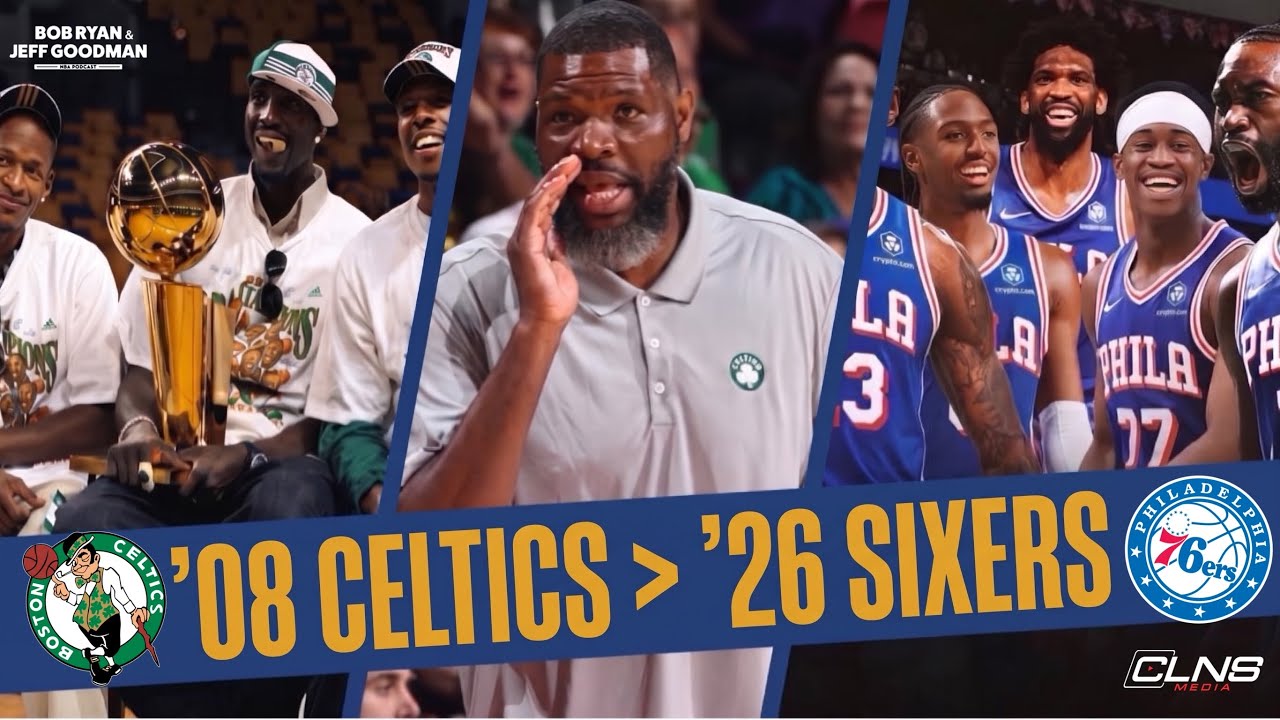
The 2008 Boston Celtics achieved an historic turnaround by merging veteran stars Kevin Garnett, Paul Pierce, and Ray Allen, effectively changing the NBA’s approach to roster construction. By successfully integrating these established superstars into a cohesive defensive system, the franchise captured its 17th NBA championship and ended a 22-year title drought, providing a permanent case study in team chemistry and tactical evolution.
The Context: A Franchise at a Crossroads
Entering the 2007 off-season, the Boston Celtics were in a state of professional stagnation. The 2006-2007 campaign had been particularly arduous; the team struggled with injuries and inconsistent output, finishing with a 24-58 record. The organization reached a critical inflection point where the existing core of young talent and veteran role players was not sufficient to compete for a title in an increasingly talented Eastern Conference.
General Manager Danny Ainge recognized that the window of opportunity was closing for franchise cornerstone Paul Pierce. The strategy shifted from gradual rebuilding to an aggressive pursuit of immediate contention. This necessitated a radical departure from traditional asset management, leading to one of the most significant series of transactions in professional sports history.
The Architecture of the "Big Three"
The transformation was anchored by the acquisition of two future Hall of Famers: Ray Allen and Kevin Garnett. The trades were structured to maximize the team's championship window while retaining enough depth to endure the rigors of an 82-game season.
The Acquisition of Ray Allen
On June 28, 2007, the Celtics traded the fifth overall pick in the 2007 draft (Jeff Green), Wally Szczerbiak, and Delonte West to the Seattle SuperSonics in exchange for Ray Allen and the 35th overall pick (Glen Davis). Allen, a prolific scorer and elite perimeter shooter, provided the spacing and offensive maturity the Celtics had lacked for years.
The Acquisition of Kevin Garnett
The defining moment occurred on July 31, 2007, when the Celtics completed a massive trade with the Minnesota Timberwolves. Boston sent Al Jefferson, Ryan Gomes, Sebastian Telfair, Gerald Green, Theo Ratliff, two first-round draft picks, and cash considerations to Minnesota for Garnett. It was the largest collection of assets ever traded for a single player at that time. Garnett brought defensive intensity, leadership, and a unique versatility that served as the team’s emotional and tactical engine.
Tactical Evolution and Defensive Identity
Head Coach Doc Rivers faced the daunting task of blending three players who had spent their entire careers as primary scoring options. The success of the 2008 Celtics was not predicated on high-octane offense, but rather on an elite defensive system that forced opponents into uncomfortable shooting positions.
The Defensive Philosophy
Kevin Garnett’s arrival allowed the Celtics to implement a switch-heavy defensive scheme. Garnett’s ability to defend both perimeter players and interior threats provided the team with unprecedented flexibility. Defensive assistant coach Tom Thibodeau played a pivotal role in implementing a "gap" defensive system, which encouraged perimeter defenders to sag into the lane, effectively clogging the paint while maintaining the ability to close out on three-point shooters.
The statistics bore out this dominance. During the 2007-2008 regular season, the Celtics led the NBA in defensive rating, allowing only 98.9 points per 100 possessions. This defensive foundation allowed them to remain competitive even on nights when their perimeter shooting regressed.
Balancing the Scorers
Offensively, the team operated under a "sacrifice" culture. Paul Pierce, the longest-tenured Celtic, had to relinquish his role as the sole offensive focus. Ray Allen transitioned from being the primary ball-handler in Seattle to functioning largely as a spot-up threat and off-ball mover in Boston. Kevin Garnett focused on high-post playmaking and screen-setting, which opened driving lanes for Pierce and Rajon Rondo, the young point guard whose development was essential to the team’s distribution.
The 2008 Postseason Path
The 2008 playoff run was a test of endurance and character. After a 66-16 regular season, the team faced unexpected adversity in the form of two seven-game series against the Atlanta Hawks and the Cleveland Cavaliers. These series forced the Celtics to develop "road toughness," a trait they would eventually rely on in the Finals.
Facing the Lakers
The NBA Finals featured a classic rivalry: the Boston Celtics vs. the Los Angeles Lakers. The Lakers, led by league MVP Kobe Bryant, posed a complex threat with their triangle offense and length.
- Game 1: Boston secured an opening win at home, establishing their physicality early.
- Game 4 (The Greatest Comeback): In what remains a defining moment of the era, the Celtics overcame a 24-point deficit in Los Angeles. This victory swung the momentum irrevocably, demoralizing the Lakers and demonstrating the collective willpower of the Boston core.
- Game 6 (The Clincher): Returning to Boston, the Celtics dismantled the Lakers 131-92. The victory was a total team effort, with the defensive intensity proving too much for the Lakers' perimeter stars.
Comparison of Championship Roster Roles
The 2008 Celtics relied on a clear hierarchy of star power supported by specialized role players. Understanding these roles is essential to grasping how the team succeeded where other "super teams" failed.
| Role | Player | Primary Contribution |
|---|---|---|
| Star Forward | Paul Pierce | Isolation scoring, clutch shot-making |
| Star Forward | Kevin Garnett | Interior/perimeter defense, leadership |
| Star Guard | Ray Allen | Floor spacing, perimeter shooting |
| Point Guard | Rajon Rondo | Playmaking, transition defense |
| Center | Kendrick Perkins | Rim protection, physical screens |
| Role Player | James Posey | Perimeter defense, three-point shooting |
| Role Player | P.J. Brown | Veteran presence, mid-range stability |
Sustained Impact and Legacy
The 2008 Celtics are frequently cited as the prototype for the modern "Super Team" era. By proving that veteran stars could successfully integrate their games to pursue a championship, the Celtics influenced the strategies of teams like the 2010s Miami Heat and the Golden State Warriors.
Furthermore, the team's emphasis on defensive versatility forced the rest of the league to prioritize defensive-minded wings and agile big men. The success of the 2008 squad also reignited the historical significance of the Celtics franchise, proving that the team could remain a destination for elite talent.
Frequently Asked Questions
Why is the 2008 Boston Celtics team considered a "Super Team" prototype?
They were one of the first modern examples of a front office aggressively acquiring three established stars in their prime through trades. Unlike previous teams that relied on draft development, Boston utilized asset accumulation to bypass the traditional rebuilding timeline.
What role did Tom Thibodeau play in the 2008 season?
As the defensive coordinator, Thibodeau was responsible for the team’s intense defensive schemes. He emphasized constant communication and "shell" drills, ensuring that every player was accountable for rotations, which resulted in the league’s top-ranked defense.
How did the team handle the transition from individual stars to a collective unit?
Through the leadership of Doc Rivers, the players agreed to subordinate their individual statistics for the goal of winning. Kevin Garnett, in particular, set the tone by prioritizing defensive intensity and rebounding over scoring, which created a culture of selflessness that the other stars adopted.
Was the 2008 Celtics championship considered a surprise?
While the team was viewed as a contender after the trades, the scale of the improvement—from 24 wins to 66 wins—was historical. It remains the largest single-season turnaround for a team that went on to win the championship in the same year.
How did the 2008 team differ from later Celtics iterations?
The 2008 team relied on a specific balance of veteran savvy, physical interior play, and specialized role players like James Posey. Later versions of the team, including the 2010 squad, had to adjust as the players aged and the league shifted toward a faster, more perimeter-oriented pace.
Recommendations for Further Research
To gain a complete understanding of the 2008 championship, enthusiasts should review the official NBA box scores from the 2008 Eastern Conference Semifinals against Cleveland, which highlight the tactical adjustments made throughout the series. Additionally, internal team documents and post-game interview transcripts from that period provide significant insight into the "Ubuntu" philosophy—the team’s chosen rallying cry—which emphasized the importance of the collective over the individual.