In 1991, Chevrolet’s production was characterized by a bold transition toward aerodynamic design and the revitalization of performance heritage. Key highlights included the controversial "whale" redesign of the Caprice, the return of the Camaro Z28 nameplate, and the final production year for the iconic "Square Body" R/V series Suburban and Blazer models.
The year 1991 stands as a fascinating case study in automotive evolution. As the United States began to emerge from a brief economic recession, General Motors' flagship division, Chevrolet, was tasked with balancing traditional American "big iron" sensibilities with the increasing demand for fuel efficiency and modern aesthetics. This period, often referred to as the "Heartbeat of America" era, saw Chevrolet maintaining its dominance in the truck market while simultaneously overhauling its passenger car lineup to compete with both domestic rivals and the rising tide of Japanese imports.
From a collector’s perspective in 2026, the 1991 model year represents a "sweet spot" for enthusiasts. It offers the rugged simplicity of TBI (Throttle Body Injection) systems alongside the first iterations of modern safety features like anti-lock brakes and driver-side airbags. Whether you are looking at the heavy-duty haulers or the high-performance icons, 1991 was a year of significant technical and aesthetic milestones.
The Aerodynamic Revolution: The 1991 Caprice Redesign
Perhaps the most significant event in 1991 Chevrolet production was the total redesign of the full-size B-Body platform, most notably the Caprice. After nearly 15 years of the boxy, upright styling that had defined the 1977–1990 generation, Chevrolet introduced a radically rounded, "aero" look.
Impact and Reception
The 1991 Caprice was longer and wider than its predecessor, though it utilized a carryover chassis. The new sheet metal was designed to minimize wind resistance, which Chevrolet argued would improve fuel economy and reduce cabin noise. While the design was polarizing—critics and the public quickly nicknamed it the "whale" or the "bubble"—it was a critical success. Motor Trend named the 1991 Chevrolet Caprice its Car of the Year, praising its ride quality and updated interior.
Engineering Improvements
Underneath the aerodynamic skin, the 1991 Caprice featured the reliable 5.0L L03 V8 as the standard powerplant for civilian models, while the police-spec 9C1 package offered the more robust 5.7L L05 V8. This year also saw the standard implementation of a rear-wheel anti-lock braking system (ABS), a major safety selling point at the time. The interior was revamped with a wraparound cockpit-style dashboard, moving away from the flat, linear designs of the 1980s.
The Return of the Z28: Camaro’s Performance Pivot
The 1991 model year was a pivotal one for the third-generation Camaro. Since 1985, the top-tier Camaro had worn the "IROC-Z" badge, a result of Chevrolet’s sponsorship of the International Race of Champions. However, that contract expired in 1990, and Dodge took over the sponsorship.
The New Look of the Z28
Instead of retiring the performance variant, Chevrolet brought back the legendary Z28 nameplate for 1991. These cars are easily identified by their "tall wing" rear spoilers and large, functional hood blisters (as opposed to the previous "louvers"). The 1991 Z28 also featured a new ground effects package that gave the car a more aggressive, lower-profile appearance compared to the IROC-Z it replaced.
The B4C Special Service Package
A hidden highlight of 1991 production was the introduction of the B4C Special Service Package. Essentially a Z28 disguised in a standard RS (Rally Sport) body, the B4C was built specifically for law enforcement. It featured the 5.7L L98 engine (or the 5.0L LB9), heavy-duty suspension, four-wheel disc brakes, and a limited-slip differential. Because these were "stealth" interceptors, they are highly prized by collectors today for their "sleeper" status and mechanical toughness.
Corvette Styling and the ZR-1 Evolution
For 1991, the Chevrolet Corvette (C4) underwent its first major styling refresh since its debut in 1984. The goal was to unify the look of the standard Corvette with the ultra-high-performance ZR-1.
Shared Aesthetics
The standard 1991 Corvette received the "wraparound" front fascia with integrated fog lamps and the convex rear bumper with rectangular taillights—features that had previously been exclusive to the ZR-1. This move modernized the aging C4 platform and provided a more premium appearance across the entire lineup. Inside, the digital dash of the early C4s had already been replaced by a hybrid analog/digital display in 1990, which remained the standard for 1991.
Technical Refinements
While the standard engine remained the 245-horsepower L98 (until the LT1 arrived in 1992), 1991 saw improvements in electronic systems and wheel designs. The "sawblade" 17-inch wheels became standard, becoming one of the most recognizable wheel patterns of the 1990s. The ZR-1 continued its production run with the Lotus-designed LT5 engine, producing 375 horsepower, a staggering figure for the era.
The End of an Era: Square Body Suburban and Blazer
While the C/K pickup trucks had moved to the modern GMT400 platform in 1988, the heavy-duty SUVs—the Suburban and the K5 Blazer—stayed on the older "Square Body" R/V platform for several more years. The 1991 model year marked the absolute end of this legendary chassis.
Why 1991 Suburbans are Coveted
The 1991 Suburban is often considered the "ultimate" version of the classic square body. Because it was the final year of production, Chevrolet included all the refinements developed over the platform's 18-year lifespan. This included:
- Fuel Injection: Standard TBI systems provided reliability that earlier carbureted models lacked.
- 4L80E Transmission: The introduction of the heavy-duty 4L80E four-speed electronic automatic transmission in 2500-series models was a game-changer for towing and longevity.
- NP241 Transfer Case: A robust and reliable choice for four-wheel-drive enthusiasts.
Restorers today specifically seek out 1991 VINs because they offer the vintage aesthetic with the most "modern" mechanical underpinnings available for that body style.
Truck Dominance and the 454 SS Upgrade
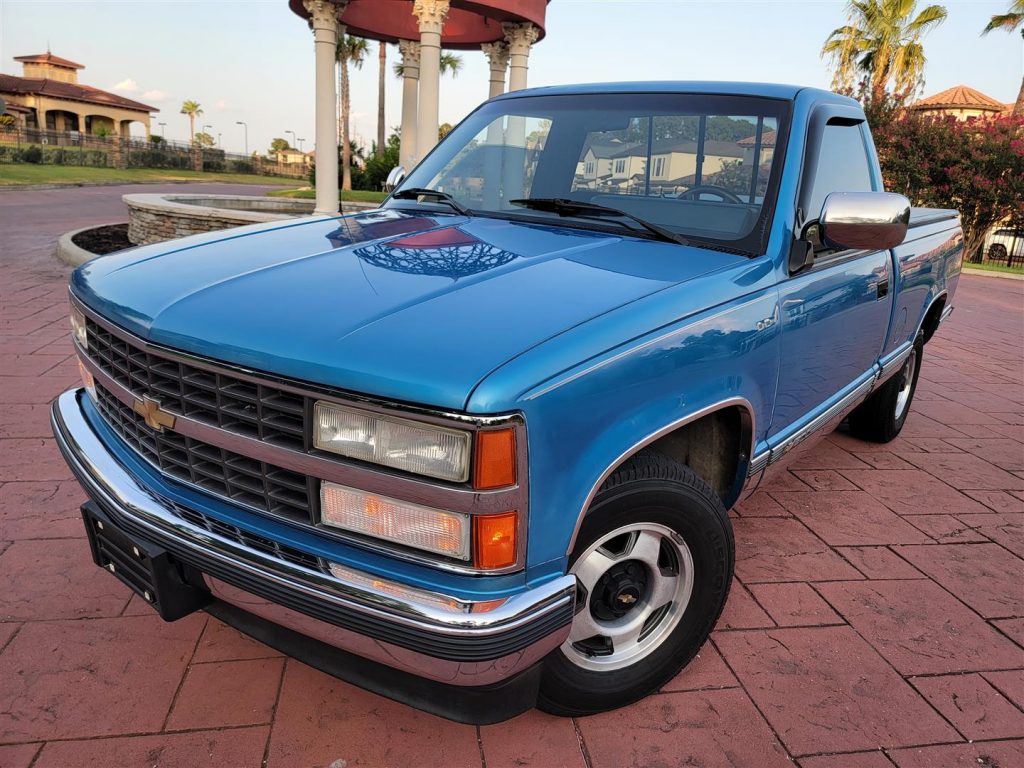
In the light-duty truck segment, the GMT400 platform (Silverado/Sierra) continued to dominate the market. However, 1991 brought significant updates to the niche performance truck market.
The 1991 454 SS
The Chevrolet C1500 454 SS had debuted in 1990 to massive fanfare, but it was often criticized for its three-speed automatic transmission which hampered highway drivability. For 1991, Chevrolet addressed this by:
- Upgrading the transmission to the 4L80E four-speed automatic with overdrive.
- Increasing the engine output slightly to 255 horsepower and 405 lb-ft of torque.
- Changing the rear axle ratio to 4.10:1 for even more aggressive off-the-line performance.
These changes made the 1991 454 SS a much more capable and desirable vehicle than the inaugural 1990 version.
1991 Chevrolet Key Model Specifications and Production Notes
The following table highlights the primary specifications and production context for the standout models of 1991.
| Model | Platform | Notable Engine(s) | Key Highlight |
|---|---|---|---|
| Caprice | B-Body | 5.0L V8 / 5.7L V8 (9C1) | All-new "Aero" styling; Motor Trend COTY. |
| Camaro Z28 | F-Body | 5.0L LB9 / 5.7L L98 | Return of Z28 name; "Tall Wing" spoiler. |
| Corvette | Y-Body | 5.7L L98 / 5.7L LT5 | ZR-1 exterior styling adopted for base models. |
| Suburban | R/V Platform | 5.7L V8 / 7.4L V8 | Final year of the "Square Body" style. |
| C1500 454 SS | GMT400 | 7.4L (454) V8 | Upgraded to 4-speed 4L80E transmission. |
| Lumina Z34 | W-Body | 3.4L DOHC V6 | Introduction of the high-revving Twin Dual Cam V6. |
Bread and Butter: The Lumina, Cavalier, and Corsica
While the performance models grab the headlines, Chevrolet’s volume production in 1991 relied on its front-wheel-drive (FWD) passenger cars.
Lumina Z34
The Lumina was Chevrolet’s answer to the Ford Taurus. In 1991, the lineup was bolstered by the Lumina Z34. This coupe featured a 210-horsepower 3.4L DOHC V6, a performance-tuned suspension, and a unique body kit. It represented Chevrolet’s attempt to bring "European-style" performance to the American mid-size market.
Cavalier and Corsica/Beretta
The Cavalier received a significant facelift for 1991, featuring smoother front and rear fascias and improved interior ergonomics. It remained one of the best-selling small cars in America due to its low cost of entry and the availability of the 3.1L V6 in the Z24 trim. Similarly, the Corsica (sedan) and Beretta (coupe) continued to serve as the backbone of Chevy’s fleet and entry-level sales, with the Beretta GTZ offering a high-output Quad 4 engine for enthusiasts.
Frequently Asked Questions
Was the 1991 Chevrolet Caprice reliable?
Yes, for its time, the 1991 Caprice was exceptionally reliable. While the styling was new, the mechanical components—the 5.0L and 5.7L small-block V8s and the 700R4 (4L60) transmission—were well-proven designs. The car's longevity is evidenced by its decade-long dominance in police fleets across North America.
How can I tell a 1991 Camaro Z28 apart from a 1990 IROC-Z?
The most immediate giveaways are the hood and the rear wing. The 1991 Z28 has large, bulbous "power blisters" on the hood, whereas the 1990 IROC-Z has flat louvers. Additionally, the 1991 Z28 features a much taller rear spoiler that is integrated into the rear hatch more prominently than the IROC's wrap-around spoiler.
Why is the 1991 Suburban so expensive in 2026?
The 1991 Suburban is the "final year" model of a body style that lasted from 1973 to 1991. It combines the classic aesthetic that many people find nostalgic with the most advanced factory mechanical parts (like the 4L80E transmission and TBI fuel injection). This makes it the most "driveable" version of a classic truck, driving up its value in the collector market.
What was the fastest Chevrolet produced in 1991?
The 1991 Corvette ZR-1 was the undisputed speed king for Chevrolet. With 375 horsepower and a top speed of over 175 mph, it was one of the fastest production cars in the world at that time, capable of competing with contemporary Ferraris and Porsches.
Did all 1991 Chevrolets have airbags?
No. In 1991, the transition to supplemental inflatable restraints (airbags) was still underway. The Corvette, Camaro, and Caprice featured driver-side airbags, but many of the trucks and smaller economy cars like the Cavalier did not yet have them as standard equipment.
Final Recommendations for Collectors and Researchers
When evaluating 1991 Chevrolet production, it is vital to distinguish between "early-year" and "late-year" builds, especially in the truck segment. For those looking to purchase or restore a vehicle from this era in 2026, prioritize models that feature the 4L80E transmission (in heavy-duty applications) or the B4C/9C1 police packages, as these versions often contain heavy-duty cooling and suspension components that were not available to the general public.
The 1991 model year serves as a bridge between the mechanical simplicity of the 1980s and the technological integration of the 1990s. Whether you are chasing the high-revving performance of a Lumina Z34 or the brute force of a 454 SS, the production highlights of 1991 offer a diverse range of vehicles that represent a high point in American automotive manufacturing.
For more detailed technical data, the GM Heritage Center provides archival production records and original marketing brochures that can help verify VIN-specific options for 1991 models.