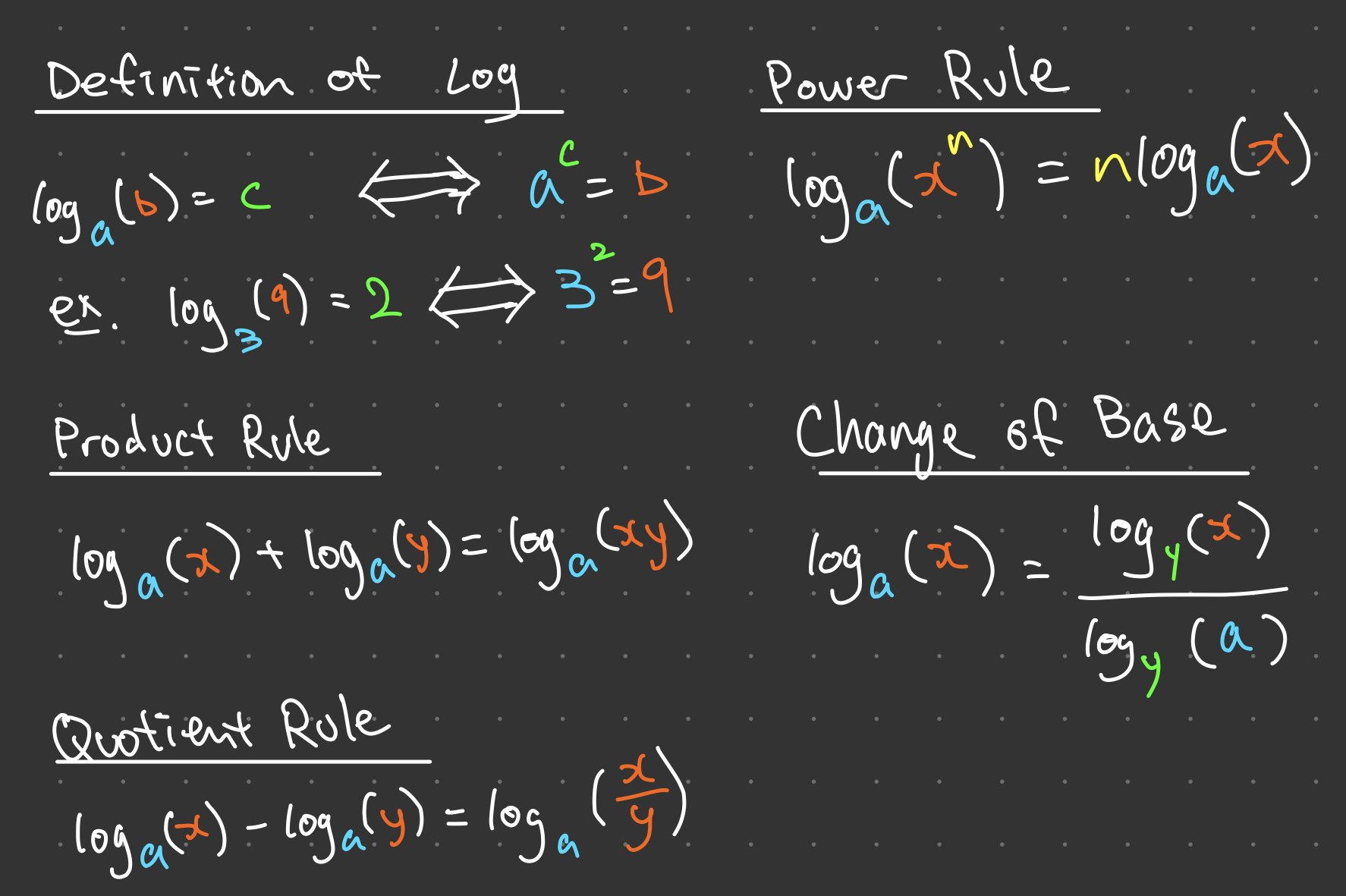
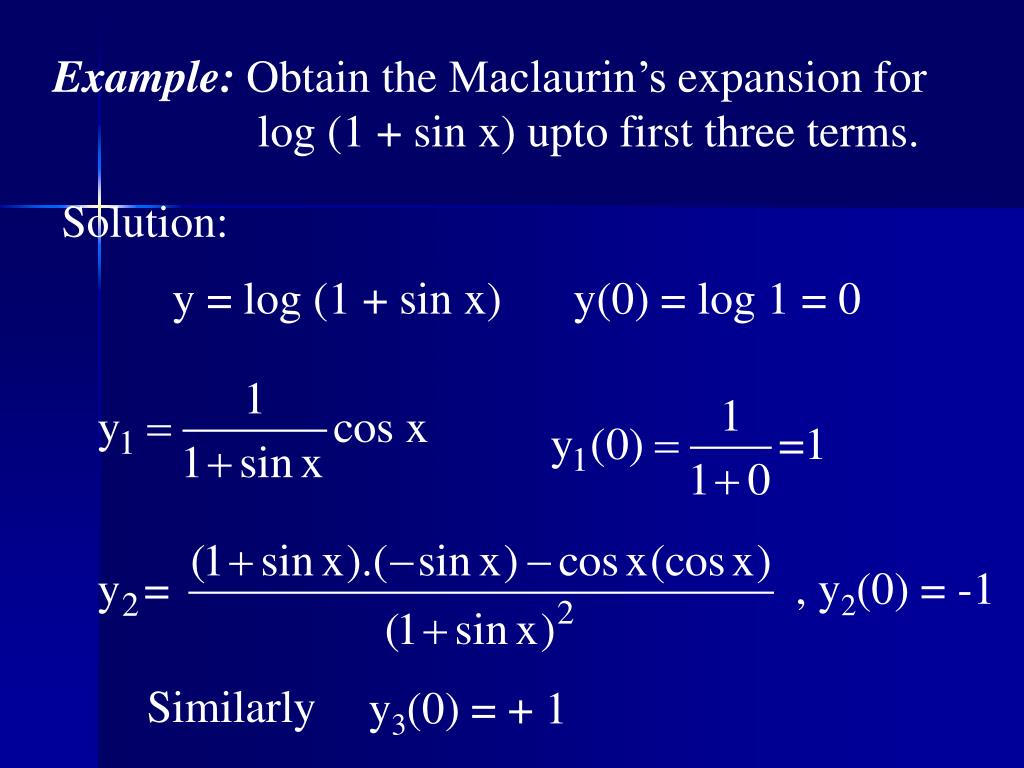
The "1 log 1 x expansion" refers to a specific configuration protocol used in data logging systems and mathematical modeling, where a single log entry or data point is processed through a unit expansion—often a multiplier or a transform—to normalize or scale information for analytical purposes. This method is primarily utilized to ensure that logarithmic data remains interpretable when it is subject to linear scaling, preventing the common mathematical errors associated with scaling logarithmic values directly.
The Mathematical Foundation of Logarithmic Scaling
At its core, the 1 log 1 x expansion deals with the tension between logarithmic scales and linear expansion. In many technical fields—such as signal processing, financial risk modeling, and structural engineering—data is captured on a logarithmic scale because the raw values span several orders of magnitude. However, when an analyst needs to compare two datasets that have been "expanded" or scaled by a factor of X, doing so directly on the log-transformed value often leads to exponential distortion.
The protocol requires that the log operation is performed as an isolated step (the "1 log" part) before the expansion (the "1 x" part) is applied. By separating these, you maintain the integrity of the data's ratio-based relationships. If you attempt to scale the log value before the expansion, you are effectively applying a power transformation, which fundamentally changes the meaning of the data relative to the baseline.
Essential Prerequisites for Implementation
Before attempting to apply an expansion protocol to your data, you must ensure your environment is set up to handle the transformation without data loss.
- Baseline Normalization: Ensure your raw data is centered around a common point of origin. If the raw values are not normalized, the 1 log operation will produce negative infinity or undefined results for any value less than or equal to zero.
- Base Consistency: Determine whether your log operations are base-10 (common logarithm), base-e (natural logarithm), or base-2 (binary logarithm). You must apply the same base consistently across all "1 log" segments to ensure that the eventual "1 x" expansion produces comparable results across datasets.
- Floating Point Precision: Because logarithmic calculations often result in irrational numbers, your computational environment must support high-precision floating-point arithmetic. Standard 32-bit integers are insufficient for logarithmic scaling, as the rounding errors will propagate significantly during the "1 x" expansion phase.
Technical Procedures and Workflow
Implementing this workflow effectively requires a disciplined approach to data architecture. Follow these sequential steps to ensure mathematical validity:
- Step 1: Data Sanitization. Filter out non-positive values. Since the logarithm of a non-positive number is undefined in real number systems, any input at or below zero must be treated as an outlier or assigned a small, non-zero constant (a process known as smoothing).
- Step 2: Execution of the Log Transform. Apply the log function to the raw dataset. This flattens the distribution, bringing the orders of magnitude closer together.
- Step 3: Verification of the Transform. Check the standard deviation of your new dataset. If it remains volatile, ensure that the log base you selected is appropriate for the scale of your input data.
- Step 4: The 1 X Expansion. Once the data is in its log form, apply the multiplier X. Mathematically, this is the stage where you determine the sensitivity of your model. A value of X greater than 1 will amplify differences, while a value between 0 and 1 will compress them.
- Step 5: Inverse Transformation (If Necessary). If your final goal is to display the data in its original format, you must reverse the log operation (e.g., using exponentiation) while accounting for the multiplier you introduced.
Comparing Linear vs. Logarithmic Expansion
Understanding the difference between how linear data scales versus log-expanded data is critical for decision-making. The following table highlights the functional differences in how these two models interact with expansion factors.
| Feature | Linear Expansion | 1 Log 1 X Expansion |
|---|---|---|
| Response to Multiplier | Proportional change | Exponential change |
| Outlier Handling | High sensitivity | Low sensitivity |
| Best Use Case | Small range, high precision | Large, diverse data sets |
| Math Complexity | Low | Moderate |
| Primary Goal | Scaling magnitude | Scaling ratios and growth |
Common Challenges and Troubleshooting
Even with a sound methodology, users often encounter specific hurdles when dealing with this type of expansion. The most common error is "Log-Drift," which occurs when the expansion factor (X) is applied inconsistently across different subsets of data. This usually happens when an automated script or a manual update causes a slight variation in the log base or the multiplication constant.
Another frequent issue is the interpretation of the "1 x" multiplier. If you are working in a regulated financial sector or a high-stakes engineering environment, ensure that your X multiplier is explicitly documented in your metadata. If the X is changed due to a system update or a change in requirements, your existing log files may become incompatible with your updated processing logic.
To troubleshoot, isolate a single log entry that you know the expected outcome for. Run it through your pipeline manually. If the result deviates from your manual calculation by more than your defined tolerance levels, check your floating-point precision settings and ensure no inadvertent rounding is happening between the "log" stage and the "expansion" stage.
Evaluating Data Integrity in Long-Term Logs
In 2026, many systems have been operating for years, leading to the accumulation of massive log files. When applying an expansion to historical logs, consider the "archival bias." Data captured in older, lower-resolution systems may not respond to the same X multiplier as modern, high-fidelity data. You may need to apply a secondary "correction factor" (Y) alongside your X multiplier to account for changes in the quality of data collection over time.
Frequently Asked Questions
Why is the 1 log 1 x expansion preferred over direct scaling? Direct scaling on raw data often causes extreme outliers to dominate the results. By using a logarithmic transformation first, you normalize the distribution, which makes the subsequent expansion (the X factor) apply more evenly across the entire dataset, preserving the relationship between small and large values.
What happens if I forget to normalize my data before the log step? If your data contains zeroes, the log function will return an undefined error. If it contains negative numbers, you will receive an imaginary number result, which will likely break any standard analytical software or mathematical model you are using to process the expansion.
Can I use a variable X factor for the expansion? Yes, but you must ensure the variance of X is tracked as a separate variable. If X changes dynamically, your output data is no longer linear, and you will need to account for this non-linearity in your final analysis or visualization.
Is this method suitable for real-time streaming data? It is, provided your computational hardware can handle the log transform in real-time. For high-velocity data streams, pre-calculating the log of the input is often performed at the edge, while the 1 x expansion is applied at the central processing node to save on compute costs.
How do I verify the accuracy of the expanded log? The most reliable method is to perform a reverse-operation test. Apply the inverse function to your result and ensure it matches your original, un-transformed input data within an acceptable margin of error.
What is the role of base-e in this expansion? Base-e (the natural logarithm) is frequently used in scientific and financial models because it simplifies the calculus involved in rates of change. If your expansion relates to growth or decay, base-e is almost always the preferred choice.
Final Recommendations
To successfully implement the 1 log 1 x expansion, prioritize the creation of a standardized transformation pipeline. Ensure that your logging infrastructure captures the raw data, the chosen base of the logarithm, and the exact value of the multiplier used in the expansion stage. Documenting these three variables will ensure that your data remains interpretable for future audits or longitudinal studies. If you are dealing with critical systems, perform a sanity check on a small batch of data every time your X multiplier is adjusted, as even a minor shift can lead to significant cumulative discrepancies in large-scale datasets.